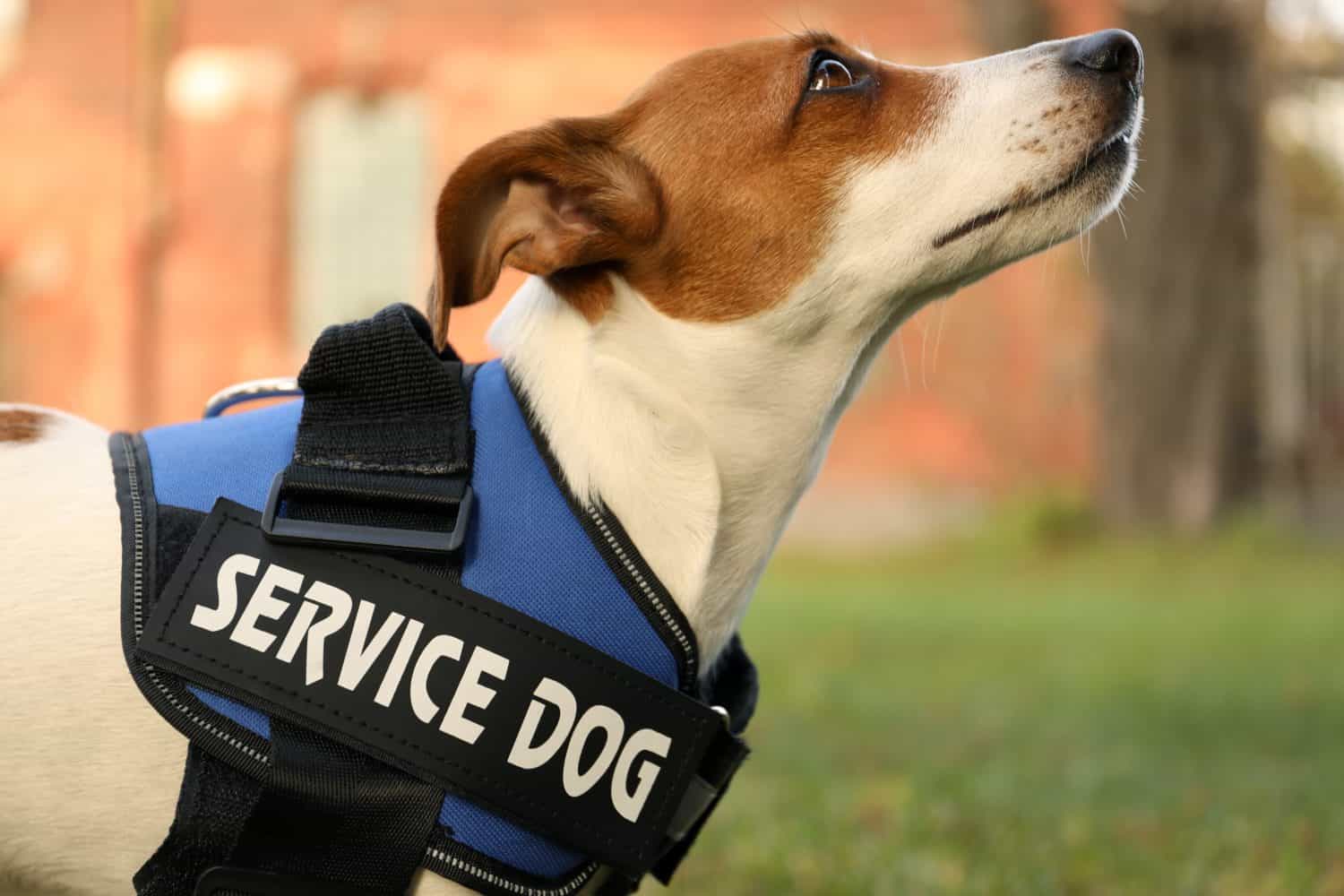

Quick Take
- There are various types of service dogs, from seeing-eye dogs to medical alert/response dogs.
- Service dogs typically cost between $10,000 and $30,000.
- Before adopting a service dog, make sure you’re working with an accredited service dog organization.
Service dogs are highly trained animals that assist individuals with specific disabilities, like blindness, hearing loss, mental health issues, and an assortment of other medical conditions. You’ve likely seen one of these hardworking, vested pups in action before.
There are various types of service dogs with differing levels of training and special skills. Wondering how much a service dog costs? We speak with experts to break down the true financial commitment of owning one of these well-trained pups.
Service dogs, including psychiatric service dogs, are trained in specific tasks to assist a person with a disability.
Amanda Conlon, Shelter to Service Program Director at Joybound People & Pets
How Much Do Service Dogs Cost?
According to US Service Animals, adopting a service dog typically costs between $10,000 and $30,000, with some as expensive as $50,000.
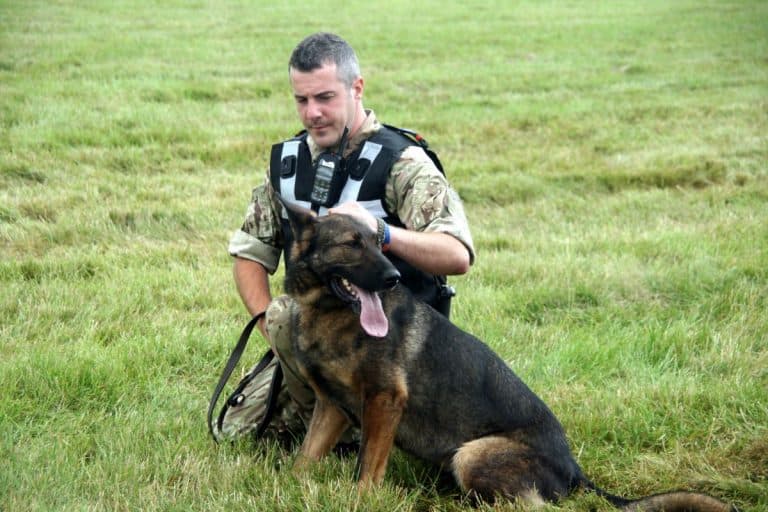
For example, Cheyenna Wilde, Service Dog Training Instructor at Warrior Canine Connection, says that at her nonprofit, “it costs approximately $40k to train each dog—a process that takes roughly two years.”
“The cost reflects the full lifecycle of developing a highly skilled service dog, to include food, training, medical/veterinary fees, staff support, and other related costs,” she adds.
Additionally, the cost of adopting a service dog depends on a variety of factors, such as their specific training levels and skills.
“The cost of a service dog usually depends more on the type and complexity of training than on the breed itself,” Wilde explains. “For example, dogs trained for advanced medical alert work or as guide dogs need more specialized training, which can increase the cost. Choosing the right breed can also affect how successfully a dog completes training and its long-term health and longevity.”
Types of Service Dogs
Seeing-eye dogs are one of the most well-known types of service dogs. These guide dogs are trained to assist individuals with visual impairments or blindness. Hearing dogs are similar in nature, trained to alert hearing-impaired owners to alarms or other sounds.
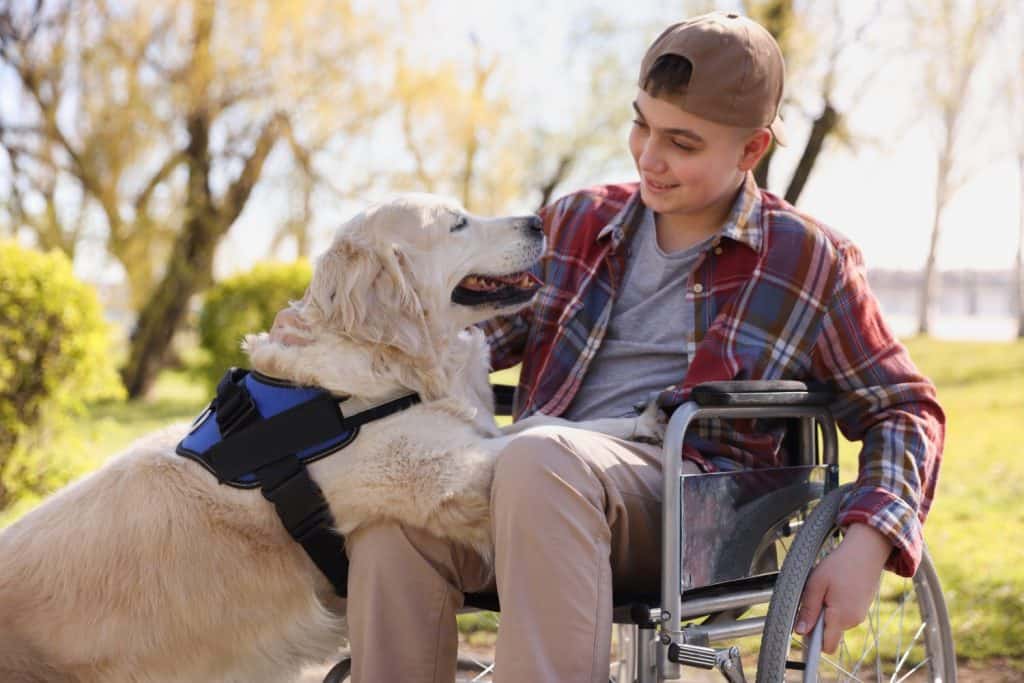
Mobility assistance dogs are trained service dogs that assist individuals with physical disabilities.
©New Africa/Shutterstock.com
Another common type of service dog is a psychiatric service dog (PSD). PSDs are trained to support individuals with mental health disabilities, such as PTSD and anxiety.
“Service dogs, including psychiatric service dogs, are trained in specific tasks to assist a person with a disability,” says Amanda Conlon, Shelter to Service Program Director at Joybound People & Pets. “Psychiatric service dogs are allowed anywhere their handlers are permitted, such as a movie theater, hospital, or restaurant. They are highly trained and socialized to be safe and unobtrusive in public.”
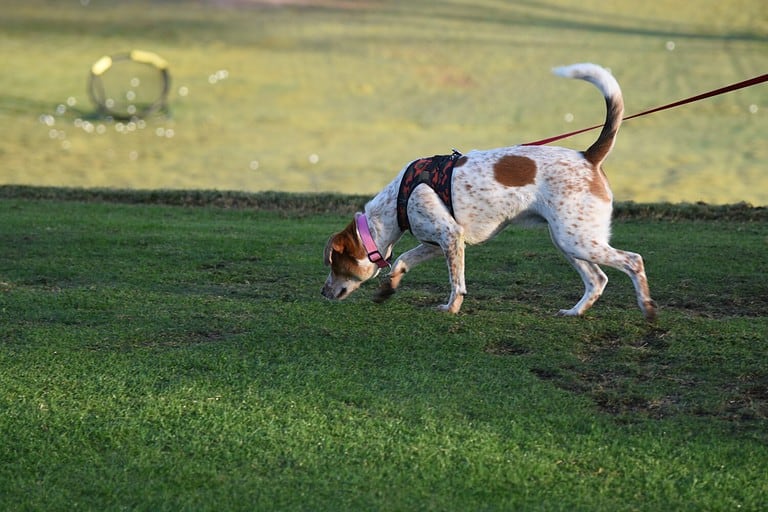
Additional service dogs include mobility assistance dogs, medical alert/response dogs, allergen detection dogs, and autism service dogs.
Common Service Dog Breeds
Any dog breed can be a service dog under the Americans with Disabilities Act. However, some breeds tend to have a more preferable temperament. Additionally, when it comes to mobility assistance dogs, larger or stronger breeds are best.
“At WCC, we are part of a purpose-bred breeding cooperative, where Golden and Labrador Retrievers are specially bred for health, temperament, and longevity,” Wilde explains. “They have friendly faces, are food-motivated, which makes them very trainable, and they’re happy, joyful dogs.”
Finding the Right Service Dog
First and foremost, consider the type of service dog you need (e.g., medical alert/response dogs vs. psychiatric service dogs). Then, work with an organization you can trust.
“Assistance Dogs International (ADI) has a list of accredited service dog organizations across the world,” Wilde mentions. “It’s important to work with reputable organizations that follow recognized service dog training standards … We recommend you ask questions about each organization’s breeding or sourcing practices, training approach, graduation rates, and post-placement support.”
While you might be seeking a quick adoption opportunity, you don’t want to rush the process.
“It’s important to be patient—high-quality programs often have waiting lists because careful training and matching take time,” says Wilde. “The national average wait time for a service dog is currently two years.”
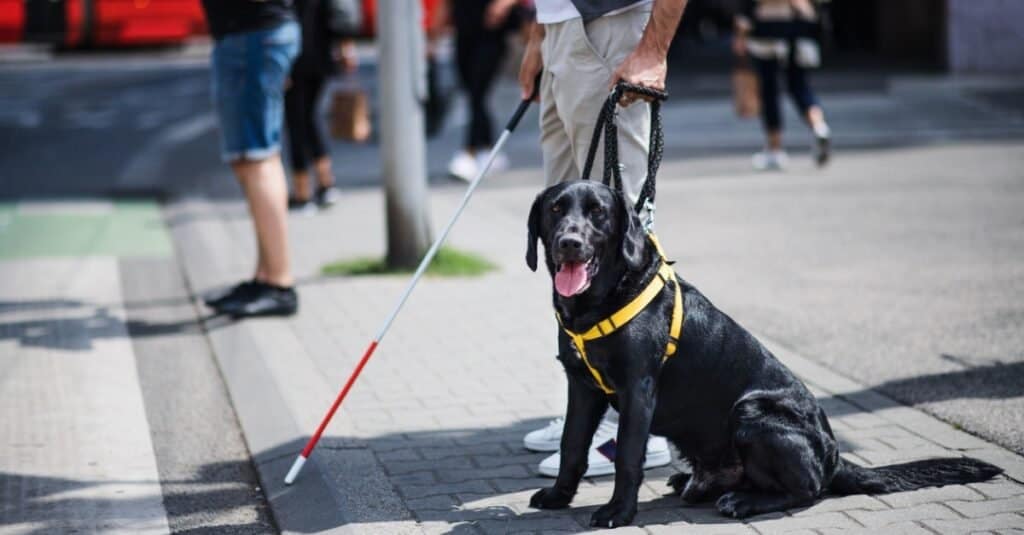
Guide dogs are trained to lead around obstacles, including hazards like low branches that may be above the height of the dog but not of its owner.
©iStock.com/Halfpoint
Some service dog programs take up to five years. If you are in serious need of a service dog, consider working with an organization that offers faster placement. In the interim, you can use an emotional support animal. While these pets lack the high-level training of a service dog, they can help alleviate anxiety and provide comfort.
That being said, a highly trained service dog is typically worth the wait.
“The true impact of service dogs lies in the remarkable power of the human-canine bond,” says Wilde. “Developing a service dog takes years of careful planning, purpose breeding, training, and partnership, but the outcome is far more than a trained animal—it is a trusted partner that supports independence, confidence, and overall quality of life. For many individuals, the connection they share with their service dog becomes a powerful source of healing, stability, and daily support.”