
Quick Take
- Your dog's eerily timed behavior probably isn't coincidence, and the real explanation is stranger than a sixth sense. See the real explanation →
- A dog once detected something its owner's doctors hadn't found yet, and the biology behind how it did so makes it even more unsettling. Read the cancer story →
- If your dog dislikes someone, it is not reading their character but rather something else entirely. What dogs actually detect →
- Clingy dog behavior can mean very different things, and mistaking one for the other could cause you to miss what your dog is actually signaling. Decode clingy behavior →
The day before my childhood dog was hit by a car and killed, she wouldn’t leave my side.
She followed me from room to room, pressed against my legs, and watched me with a kind of quiet intensity I couldn’t explain. At one point, she stopped at the bottom of the stairs, turned, and looked back at me. It felt like she was trying to tell me something. The next day, she was gone.
For years, I’ve wondered: did she know? Was that clingy, unsettled behavior her way of saying goodbye?
Fast forward six years. My dog, Maisy, has suddenly started acting the same way. She recently started sticking close, shadowing me around the house, and seems unwilling to settle. My stomach drops every time she exhibits this behavior. Is something wrong with her? With me? Or am I reading meaning into behavior that has a much simpler explanation?
If you’ve ever felt like your dog knows something you don’t, you’re not alone. So I asked Dr. Victoria Carmella, Veterinary Advisor at Pet Honesty, to help separate the mystery from the science.

Dr. Victoria Carmella offers a unique perspective and expert commentary on dog behavior.
©Dr. Victoria Carmella, a veterinarian advisor at Pet Honesty, – Original / License
What People Are Really Seeing
The idea that dogs have a “sixth sense” is everywhere. But according to Dr. Carmella, what we’re witnessing usually has a very real, very physical basis.
“Dogs are incredibly receptive, and often notice things before we do, which can almost seem supernatural,” Dr. Carmella explains. “In reality, it’s their incredibly sensitive senses, hearing and smell that allow them to detect subtle changes in their environment or in us long before we humans often recognize them.”
In other words, your dog isn’t psychic. Their senses simply operate on a different level than ours. Where we notice nothing, they pick up a shift in scent, a change in sound, or a tiny difference in how we move.
That gap between what they detect and what we cannot is where the “sixth sense” myth is born.

Dogs often seem to know exactly how we’re feeling, and it’s not just our imagination.
©Bianca Grueneberg/Shutterstock.com
Can Dogs Read Our Emotions?
One of the most common experiences dog owners describe is a pet who seems to know exactly how they’re feeling. As it turns out, that’s not wishful thinking.
“Yes! Dogs are experts at reading facial expressions, posture, and tone of voice,” Dr. Carmella says. “Interestingly, dogs’ remarkable sense of smell even allows them to detect subtle chemical (scent) changes that can be linked to stress or emotion.”
This helps explain Maisy’s behavior. My family has been traveling on and off for the past month, our routines scrambled, our stress levels up. Maisy has no other signs of illness. She isn’t limping, off her food, or hiding. She’s just… clingy.
When I looked at it through this lens, the mystery started to dissolve. She may simply be responding to the disruption she senses in me and in our home. Her body is picking up cues that my mind hadn’t fully processed.
Dogs are incredibly receptive, and often notice things before we do, which can almost seem supernatural.
Dr. Victoria Carmella, Veterinary Advisor at Pet Honesty
The Dog Who Sensed Cancer
Still, some stories are harder to explain away — and they’re worth taking seriously.
I read about a woman whose dog kept pressing its nose to her breast. It was strange, persistent behavior that didn’t match anything the dog normally did. Eventually, she paid attention, made a doctor’s appointment, and was diagnosed with breast cancer. Her dog may have saved her life.
Stories like this feel supernatural, but Dr. Carmella says they trace back to the same source: a dog’s astonishing sense of smell.
“Dogs may hear your car before you arrive home, detect scent changes associated with illness, recognize when you’re feeling sad, or react to someone moving unpredictably,” she explains. “This ‘intuition’ is truly the product of their incredible sensory and observational capabilities.”
We already know dogs can be trained to alert diabetics to dropping blood sugar. Detecting the chemical signature of illness isn’t magic, though. It’s biology, sharpened to a degree we can barely imagine.
Can Dogs Sense “Bad” People?
Many owners swear their dogs are good judges of character. If the dog doesn’t like someone, that person must be bad news, right?
Not quite.
“Not necessarily,” Dr. Carmella says. “But what they can detect are signs of tension, fear, aggression, or unpredictable behavior. Those cues may make a dog seem like it’s judging someone’s character, when it’s really responding to that person’s body language and emotional state.”
So your dog isn’t evaluating a stranger’s morality. Instead, it’s reading the physical and emotional signals a person gives off. A nervous, jittery, or aggressive posture reads very differently to a dog than a calm, relaxed one.
That’s an important distinction. It means your dog’s reaction reflects what someone is doing in the moment, not who they fundamentally are.
Should You Trust Your Dog’s Instincts?
Given all this, should you listen when your dog seems uneasy around someone new?
Dr. Carmella offers a balanced answer.
“Dogs may react to new or unfamiliar people based on past experiences, their environment, or subtle cues they’re picking up in the moment,” she says. “While their response is worth paying attention to, it shouldn’t be viewed as a final judgment.”
In practice, that means treating your dog’s behavior as useful information, not gospel. If your dog reacts strongly, it’s worth a second look. But context matters, and a single wary reaction doesn’t define a person.
For dogs who tend to get nervous, there are gentle ways to help them feel more secure. Combining patient training with calming support can make new encounters feel less overwhelming for an anxious pup.
So, What About Maisy?
Here’s what I’ve come to believe.
Dogs aren’t fortune-tellers. They don’t glimpse the future or predict tragedy. What they do have is a sensory world so rich and finely tuned that it can look like second sight.
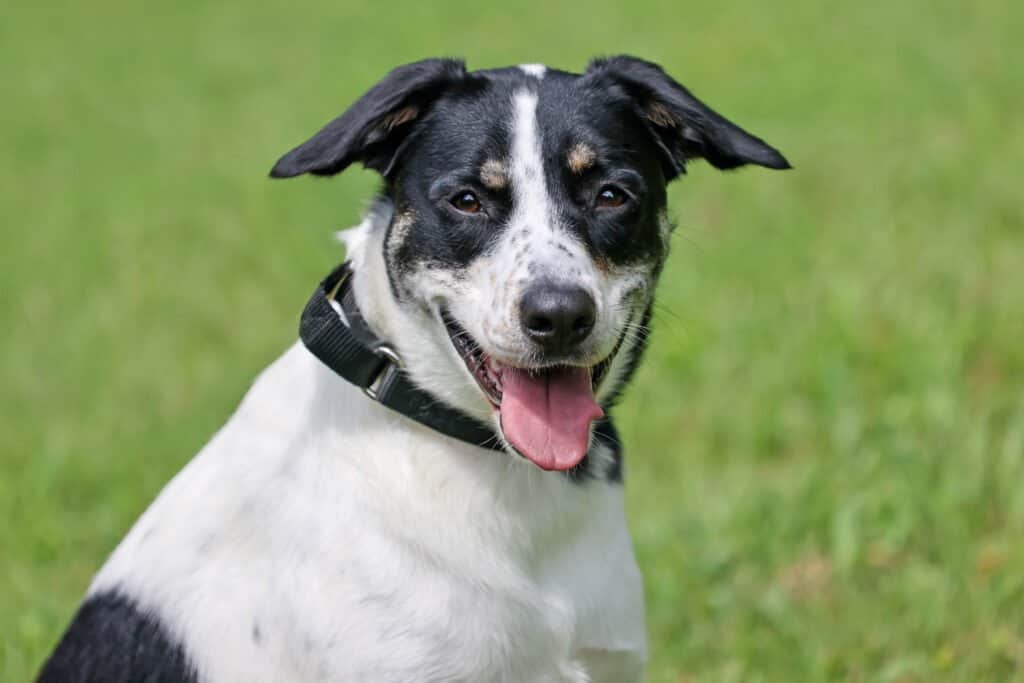
Maisy, pictured here, isn’t psychic. She’s simply attuned to changes happening in the household and daily routine.
©
Maisy’s clinginess most likely reflects the upheaval of a month full of travel and shifting routines, changes she felt before I had even named them myself. She’s not warning me of doom. She’s telling me she needs a little more stability and reassurance.
And that dog who nosed at cancer? Same principle, extraordinary result. Sharp senses, aimed at something we couldn’t detect.
So the next time your dog does something uncanny, pause and pay attention. There’s usually a real explanation waiting underneath the mystery, and honestly, that’s even more amazing than magic. Your dog is quietly reading a world you can’t access, and pointing you toward what matters most.