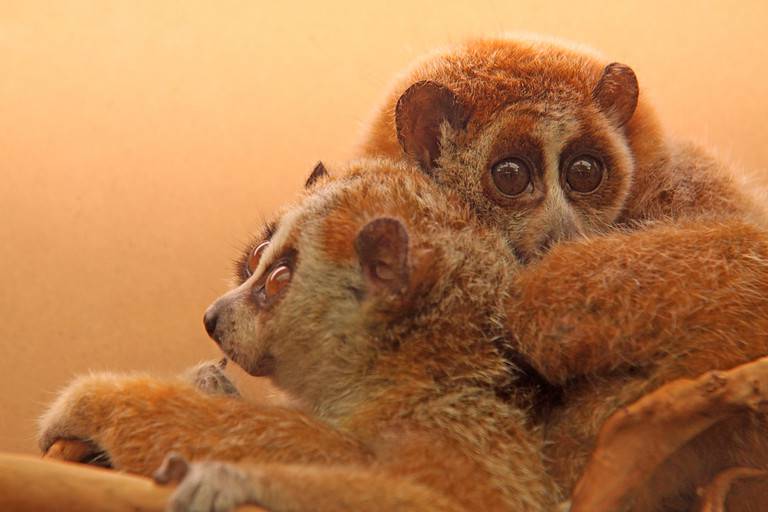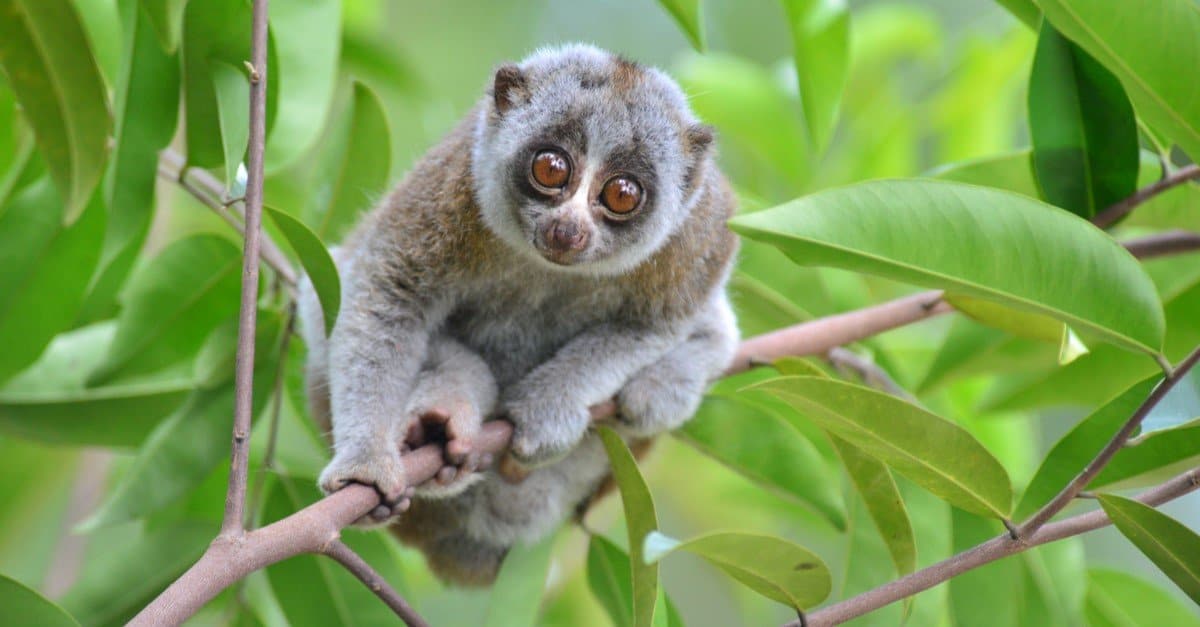

Slow Loris are adorable, wide-eyed primates. Read this article to learn about these fascinating little monkeys.
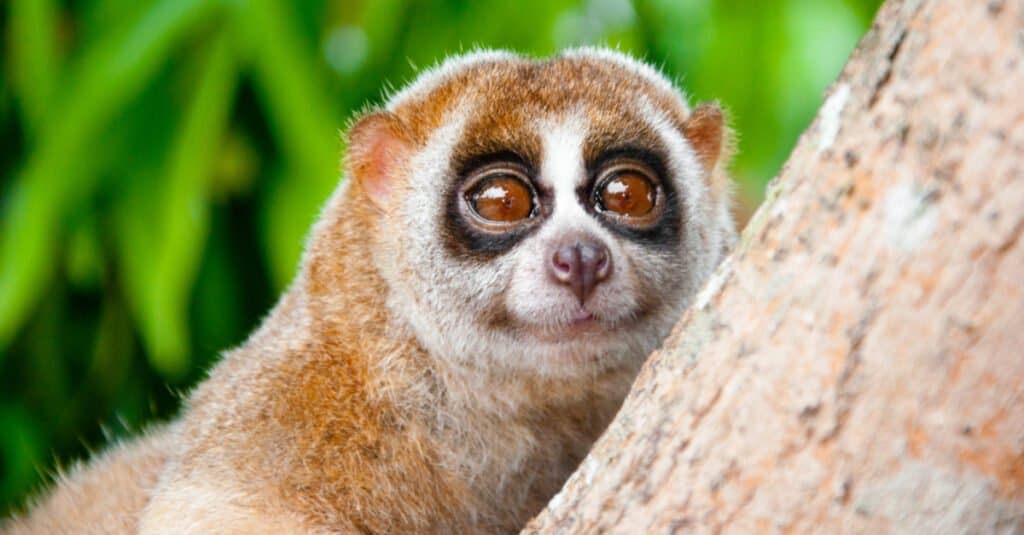
Slow Lorises are cute primates, but they are deadly!
©kunanon/Shutterstock.com
What Is a Slow Loris?
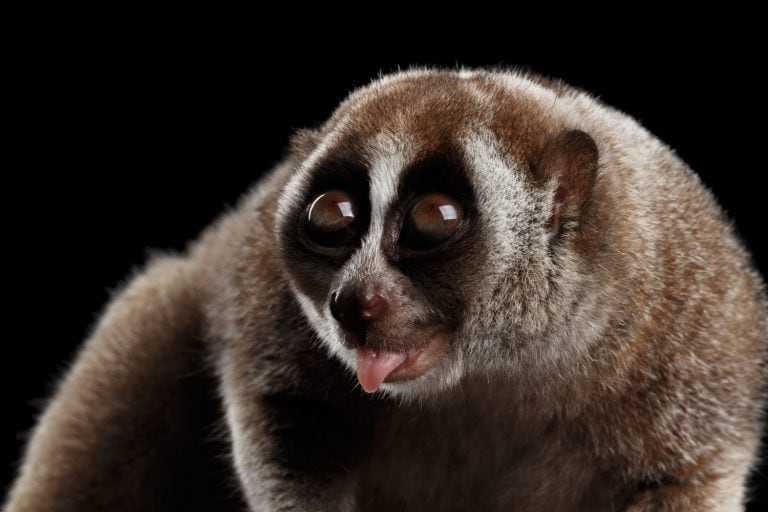
A slow loris is a small primate that comes to life during the night. Additionally, they have large eyes that assist them in finding food. In addition, they travel by slowly moving along the underside of the branches using a hand-over-hand movement.
Slow Loris Lifespan
In the wild, slow lorises can live for 20 years. In captivity, they can live for an additional 5 years. However, it is important to note that slow lorises are not meant to be kept as pets. The captivity life expectancy is likely higher because of the efforts of wildlife conservancies and zoos in an attempt to help prevent these neat primates from going extinct. Additionally, slow lorises can grow to be 13-15 inches in length.
Habitat
Slow Lorises can be found in environments rich in trees, bamboo, and trees abundant in sap and gummy substances crucial to their well-being. Additionally, they prefer environments where they are embraced by leaves that can provide moisture if they become thirsty. Mostly, slow lorises can be found within the rainforests of Southeast Asia and South Asia.
Additionally, two types of slow lorises reside in these two countries. The first species of slow lorises are the greater slow lorises( Nycticebus coucang) and the Bengal slow loris(Nycticebus bengalensis).
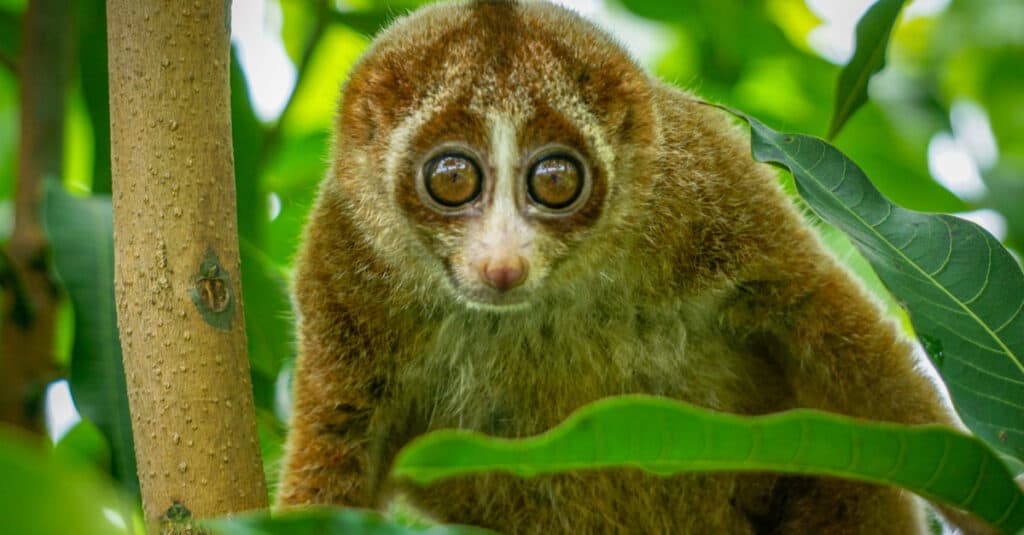
Slow Lorises can be found in environments rich in trees, bamboo, and trees abundant in sap and gummy substances crucial to their well-being.
©hkhtt hj/Shutterstock.com
What Does a Slow Loris Eat?
A slow loris has a very distinct and diverse diet. This is why humans can’t mimic the correct nutritional requirements that a slow loris requires. For example, on the forest floors, they will forage for fruit, plants, and bugs. Their diet consists of 35% sap, 31.7% of their food intake consists of plants with nectar, and their intake of fruits comes in at 22.5%.
Socialization
Slow lorises are mostly loners. However, you can rarely see them in pairs or with their kin. What’s more, is that they do not reside with other slow lorises, although they are known to live around where there are others of their kind. Think of their lifestyle as similar to living in a community of tiny homes. Additionally, they may live in a community but still choose a home of solitude that is their own.
Communication
Slow lorises do not communicate like many other wildlife. In fact, they use their urine as a way to speak to one another as well as to mark their territory. They also use low whistles to mate, as a danger alert system, and to speak to mother and child. Additionally, they will make hissing noises when they are trying to warn predators to back off. Female slow lorises use a high-pitched sound to call in a mate.
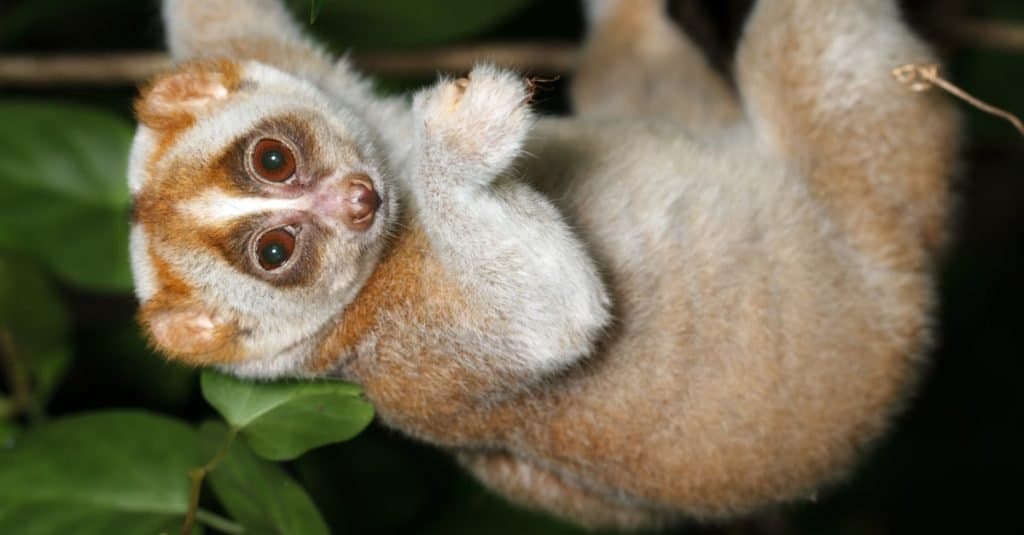
These small primates will make hissing noises when they are trying to warn predators to back off.
©Nachaliti/Shutterstock.com
Slow Loris Reproduction Habits
Slow lorises are known to have multiple mates and produce babies throughout the year. In addition, when a female slow loris reaches 17 to 21 months of age, they can start producing. A male slow loris is ready to give birth at 10 months of age.
Mating is very short and sweet for the slow loris, often only lasting 7 minutes at max. Additionally, the gestation period for a female slow loris lasts for 6 months. Following this period, one or two babies are born.
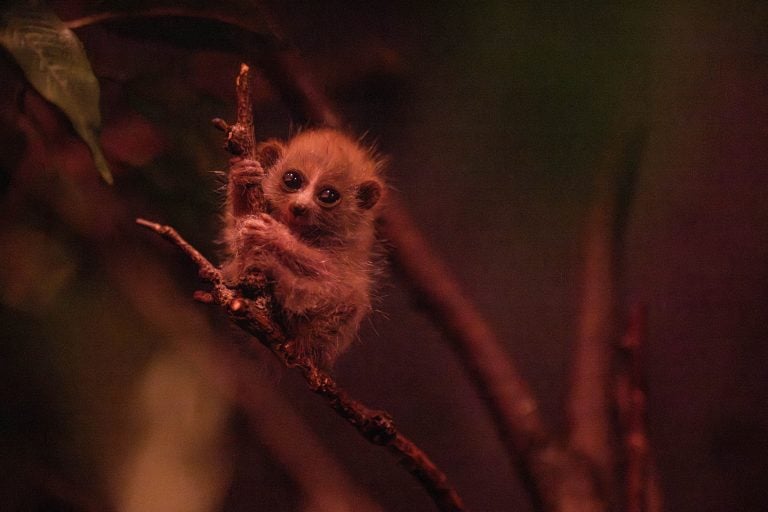
A slow loris is born with their eyes open. What’s more, they are already strong enough to latch onto branches as soon as they leave the womb.
Once a baby has been born, they remain with their mother until they are 7 weeks old. Additionally, their offspring do not separate from the mother except when she forages for food. When the mother goes foraging for food, she lick her offspring with venom to protect them from being abducted by prey.
6 Interesting Facts About the Slow Loris
1. Slow Lorises Have 2 Tongues
The first tongue is located at the upper region of their mouths. This tongue is designed to lap away at sap from trees, which provides essential vitamins. The second tongue is located at the lower region of their mouth, and it is used as a means to clean their teeth.
2. They Are a Venomous Primate
One of the fascinating facts about slow lorises is that they have a venomous gland near their elbow. When they are startled, they will lick their gland. This poisonous gland is awakened through their saliva, which rolls out on their tongue.
3. One Bite Is Lethal
As mentioned above, slow lorises produce a deadly toxin. This toxin that emanates from their gland to their teeth is potent enough that it can take down a human with just one bite. The toxin is strong enough that it will decay through flesh.
4. They Don’t Like to Be Tickled
While the videos may appear to be cute, what is actually happening is the slow loris is trying to tell the person tickling them to back off. If they keep going, it could be one deadly bite.
5. Their Eyes Are for Protection
Ever wonder why a slow loris has such big, sweet eyes? The answer is that their eyes are meant to make them look like a predator to protect them from being eaten by prey animals.
6. They Have Additional Blood Vessels
A slow loris can hold onto a branch for days! This is due to the additional blood vessels that allow oxygen to flow to the muscles so that they do not exhaust themselves.
Slow Lorises May Be in Danger
While you may have seen cute videos of slow loris being kept as pets, and even “tickled,” the matter is not so funny. These little guys are not a good idea for a pet as humans cannot provide the adequate food and nutrition that they need for optimal wellness. Unfortunately, most of those kept as pets die early due to loneliness, pain, and disease.
The reason they hold their arms up in the air in those misunderstood videos doesn’t have to do with enjoying being tickled at all. Plus, their arms rise above their head because they are tapping into a venomous gland beneath their armpits, which is used to defend themselves from enemies.
Additionally, they are taken away from their mothers early in life by poachers who try to sell them in the black market. Once they have been captured, they are then out through excruciatingly painful procedures to remove their teeth, which contain venom.
They are also captured to be used in countries such as Cambodia to help with sexually transmitted diseases, tattered bones, and stomach issues. However, there is a lack of science to back up the claims.
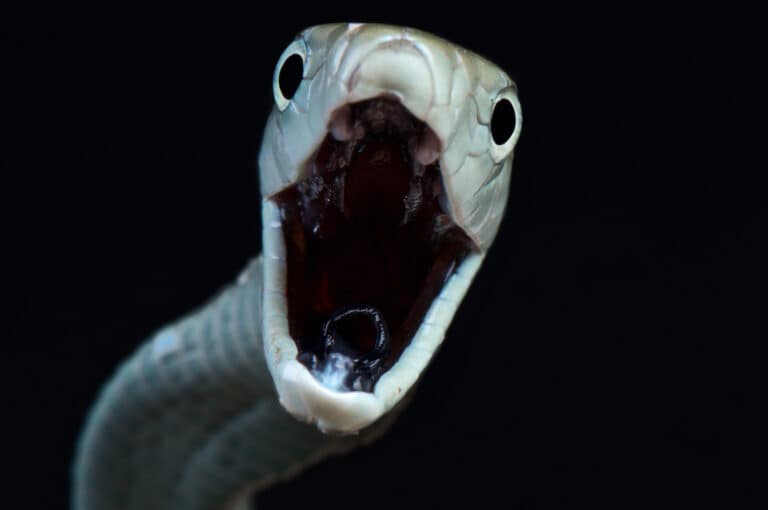
Not only do they have to be wary of being captured by humans, but they also must be able to guard themselves against predators such as hawks, eagles, and pythons.
The slow loris may be one of the cutest nocturnal primates, however, they are also one of the deadliest.
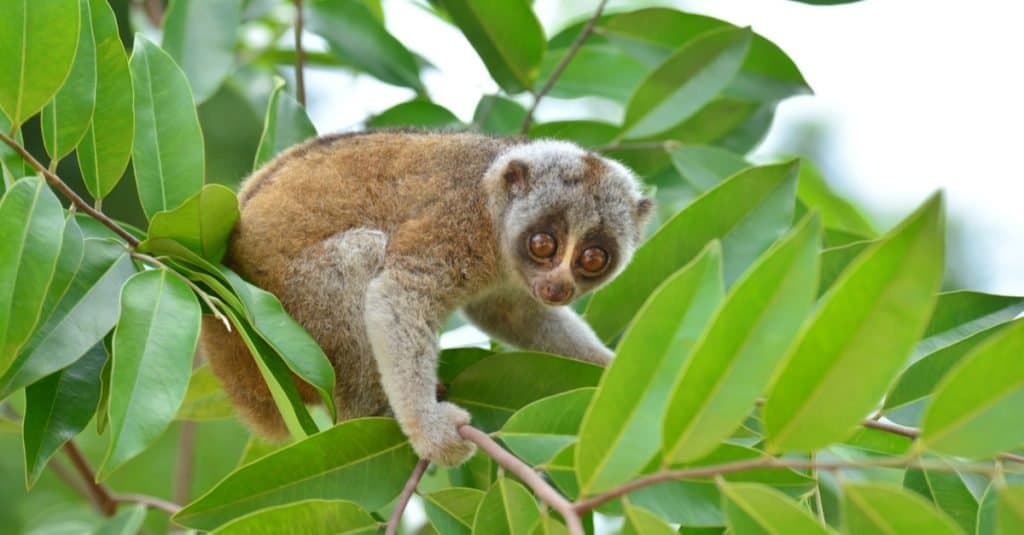
Slow lorises must be wary of being captured by humans. They must also guard themselves from predators such as hawks, eagles, and pythons.
©Conservationist/Shutterstock.com