
Quick Take
- That viral video of a slow loris raising its arms looks adorable, but appearances are deceiving. The animal is actually doing something far more sinister. See the sinister truth →
- Slow lorises have a body part designed for grooming, yet they've repurposed it into one of the animal kingdom's most effective weapons. Discover the repurposed weapon →
- A slow loris mother has a strange way of protecting her babies, and the method involves her own venom. Learn how mothers use venom →
- Those cute slow loris pet videos hide a much darker reality that most viewers never suspect. Uncover the darker reality →
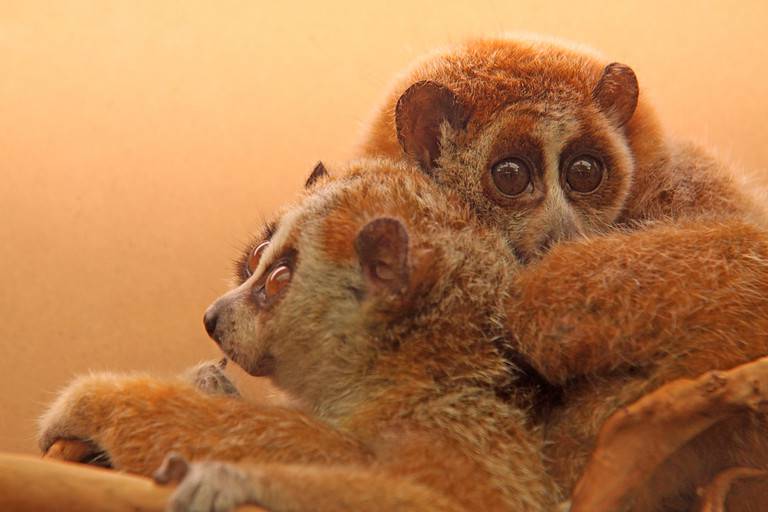
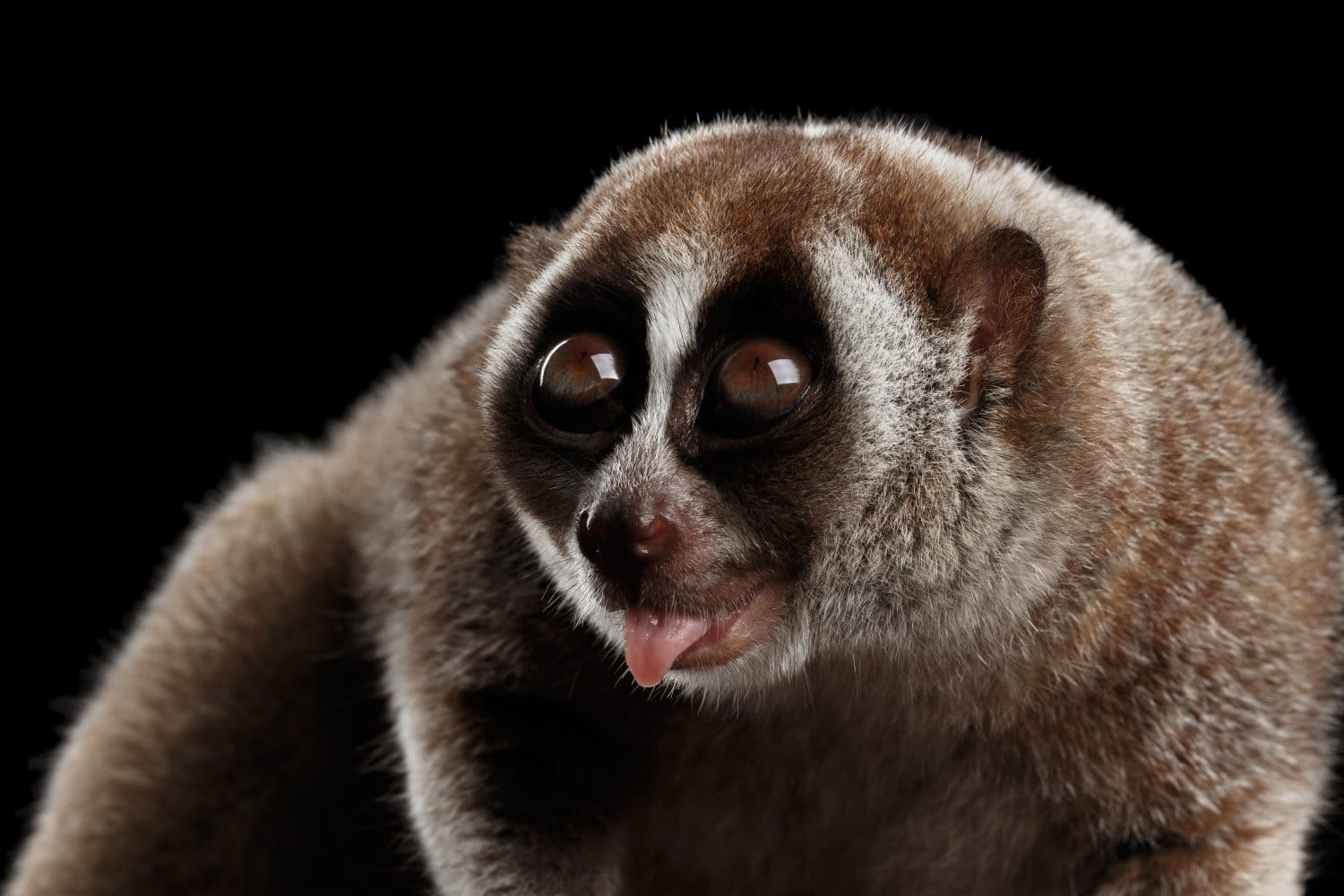
With their enormous eyes, fluffy fur, and tiny hands, slow lorises look a lot like living stuffed animals. Viral videos of them eating snacks or holding tiny umbrellas have only reinforced their reputation as adorable exotic pets.
However, the reality is much darker. Slow lorises are actually the world’s only venomous primates, equipped with a truly unusual defensive system. They use a two-step process to manufacture their own venom, delivering a bite that causes excruciating pain and extremely slow-healing wounds.
The World’s Strangest Venom Recipe
Unlike snakes or spiders, a slow loris doesn’t store ready-to-use venom in its mouth. Instead, it starts with a harmless oil secretion produced by glands located near its elbows on the inner side of its arms. The loris activates the venom by raising its arms above its head and licking these glands. This mixes the oil with its saliva, creating a potent toxic weapon.
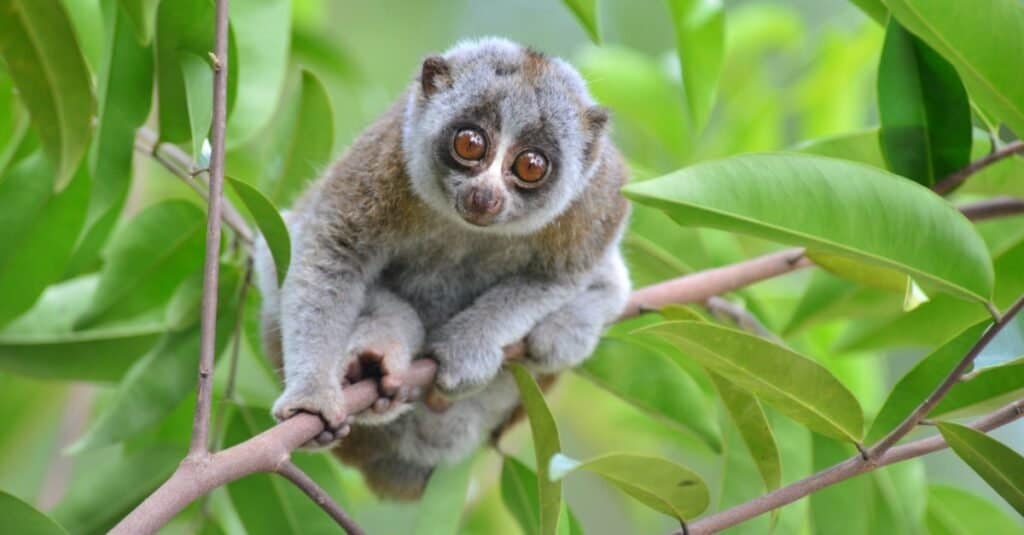
Slow lorises are viciously territorial and use their venomous bite to defend their area.
©Conservationist/Shutterstock.com
Although this defensive posture may appear as if the loris is covering its face, it is actually preparing to defend itself.
A Toothcomb Turned Into a Weapon
Once the venom is activated, the slow loris delivers it using a specialized set of lower front teeth called a toothcomb. While the toothcomb is typically used for grooming and feeding, it also functions as an effective venom delivery system. The tightly packed teeth channel the venom directly into bite wounds. The bite causes severe tissue damage and injuries that heal very slowly and are very painful. This makes it a powerful defense against predators.
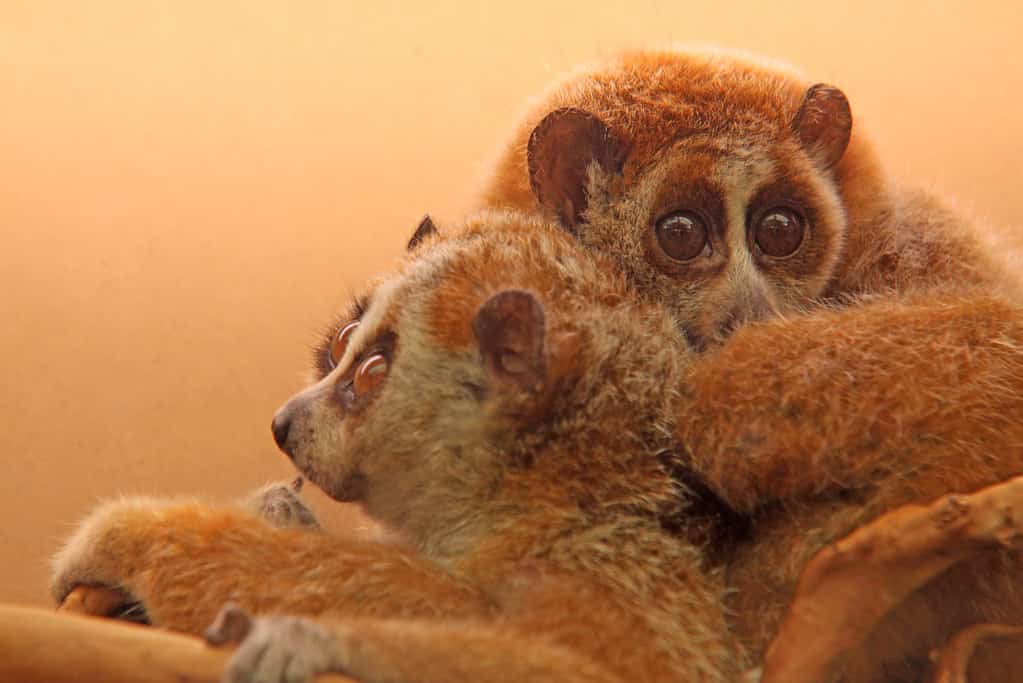
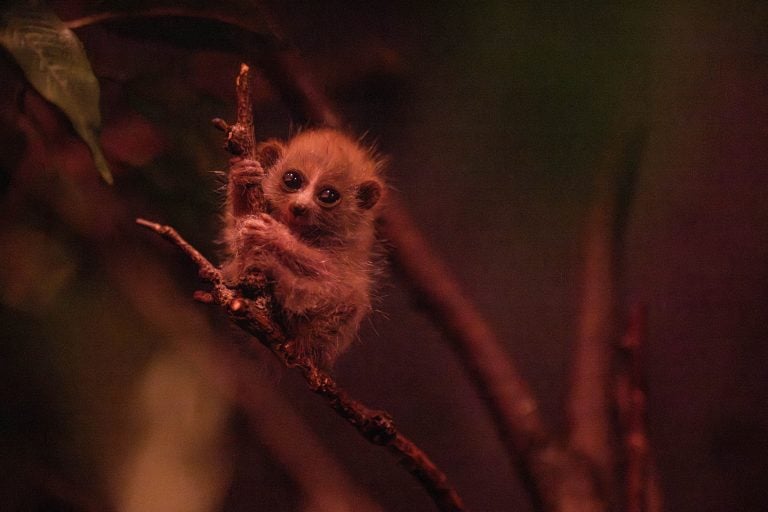
Slow lorises are nocturnal animals.
©inzyx/iStock / Getty Images Plus via Getty Images
However, slow lorises don’t save their venom just for predators. They frequently bite rivals in fierce battles over territory, food, or mates, leaving behind severe, lasting injuries. Mother lorises even use venom to protect their babies. Before leaving her infant to forage, a mother licks her arm glands and grooms venom directly into her baby’s fur, creating a toxic shield that helps protect the defenseless youngster from predators.
Why Slow Lorises Should Never Be Pets
The venom that protects slow lorises in the wild is why they should never be kept as pets.
Their popularity on social media has fueled demand in the illegal wildlife trade, where many animals suffer extreme stress and have their teeth removed by poachers to make them seem “safe.” In addition to the cruelty involved, removing a slow loris from the wild eliminates the complex behaviors that make this primate unique.
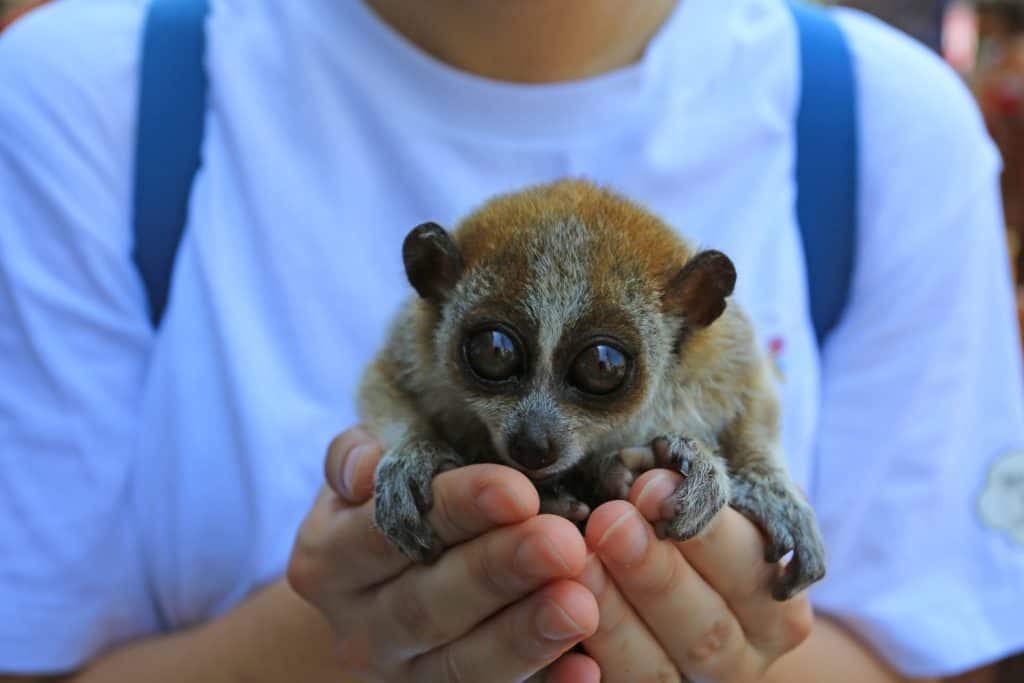
Slow loris venom can cause extreme pain, necrosis, and anaphylactic shock.
©Lewis Tse/Shutterstock.com
Don’t let that cute face fool you. Behind the wide eyes and teddy bear appearance is an animal unlike any other—the world’s only venomous primate, armed with a bite that is as fascinating as it is fearsome.