
Quick Take
- A conservation cruise wasn't supposed to be a research expedition, yet an accidental whale spout changed everything and produced footage no one had ever captured before. Watch the accidental discovery →
- This whale is non-migratory and stays in one place, yet it has somehow taken until 2026 to film it doing something every whale must do to survive. See the first feeding footage →
- The only dedicated research program studying this species launched over a decade ago and has revealed a global secret about Omura's whale that would have derailed conservation efforts if missed. Explore the Madagascar project →
Whales have inhabited the Earth for roughly 50 million years, but the discovery of Omura’s whale (Balaenoptera omurai) is still relatively new. This non-migratory species was first recognized in 2003, but living specimens weren’t formally recorded until 2015.
With a little more than a decade of research, there’s still much to learn about Omura’s whale. But footage recently published from a March 2026 sighting in Dampier Strait gave the world a closer look at this rare whale.
Studying Omura’s Whale Poses Unique Challenges
Omura’s whale is rarely seen and is often mistaken for Bryde’s whale. From afar, both of these species look similar. Up close, Omura’s whale has defining features that set it apart from any other whale on Earth.
At 33 to 38 feet long and roughly 13 to 30 metric tons fully grown, this baleen species is one of the smallest. The whale’s coloring keeps it well hidden beneath the surface. The top of its body is gray, while the underbelly is white, mimicking the sea’s surface and depths, respectively.
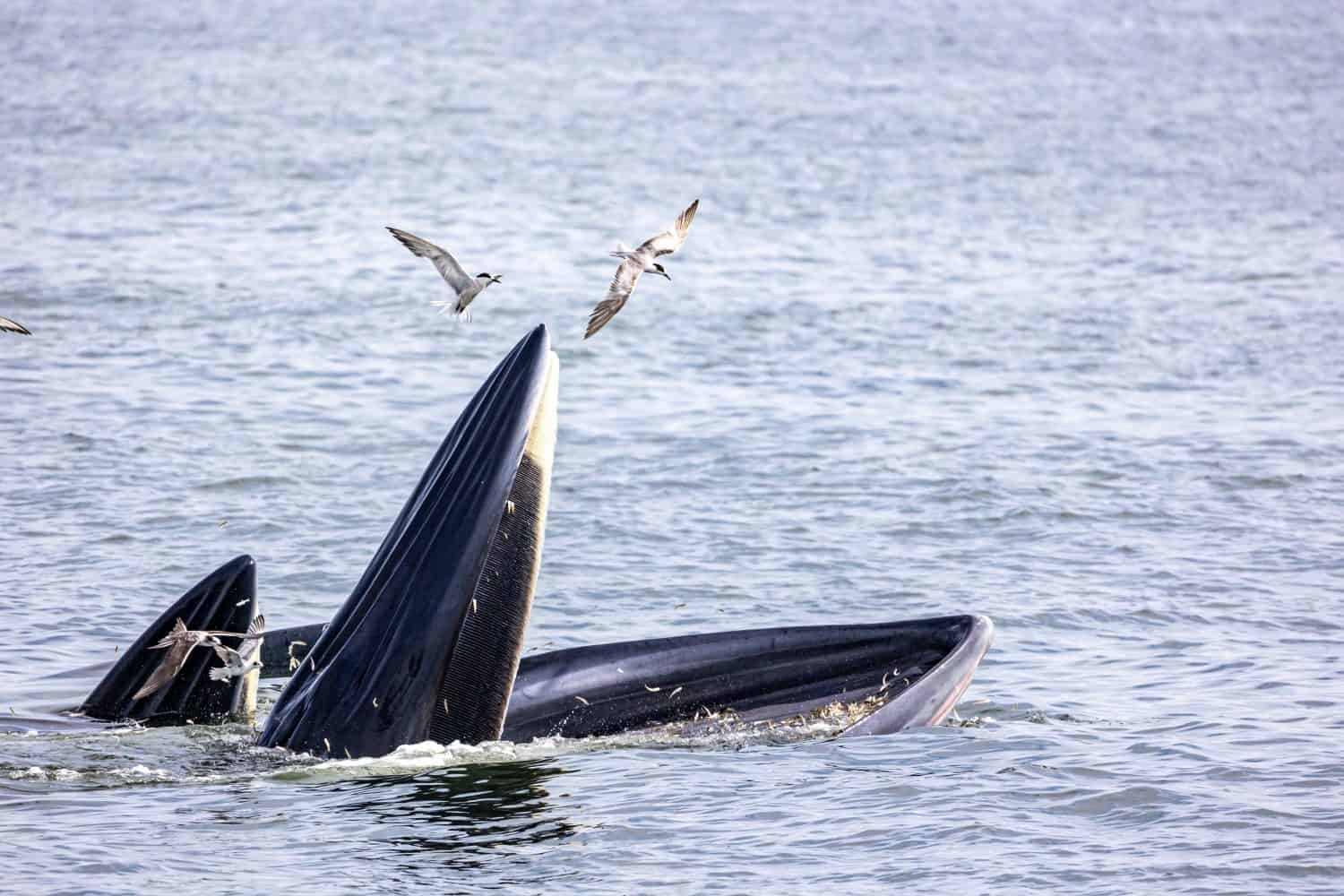
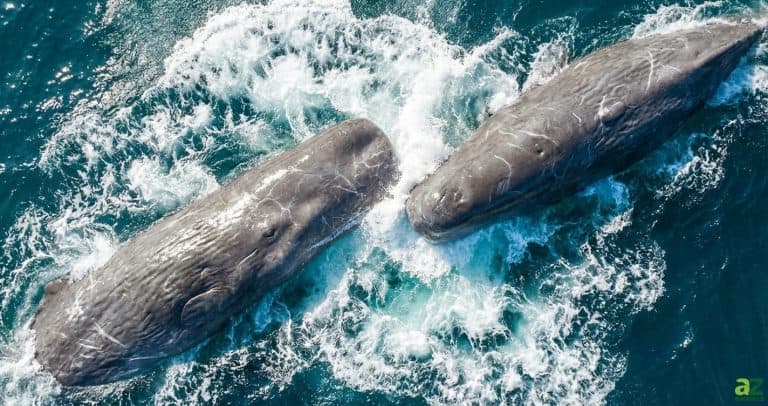
Omura’s whales are often mistaken for Bryde’s whales, which look identical except for their head ridges.
©FOTO JOURNEY/Shutterstock.com
The ridge on the top of its head is what led many sightings to be mistaken for Bryde’s whale. However, Omura’s have only a single ridge, whereas Bryde’s have more than one. They travel alone or in pairs, and their elusive nature makes them even more challenging to locate. But this contradicts their lifestyle, which typically keeps them in one place rather than migrating as other baleen whales do.
Omura’s whales also prefer warm, tropical waters. They’ve been observed in the Indo-Pacific, western Pacific, and east Indian oceans. The individual observed off the coast of the remote island of Mansaur wasn’t unusual, but it was significant.
Newly Released Footage Shows an Omura’s Whale Feeding
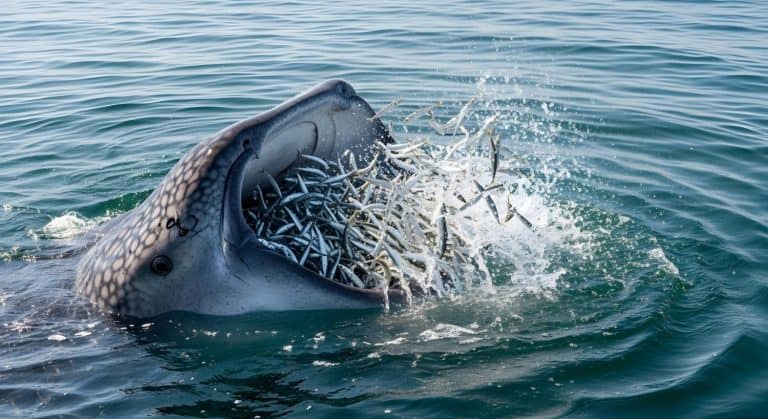
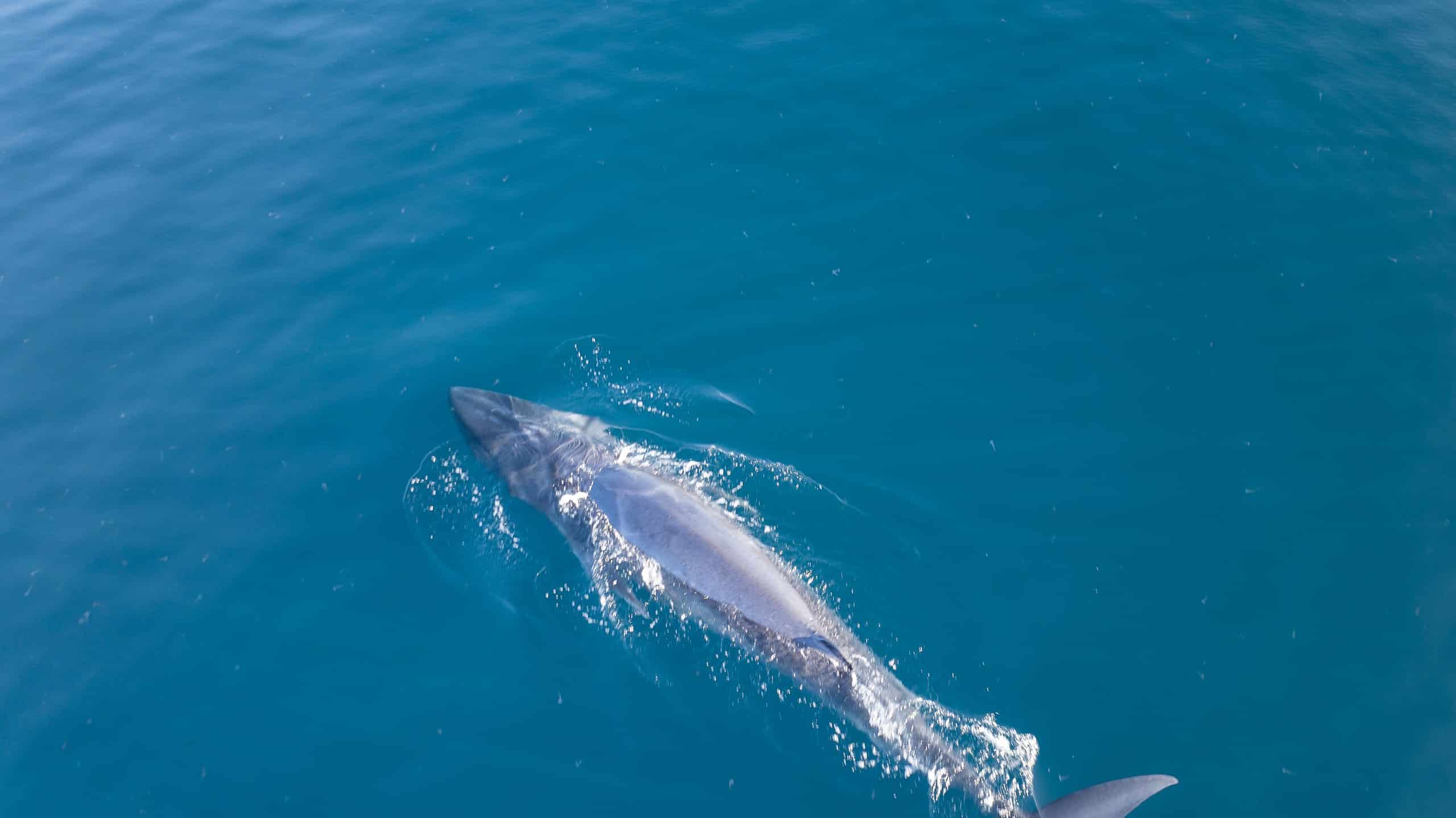
The drone footage was captured by Dr. Mark Erdmann, Executive Director of the shark conservation initiative ReShark and Vice President of Conservation International’s Asia-Pacific marine programs. During a conservation cruise in partnership with Silolona Sojourns, the ship’s crew spotted a whale spout. Eager to get a closer glimpse, Dr. Erdmann launched his drone. What he captured was something the world had never seen before.
Omura’s whales are lunge feeders, meaning they actively launch themselves at schools of fish and krill. This is a dramatic scene as the whale lunges forward, sometimes turning sideways, as its enormous mouth opens. Pleats along the whale’s throat allow it to expand, enabling it to consume as much fish and krill as possible.
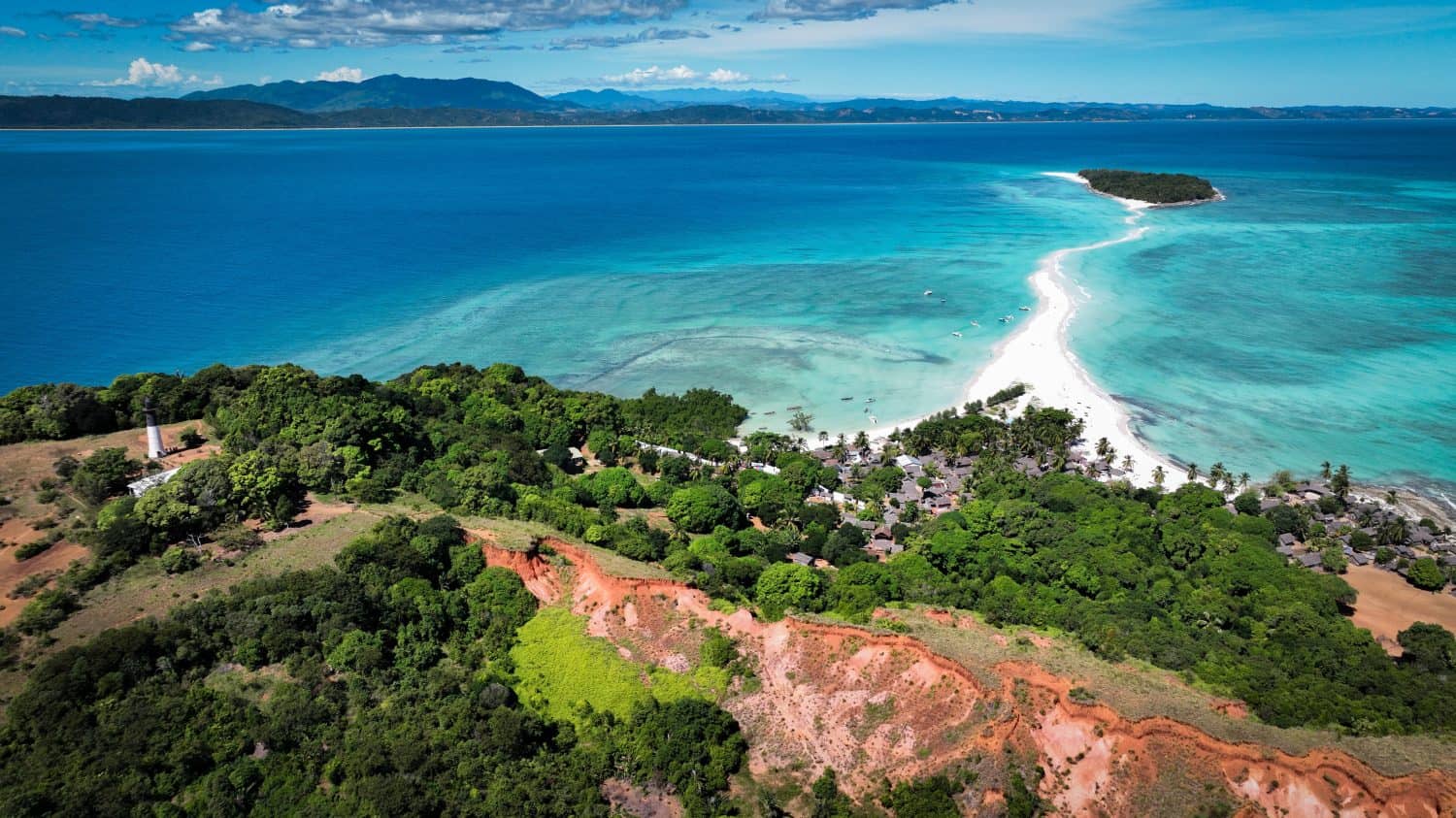
The largest known pod of Omura’s whales was found just off the coast of Madagascar.
©Dave Primov/Shutterstock.com
The drone footage shows this majestic whale sluicing through the water before feeding. As it does, it sends a wake out on either side of its enormous body. Its size and power are obvious, even from dozens of feet above the whale. The excess water from the Omura whale’s lunge can also be seen filtering out through its gills.
While not as large as a humpback, Omura’s whale still has an imposing presence. This is the first known footage of the species feeding, which is a significant milestone in research.
The Last Live Study on Omura’s Whales Took Place In 2013
Also known as the Dwarf Fin, the last major live field study began in 2013. This study, led by Dr. Salvatore Cerchio, followed a confirmed pod of Omura’s whales off the coast of Madagascar. This was the first population ever discovered and remains one of the most significant sightings of the species.
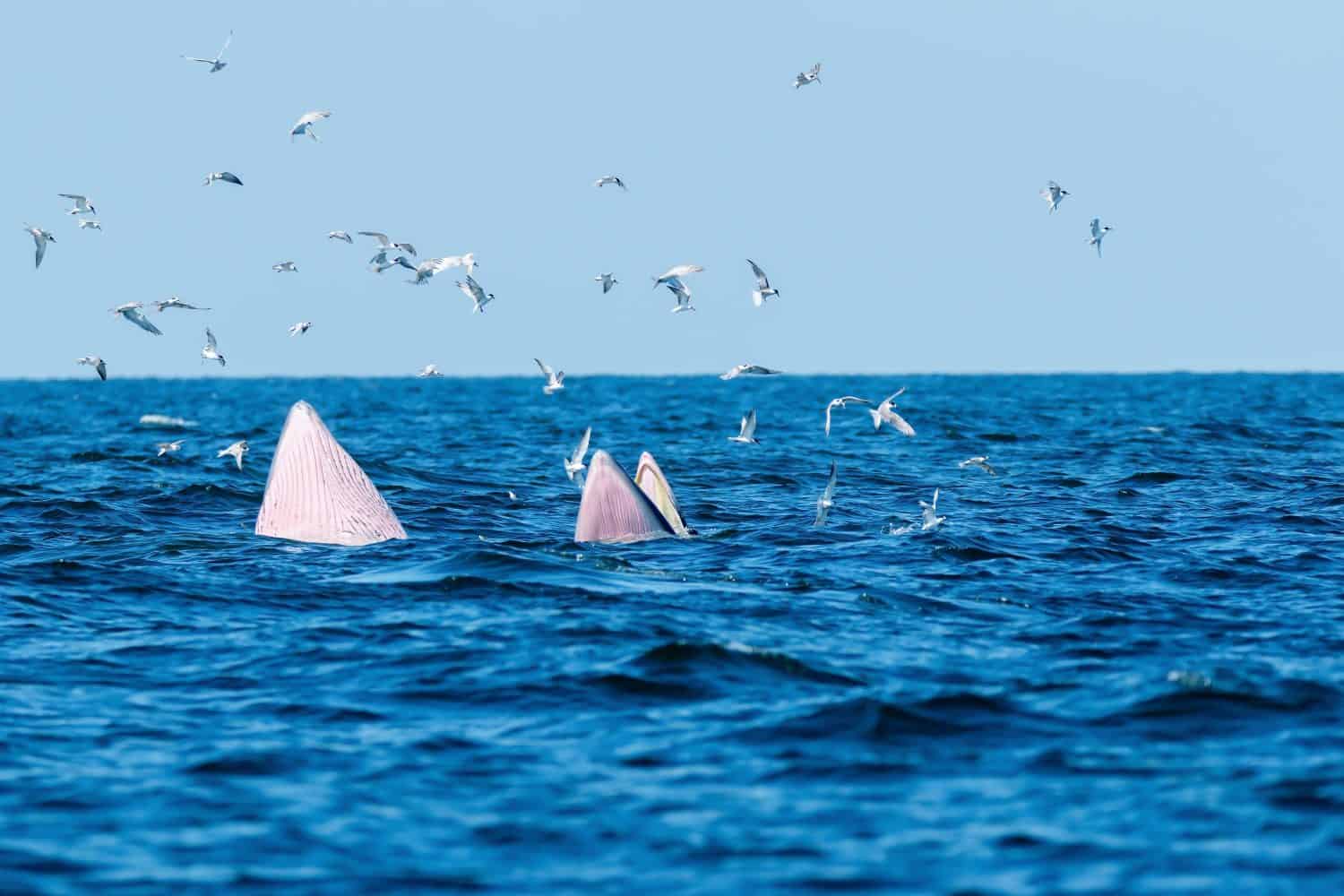
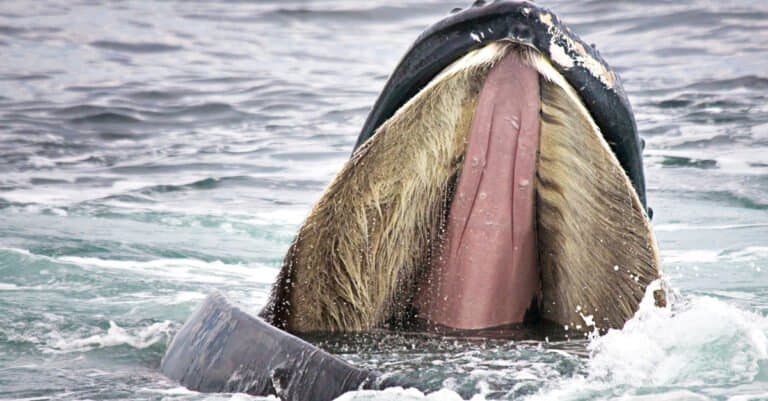
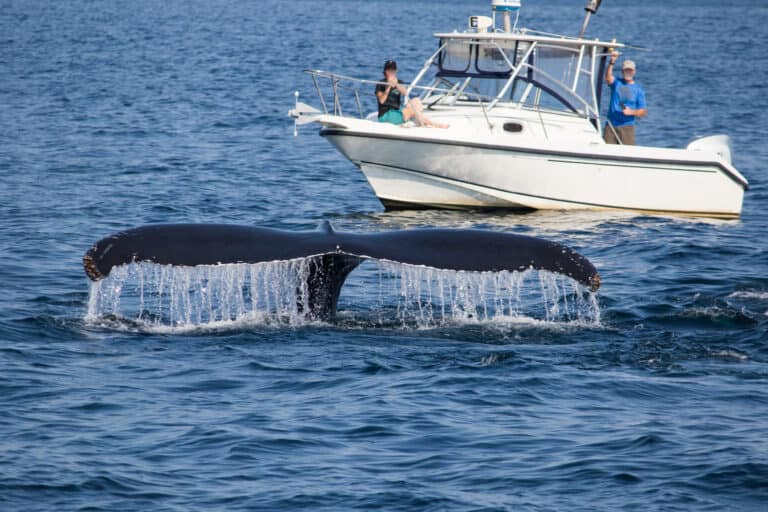
Baleen whales are lunge feeders and use their baleen to capture krill while filtering out water.
©PK289/Shutterstock.com
Now, the study is referred to as the Omura’s Whale Project. It’s the only conservation effort dedicated solely to researching the Omura’s whale, specifically those found off the northwest island of Nosy Be. The project is ongoing to this day, using several different methods to observe and record the species:
- Photographic identification to ID individual whales
- Skin biopsies to study feeding habits and overall health
- Bioacoustics, which measures the whales’ vocalizations
- Feces collection to study the whales’ diets
- Tagging to track whales through satellite telemetry
- Drones to capture footage, such as the most recent near Mansaur
Research and footage help biologists learn about the Omura whales’ feeding, lifestyle, and breeding habits. In 2019, it was confirmed that the species is found globally and is not restricted to one ocean region. Without dedicated observation, this fact would remain unknown, limiting future conservation efforts. Dr. Erdmann’s recent footage adds to our growing understanding of the incredible species.