
Quick Take
- A $100 collar is exposing a massive flaw in how we currently measure wildfire air quality, and the gap turns out to be far bigger than anyone expected. See how the collar works →
- Birds, bees, and deer don't experience wildfire smoke the way researchers assumed, a difference that changes how conservation might work. See what animals revealed →
- The nearest air quality station may be giving wildlife managers dangerously misleading data about what animals are actually breathing. Discover the data gaps →
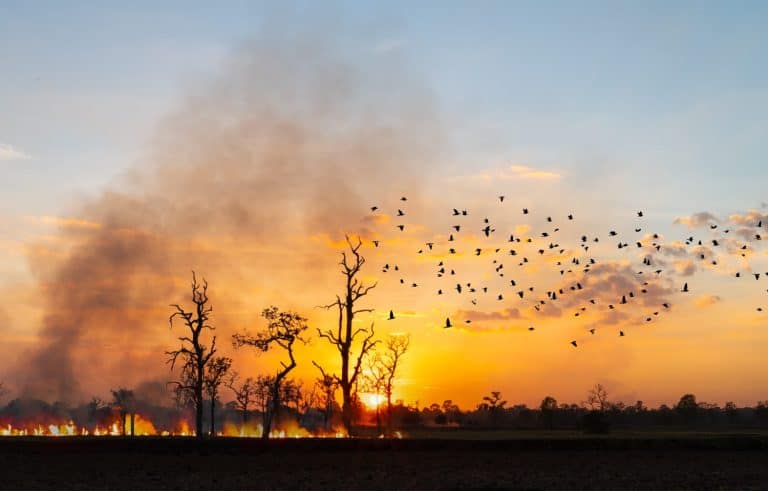
In 2025 alone, 77,850 wildland fires were recorded in the United States. This was an increase of roughly 15% from the previous year, when the U.S. saw 67,897 active wildfires. The devastation caused by these fires is insurmountable, with irreversible damage done to our environment, homes, and woodlands.
But while fires rage uncontrolled, wildlife suffers the most. Evacuations save the lives of many people living in affected areas, but animals are not as lucky. Researchers at Colorado State University wanted to determine how much wildfires affect species that are often caught in the crossfire. Their new device—known as the Smoke Logger—reveals just how much danger they’re in and how wildfire smoke affects our native species.
How Does the Smoke Logger Collar Work?
The Smoke Logger was designed by CSU postdoctoral researcher Adam Parlin. Parlin designed the collar while conducting research in the Department of Fish, Wildlife, and Conservation Biology, which raised the natural question of how to track the effects of wildfires on animals.
In an interview with Warner College of Natural Resources, Parlin said that little is known about the effects of wildfire smoke on animal behavior. He added that even less is known about its effects on animals that roam freely through wildfire-prone regions. “These units provide one avenue to better understand the consequences from wildlife’s perspective – such as identifying refugia during smoke events – that can provide actionable insights for conservation and management,” Parlin explained.

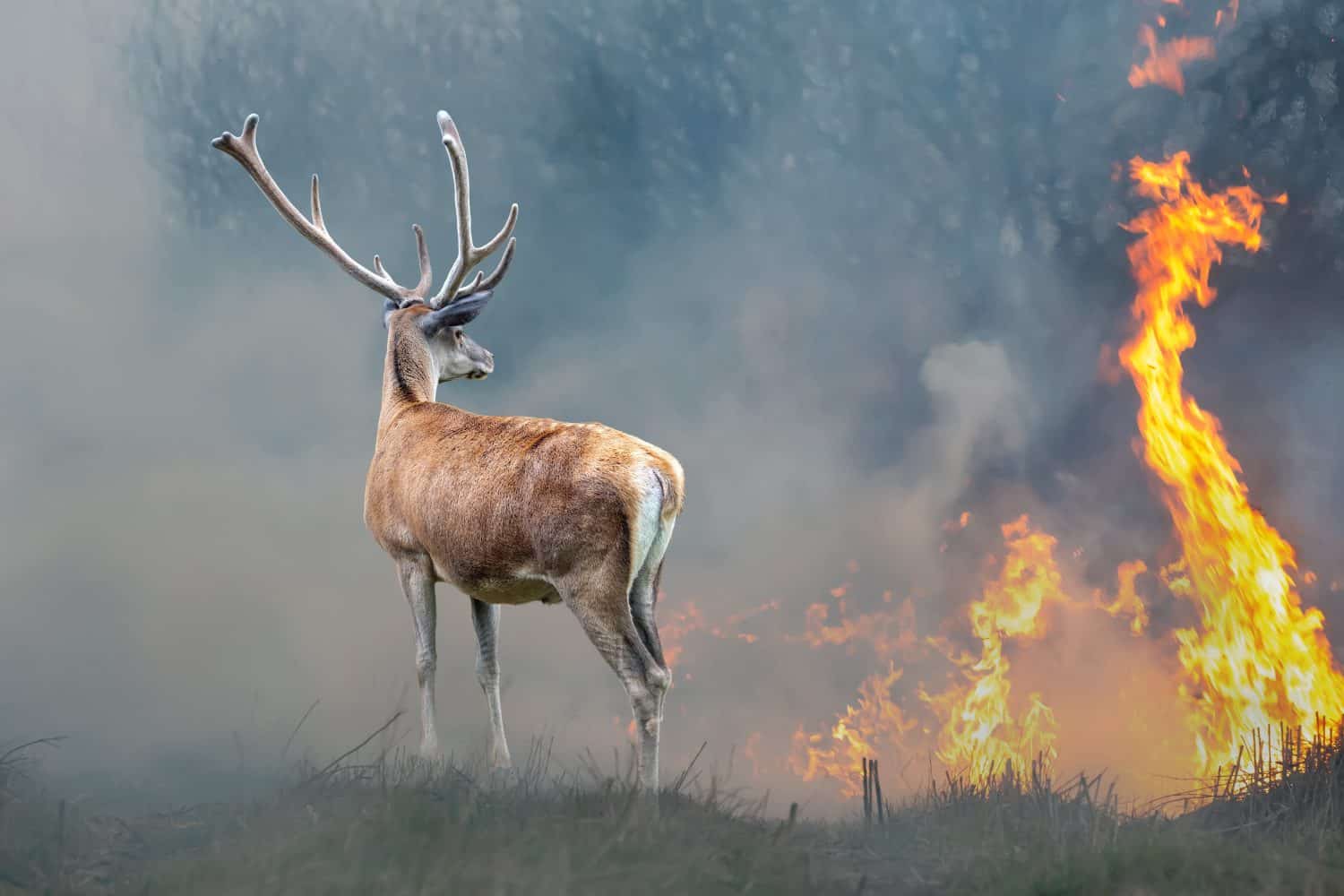
Mule deer are the first to test out the Smoke Logger collars.
©Christopher M Hall/Shutterstock.com
The Smoke Logger is slated to change that. The solar-powered collar is equipped with commercial laser sensors that measure fine particulate matter (PM2.5). Every half hour, the device records the air quality and stores it on the local hard drive. This saves battery life, but also means researchers must physically retrieve the device to download its data.
The device—which is also cost-efficient at only $100 per unit for materials—is already proving its worth. The initial results showed that PM2.5 levels were either 10 times higher or 10 times lower than those at the nearest air quality station. This boots-on-the-ground method of recording fine particulate matter provides more accurate results and reveals crucial information about the health of the animals breathing it in.
How Dangerous Is Prolonged Exposure to PM2.5?
The danger of PM2.5 lies in its size. These particles are small enough to bypass the upper airway filters, easily making their way into the lungs. This is true for both humans and animals, and many symptoms of PM2.5 exposure overlap.
In humans, immediate symptoms include:
- Wheezing
- Coughing
- Shortness of breath or difficulty breathing
- Airway irritation and soreness
This also worsens underlying respiratory issues such as asthma and COPD. Prolonged exposure can degrade cardiovascular health, leading to increased risk of heart attacks and heart disease. Long-term exposure increases the risk of lung cancer, chronic bronchitis, and other respiratory diseases.
Scientists have even found that exposure to PM2.5 can cause neurological issues. Its systemic inflammation has been linked to Alzheimer’s disease, dementia, and Parkinson’s disease. This is sometimes visible in animals, and even insects such as bees have been disoriented by high levels of PM2.5.
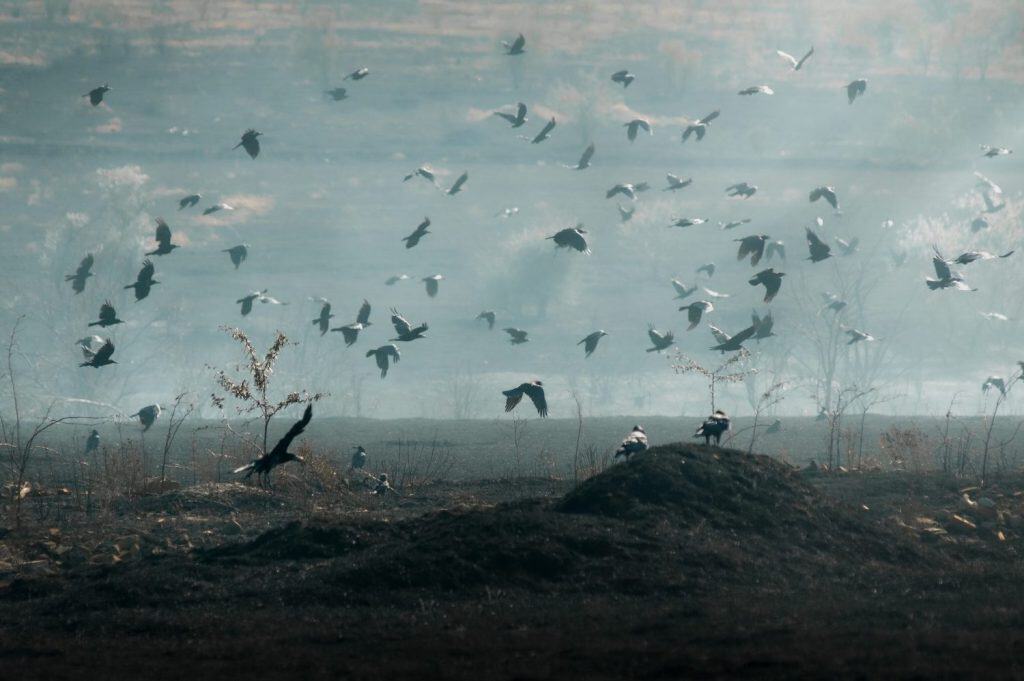
Wildfire smoke affects everything, from respiratory and cardiovascular health to navigation in many species.
©Photobox.ks/Shutterstock.com
Birds are especially sensitive to particulate matter and are often among the first to suffer from its effects. They become easily disoriented and show signs of fatigue and low stamina, making it harder for them to fly and find their nests. On the ground, mammals face almost the same symptoms as humans, with the first being severe respiratory distress.
Sadly, one study found that vet visits have increased in recent years due to PM2.5 exposure. Overall, veterinarians have seen a 0.7% rise in cases involving air quality issues. If nothing else, this proves how crucial the Smoke Logger is for future research and prevention.
The Smoke Logger Is Already Making a Difference
CSU researchers are not gatekeeping their device or its open-source programming. To further spread efforts, they’ve teamed up with researchers across the Western U.S. to track cougars and elk in addition to deer. The device design and initial results are also published in Methods in Ecology and Evolution and are freely accessible.
Smoke Logger collars won’t prevent wildfires, but they will change how we learn about their effects on wildlife.
©Volodymyr Burdiak/Shutterstock.com
The overarching goal is to combine PM2.5 measurements with GPS coordinates and health monitoring. By tracking an animal’s heart rate alongside particulate matter levels, researchers might better understand how smoke directly affects animals.
While the initial tests have only been conducted on mule deer, researchers are hopeful. Tracking animal health won’t stop wildfires, but it can help us understand their impact on wildlife. By extension, this data can be used to raise awareness and add to the fight to stop wildfires before they start. This data can also provide clues about the future and how certain species survive after such a disaster.