
Quick Take
- The world's largest fish survives on prey so small it seems almost impossible, and the anatomy behind it is stranger than you'd expect. Discover their filter-feeding anatomy →
- Whale sharks don't hunt, yet they time their migrations with surgical precision. Explore their migration strategy →
- Communities that once hunted these sharks now hold a rescue record that's hard to believe, and that record points to what conservation can actually look like. See the community rescue record →
August 30, 2026, is International Whale Shark Day, a time to celebrate these magnificent creatures. In honor of this day, it’s important to spread awareness around whale sharks and their unique traits, migration patterns, and conservation status. Let’s dive right in to learn more about these gentle giants of the sea.
Continue reading
Fun Facts About the Whale Shark
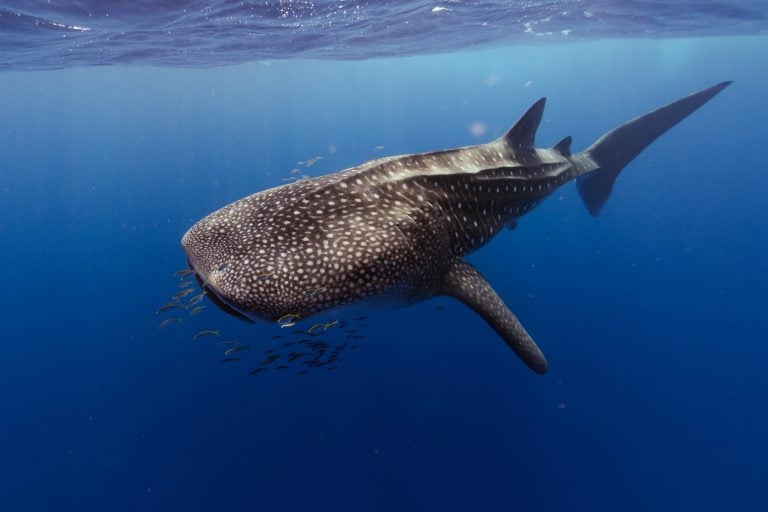
Did you know that the whale shark (Rhincodon typus) is the largest fish in the ocean? You might assume this makes them aggressive creatures, but they actually pose little to no threat to humans.
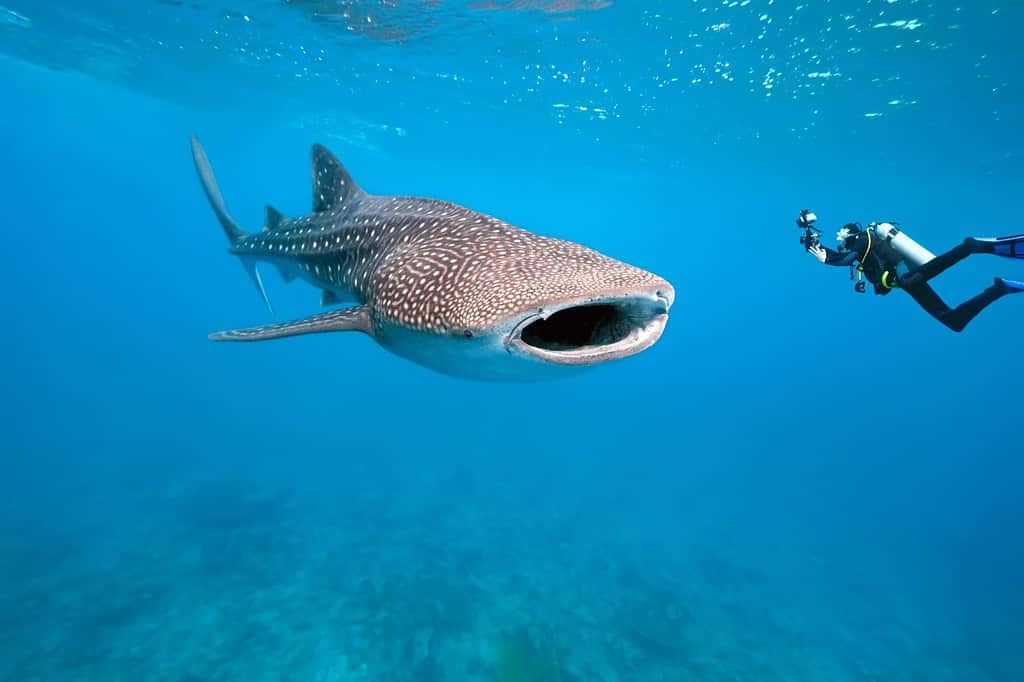
“Whale sharks are the biggest fish in the sea, but they are truly gentle giants and are my absolute favorite of the more than 500 shark species out there,” says Maggie Winchester-Weiler, senior manager of Ocean Conservancy’s Florida conservation program and a shark biologist. “They usually measure between 20 and 30 feet in length, which is about the size of a school bus and—like their name implies—comparable to and even bigger than some species of whale. The largest individual recorded was a staggering 60 feet in length, which is about the height of a six-story building!”
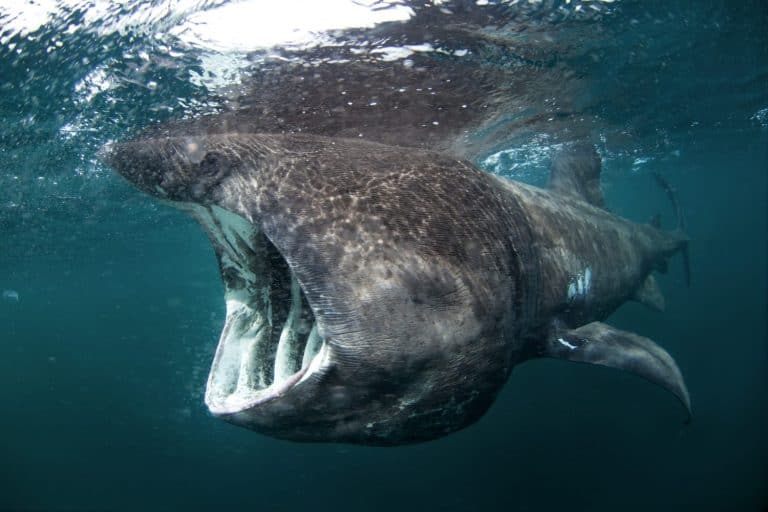
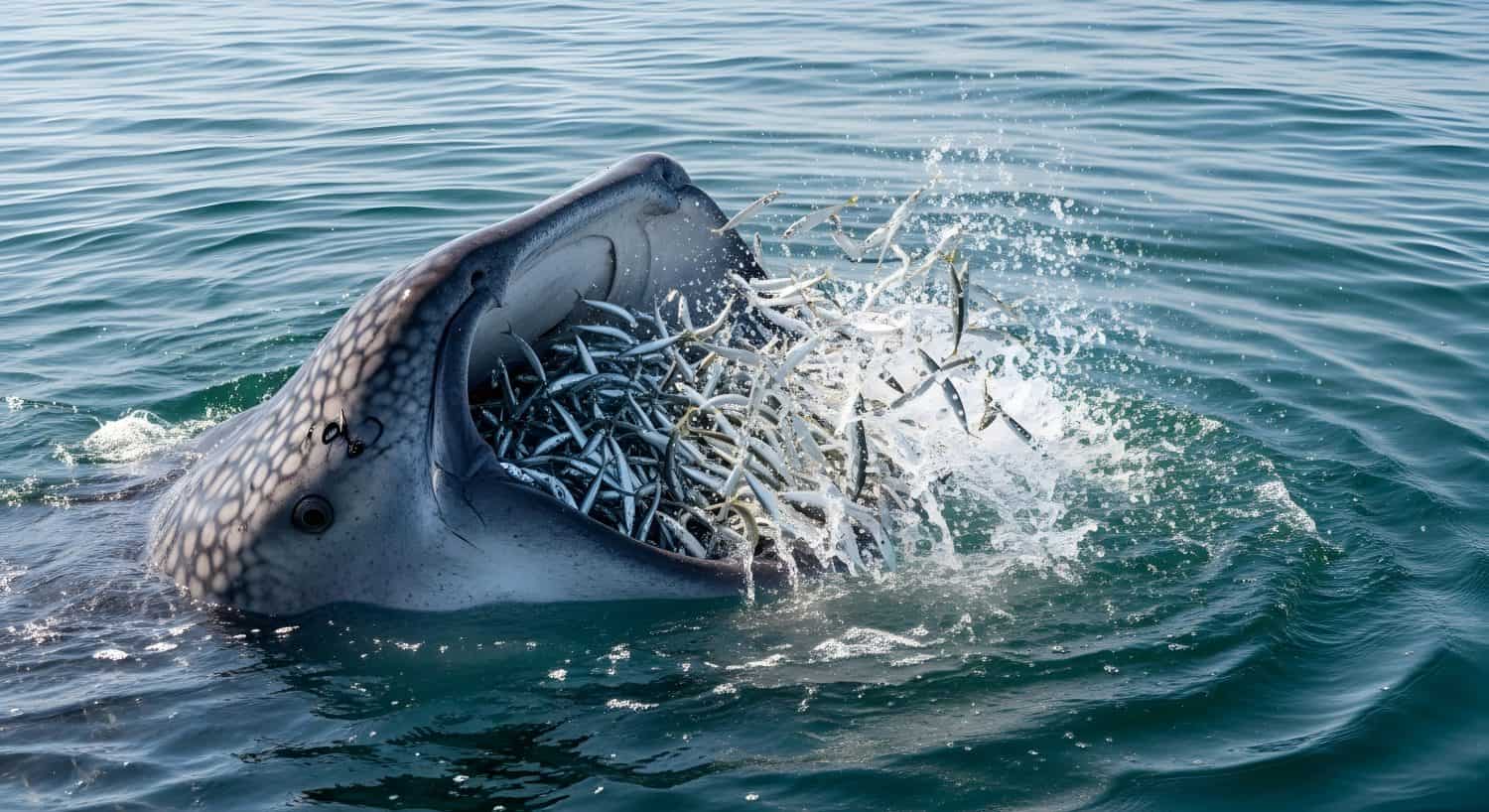
Did you know whale sharks eat by opening their massive mouths and straining small fish from the ocean?
©Krzysztof Odziomek/Shutterstock.com
Additionally, they can weigh up to 40 tons. As a result, you might think whale sharks mainly consume larger fish or mammals. However, this is not the case; whale sharks are filter feeders.
“Despite being the biggest fish in the sea, whale sharks eat some of the smallest prey,” says Winchester-Weiler. “They are filter-feeding sharks, meaning their mouths are wide and coated with tiny teeth that create a web-like filter to collect tiny plankton, krill, and other super-small organic matter. All the water they gulp down then gets filtered through their gills.”
While they have large mouths and even larger bodies, these sharks have small, narrow throats that make consuming larger fish difficult.
Migration Patterns of Whale Shark
Whale sharks inhabit the Atlantic, Indian, and Pacific Oceans, with a majority in the Indo-Pacific region. They typically migrate through tropical and subtropical waters.
“While they’re not hunters in the way we traditionally think of sharks, they are known to migrate long distances to regions where they can expect food to be available in abundance, such as during coral and fish breeding seasons,” Winchester-Weiler explains. “This is known as speculative hunting—meaning, they usually arrive right before the fish or coral spawning begins.”
Threats to Whale Sharks
Researchers estimate that whale sharks can live for up to 130 years in the wild. Unfortunately, these massive fish are listed as an endangered species on the IUCN Red List due to their declining population. In fact, global populations have declined by more than 50% since the 1980s. Scientists attribute this decline to human pressures, including microplastic pollution.
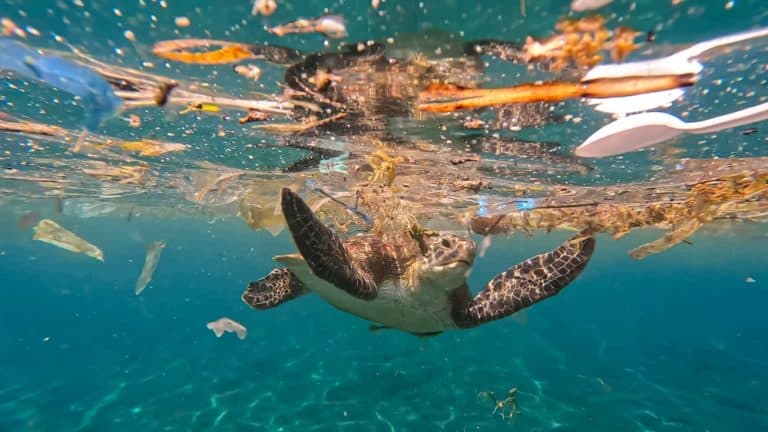
“Unfortunately, because they are filter feeders, they are especially vulnerable to ingesting microplastics and even larger plastic items,” says Winchester-Weiler. “In 2018, a whale shark washed up in the Philippines with no apparent injuries or illnesses, but 38 pieces of plastic were recovered from the digestive tract and gills of the shark.”

Plastic pollution doesn’t go away. It breaks down into microplastics, which can be incredibly dangerous for animals including whale sharks.
©iStock.com/pcess609
“Microplastics have also been found in whale shark poop,” Winchester-Weiler continues. “While there haven’t been studies on plastic ingestion in whale sharks, specifically, Ocean Conservancy scientists recently published a study about the impacts of plastic ingestion on other ocean species, and it’s remarkable how vulnerable they are. For example, consuming less than half a baseball’s worth of plastics kills one in two Loggerhead turtles.”
Microplastics can cause physical damage to the sharks’ bodies and release harmful chemicals. However, they are certainly not the only threat to whale sharks. According to the International Fund for Animal Welfare (IFAW), these fish specifically face manmade threats like finning, bycatch, vessel strikes, tourism, and climate change. According to IFAW, warming waters in particular can trigger whale sharks to migrate to cooler areas and may increase human-shark interactions.
Despite being the biggest fish in the sea, whale sharks eat some of the smallest prey.
Maggie Winchester-Weiler, senior manager of Ocean Conservancy’s Florida conservation program and shark biologist
Whale Shark Conservation
There are many shark conservation efforts, ranging from ecotourism to community support. In fact, organizations like the Marine Megafauna Foundation are actively exploring ways to help the whale shark population recover. By donating to such organizations, you can help fund ongoing conservation strategies to protect these gentle giants.
Additionally, many local fishing communities have started protecting whale sharks rather than actively hunting them. In fact, as of last year, the Wildlife Trust of India (WTI), Gujarat’s fishing communities, and the Gujarat Forest Department have rescued and released 987 whale sharks since 2002, according to IFAW.