
Quick Take
- Humpback whales open their mouths wide all the time, but scientists only just realized one version of it has nothing to do with eating. See what gaping is →
- Researchers built an entire scientific study on footage shot by tourists, and their findings challenge what we thought we knew about whale behavior. Explore the tourist footage study →
- Scientists have four competing theories for why whales gape, and the most persuasive one has nothing to do with hunger or health. See all four theories →
- A whale spinning on its pectoral fins with its mouth wide open gave researchers a major clue, though the mystery still isn't solved. Discover the spinning whale clue →
Picture this. You’re on a whale watching trip in an exotic locale, when a giant humpback whale swims up next to the boat. It does all the things you hope it will do. It rolls, it jumps, it even mugs. Cameras flash, videos record. Everyone on board is thrilled.
But then the whale does something really unexpected. It opens its mouth wide and then…just floats there. Thanks to social media, the footage goes viral and eventually catches the attention of whale researchers.
Scientists call the behavior ‘gaping,’ but nobody is quite sure why humpback whales do it.
What Is ‘Gaping?’
Humpback whales often open their mouths wide, but it is usually when they’re catching their favorite dinner of krill and plankton. They are baleen whales, a group that uses a technique called ‘lunge feeding’ to capture large amounts of water and then filter it through their baleen plates to extract the tiny food particles they love. It’s a well-known practice and one that’s well-documented by scientists around the world.
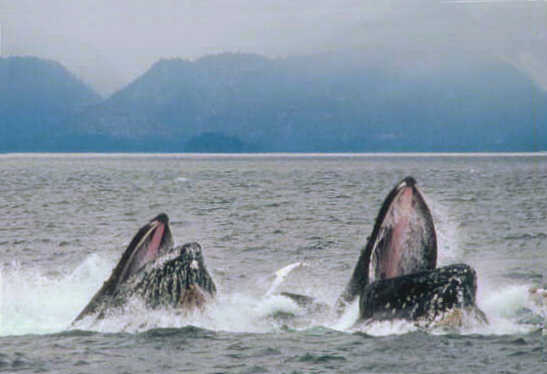
A pair of humpback whales lunge feed.
©This image was taken by a United States government employee during the course of their work and as such is in the public domain., Public domain, via Wikimedia Commons – Original / License
But ‘gaping’ is a whole different story, even though it looks similar.
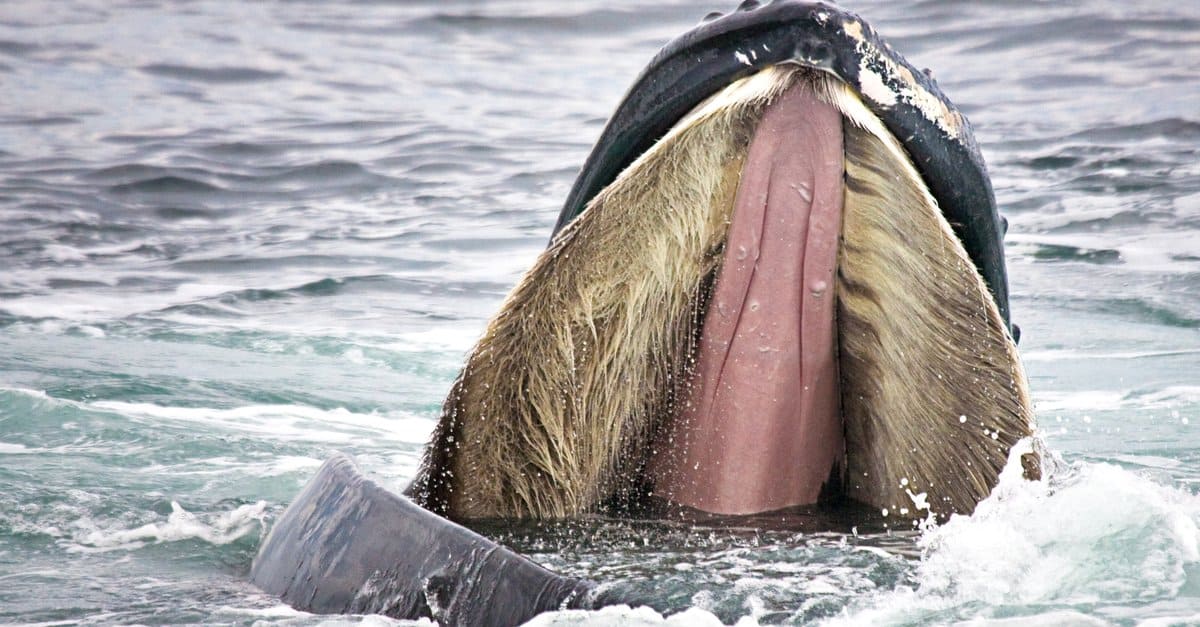
When a humpback whale ‘gapes,’ there is no prey nearby. The whale does not lunge to capture water or expand its throat to hold extra water. Instead, it simply opens its mouth and floats. Sometimes, its tongue is even visible.
Nobody knows how often it happens in the wild. Even whale-watching boat captains rarely see it, and they’re on the water thousands of hours each year. So when someone actually captures this behavior and shares it on Instagram or TikTok, it draws significant attention, especially from scientists.
Those viral videos and images inspired a group of researchers, led by Vanessa Pirotta from Macquarie University in Australia, to dive deeper into the phenomenon. The team just published their findings in the journal Animal Behavior and Cognition.
What the Study Found
What the team found was that gaping in humpback whales is more common than once believed.
The researchers turned to social media to find sources for their study. Between 2014 and 2025, and leveraging the power of hashtags, they identified 66 documented observations that tourists had posted on Instagram, Facebook, TikTok, YouTube, X, and Bluesky. The incidents were recorded from boats above the water, during swimming experiences in the water, and through drone observations.
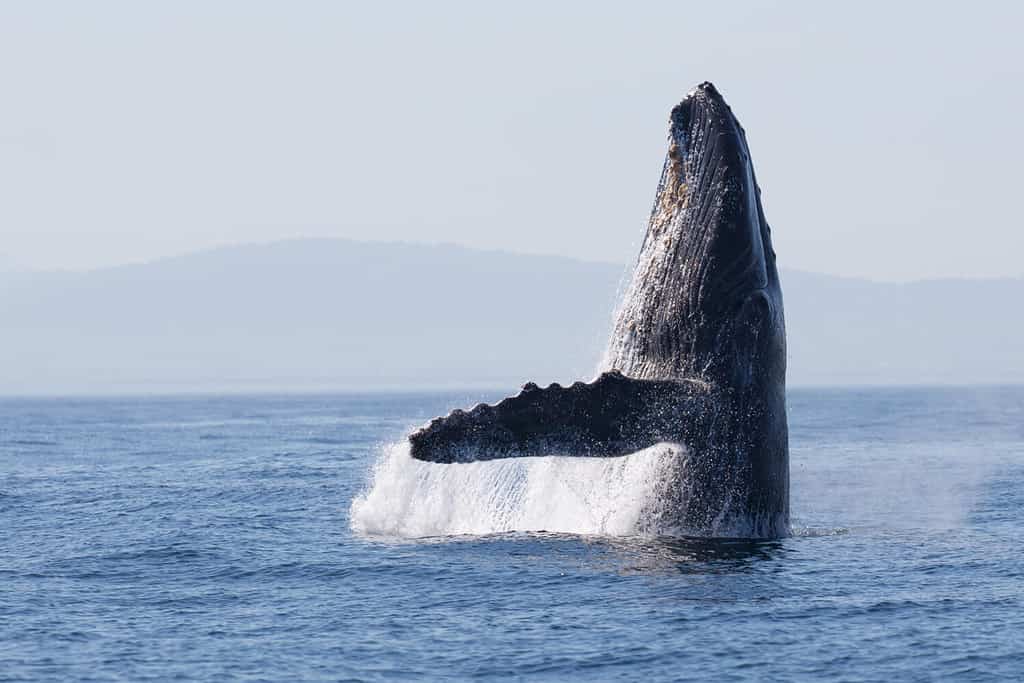
Researchers relied on images and videos captured by tourists as the basis for the study.
©Tory Kallman/Shutterstock.com
The footage was compiled from around the world, including Australia, Hawaii, the Dominican Republic, French Polynesia, Tonga, Mauritius, and South Africa. The gaping lasted anywhere from one to 36 seconds and was observed in calves, juveniles, and adults. In more than half of the cases, the gaping happened when other humpback whales were present.
While the behavior is well documented, the researchers have no concrete evidence on why humpback whales gape when food is not involved.
Scientists Have Four Theories
Social signaling and communication
Many of the gaping incidents captured by tourists involved whales in social settings. Sometimes, the gaping was accompanied by bubble production or jaw popping, common social behaviors among whale groups. Researchers think gaping could be a form of non-vocal communication between whales, likening it to similar behaviors observed among belugas and bottlenose dolphins.
One whale off the Australian coast was captured on video gaping while pirouetting using its pectoral fins. To researchers, this reinforced the idea that gaping is part of a social display.
The theory that gaping serves as social signaling is the most persuasive, but there are a few other possibilities as well.
Jaw stretching
Whales spend a lot of time migrating and breeding. During those long stretches, they tend to eat far less than normal. Gaping may just be a response to a stiff jaw that hasn’t been stretched in a long time. It’s similar to how a human rolls their neck and shoulders after sitting at a computer screen for a long time.
Not the most exciting theory, but a very practical one.
Pre/post suckling behavior
When gaping was observed in calves, it often preceded or followed a nursing session with mom. The researchers think it could be a response to the act of suckling itself.
Play and exploration
Some video footage captured calves gaping while playing with an unknown object. This led researchers to speculate that gaping could be used as a means to investigate unfamiliar objects in the water.
Why Does It Matter?
Whales will continue to gape, whether or not the activity is captured on camera. The challenge for scientists is that observing this behavior firsthand and drawing conclusions in a controlled scientific environment is difficult. Formal observation trips to study humpback whales are costly, the logistics are complicated, and results are hit or miss.
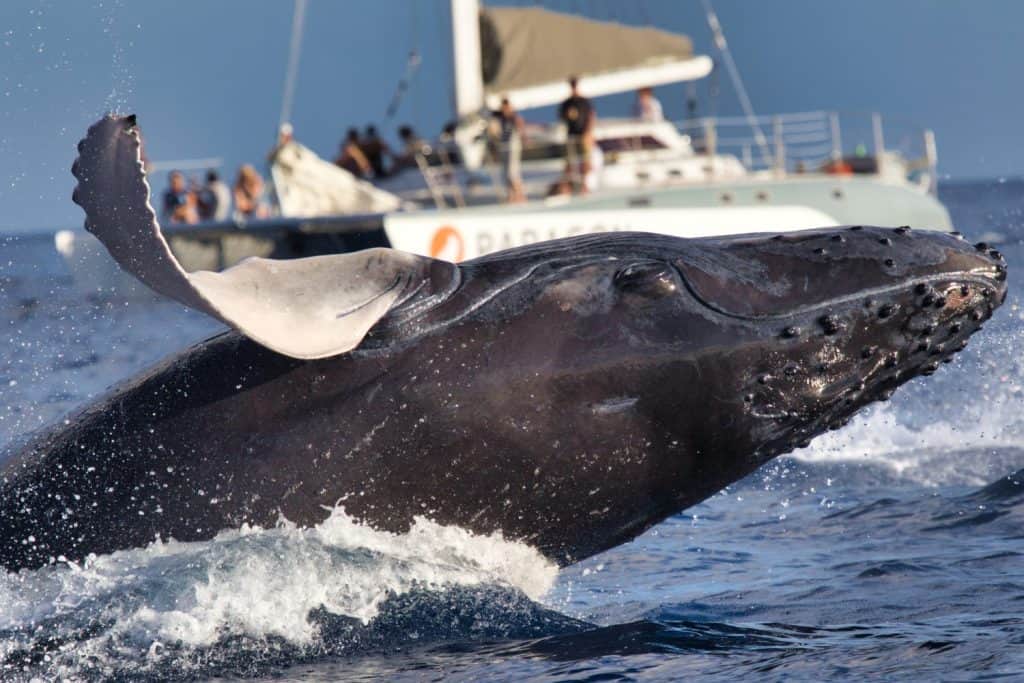
Whale watching tours are a great source for citizen scientist-captured videos and images.
©Manuel Balesteri/Shutterstock.com
That’s where tourist observations become important. The entire basis of the study relied on video and photos snapped by vacationers. Whether they intended to or not, these tourists became ‘citizen scientists‘ and filled a big gap in observed humpback whale behavior. While this is not a definitive answer, it is a valuable starting point.
Researchers are also lending their expertise to other tourism-focused observation programs. One example is the Tongan Whale Tourism Project, launched in 2025 and led by one of the study’s main researchers. The project aims to more formally study whale behavior through swim tourism observations.