
Quick Take
- Seafood isn't a central part of the Komodo dragon's diet, but that doesn't stop this one from trying a new flavor.
- Taste buds are overrated, say Komodo dragons who follow their nose to the sweet scent of decaying flesh, not to the promise of a tasty meal.
- Komodo dragons' blood includes compounds that allow them to feast on decaying flesh.
An opportunity washes up on shore for this well-known opportunistic predator.
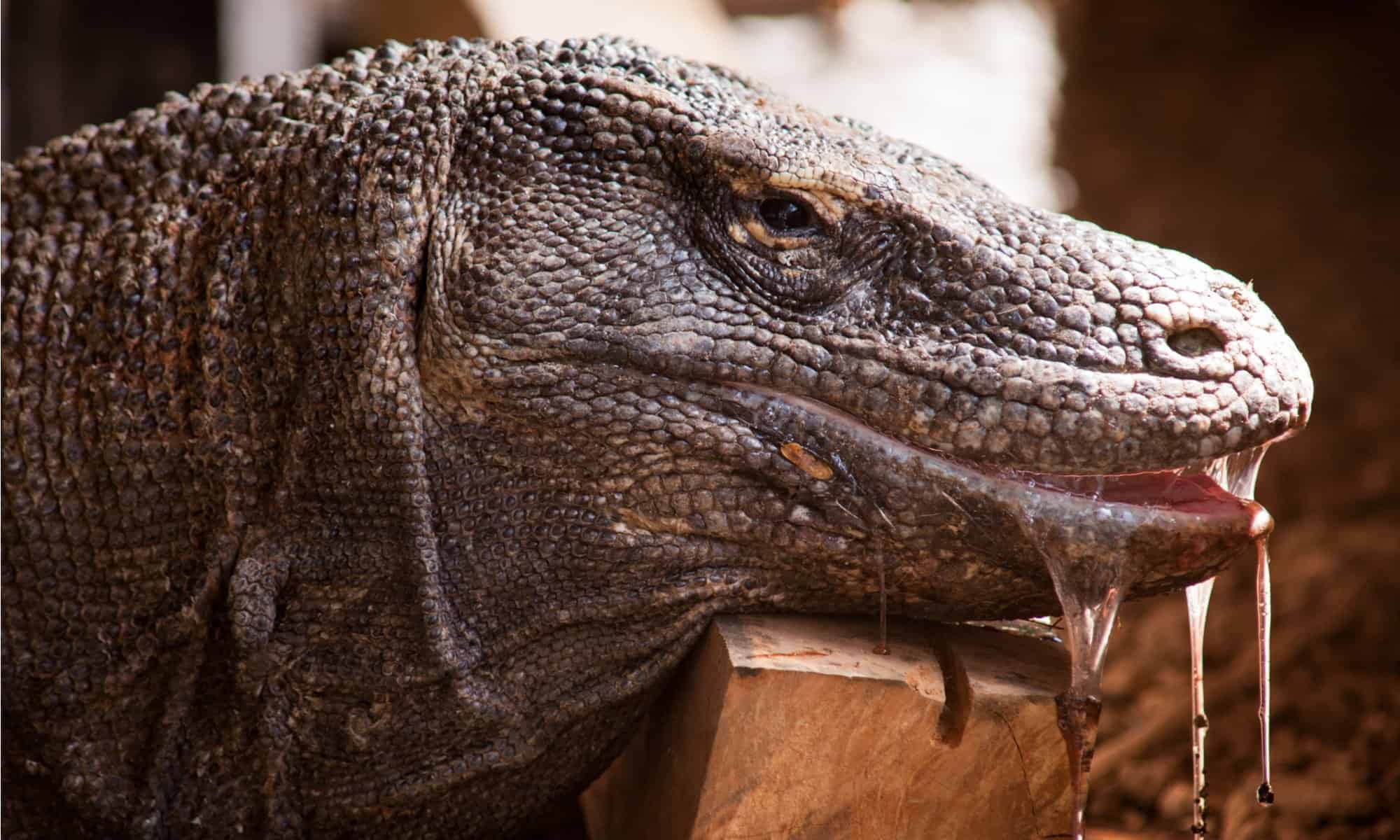
Komodo dragons live on a number of Indonesian islands, primarily those located within Komodo National Park. Nevertheless, marine life is not a central part of their diet, although these lizards will and do eat fish and crustaceans.
Today’s video clip from Komodo Wild Adventures shows a Komodo dragon attempting to work a deceased manta ray that has washed up on shore into its mouth. The cartilaginous fish’s shape makes for an awkward meal for the Komodo dragon, but the lizard’s appetite for an easy meal will surely drive it to find a way to consume it.
Komodo dragons feed opportunistically and carnivorously. In other words, they eat just about anything that moves at just about every opportunity. Very young Komodo dragons eat mainly beetles and grasshoppers. As they grow in size and maturity, so too do their prey’s size. They’ll add birds and eggs to their diet before incorporating small mammals such as rats and shrews and reptiles, including geckos, skinks, and small snakes. Larger Komodos will eat water buffalo and deer, larger snakes, and even smaller Komodo dragons, as well as livestock such as goats.
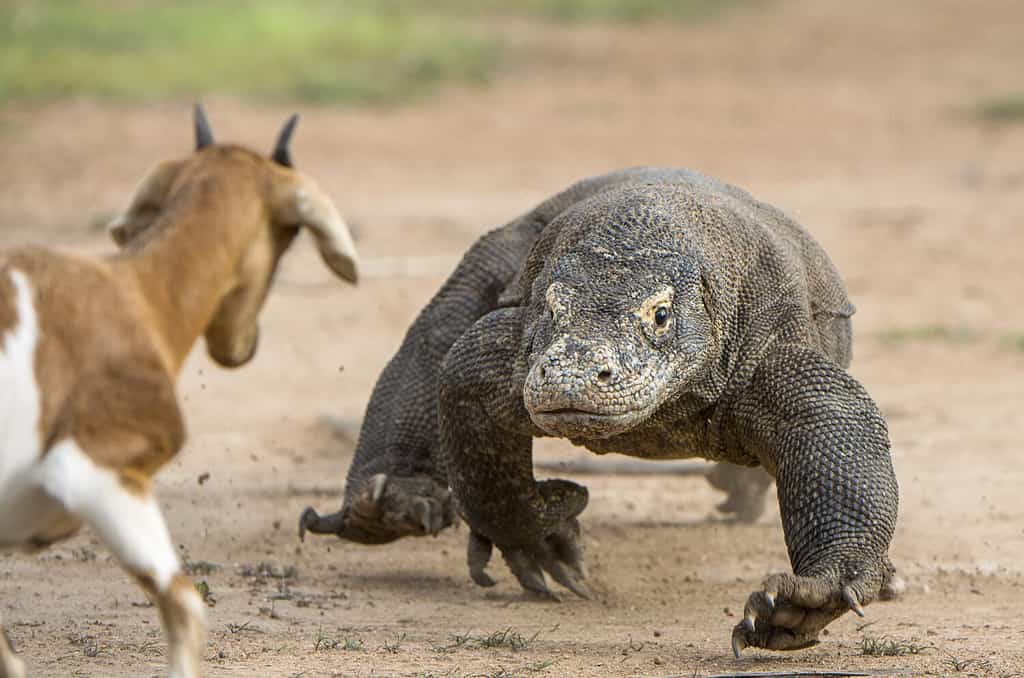
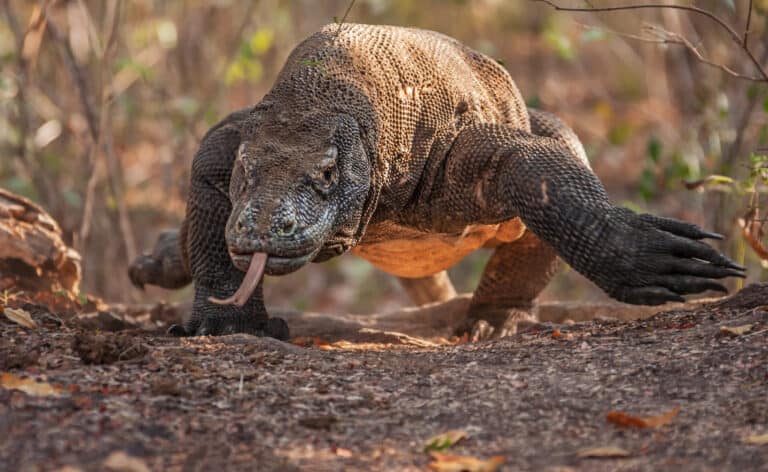
If the opportunity presents itself, Komodo dragons will gladly feast on livestock such as a goat.
©Sergey Uryadnikov/Shutterstock.com
Seafood is not typically found in their preferred diet, but as opportunistic feeders, it’s not out of the question either. Komodo dragons are voracious scavengers, and one way opportunity knocks is carrion—the decaying flesh of dead animals. As this video shows, this Komodo dragon has located an easy meal, most likely from using its keen chemical sensing with its tongue and Jacobson’s organ, an olfactory sense organ located in the soft tissue of the nasal septum.
Carrion may not sound or smell appetizing to humans, but for many animals, carrion provides an easy meal. While it may not sound like a bright idea to eat the flesh of dead animals, as it can carry disease and harmful microorganisms, animals that eat carrion do so because their systems are appropriately adapted for it. Komodo dragons are no different.
One reason may be antimicrobial compounds identified in their blood. These compounds in their blood may help protect them against microorganisms associated with decaying carcasses. This is an extraordinary adaptation, allowing Komodo dragons to exploit an available source of food—and today’s meal is a dead manta ray.