
Quick Take
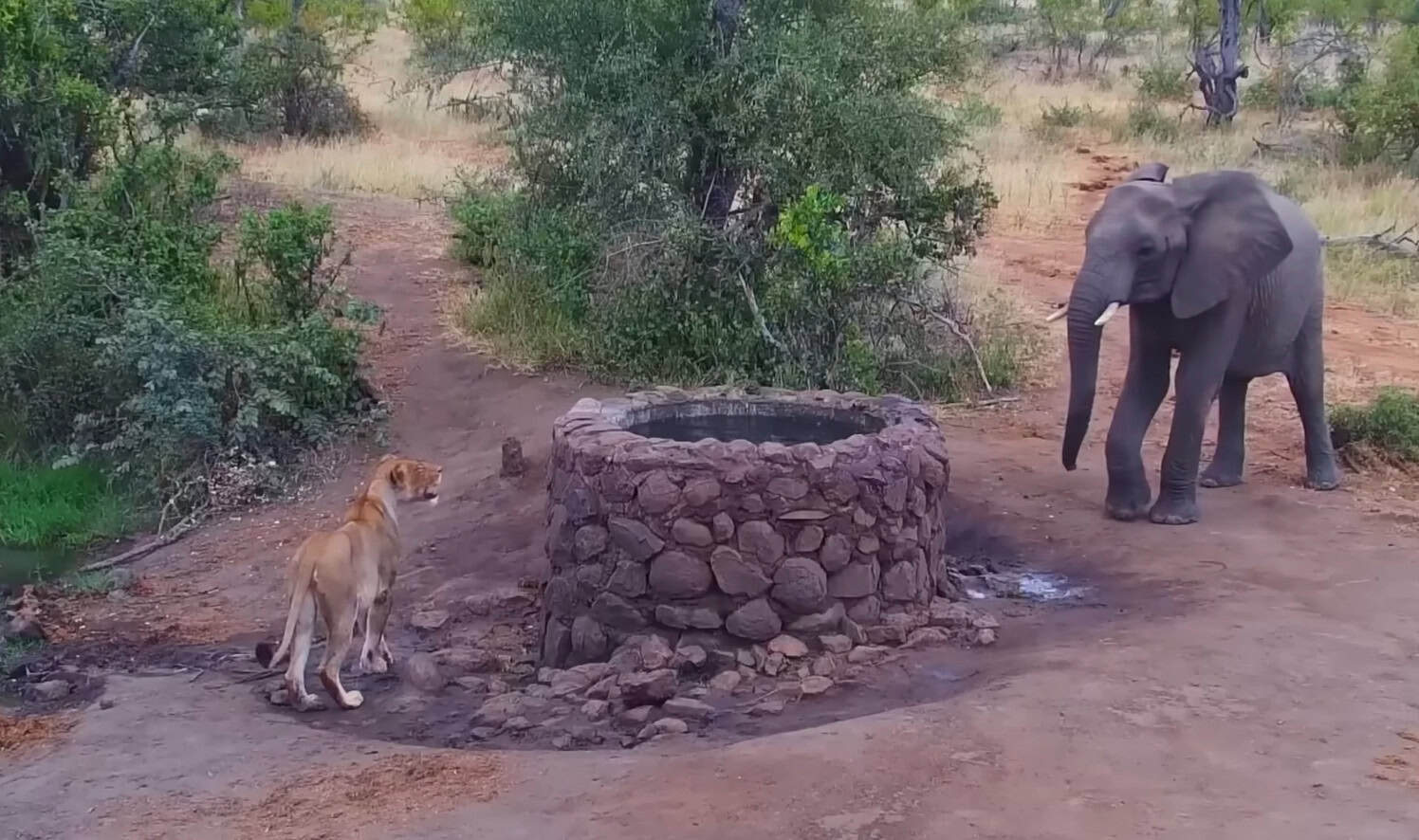
- A tiger backs down from a watering hole without a fight. Find out what the elephant did to make that happen. Explore elephant power →
- Orange is one of the worst colors for hiding in green jungle, so it raises the question of why tigers wear it. See why orange works →
- Tiger stripes do more than just look striking. Researchers use them in a way most people never expect. Discover how stripes identify tigers →
- Elephants symbolize very different things depending on where you are in the world, and the gap between cultures might surprise you. Compare cultural meanings →
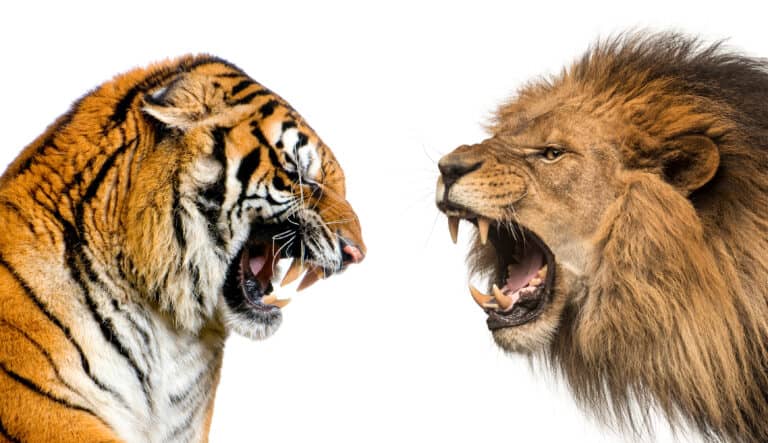
People love to call the lion the king of the jungle, although lions are actually better known for living in grasslands and savannas. Tigers, meanwhile, are found across a variety of habitats in Asia, including tropical forests, mangrove swamps, grasslands, and colder forests. In the video below, one tiger finds itself sharing a watering hole with a much larger elephant. The elephant eventually sprays water toward the tiger, and the big cat quickly decides this particular watering hole is not worth arguing over.
Why Do Tigers Have Stripes?
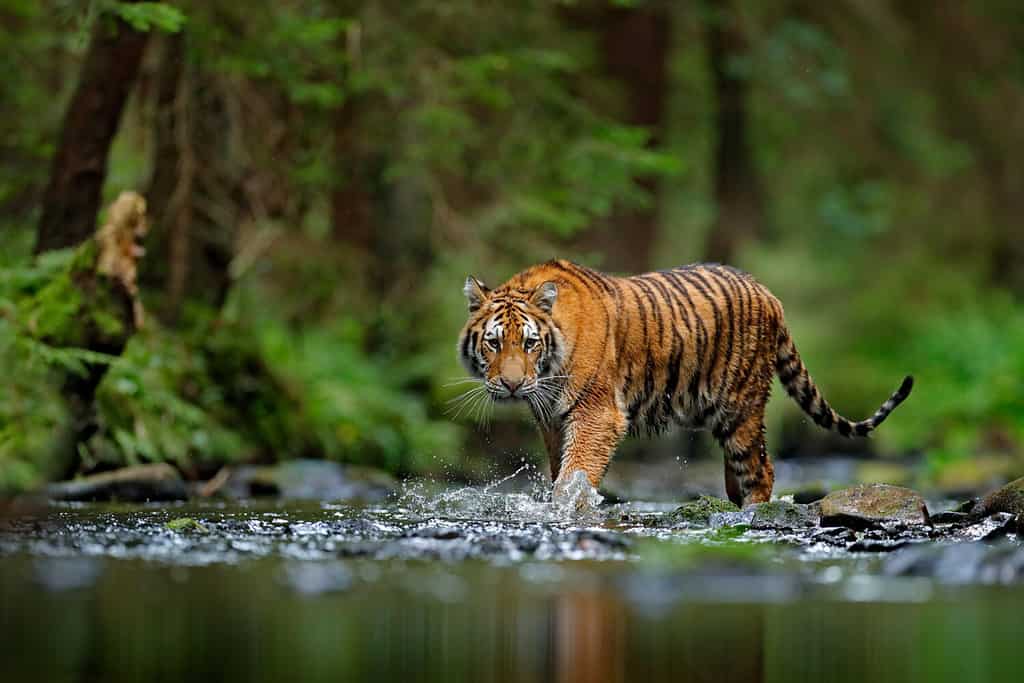
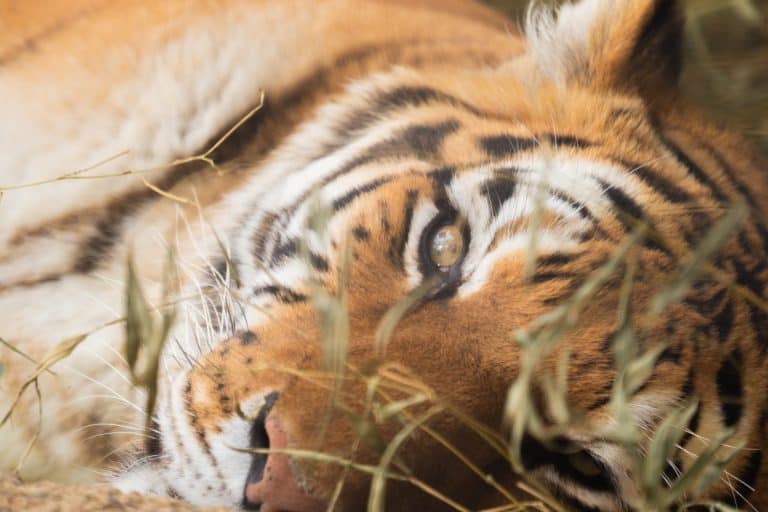
No two tigers have exactly the same stripe pattern.
©Ondrej Prosicky/Shutterstock.com
A tiger’s orange coat and dark stripes provide surprisingly effective camouflage. To human eyes, bright orange might seem like a strange choice for an animal trying to disappear into green vegetation. The difference comes down partly to how some of a tiger’s prey see color. Many mammals, including deer, have dichromatic vision, meaning they rely on two types of color-sensitive cone cells rather than the three humans typically have.
Research from the University of Bristol found that orange tiger fur can appear greenish to dichromatic prey such as deer, making the cat much harder to distinguish from surrounding vegetation. The dark stripes help break up the tiger’s outline even further, particularly among shadows, trees, and tall grasses. Each tiger also has its own unique stripe pattern, allowing researchers to identify individual animals in the wild from photographs.
What Do Elephants Symbolize?
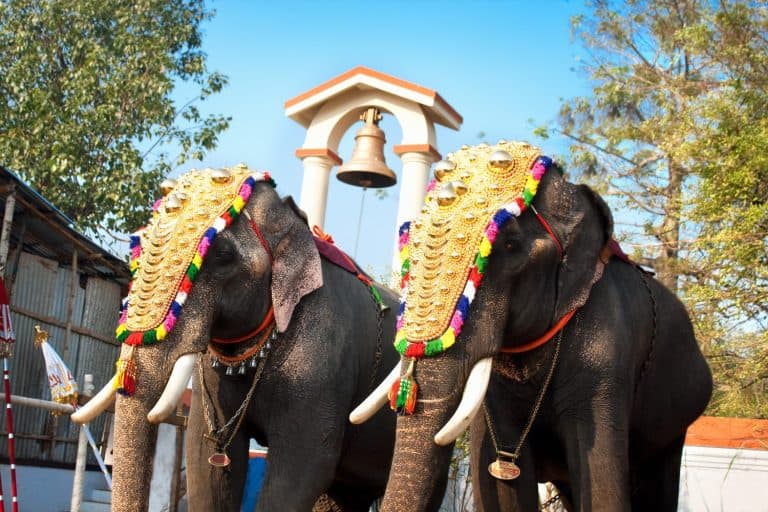
Elephants have held important symbolic roles in cultures across Africa and Asia for centuries, although their meaning varies widely from one culture to another. They have been associated with qualities such as strength, leadership, wisdom, memory, protection, and royalty. In parts of Africa, elephants appear in traditional art, proverbs, masks, and symbols connected with rulers and leadership. Across Asia, they also have deep religious and cultural significance.
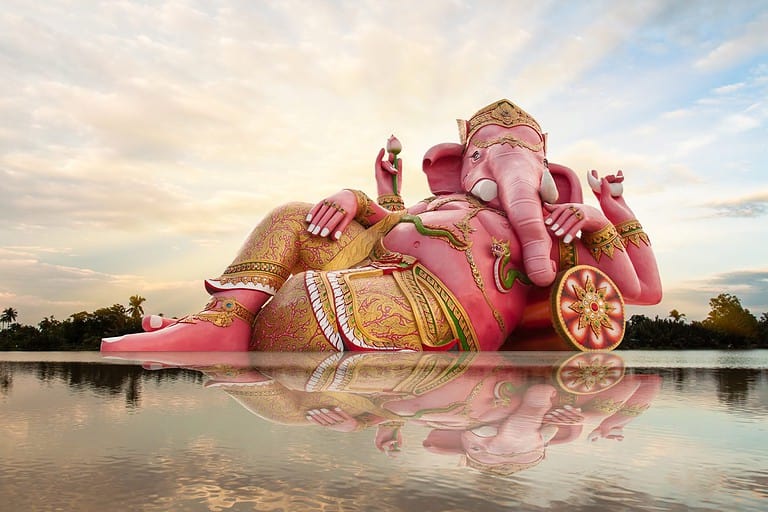
One of the best-known examples is Ganesha, the elephant-headed Hindu deity widely associated with wisdom, prosperity, and new beginnings. Elephants also appear prominently in Buddhist traditions and in the royal symbolism of several Asian cultures. Their enormous size, complex social lives, and long relationship with humans have helped make elephants powerful cultural symbols far beyond the habitats where they naturally live.