
Quick Take
- The Soviet Union didn't accidentally push the Caspian tiger to extinction. It actively ordered soldiers to eliminate them. See the military policy →
- At 530 pounds with claws rivaling a grizzly bear, this tiger ruled Central Asia. So what kind of force does it actually take to erase an apex predator from 350,000 square miles? Explore the apex predator →
- The Caspian tiger was granted protected status in 1947, but that designation came far too late to matter, and the reason why reveals a flaw in how conservation was practiced under Soviet rule. Read about protected status →
Mother Nature can be merciless, but human activity sometimes far outweighs her cruelty. Some of the world’s most tragic extinctions came not from storms or biological factors, but from our own hands. The Caspian tiger (Panthera tigris virgata), once the most powerful predator in all of Central Asia, was a victim of human mismanagement.
Its habitat, which once spanned roughly 350,000 square miles, was ruthlessly seized for development purposes. The consequences would be dire and irreversible, though no one knew the extent of the damage at that point. Today, the Caspian tiger’s story is a cautionary tale of extinction, and a warning that sometimes, human evolution is the animal kingdom’s worst enemy.
Caspian Tiger: The Unmatched Apex Predator of Asia
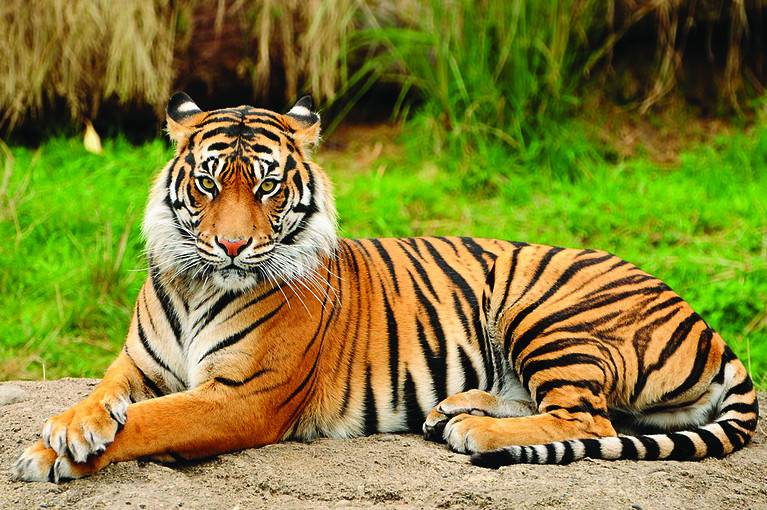
Imagine: A 9-foot-long cat weighing 530 pounds, with claws that rivaled those of the largest grizzly bear. Its bold orange and black stripes marked it as a tiger, while its canines could slice through prey with the precision of a surgeon’s knife. Despite its size, the footfalls of this cat—one of the largest in the world—are nearly silent. It tiptoes through the marshes of eastern Turkey, northern Iran, and China, before taking down a full-sized deer in a matter of seconds. This is the legacy of the Caspian tiger, once one of the most feared apex predators throughout Central Asia.
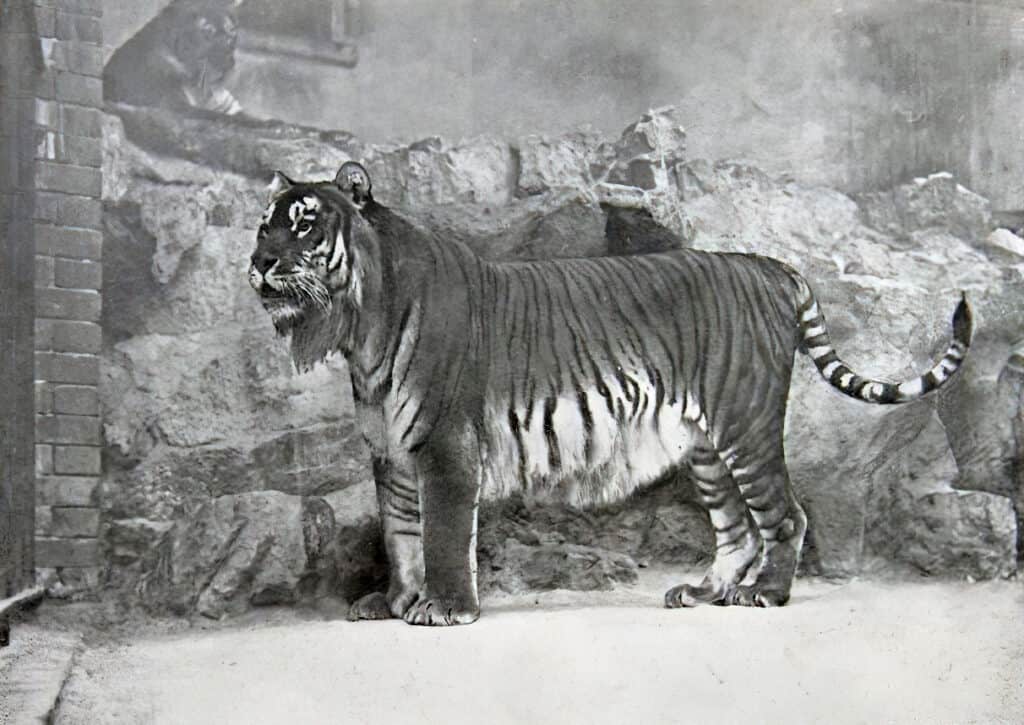
Panthera tigris tigris, the Caspian tiger, one of the most impressive of all extinct types of tigers. Unlike Java and Bali tigers, Caspian tigers did not live on islands.
Some individuals of the species could grow up to 10 feet long, making them comparable only to the Siberian tiger in size. Females were slightly smaller but no less fearsome. They didn’t hesitate to protect their cubs and defend their territory. As a species, Caspian tigers were magnificent, graceful, and powerful animals. Sadly, none of these traits were enough to keep them safe from poachers and hunters. And when the Soviet Union moved its agricultural development into the Caspian tiger’s territory, its days were numbered.
The Tragic Habitat Loss of the Caspian Tiger
At one point, the Caspian tiger may have joined the ranks of other big cat species now protected under endangered species laws. But in the early 1900s, conservation was not a priority like it is today. As the world braced for war, the Soviet Union was more concerned with expanding its efforts than with the wildlife it could save. Part of this was agricultural development, and included cotton field expansion across the central Asian territory. This included parts of the Middle East that Caspian tigers inhabited.
As these expansions took place, land was rapidly deforested and converted into farmland. The Soviet Union needed dry, fertile land for its endeavors. As a result, Caspian tigers and many other native animals lost the vegetation and waterways that they also depended on for survival. As their habitats shrank, the tigers were forced to retreat into untouched land. However, even these areas would not remain safe.
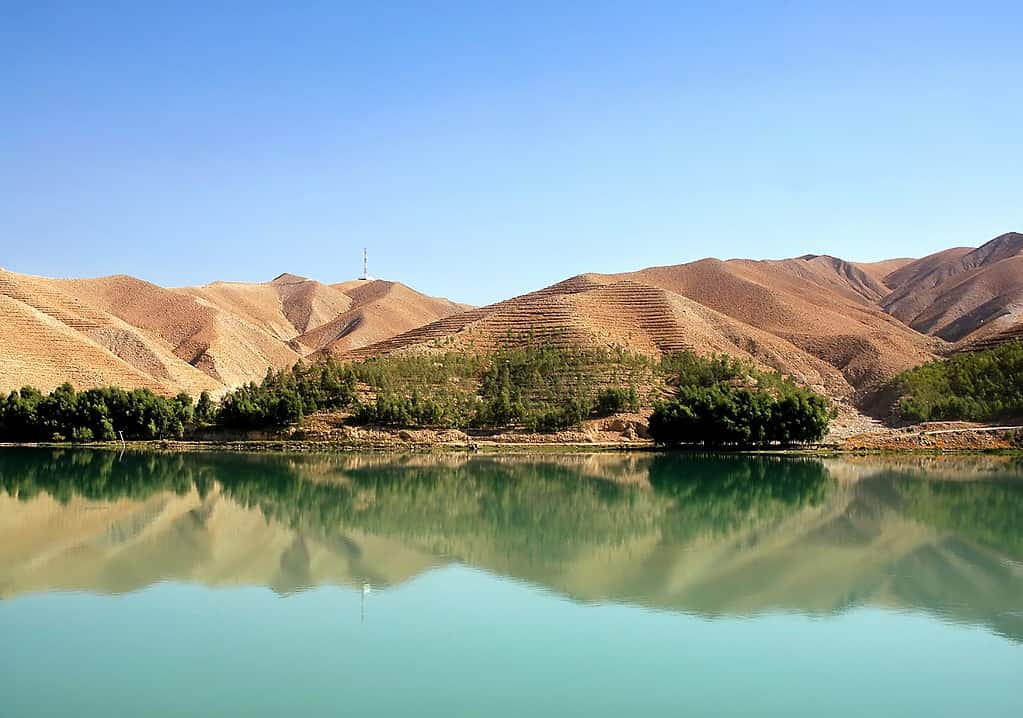
Many Caspian tigers moved into what’s now Afghanistan.
©Jonathan Wilson/iStock via Getty Images
Until 1929, Soviet Union soldiers were ordered to kill any Caspian tigers they encountered. They were actively hunted for their pelts and as prized trophies. Skilled hunters joined the military troops during many hunts, killing Caspian tigers without consequence for years. This was done under the guise of protecting new human settlements. Wooded areas near farms were also used as hunting grounds to protect livestock. Whether or not this was necessary is uncertain, but the result was a severe decline in tiger populations.
Hunted to Extinction: Paying the Ultimate Price
Caspian tiger hunting spiraled out of control, and by the mid-1900s, hunters were using both weapons and poison to bring down the big cats. Their numbers rapidly declined, and they were forced into increasingly arid and inhospitable territory. Caspian tigers weren’t declared a protected species until 1947. At this point, only a few individuals remained, and most of them would not survive for more than a decade.
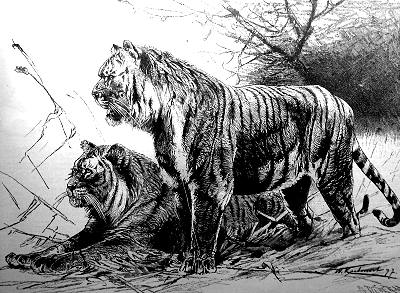
Caspian tigers were not protected until 1947, and by then, it was too late.
Despite the protective order, the Soviet Union continued its deforestation efforts to promote agricultural growth. While not directly killing the tigers, these actions contributed to their ultimate demise. It’s believed that the last tiger was shot and killed in 1957, while the last sightings happened in 1958 and 1968. These sightings occurred in Afghanistan and near the Aral Sea, two regions Caspian tigers were forced to inhabit after losing their native habitats. Reports of these are conflicting, and no solid proof has ever been presented.
Some reports claim the very last Caspian tiger was captured and killed in 1997. However, there is little evidence to support this. The species was officially declared extinct by the IUCN in 2003. To this day, no Caspian tigers exist anywhere in the world, including zoos or protected wildlife habitats.