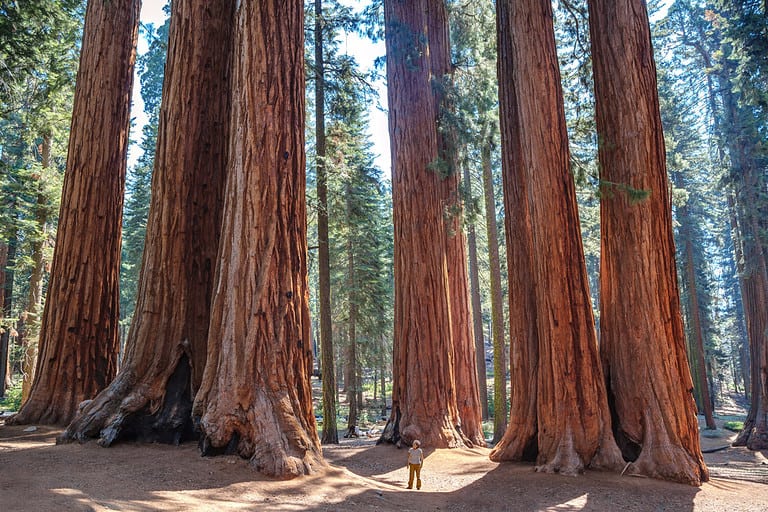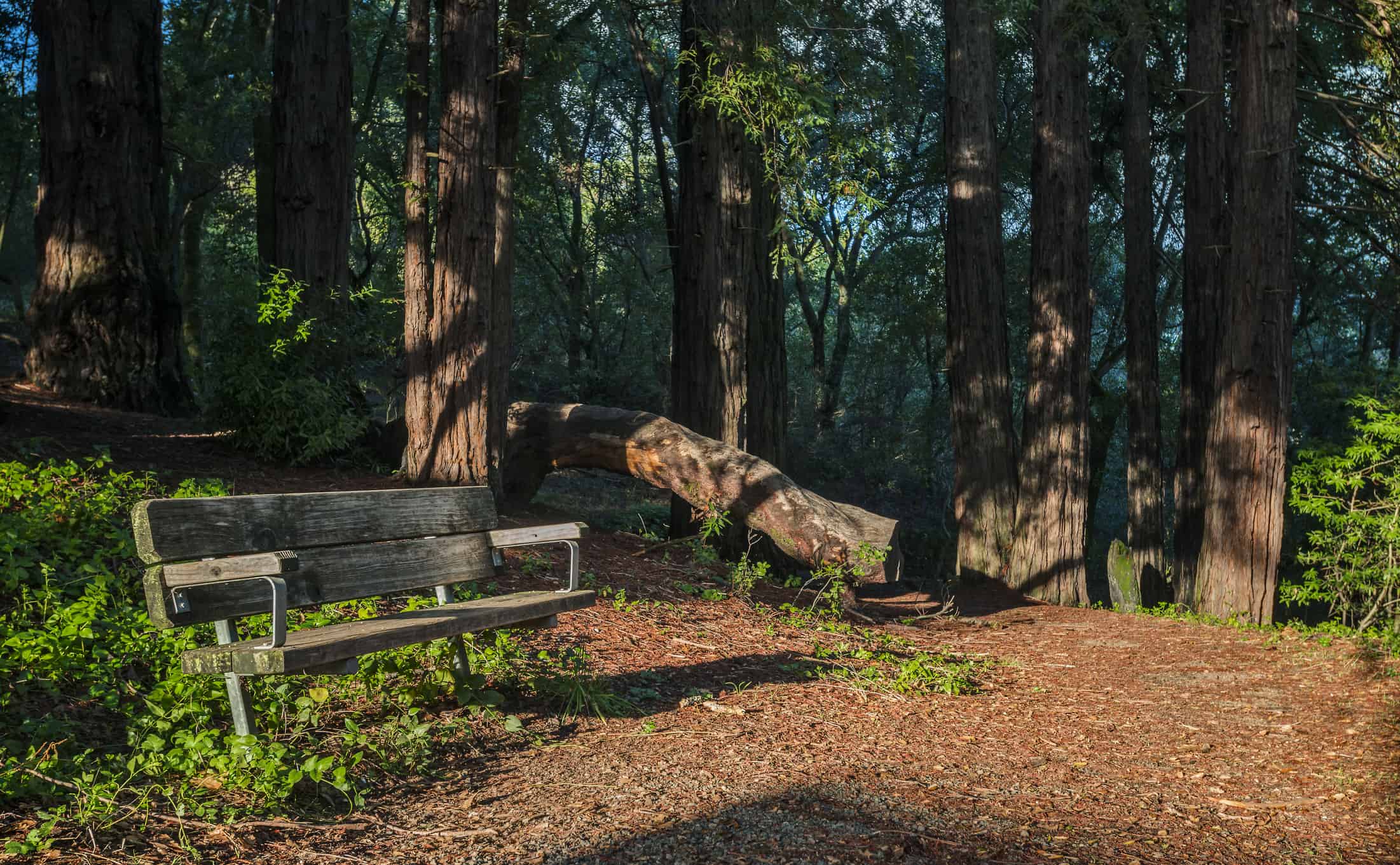

Rising over the rest of the canopy, Redwood trees and Yellow Cedar trees are two of the world’s largest species of tree. There’s simply no comparing any other arboreal specimen to the girth and height of these massive trees.
Both trees are members of a family known as Cupressaceae, which includes all cypresses and junipers. Redwoods are part of a subfamily known as Sequoioideae. The fact that these trees are so closely related can add to the confusion for some.
Redwood vs. Yellow Cedar Tree: although these types of trees can appear quite similar, each one has a set of unique characteristics. Once these are learned, they can help one easily recognize the differences between these two trees.
Facts About Redwoods
There are three kinds of Redwoods that make up the family Sequoioideae: the Coastal Redwood, the Giant Sequoia, and the Dawn Redwood. The first two trees can be found in California, while the third only exists on the southeast coast of China.
The Coastal Redwood and The Giant Redwood are the tallest and most massive species of tree in the world, respectively. There are members of these species that are larger than any other type of tree. This makes them among the largest organisms living on the planet today.
Redwoods are an ancient tree species and first emerged in the world in the Jurassic and Cretaceous eras of life on Earth. This means that these trees shared space with dinosaurs and other ancient creatures.
Individual Redwoods have the potential to live for a very long time. There are individuals of this species that are well over a thousand years old. Despite this, all three species of Redwood tree are endangered.
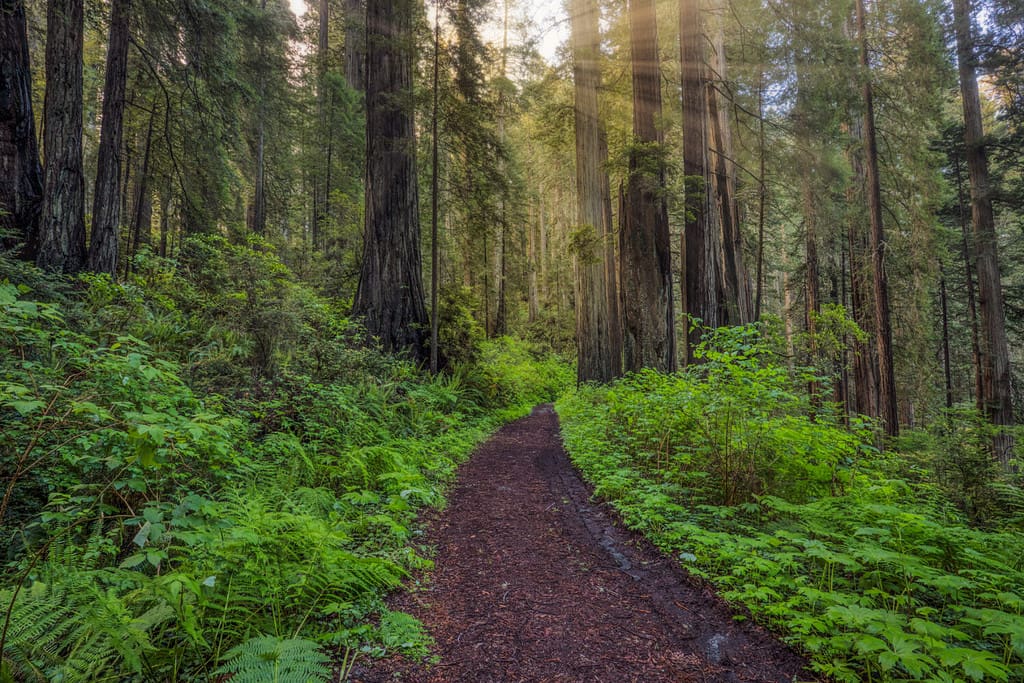
Redwood Trees are the world’s largest trees.
©Danita Delimont/Shutterstock.com
Facts About Yellow Cedars
Yellow Cedars are also a member of the Cupressaceae family, a genus of tree that includes all of the cypresses. There are many members of this family of trees that humanity has bonded with.
Yellow Cedars have both pragmatic and ceremonial uses by the indigenous people who dwell in their habitat. This is due to their beautiful bark, intoxicating scent, and graceful appearance.
Yellow Cedars live up and down the west coast of North America, from California to Alaska. Like Redwoods, individual Yellow Cedars can live to be very old. One grove in British Columbia contains many trees well over a thousand years old, including one individual over 3,000 years old.
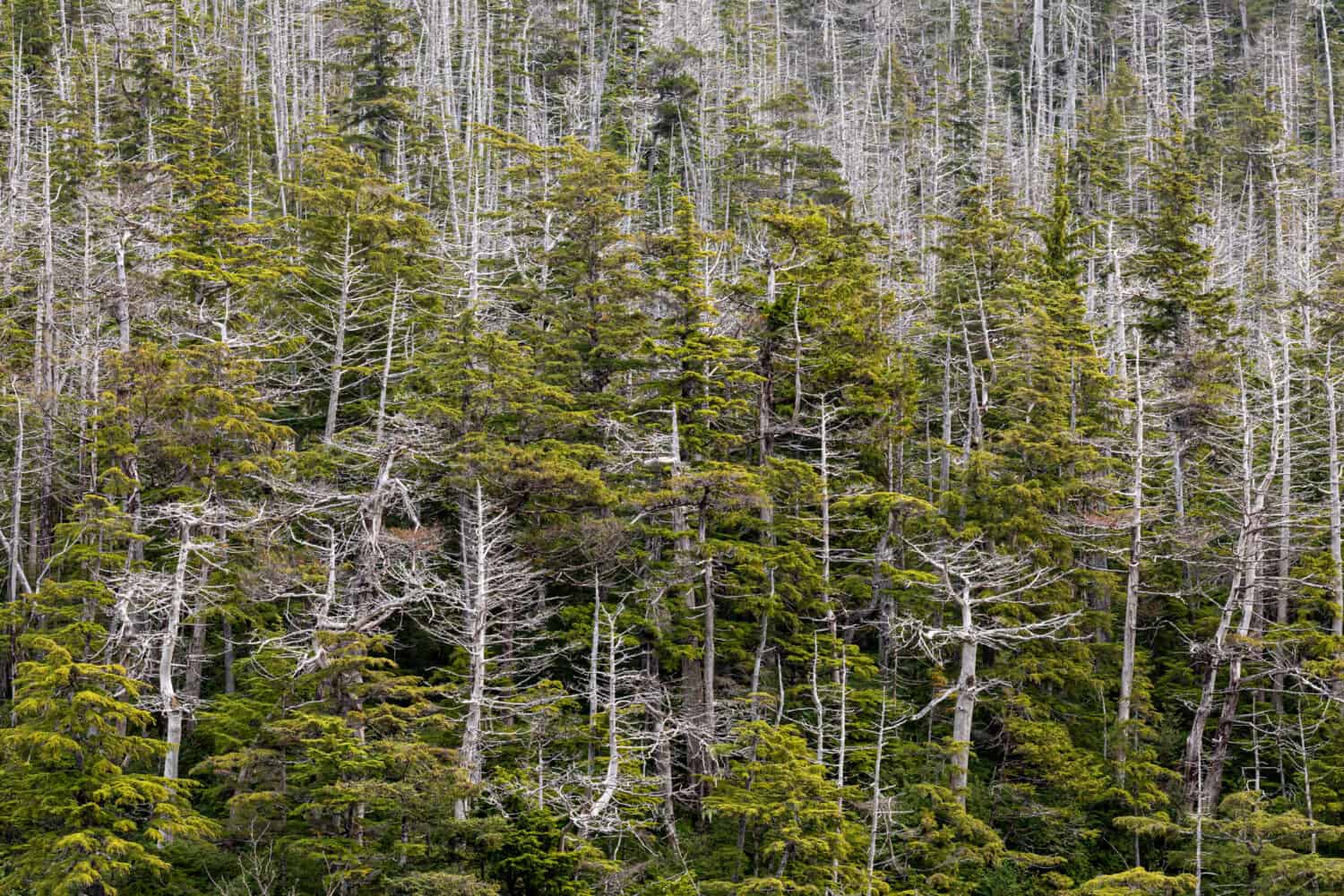
Yellow Cedars exist up and down the west coast.
©Danita Delimont/Shutterstock.com
How to Tell the Difference Between Redwoods and Yellow Cedars
1. Habitat
Although both of these trees live on the western coast of North America, the two types of trees live in very different places. Much of this owes to the fact that Redwoods really only exist in a few parts of the world.
Outside of the coast of Northern California, The Sierra Nevada Mountains, and the southeast coast of China, there aren’t any wild Redwood trees that haven’t been cultivated or accidentally introduced. On the other hand, Yellow Cedars also have a very specific habitat that’s arguably slightly larger in its total area. These trees exist up and down the west coast from California to Alaska.
The only places that these two trees share habitat naturally are around the border of Southern Oregon and Northern California. Even then, outside of the Sierra Nevada mountain range, Redwood trees tend to hug the coast. In this particular bioregion, Yellow Cedars are found inland and only become coastal in the northern end of their range.
Yellow Cedars exist at much higher elevations. In some areas of their range, they climb all the way up to the timberline. Trees at this height sometimes exhibit the twisted Krummholz shapes found in trees at very high elevations.
2. Smell
Another distinction between these two trees is in the scent they give off. While Redwood Trees have a scent that doesn’t particularly stand out, cedars have a powerful and pleasant aroma that they exude from their wood and sap.
This smell has a soothing effect that has made it quite popular as an incense and as an ingredient in cologne and perfume. In the places where cedar trees grow naturally, the indigenous people who have a relationship with these trees place emphasis on the spiritual potency of cedar smoke.
3. Cones
Another easy way to tell the difference between redwoods and cedars is by the shape of their cones. Each tree has a very distinctive pine cone that can help you tell the two trees apart.
A redwood pine cone comes in different shapes, depending on the species of Redwood. The pinecone of the Coastal Redwood is petite and compact, with very little space separating the separate seed pods of the cone.
A Giant Sequoia pinecone is one of the most distinctive pinecones of all. This is because, like its parent tree, a Giant Sequoia pinecone is absolutely gigantic. It’s not unusual for the cones of these trees to exceed a foot in length!
A cedar pinecone is rather minuscule and exhibits characteristics typical of the cypress-juniper family that it’s a member of. Yellow Cedar pinecones look almost like tiny ridged globes and only open up when exposed to summer-level heat temperatures.
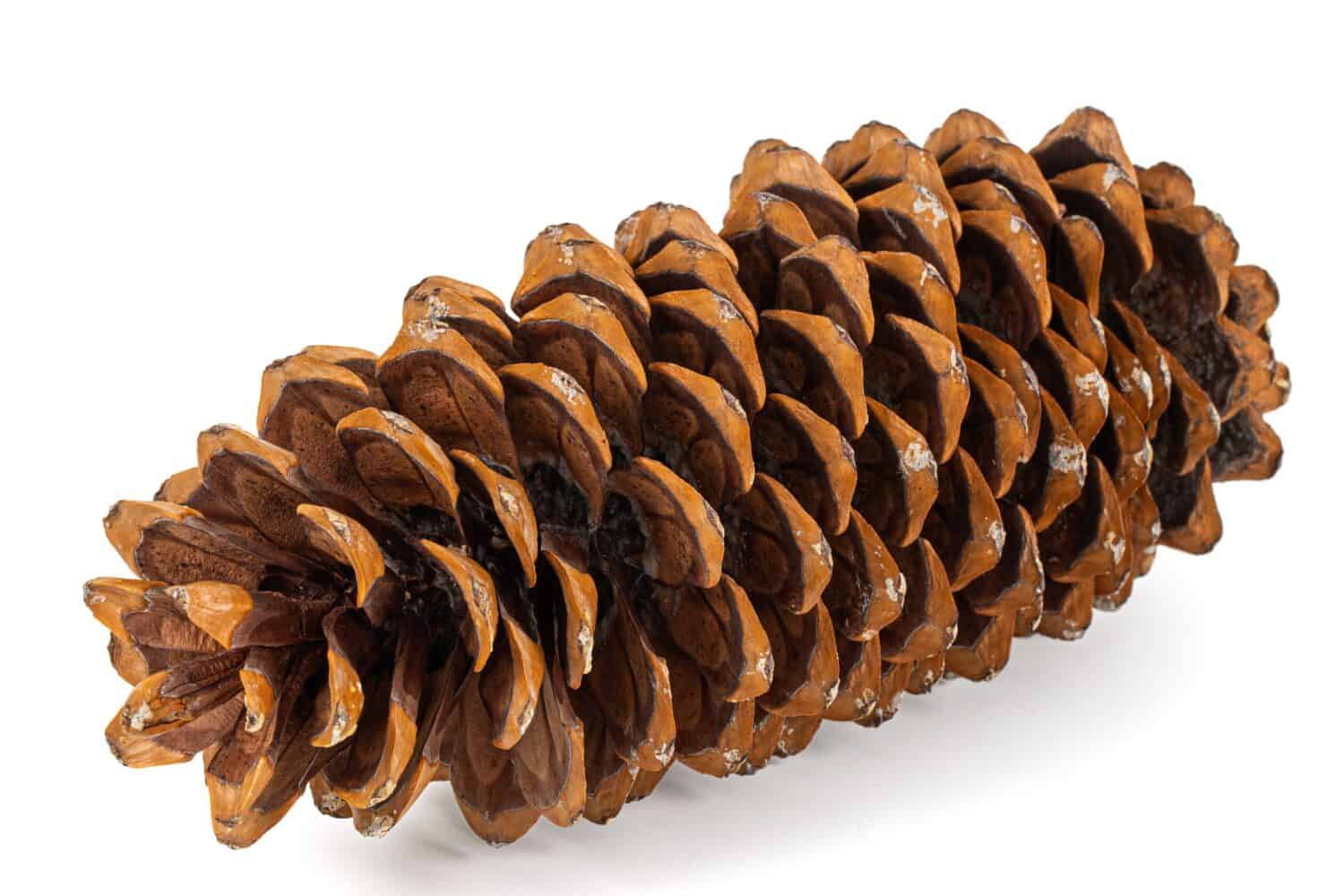
Giant Sequoias have enormous pinecones.
©Oleksandr Kostiuchenko/Shutterstock.com
4. Bark
Another way to identify and differentiate between these two types of trees is through their bark. This is true for both their appearance, as well as the texture of the bark. True to their name, the bark of Redwoods exhibits a reddish hue. There is some variability in this phenomenon depending on the species of Redwood.
A Yellow Cedar’s bark isn’t particularly yellow. It does look more like that color than the other major type of cedar on the West Coast, the Red Cedar. Yellow Cedar bark is basically a mild grey, with the yellow in their name more referencing the yellow hues present in their needles.
Cedar trees also have a very distinctive look and feel to their bark, which has a shaggy sort of texture to it. This shaggy and pliable nature made it highly valued in ancient times for basket weaving and the production of textiles. Redwood tree bark is more rigid and geometric and exhibits knobby-looking patterns in contrast to the “softness” of Cedar trees. Redwood bark is also much thicker than cedar bark.
5. Size
Both kinds of trees are very large and generally much larger than most of the other lifeforms around them. However, nothing tops the size of Coastal Redwoods and Giant Sequoias. These trees are quite simply the largest in the world.
Coastal Redwoods can rise to a massive 300 feet above the ground, with the largest specimen in existence, Hyperion, rising to an incredible 360 feet. The most massive Giant Sequoia, General Sherman, has a bole volume of 1,487 m3.
Yellow Cedars are nothing to scoff at size-wise, but don’t quite match the exorbitant heights of Redwoods. The average height of a Yellow Cedar is approximately 131 feet tall. That being said, there are many that exist that are over 200 feet tall.
6. Needles
Another dead giveaway between Redwoods and Yellow Cedars comes in the form of the shape of their needles. Each tree has a very distinctive shape that makes it very easy to differentiate.
Redwood needles are flat, light green, and often described as blades. The shape of each individual needle tapers off from an oval shape to a fine point.
Cedar needles are a little rougher, with serrated edges along their sides. The needles have rounded tips and look quite similar to those of other junipers and cypresses.
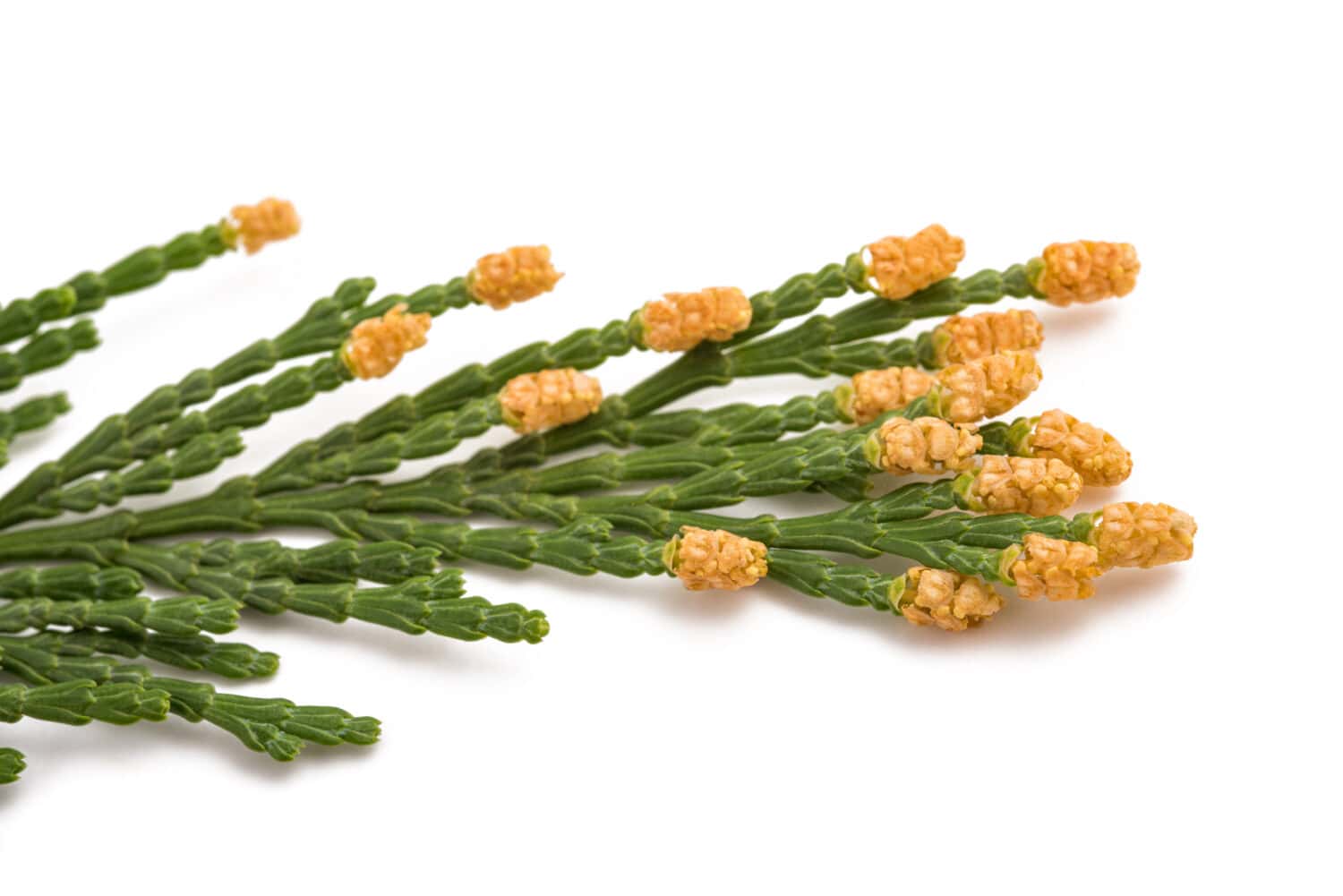
Yellow Cedar needles are similar looking to other trees in the cypress family.
©Scisetti Alfio/Shutterstock.com
Conclusion
Although cedars and redwoods are similar in size, there are noticeable differences between the two. These can allow one to easily tell the difference between these two giants of the forest. The differences between color, size, appearance, and habitat mean that you’ll actually rarely encounter the two species on the same excursion.
If you’re on the West Coast of North America in one of the areas where the two species overlap heavily, such as Southern Oregon or Northern California, then finding something like a tree-identifying guidebook for the region will likely be very helpful.