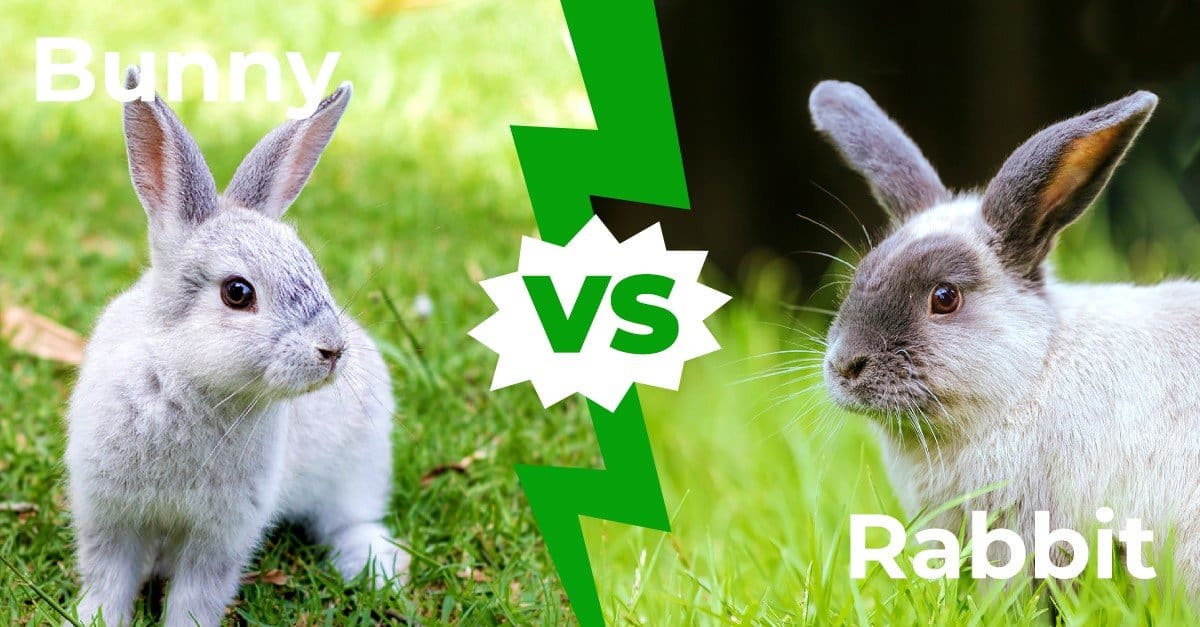

Rabbits are small, furry, long-eared mammals that are part of the family Leporidae, which includes over 60 species of rabbits and hares. In common usage, there is no difference between a bunny and a rabbit, and many people use these words interchangeably. However, according to the Merriam-Webster dictionary, “bunny” is informal for rabbit, especially a young rabbit. So, others use “bunny” exclusively to refer to baby rabbits.
In fact, until the 18th century, the word “rabbit” also exclusively referred to the young of the species. “Coney” was the common name for these animals until rabbit became more popular. “Coney” is originally derived from the Latin word “cuniculus,” meaning burrow. Oryctolagus cuniculus is the scientific name for the European rabbit, from which all modern domesticated rabbits originated. Keep reading to learn more about the differences between young bunnies and adult rabbits.
Comparing a Bunny vs. a Rabbit
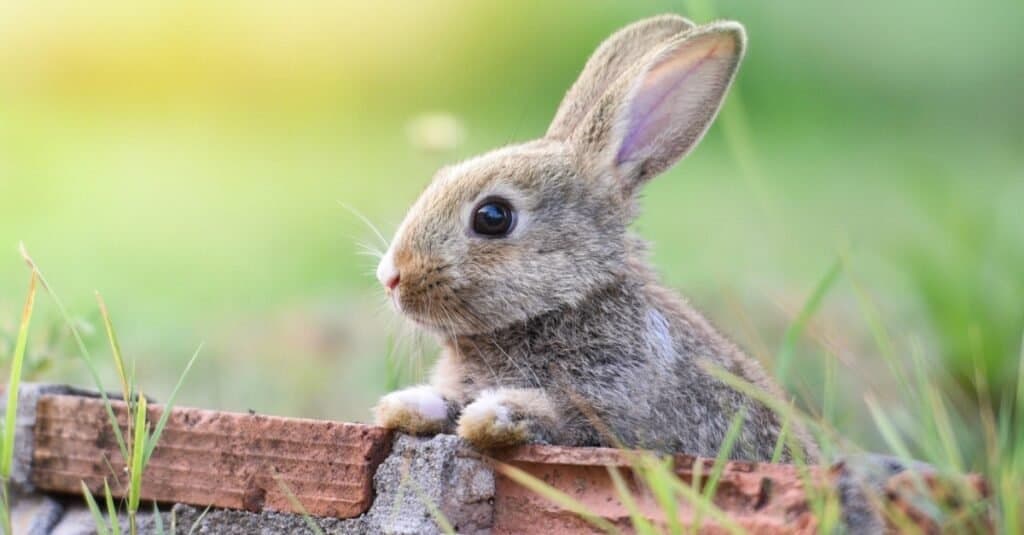
Young bunnies are more curious and energetic than adults.
©Bigc Studio/Shutterstock.com
| Bunny | Rabbit | |
|---|---|---|
| Diet | Mother’s milk; require higher protein and calcium | Lower protein needs; eat mainly grass hay and some dry food in captivity |
| Physical Characteristics | Softer, fluffier coat; sharp but softer and more delicate nails | Thicker, coarser fur; hard nails |
| Behavior | Curious, energetic, easily distracted; more prone to destructive chewing; juveniles can be territorial | Generally calmer with more consistent energy levels; individual personalities are more obvious |
Defining Differences Between a Bunny and a Rabbit
Baby bunnies, also called kits, are born with no fur, and both their ears and eyes are closed. Their ears begin to open at around 5 days, and their eyes open between 10 and 12 days. They are fully covered in fur by the time they are 7 to 10 days old. Female bunnies reach sexual maturity at around 4 months, while males reach maturity at around 5 months.
Most rabbits are fully grown by the time they reach one year old. However, small breeds may be fully grown by about 6 months, while some giant breeds may not reach full size until 18 months. Weight varies by breed, with adult rabbits generally weighing between 2 and 16 pounds, although some giant breeds can grow larger. Aside from obvious markers such as age and size, the primary differences between a bunny and an adult rabbit are diet, physical characteristics, and behavior.
Diet
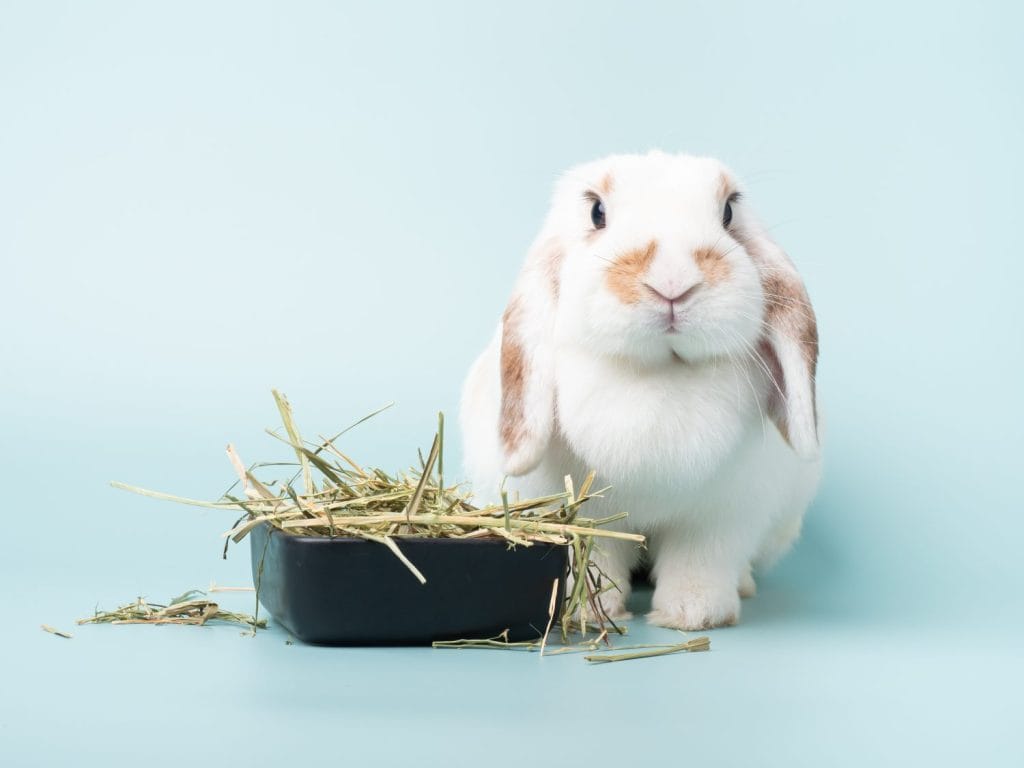
Adult rabbits primarily eat a diet based on grass hay, such as Timothy, orchard, or meadow hay.
©Arlee.P/Shutterstock.com
Like most mammals, bunnies get their initial nourishment from their mother’s milk. Domestic rabbits typically nurse their young for 4 to 6 weeks. Young bunnies are prone to gut infections due to the pH balance of their stomachs. The mother’s milk contains a type of antibiotic substance that helps prevent these infections. After 2–3 weeks, the babies may begin to try solid food in addition to milk. Baby bunnies require more protein and calcium than adult rabbits. Experts recommend feeding baby rabbits alfalfa hay for up to 6 months because of its softer texture and high protein and calcium content.
Adult rabbits have a more varied diet. In captivity, they primarily eat grass hay, such as Timothy, orchard, or meadow hay, high-fiber, grass hay-based pellets, and fresh, leafy green vegetables. Experts advise against feeding alfalfa hay to most adult rabbits because the high protein and calcium content can cause obesity and urinary issues. In the wild, they regularly forage for many types of vegetation. Rabbits may eat weeds, flowering plants, leafy greens such as clover, and shrubs. Like rodents, rabbits’ teeth grow continuously throughout their lives. In captivity, hay keeps their teeth worn down, while in the wild, they keep their teeth trimmed by chewing on tree bark and twigs.
Physical Characteristics
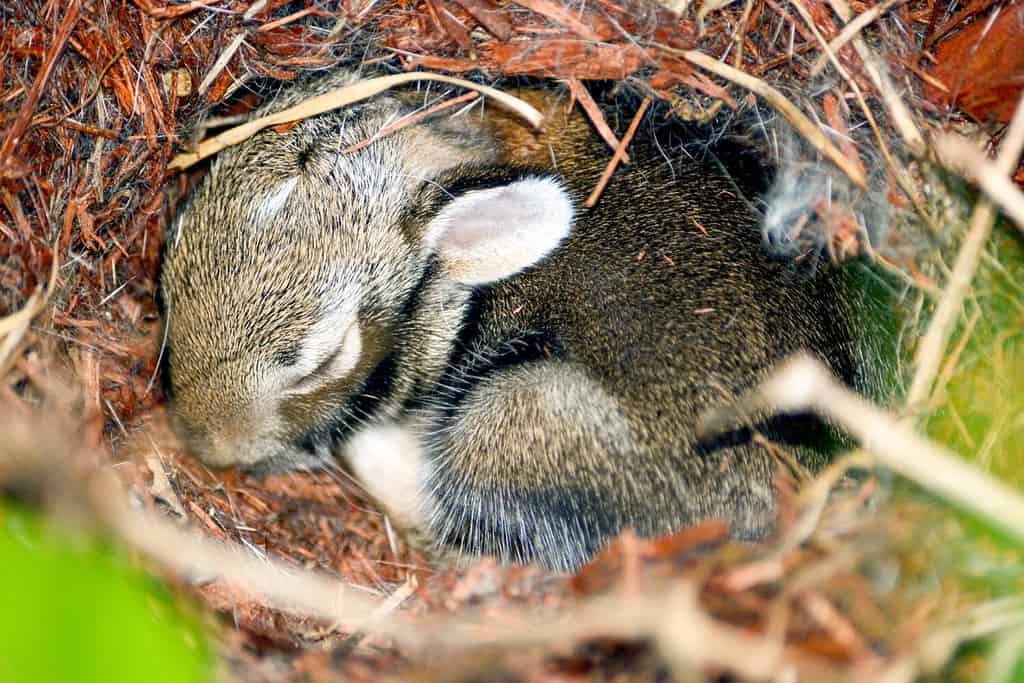
Baby bunnies are born without fur but develop a full coat in a week to 10 days.
©Jerry Morse/Shutterstock.com
As mentioned above, baby bunnies are born without fur. They usually develop a coat of soft, fuzzy fur within about a week to 10 days. When they reach 4–6 months, this baby coat is replaced by what is called a transitional coat. This coat is a mix of fluffy baby fur and adult fur. The rabbit’s adult coat will continue to develop until it is between 18 months and 2 years old. A young bunny’s fur color may also change as it transitions to its adult coat. Additionally, even though a baby bunny’s nails are needle-sharp, they are tiny, delicate, and difficult to trim.
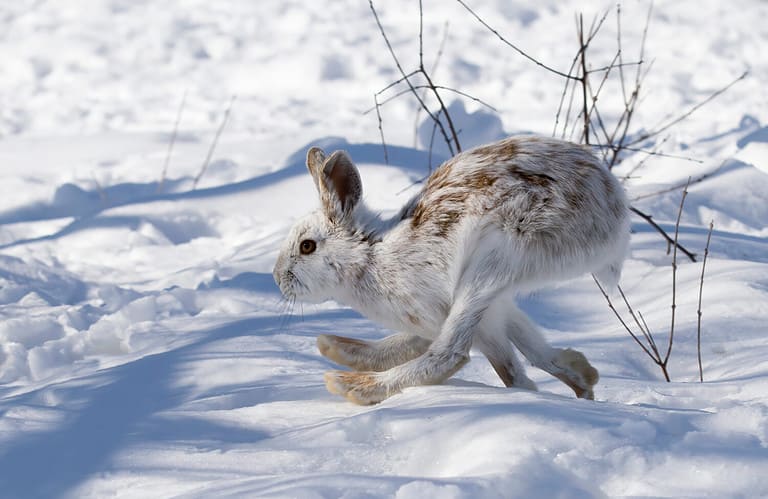
Adult rabbits have fur that is much coarser than a baby’s. Most adult rabbits’ coats are also denser, with water-resistant guard hairs to protect the insulating undercoat. Because rabbits in the wild dig burrows, adult rabbits have large, thick nails. They typically require trimming every 1-2 months. If the nails are not kept trimmed, overgrowth can cause snagging and may force the rabbit to place its feet at awkward angles, which can result in joint strain or injury.
Behavior
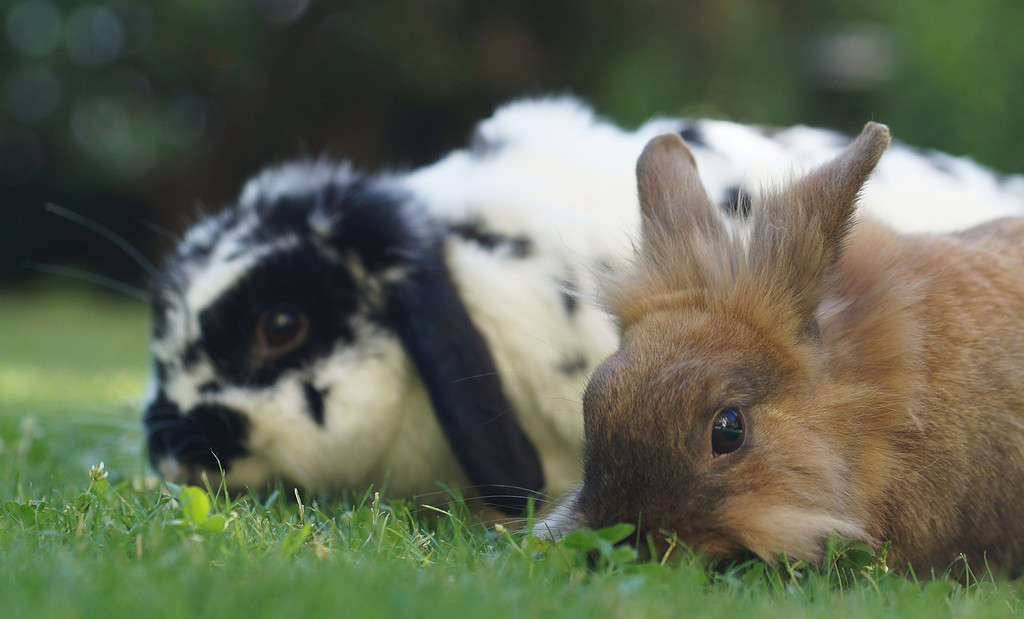
Adult rabbits may be more settled, but they still need exercise and enrichment.
©Sophia Floerchinger/ via Getty Images
As with most species, there are behavioral differences between children and adults. Bunnies are curious, highly energetic, and easily distracted. They are more likely to exhibit destructive chewing and digging as they begin to explore. Hormonal changes at sexual maturity can also significantly impact behavior. Juvenile bunnies can become territorial and aggressive if they are unspayed or unneutered. Litter box habits may also take a turn for the worse during this period.
In contrast, adult rabbits are generally calmer with more consistent energy levels. Adult rabbits also tend to have more established habits and routines. Individual personalities become more obvious. While they are more laid back than young bunnies, adult rabbits are still active and require exercise and enrichment to remain healthy.