
Lake Powell is a 2,000-mile-long lake. It extends from Northern Arizona and dips into southern Utah. Lake Powell is beloved by many for its abundance of sunlight and warm weather. You can find activities such as hiking, camping, and fishing. If you enjoy fishing or learning about animals, read this article to discover five amazing fish living in Lake Powell.
What Types of Fish Live in Lake Powell?
Some fish you may come across in Lake Powell include bass, walleye, catfish, bluegill, and crappies. In rare cases, you may find a jellyfish or two.
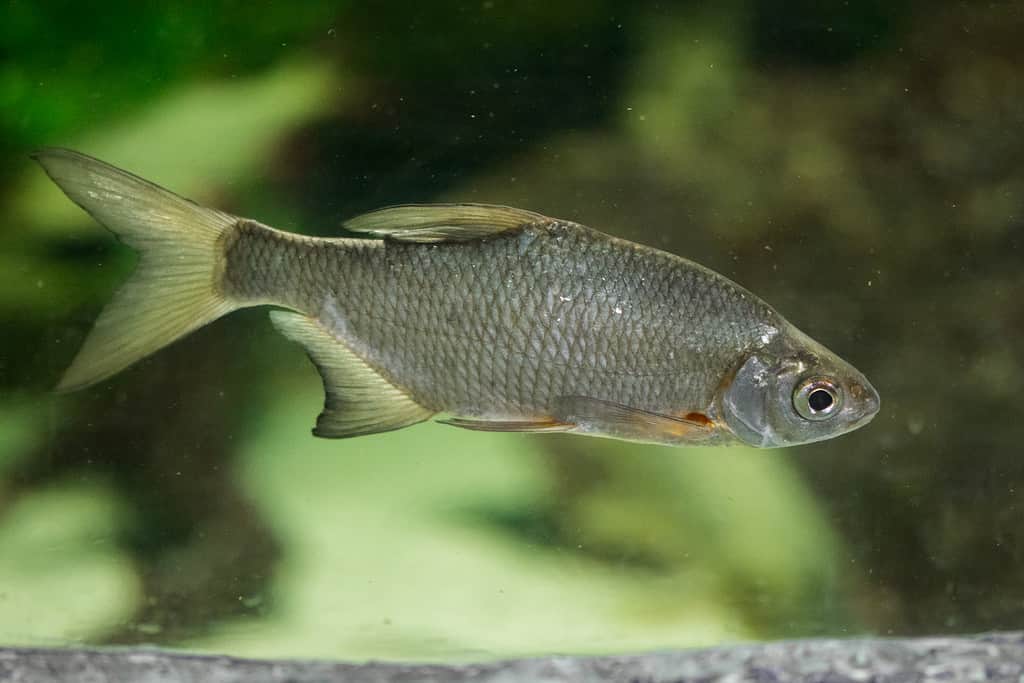
Some fish you may come across in Lake Powell include bass, walleye, catfish, bluegill, and crappies.
©Andrej Jakubik/Shutterstock.com
What Is the Largest Fish Out of Lake Powell?
The largest fish that an angler ever caught weighed in at a whopping 48 lbs and 11 ounces! The biggest fish that was captured in Lake Powell occurred in 1991.
Are There Jellyfish in Lake Powell?
Yes! However, the jellyfish that were caught in Lake Powell are different from the saltwater versions of them.
How Many Species of Fish Live in Lake Powell
There are at least eight different species of fish living in Lake Powell. But you will also find at least three additional species of fish living in Lake Powell, such as brown trout, rainbow trout, and carp as well.
Can You Eat Striped Bass From Lake Powell?
It is safe to eat striped bass from Lake Powell. However, you should take note that it is not a good idea to eat striped bass from the southern areas of Lake Powell as they may contain high levels of mercury.
5 Amazing Fish Living in Lake Powell
Although many awesome species live in Lake Powell, these 7 caught our gills!
1. Striped Bass (Morone saxatilis)
Striped bass are one of five amazing fish living in Lake Powell. They can live up to 30 years, depending on where they are residing. In places such as Lake Powell, they may live shorter lives due to being caught by fishermen. Male and female striped bass can grow to be five feet in length and weigh around 77 pounds.
Adult striped bass feed on zooplankton. Similarly, younger striped bass can feed on small crustaceans, larvae, and mayflies.
Additionally, smaller striped bass are prey to fish such as cod and bluefish.
Popularity
Common.
Danger Level
High.
You may be exposed to mercury poisoning if you consume too many striped bass.
Why Striped Bass Are Amazing
- They come in a kaleidoscope of colors, such as silver, white, and olive green.
- They enjoy living near coastlines.
- They hunt prey by stirring up water to blind their prey and make the water impossible to swim out of.
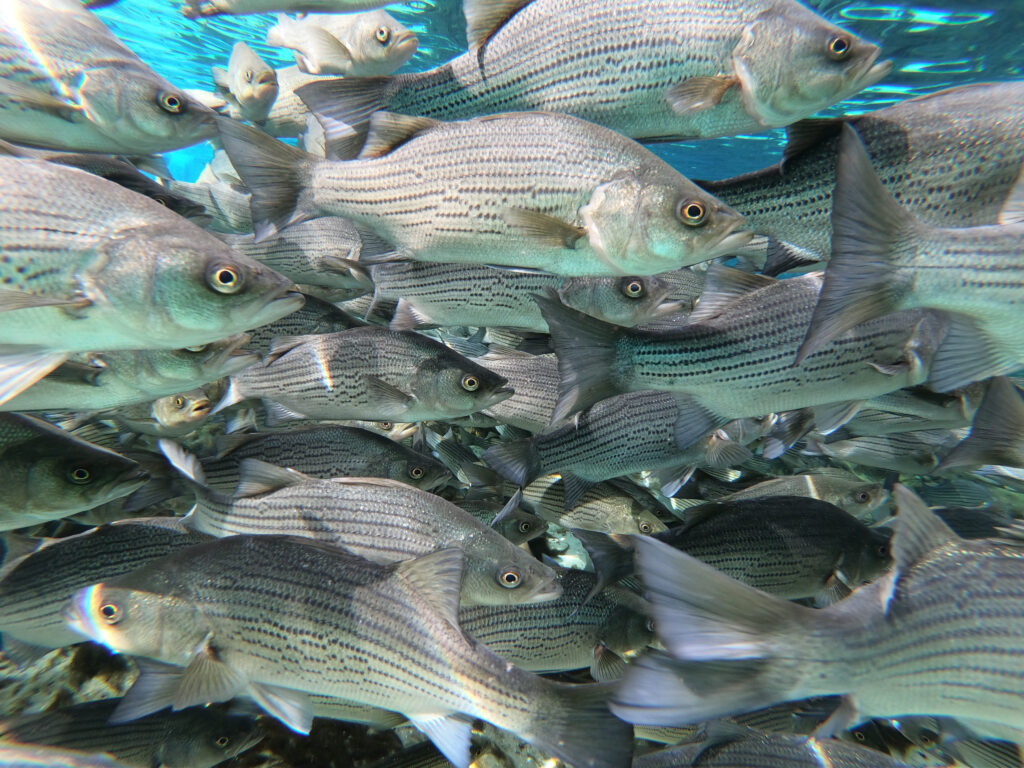
Adult striped bass feed on zooplankton. Similarly, younger striped bass can feed on small crustaceans, larvae, and mayflies.
©Pelow Media/Shutterstock.com
2. Common Carp (Cyprinus carpio)
Common carp may live for 20 years in the wild. However, if they are kept in captivity, they can live up to 40 years. Carps can grow to be 12-25 inches long, although they can grow to be much larger. Likewise, common carp weigh around 8 to 10 pounds, but they can weigh more.
You will see carp travel in groups that are referred to as schools. However, adult carp are known to travel in solitude.
Popularity
Common.
Danger Level
High.
Common carp like to stir up the bottom of the lake or river where they are stalking prey. Moreover, this can disrupt precious sea plants and cause a disruption in the ecosystem. It is also important to keep in mind that common carp can jump out of water and create disastrous ripples that can overturn a boat.
Why Common Carp Are Amazing
- They make up to 70% of the carp population.
- One carp located in France was discovered to weigh 91 pounds.
- Female carp can produce as much as 100,000 eggs. Consequently, each egg takes about four days to hatch.
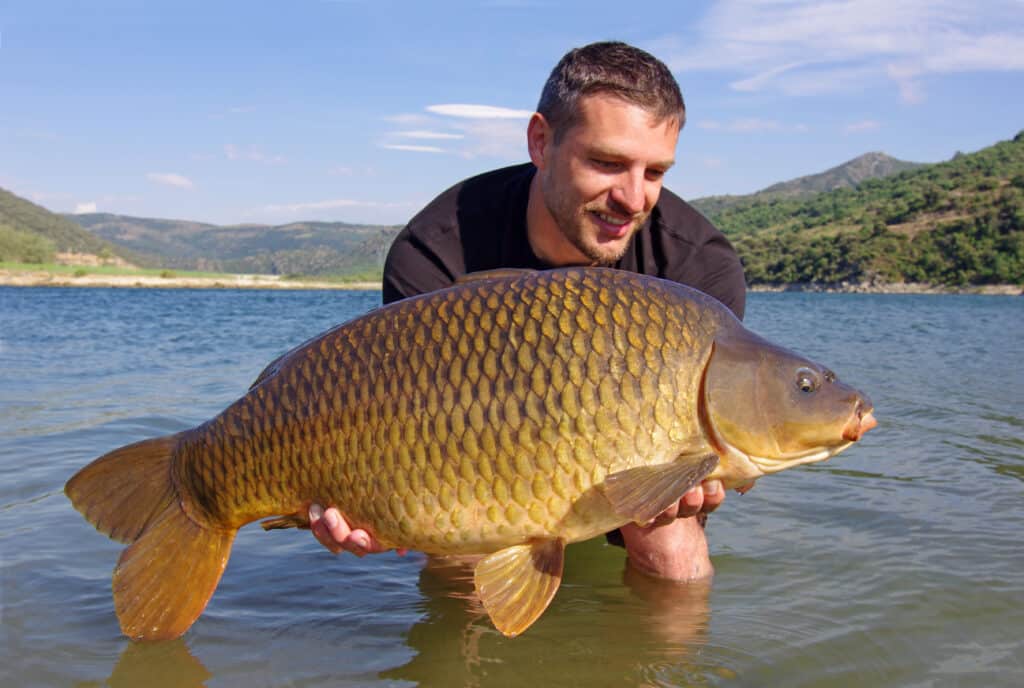
Common carp can jump out of water and create disastrous ripples that can overturn a boat.
©Fabien Monteil/Shutterstock.com
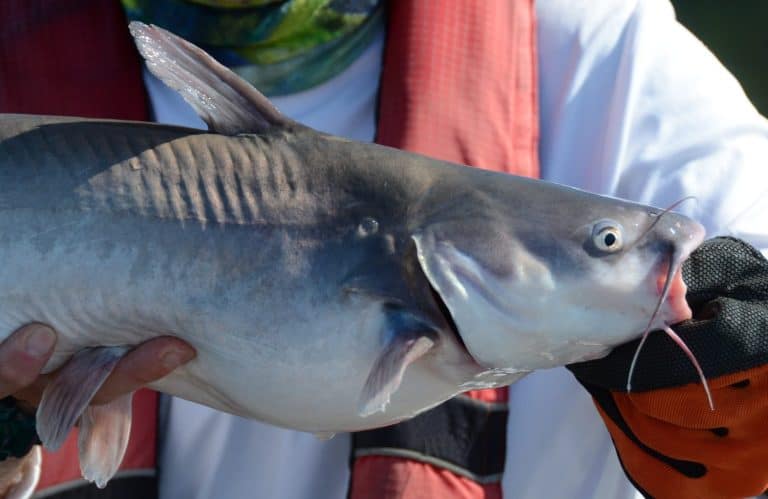
3. Channel Catfish (Ictalurus punctatus)
Channel catfish will grow to about 12-32 inches. They can weigh anywhere from 1 lb to 16 lbs. Additionally, there have been rare instances where catfish have been caught that weighed 40 lbs or more!
It is important to carefully observe the appearance of the channel catfish. They may resemble other species of catfish. Consequently, other species of catfish are mistaken for the channel catfish.
Below are a list of traits that will help you identify the channel catfish
- Dark spots are spread along the back and sides.
- The anal fin has a round shape rather than a straight line.
- Their anal fin includes 24-29 rays and is noticeably shorter than the blue catfish.
- The head and body of the channel catfish are not as wedged-shaped as other catfish.
Channel catfish feed on a wide variety of food, such as insects, crayfish, and plant material.
Female catfish produce offspring in the last week of May. Additionally, they create gel-like material at the bottom of nests where they give birth. The male catfish will guard the nest until it is time for the eggs to hatch.
As a result, the eggs hatch in a week. Furthermore, the offspring will remain in the nest for another week.
Popularity
Common.
Danger Level
High.
Safety precautions should be taken seriously when handling a channel catfish. The spines located on the dorsal and pectoral fins can cut you if you do not handle them properly.
In addition to that, their skin produces a toxin to ward off predators, and if it leaks onto your hand, it can leave an unpleasant burning sensation. This is often mistaken for being stung by a channel catfish. However, it is a bite that causes the burning and pain.
In rare cases, the toxin from the catfish has been known to take down a human being within a few minutes. However, this is found in species of catfish that are very rare to find.
Furthermore, always place your hands behind the spine when handling a catfish. This helps you grip the catfish without running the risk of being cut or stung.
Why Channel Catfish Are Amazing
- There are 3,000 species of catfish.
- Catfish are mistaken to have barbels. However, they are sharp-looking whiskers.
- Catfish have an extraordinary gift for using their whiskers to discover food and explore their surroundings.
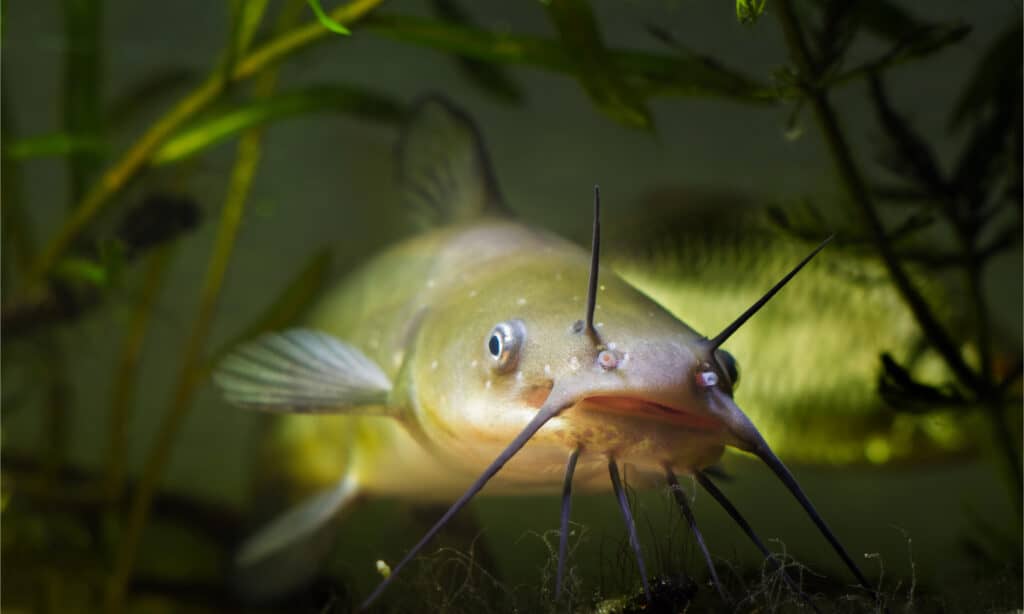
In rare cases, the toxin from the catfish has been known to take down a human being within a few minutes.
©Aleron Val/Shutterstock.com
4. Smallmouth Bass (Micropterus dolomieu)
Smallmouth bass can grow to be 30 inches in length and weigh around 6 or 7 pounds. What’s more, is that smallmouth bass can live for 10 to 16 years.
Reproduction happens in late spring or early summer along river shallows. In addition, there is an abstruse dance ritual that the males and females do to mate. They will rub and bite each other until the dance is complete.
The males build and guard the nest, while the female is the one who spawns the eggs. What’s more, is that the female can produce 5,000 to 14,000 eggs in a span of 5-second intervals that last a little over two hours.
They are most commonly found in bodies of water such as lakes and streams.
Smallmouth bass have an innate ability to adjust to environments better than other fish.
In addition, they enjoy an environment with water that is clear as day with temperatures around 65-75 degrees.
If you visit Lake Powell on a cold day that falls under 60 degrees, your chances of coming across a smallmouth bass are slim to none. This is because they will migrate when the temperature drops.
When it comes to appearance, smallmouth bass can be recognized by their long upper jawline, which reaches the eye. Additionally, you can identify a smallmouth by the three brown vertical bands that run along their flanks.
Popularity Level
Common.
Danger Level
High for animals. Low for Humans.
Smartmouth bass are a danger to other animals. This is because they can destroy habitats, thus making it hard for some species of fish to reproduce and survive.
They are afraid of humans. At most, you may get cut by a fin if you are not holding them in the right manner.
Why Smallmouth Bass Are Amazing Fish
- They can eliminate other species of fish due to destroying environments when hunting for food.
- Female smallmouth bass are bigger than males.
- The lines of a smallmouth bass fade. Therefore, the more faded the lines are, the older the smallmouth bass are.
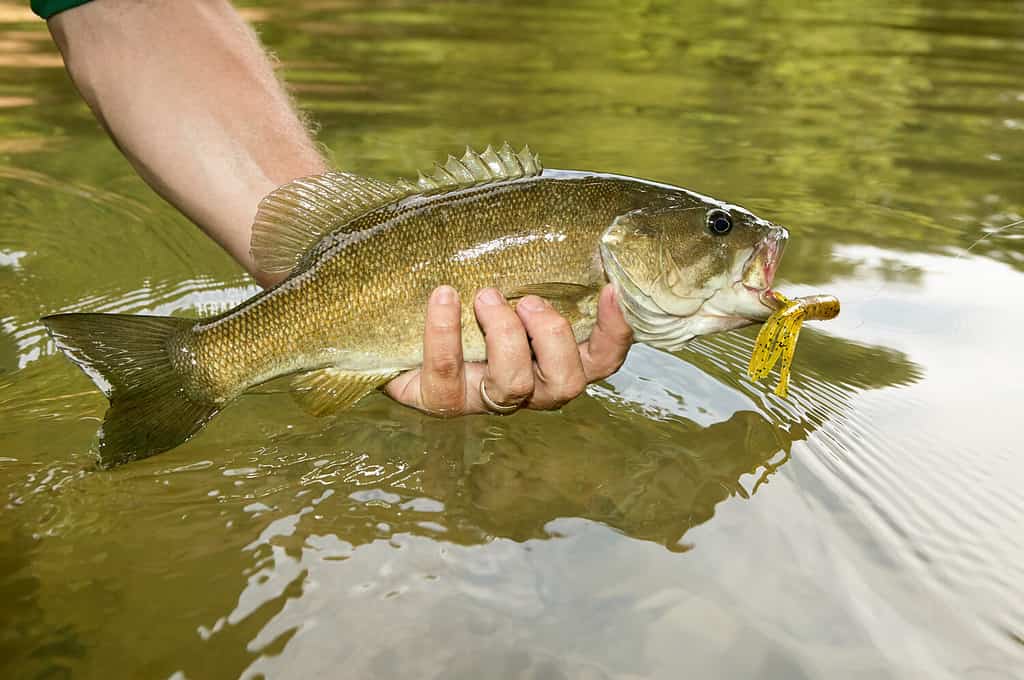
Smallmouth bass have an innate ability to adjust to environments better than other fish.
©CLP Media/Shutterstock.com
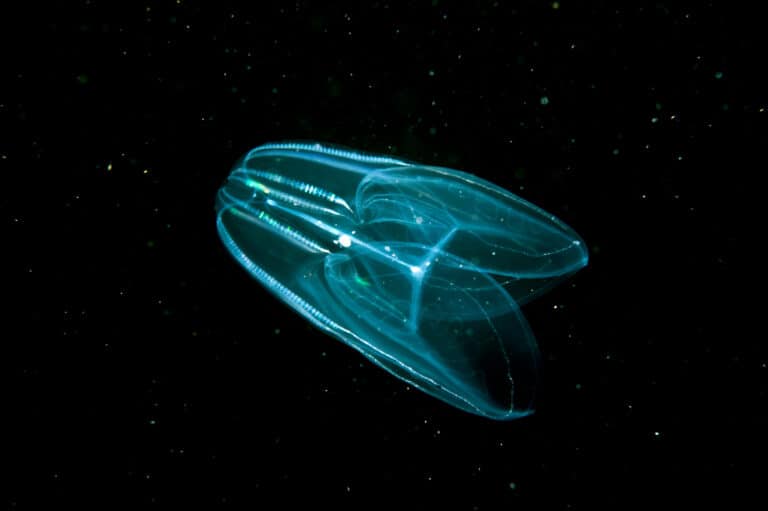
5. Freshwater Jellyfish (Craspedacusta sowerbii)
Jellyfish aren’t only found in the deep blue sea! Freshwater jellyfish can be found in Lake Powell!
Freshwater jellyfish reside in quiet bodies of water. If you want to encounter a freshwater jellyfish, you will want to visit Lake Powell at the quietest times, which are from October to January. They prefer warm water climates where they can feast on an abundance of zooplankton.
They are most likely to be spotted in areas that boats and ports cannot reach, such as shallow pools.
Freshwater jellyfish do not grow to be very big. Moreover, the average size for a freshwater jellyfish is 1 inch.
They reproduce asexually by a process known as budding. First, the jellyfish is born in the form of a polyp. Then they evolve into frustules, which allow them to travel a short distance before they produce the final polyp called the medusa, which is where they detach as full-grown adults. Finally, the medusa reproduces fertilized eggs.
Popularity
Rare.
Danger
Low.
Freshwater jellyfish pose a threat to small microorganisms but do not pose any threat to humans. Moreover, their stingers are made to capture tiny organisms, but they are not able to sting human skin.
Why Freshwater Jellyfish Are Amazing
- One jellyfish can have as many as 400 tentacles!
- Shorter tentacles are made to assist the jellyfish in traveling.
- Longer tentacles are made to assist the jellyfish in paralyzing and hunting prey.
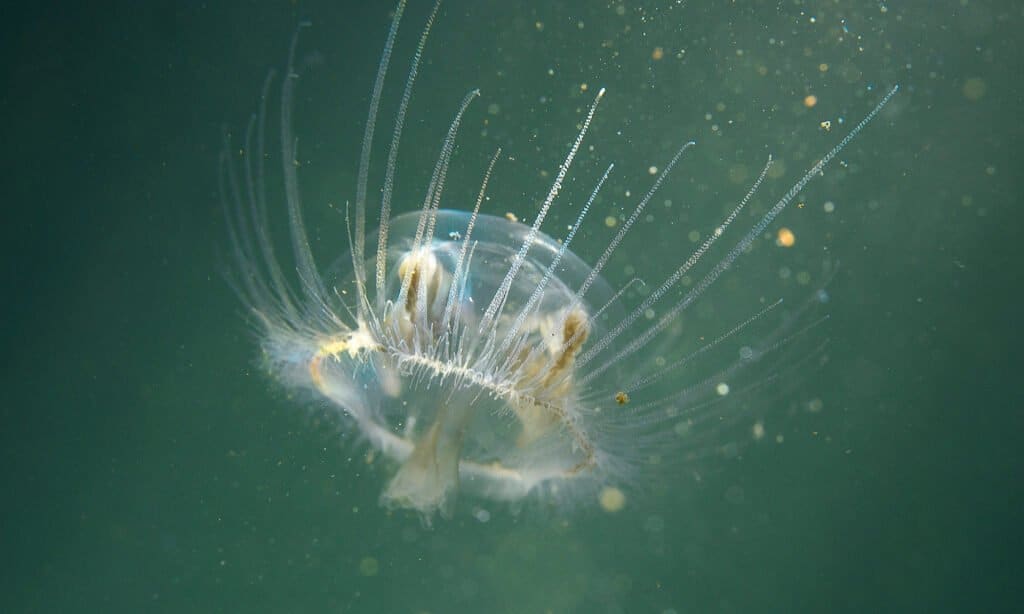
One freshwater jellyfish can have as many as 400 tentacles!
©Rostislav Stefanek/Shutterstock.com
Recap: Discover 5 Amazing Fish Living in Lake Powell
The five amazing fish living in Lake Powell can be discovered in this article. Remember to schedule your trip accordingly, handle fish with care, and enjoy!
| Fish | Why They’re Amazing |
| Stripped Bass | They make up to 70% of the carp population. One carp located in France was discovered to weigh 91 pounds. Female carp can produce as much as 100,000 eggs. Consequently, each egg takes about four days to hatch. |
| Common Carp | There are 3,000 species of catfish. Catfish are mistaken to have barbels. However, they are sharp-looking whiskers. Catfish have an extraordinary gift with using their whiskers to discover food and explore their surroundings. |
| Channel Catfish | They can eliminate other species of fish due to destroying environments when hunting for food. Female smallmouth bass are bigger than males. The lines of a smallmouth bass fade. Therefore, the more faded the lines are, the older the smallmouth bass are. |
| Smallmouth Bass | They can eliminate other species of fish due to destroying environments when hunting for food. Female smallmouth bass are bigger than males. The lines of a smallmouth bass fade. Therefore, the more faded the lines are the older the smallmouth bass are. |
| Freshwater Jellyfish | One jellyfish can have as many as 400 tentacles! Shorter tentacles are made to assist the jellyfish in traveling. Longer tentacles are made to assist the jellyfish in paralyzing and hunting prey. |