
Quick Take
- The largest fish species in the White River is the alligator gar.
- The White River is 722 miles long.
- The White River is well known for excellent trout fishing.
There are over a dozen rivers in the United States called the White River, the longest of which is the 722-mile-long White River of Arkansas and Missouri. Its source is located in Northwest Arkansas’ Boston Mountains, from which it flows northward into Southwest Missouri before looping back southeast through Arkansas to its mouth at the Mississippi River. Missouri’s first-ever hydroelectric dam, the Powersite Dam, was constructed along the White River. It was completed in 1913, and still provides electricity to residents of the Ozarks today. The White River is popular among anglers, especially those angling for trout and white bass. It is home to approximately 80 known fish species. Continue reading to learn about the five largest.
5. Brown Trout
Brown trout (Salmo trutta) were first introduced into the White River around 1955, after the completion of several dams which resulted in cold tailwaters that trout can survive in. They are native to the majority of Europe and West Asia, as well as some parts of North Africa. Brown trout have been introduced globally because they are popular game fish, and have subsequently become one of the worst invasive species. They are an incredibly adaptable species that has evolved several ecotypes. The riverine ecotype known as river trout (S. t. morpha fario) is unsurprisingly the one found in the White River.
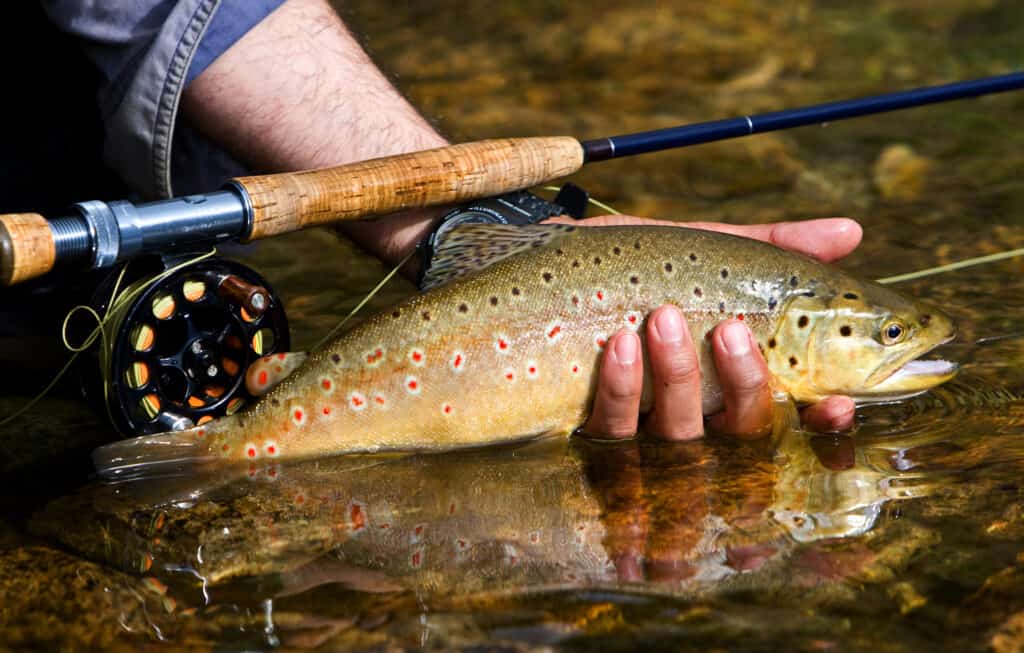
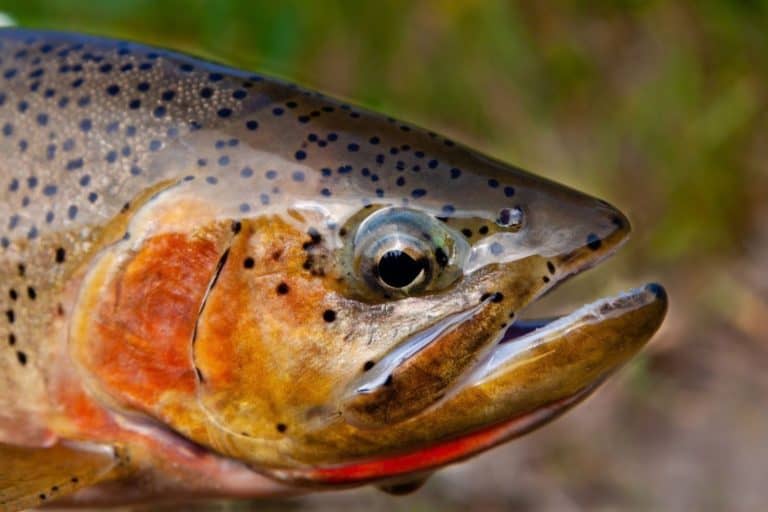
The brown trout’s distinctive spots vary in color from red to black.
©iStock.com/MarceloDufflocqw
Brown trout typically measure 8 to 24 inches long and weigh 2 to 10 pounds. The largest brown trout ever caught in the White River weighed 38 pounds, 7 ounces and measured 36.5 inches long. It was caught by angler Calvin Johnston on February 27th, 2015.
4. Flathead Catfish
Of the many catfish species living in the White River, flathead catfish (Pylodictis olivaris) are the second largest. It is the sole member of its genus, Pylodictis. Most other catfish species belong to the Ictalurus genus. Flathead catfish are olive colored with a white or yellow belly. Juveniles are typically darker in color, with many being dark brown to black. Their anal fins have 14 to 17 rays. They are a benthic species, meaning they are primarily found lying on the bottom of rivers or lakes.
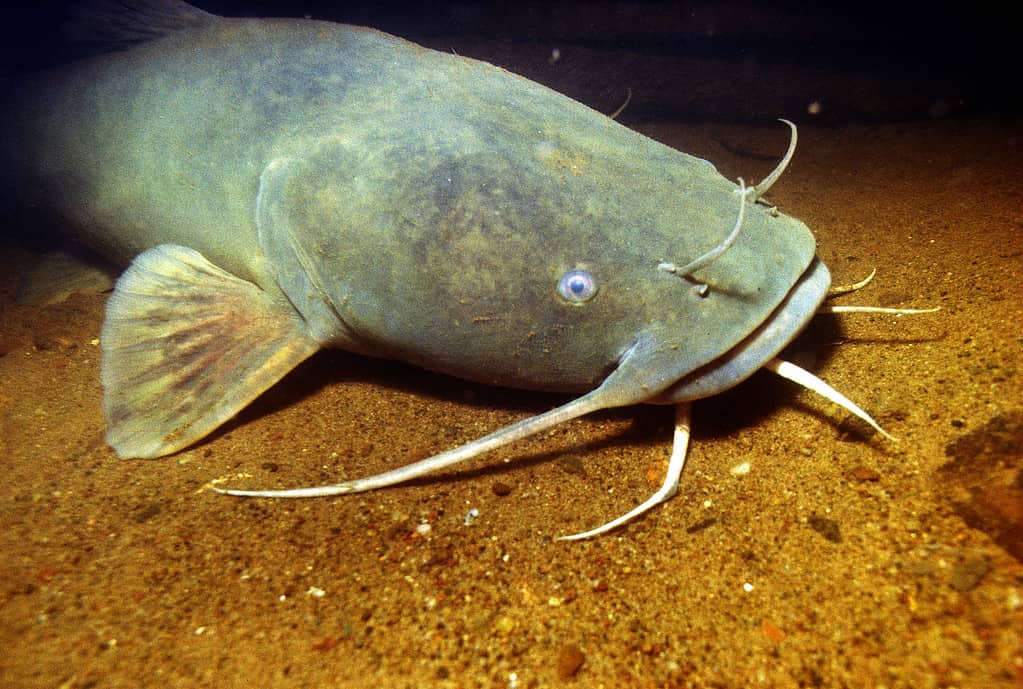
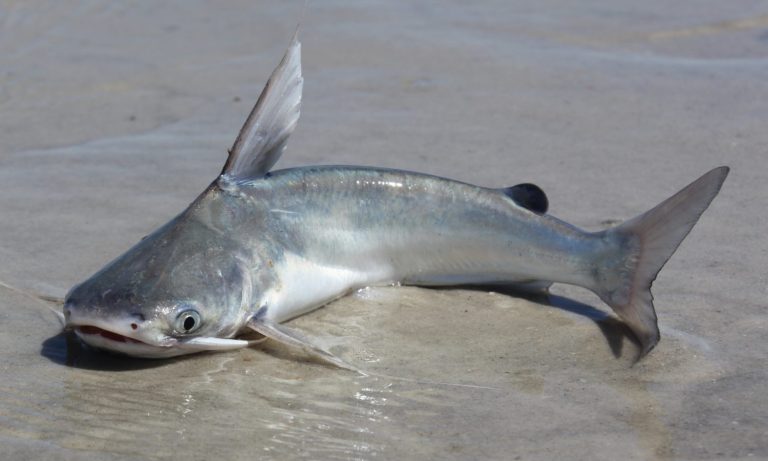
A flathead catfish on the bottom of the Mississippi River.
©stammphoto/ via Getty Images
Flathead catfish typically measure 1.3 to 3.7 feet long and weigh 10 to 45 pounds. There is no official record for flathead catfish caught in the Arkansas-Missouri White River. However, record specimens caught in other rivers in the region could be indicative of what is lurking in the White River. The largest flathead catfish caught in Missouri weighed 100 pounds, and the largest caught in Arkansas weighed 80 pounds.
3. Blue Catfish
Blue catfish (Ictalurus furcatus) are North America’s largest catfish species. However, despite being native to the continent, populations in the Chesapeake Bay and Albemarle Sound are considered invasive. Conversely, blue catfish have been introduced into many lakes and rivers throughout the United States because they are popular game and food fish. The White River is within the species’ native range. They are often mistaken for channel catfish (Ictalurus punctatus). Blue catfish are blueish gray and heavy bodied with a dorsal hump, whereas channel cats are dark gray, spotted and smaller. The easiest way to distinguish the two is by counting the number of rays on the fish’s anal fin. Blue catfish have 30 to 36 rays, while channel catfish have 25 to 29.
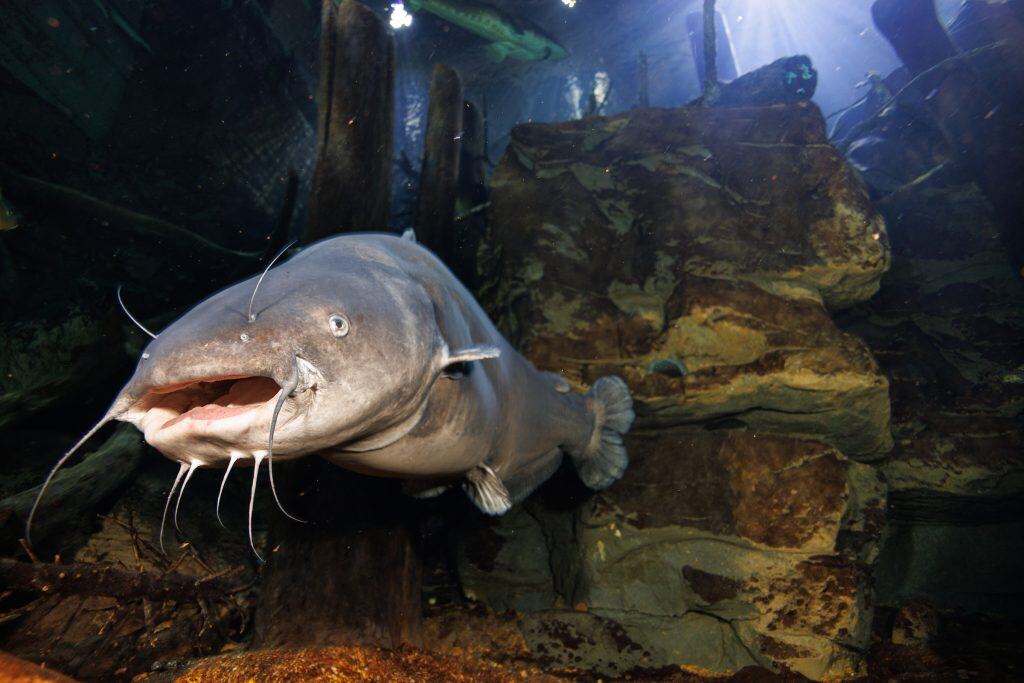
A Blue Catfish in the Tennessee Aquarium’s Tennessee River exhibit.
©Tennessee Aquarium
Blue catfish typically measure 1.7 to 4.2 feet long and weigh 20 to 50 pounds. While there is no documentation of record-setting blue catfish pulled from the White River, the largest specimen caught in Arkansas weighed 116 pounds, 12 ounces, and the largest in Missouri weighed 130 pounds.
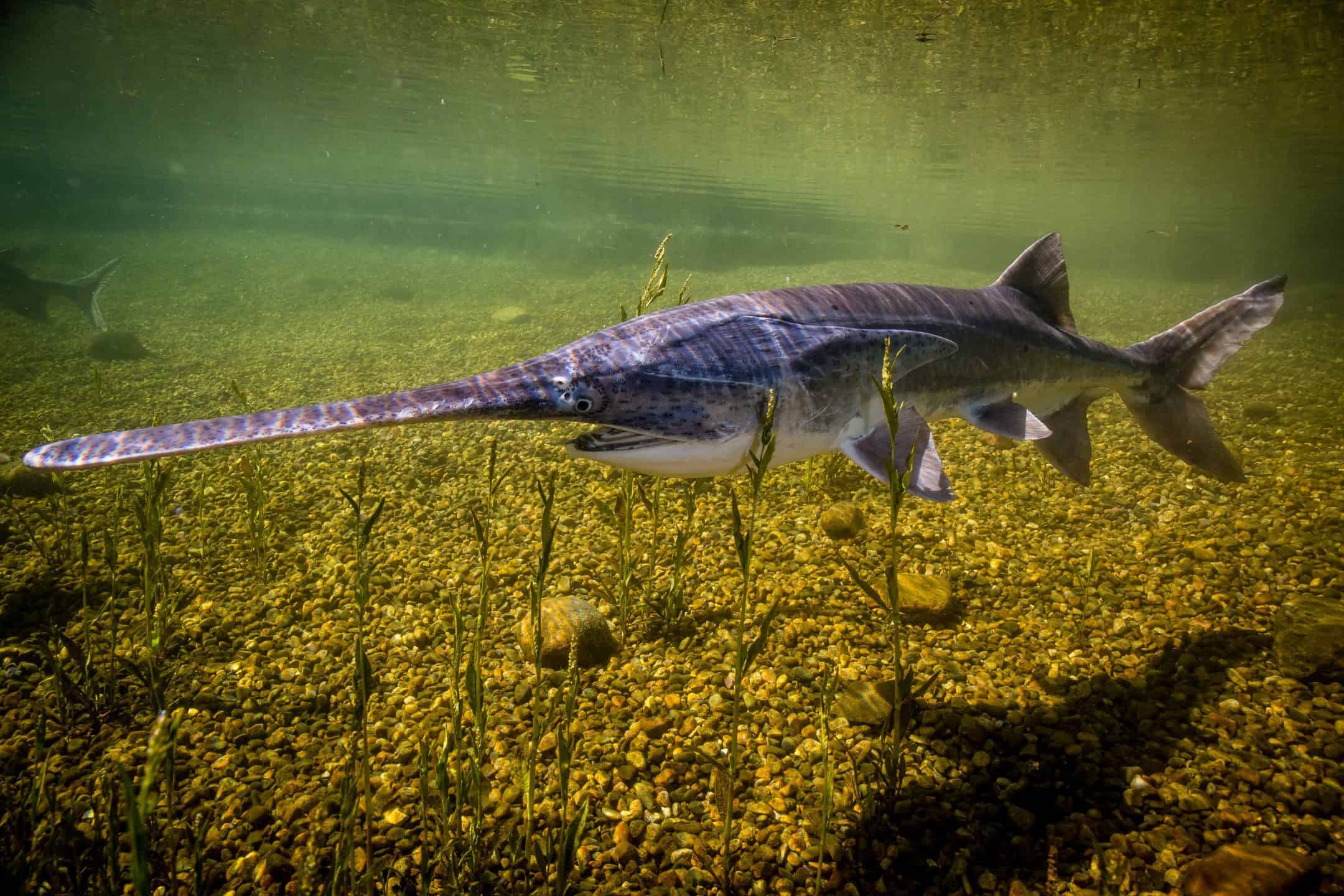
2. American Paddlefish
The American paddlefish (Polyodon spathula) is the oldest and only extant paddlefish species, and classified as Vulnerable by the IUCN. Habitat destruction, pollution, overfishing, and poaching have led to dramatic declines in the species’ populations. They are native to the Mississippi River basin, which includes the White River.
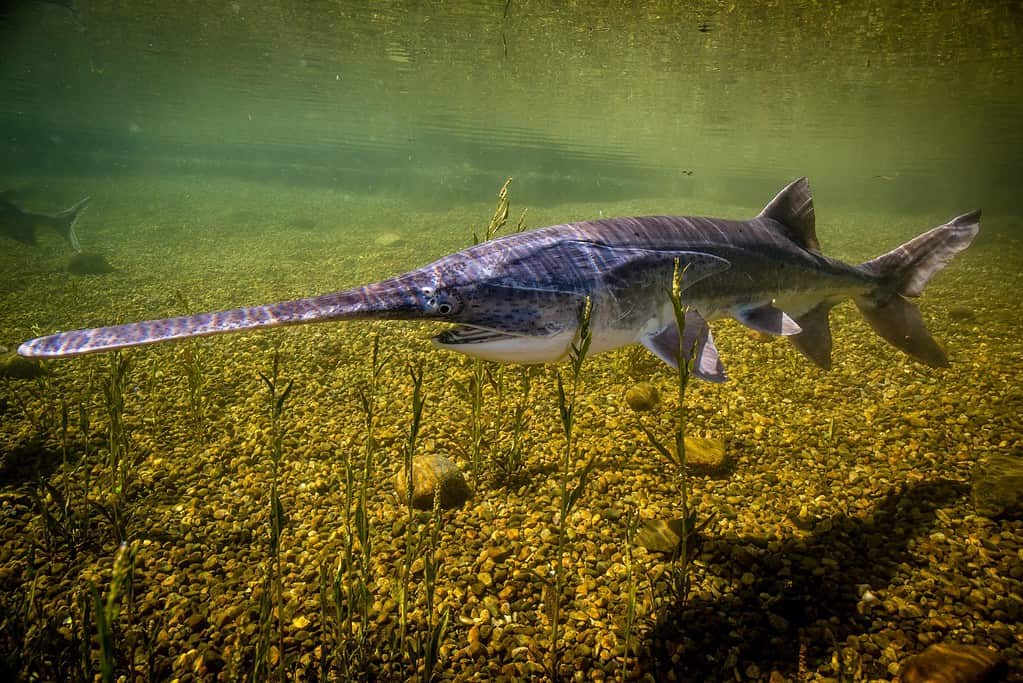
©U.S. Fish and Wildlife Service / Public domain – Original / License
American paddlefish typically measure 5 to 7 feet long and weigh 40 to 60 pounds. In April 2023, Arkansas angler Robert Murphy caught the largest specimen in the White River, it weighed 102 pounds. In June 2024, Mike Schleeper caught a 127-pound, 6-ounce paddlefish in Beaver Lake, part of the White River system, setting a new Arkansas state record.
1. Alligator Gar
The largest fish found in the White River is the alligator gar (Atractosteus spatula). They are native to North America, primarily in the Southern United States. Historically, alligator gar were considered trash or nuisance fish. They were subsequently targeted for extermination by United States authorities in the belief this would enable populations of popular game fish to thrive. However, researchers in the 1980’s discovered the importance of alligator gar in maintaining their native riverine ecosystems. Since then, alligator gar have received some state and federal protections. Today, anglers consider them a game fish, with Arkansas being one of several states allowing regulated game fishing of the species.
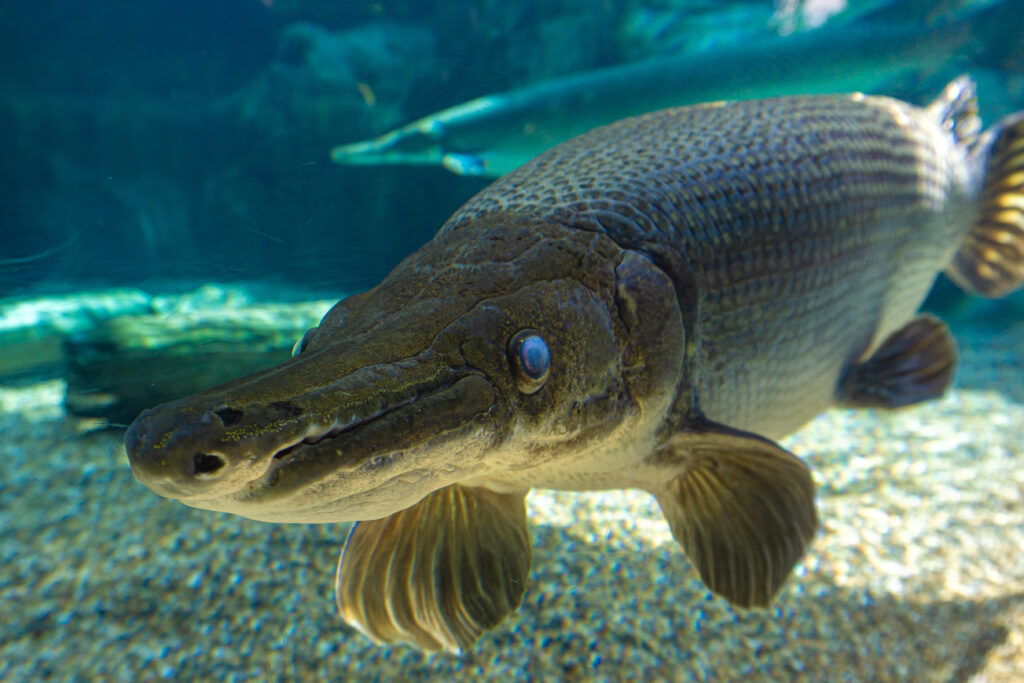
Once considered trash fish, alligator gar are now a sought-after game fish.
©TKBackyard/Shutterstock.com
It is no surprise alligator gar are now viewed as game fish when considering their incredible size. They typically measure 6 feet long and weigh over 100 pounds. The largest documented alligator gar caught in the White River weighed 240 pounds and measured 8 feet, 2 inches long, according to a 2004 report.