
Quick Take
- Running from a bear feels instinctive, even though wildlife experts say it's one of the worst things you can do. Why fleeing triggers pursuit →
- A skier on a snowy slope had one narrow advantage over a charging brown bear, but it almost wasn't enough. See the Romania incident →
- Brown bears look slow and lumbering, but their actual top speed changes the calculus of every encounter. See brown bear top speeds →
- Most bear charges aren't what they appear to be, and misreading one could be a fatal mistake. Learn about bear charge types →
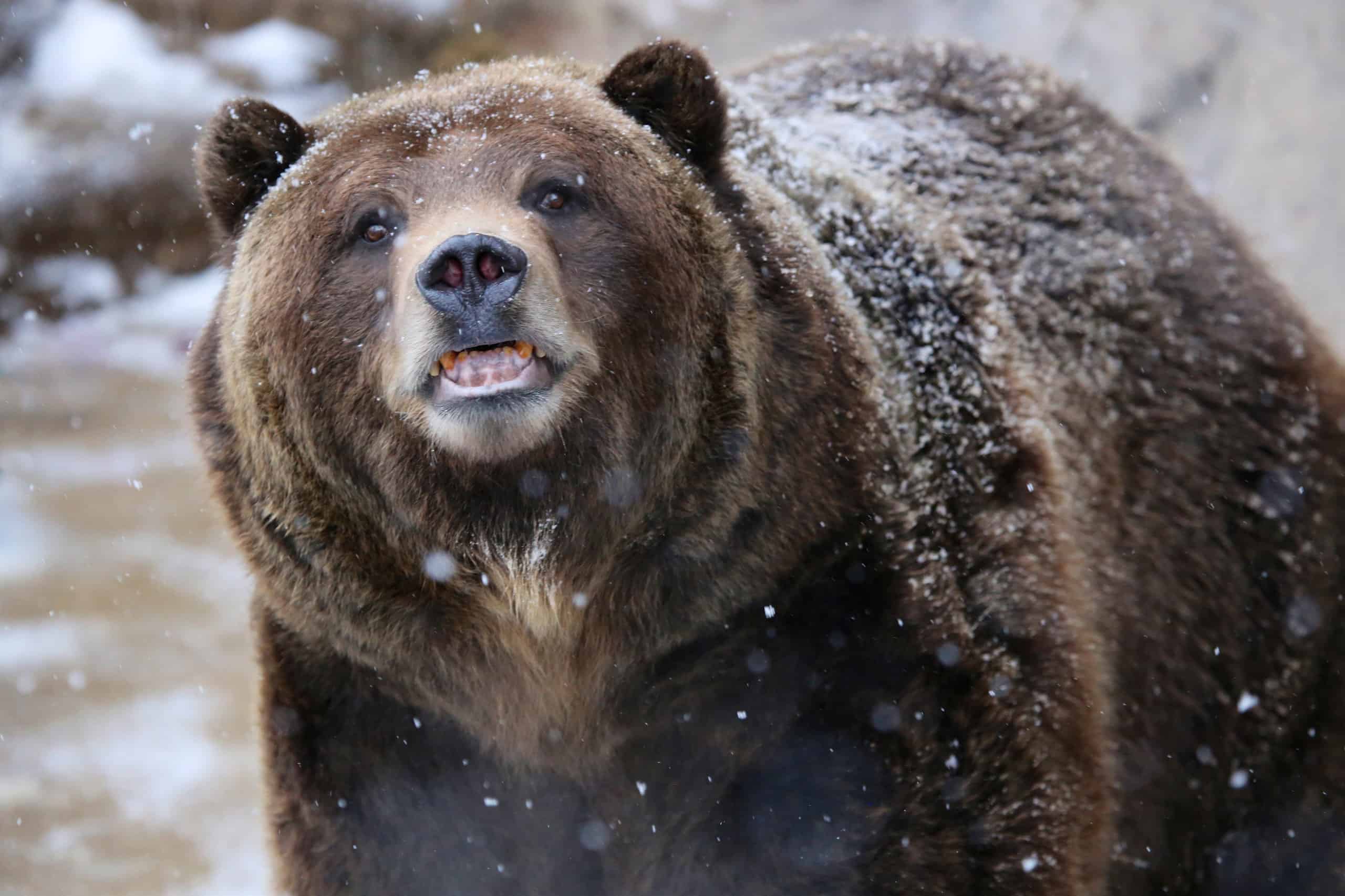
Seeing a wild animal from a distance can be incredible. Having one come charging after you is a very different experience. Fortunately, most encounters between people and bears end without injury, but bears are powerful wild animals and their behavior can be unpredictable. Defensive encounters can happen when a bear is surprised, feels threatened, is protecting cubs, or is guarding a food source.
Watch the Bear Chase a Skier Down the Mountain
Bears are sometimes portrayed as animals that will immediately chase any person unlucky enough to cross their path. Real encounters are much more complicated. According to the National Park Service, most bear encounters end without injury, and many aggressive encounters involve a bear reacting defensively after being surprised or perceiving a threat.
That does not make a charging bear any less dangerous. Brown bears are incredibly fast, and people should never assume they can outrun one on foot. Wildlife officials generally advise people not to run during a close bear encounter because fleeing can trigger a pursuit response.
Brown Bear Chases Skier in Romania
The dramatic video above was recorded at a ski resort in Romania in January 2021. It shows a brown bear racing down a snowy slope behind a skier while people watching from a chairlift shout warnings from above.
Exactly why the bear began following the skier is difficult to determine from the footage alone. There is no clear evidence that the skier intentionally approached or provoked the animal before the recording began, so it is better not to guess about what triggered the encounter.
Whatever caused it, the skier had very little room for error. The bear continues downhill behind him as he tries to maintain distance, periodically slowing before continuing the pursuit. ABC News reported that the skier eventually escaped safely. The footage quickly spread online because of just how close the encounter appeared to become.
How Fast Can a Brown Bear Run?
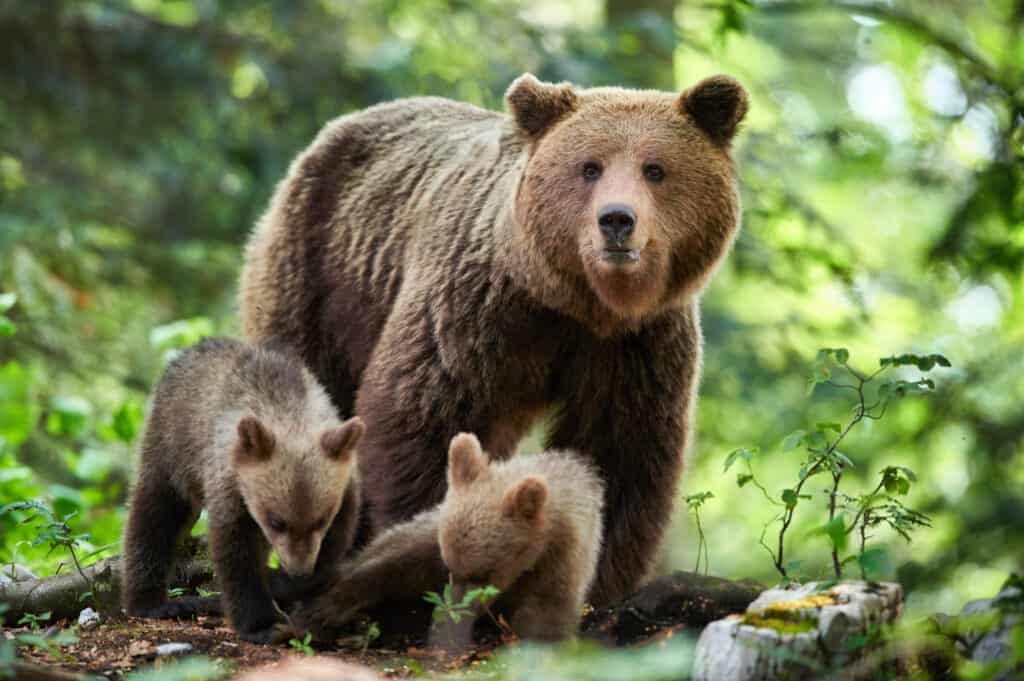
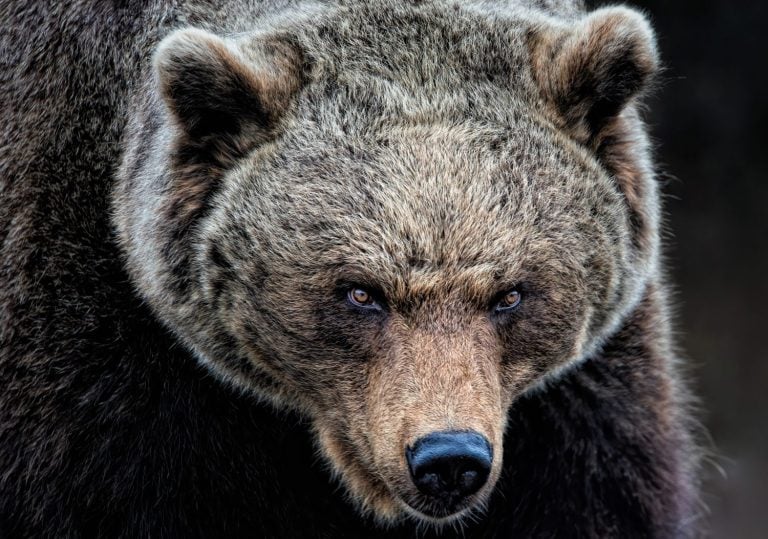
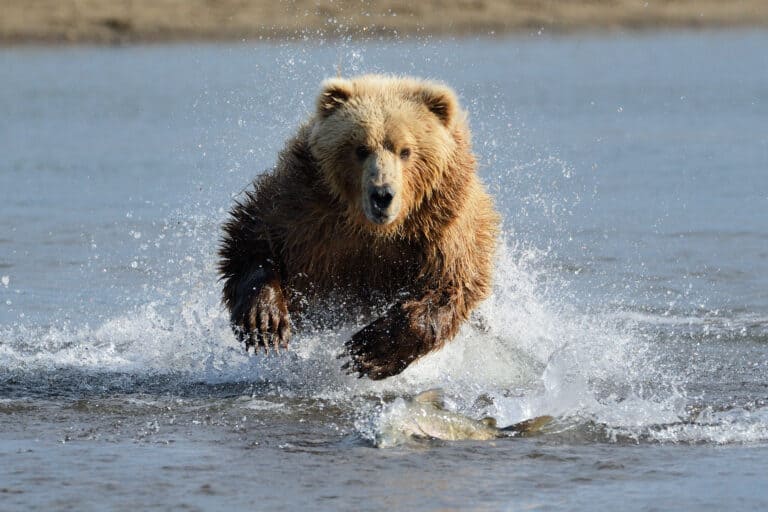
Brown bears can reach impressive speeds over short distances.
©Piotr Krzeslak/Shutterstock.com
Brown bears are much faster than their bulky appearance suggests. The National Park Service reports that brown bears can reach roughly 35 to 40 miles per hour over short distances. That is considerably faster than a person can run, which is one reason wildlife agencies specifically warn people not to try to outrun a bear.
Size varies considerably depending on sex, population, habitat, and season. Adult brown bears can weigh anywhere from roughly 200 to 1,000 pounds. They generally measure about five to seven feet long, while especially large individuals may approach nine feet in height when standing upright on their hind legs.
Where Do Brown Bears Live?
Brown bears, scientifically known as Ursus arctos, have one of the widest ranges of any living bear species. They occur across portions of North America, Europe, and Asia, including Romania and other parts of the Carpathian region.
The species once occupied an even larger range, but disappeared from many areas as human settlement expanded. Large populations remain in places including Russia, Alaska, and Canada, while Europe supports several important populations of its own. European conservation data estimates that roughly 20,500 brown bears lived across the continent in 2023.