
Quick Take
- What looks like a random attack on a cyclist may actually be something far more calculated, and understanding the difference could save your life. Stay safe on the road →
- Wildlife experts warn that assuming an elephant is bluffing is one of the most dangerous mistakes you can make near a herd. Understand charge behavior →
- The elephant in this video may not have been acting aggressively at all, and the real explanation is stranger than it looks. Watch the footage explained →
- India's relationship with wild elephants has reached a tipping point, and the numbers behind it are hard to believe. See the population numbers →
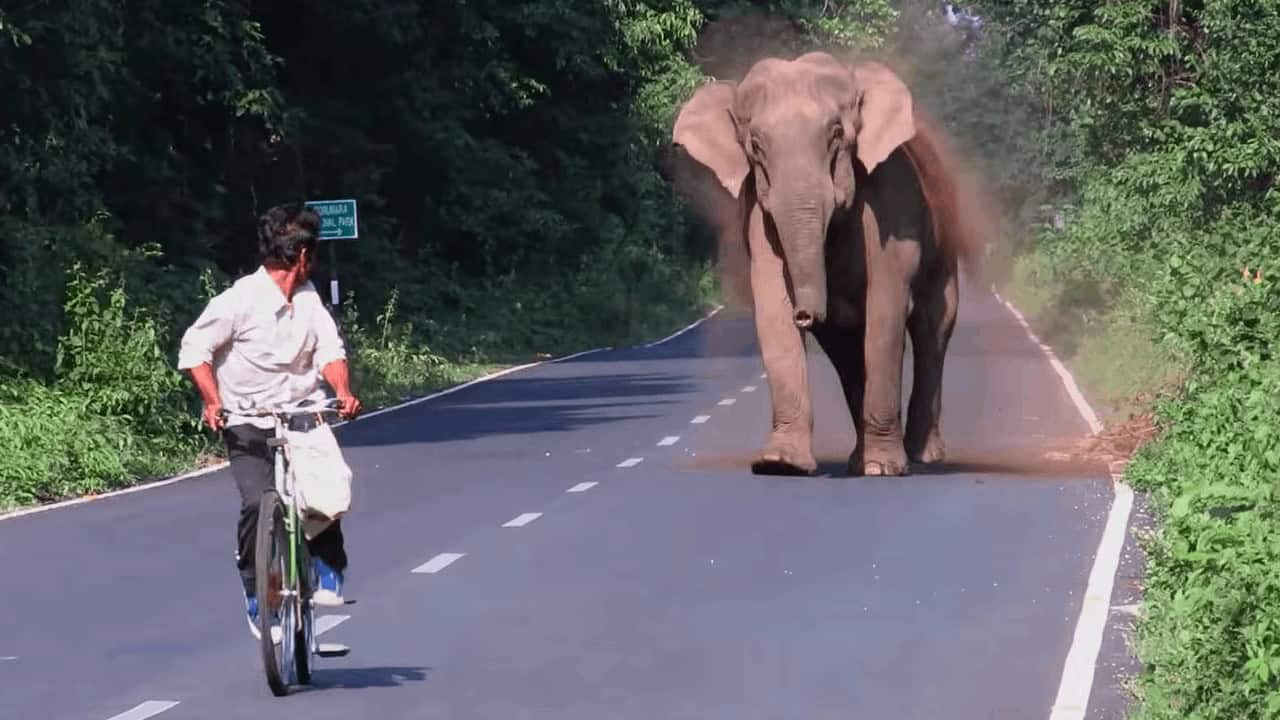
A cyclist traveling along a forest road in India suddenly finds himself facing a very large, very determined elephant. The animal steps into the road and rushes toward him, forcing him to make a quick getaway. But what happens next helps explain why the elephant may have reacted so aggressively.
Captured along the Chalsha-Nagrakata road in West Bengal, India, the footage shows a large Asian elephant confronting the cyclist before turning its attention toward approaching vehicles. The animal remains on the road as traffic comes to a stop. Then, several other elephants emerge from the surrounding forest and begin crossing. What initially looks like an aggressive encounter may actually be a protective response to a perceived threat near the herd.
The video, originally published in 2016, offers a fascinating look at how wild elephants respond to people entering their space. These enormous animals have strong family bonds and can become defensive when younger herd members are nearby. Watch the clip now to see the encounter unfold, then discover what scientists know about Asian elephant behavior and why these roadside encounters can be dangerous.
Watch the Elephant Chase the Cyclist Before Its Herd Crosses
The elephant’s sudden movement sends the cyclist away from the area, but the encounter doesn’t end there. After confronting the approaching traffic, the animal remains near the road as other elephants emerge from the trees and cross. Although we can’t know exactly what the elephant was thinking, the sequence is consistent with defensive behavior around a family group. Fortunately, the cyclist gets away, and the herd is able to continue across the road.
Why Would an Elephant Chase a Cyclist?
Elephants aren’t naturally interested in chasing cyclists, but they can react aggressively when they feel threatened or encounter people at close range. This is particularly important when calves or other herd members are nearby. In the video, the elephant makes a sudden advance toward the cyclist before stopping short, behavior the original filmmaker described as a mock charge.
A mock charge is generally considered a warning display. An elephant may rush toward a perceived threat, spread its ears, shake its head, or make other intimidating movements without following through with an attack. However, these signals aren’t always easy to interpret, and a warning charge can turn into a genuine attack. That’s why wildlife experts caution people against assuming an elephant is bluffing.
In this case, the appearance of the other elephants suggests the animal may have been reacting to people and vehicles near its group. That doesn’t necessarily mean it was deliberately directing traffic or checking for cars the way a person would. What the video does show is an elephant creating distance between itself and nearby people before the rest of the herd crosses.
How Do Asian Elephants Protect Their Families?
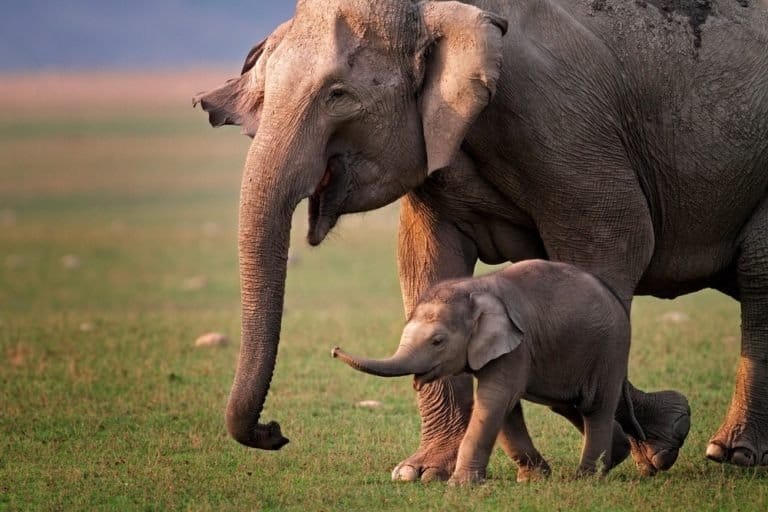
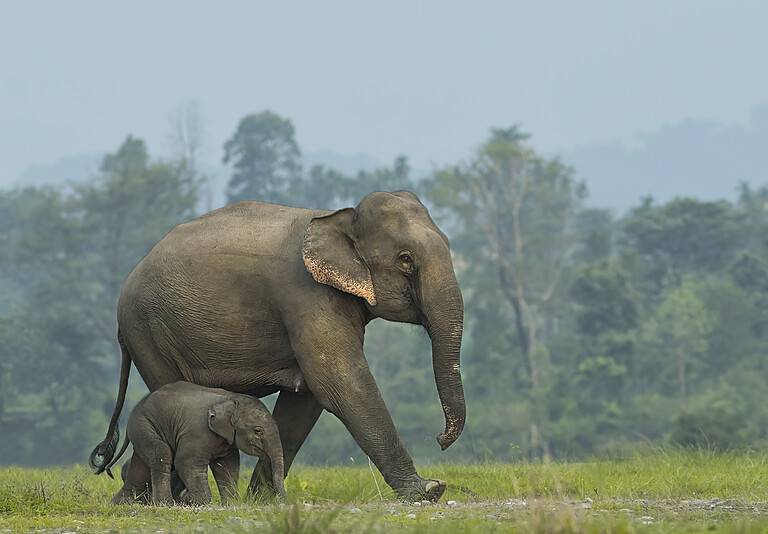
Asian elephants are highly social animals that maintain complex relationships with other members of their groups. Females typically live alongside related females and their offspring, while males generally begin leaving their family groups as they reach adolescence. Adult males may travel alone or associate with other males, occasionally joining female groups.
Older females can play an important role in the herd, particularly when it comes to experience, movement, and responding to potential danger. However, Asian elephant social structures vary, and not every group follows the same rigid leadership arrangement. Their groups are often smaller and more fluid than those of African savanna elephants, with individuals sometimes separating and rejoining one another.
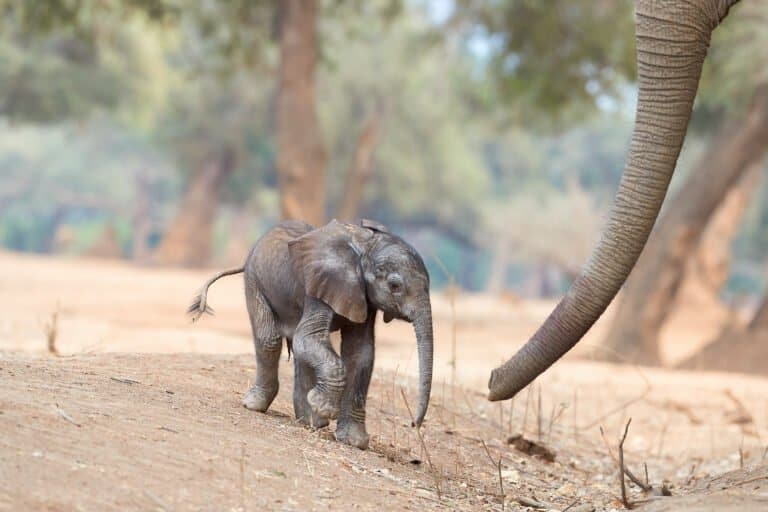
Females also cooperate in caring for younger elephants. Calves depend heavily on their mothers, but other females may help protect, guide, and supervise them. These relationships are especially important when elephants move through unfamiliar areas or encounter potential threats. A busy road cutting through elephant habitat creates exactly the kind of situation where keeping the group together can become challenging.
Where Do Asian Elephants Live?
Asian elephants are native to parts of South and Southeast Asia, with wild populations remaining in 13 countries, including India, Nepal, Bangladesh, Bhutan, Sri Lanka, Thailand, and Indonesia. They occupy a variety of habitats, from tropical and subtropical forests to grasslands and areas near rivers. Access to food, water, and suitable shelter plays a major role in where they travel.
India is particularly important to the species’ survival. According to the country’s 2021-2025 elephant population assessment, released in October 2025, India has an estimated 22,446 wild elephants and supports approximately 60% of the world’s remaining wild Asian elephant population. The species is classified as Endangered, with habitat loss, fragmentation, and conflict with people among its biggest threats.
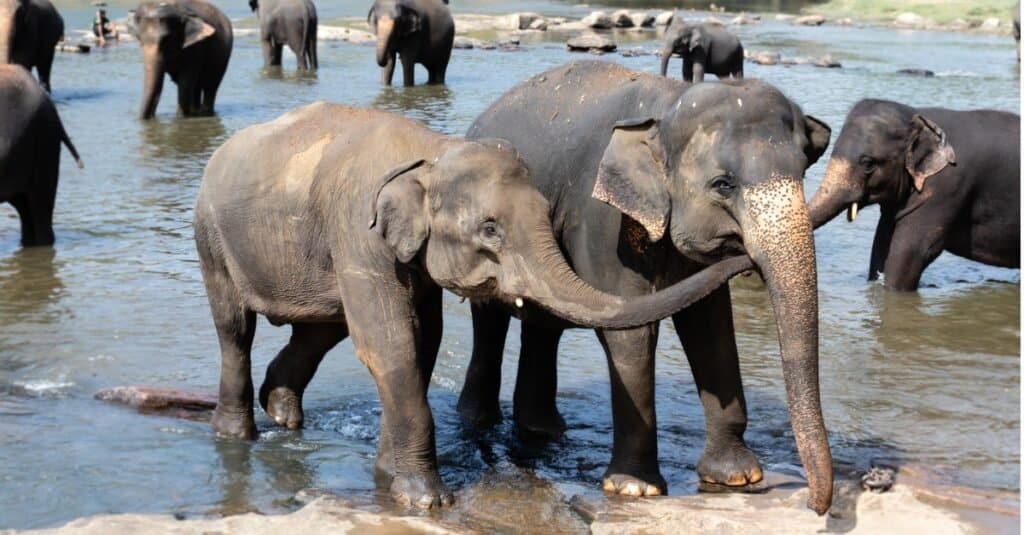
Access to water is essential for elephants, which regularly drink and bathe to stay cool.
©iStock.com/Nilanka Sampath
Unfortunately, elephant habitats increasingly overlap with farmland, villages, roads, and other human developments. Elephants often travel considerable distances in search of food and water, and traditional movement routes can become dangerous when they intersect with busy transportation corridors. The road shown in this video is located in a region where elephants and motorists regularly encounter one another.
What Should Drivers Do When Elephants Cross a Road?
Seeing a wild elephant from a vehicle can be an unforgettable experience, but keeping a safe distance is essential. Drivers should stop well away from the animals, avoid honking or revving their engines, and never attempt to squeeze between members of a herd. Getting between an adult and a calf can create an especially dangerous situation.
Elephants are capable of moving much faster than their size might suggest, and even an animal that appears calm can react defensively when startled. The safest approach is to give the herd plenty of space, follow any instructions from local wildlife authorities, and wait until the animals have completely cleared the road before continuing.
The cyclist in this video escaped an extremely uncomfortable encounter, while the elephants eventually made it across the road. It’s a good reminder that when people travel through wildlife habitat, giving animals room to move is often the safest outcome for everyone involved.