
Quick Take
- Two-toed sloths have front pseudo-canine teeth used to cut leaves and defend against predators.
- Sloth teeth lack enamel and are made of dentine and cementum.
- Sloths will bite if they feel threatened.
There are six recognized extant species of sloths contained in two genera: four three-toed sloth species (Bradypus) and two two-toed sloths (Choloepus). Sloths, the slowest land mammals, live in the tropical rainforests of Central and South America and spend most of their time in trees. Their diet consists primarily of leaves, shoots, and fruit. Sloths have hypsodont teeth that continue to grow throughout their lives. Their teeth are crucial for processing their abrasive, leaf-filled diet, which consistently wears the teeth down. Continue reading to discover everything you need to know about sloth teeth.
Do Sloths Have Teeth?
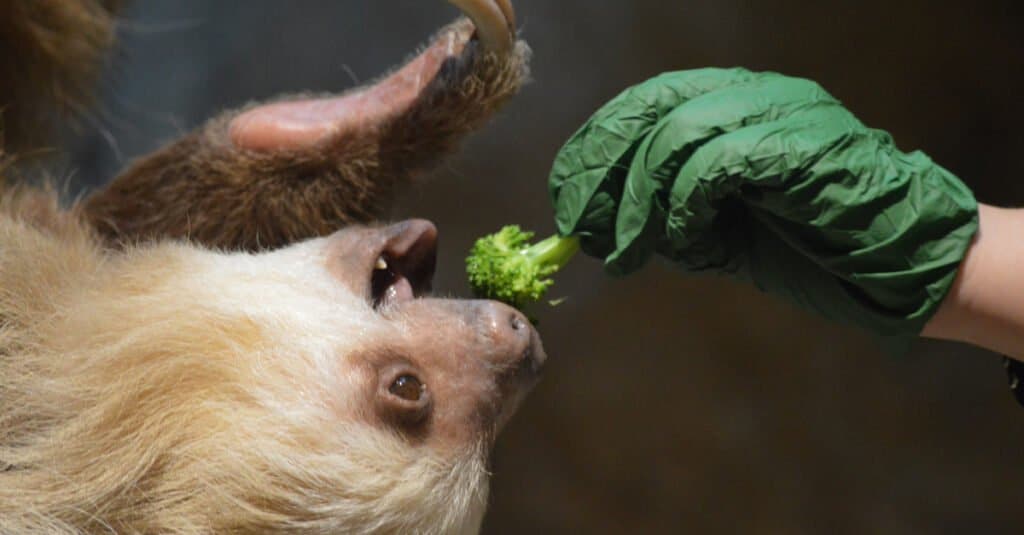
Even though sloths don’t usually open their mouths wide enough to show their teeth, sloths do have teeth, and they are sharp.
Instead of incisors and canines, two-toed sloths have two pairs of prominent, razor-sharp teeth that are called pseudo-canines in the front of their mouths. Pseudo-canines, a specialized type of premolar, are used to cut and bite. They are separated from the rest of the sloth’s teeth by a gap called a diastema.
Pseudo-canines are located in a sloth’s upper and lower jaws. The upper fang-like teeth are positioned slightly in front of the lower ones, resulting in a mild overbite. Therefore, the two pairs of pseudo-canines grind against each other each time the sloth opens and closes its mouth. This action keeps the fangs incredibly sharp.
How Many Teeth Do Sloths Have?
Two-toed sloths have 18 teeth, while three-toed sloths typically have 16 to 18 teeth, depending on the species. However, the placement of these premolars and molars, called molariforms, varies significantly between two-toed and three-toed sloths.
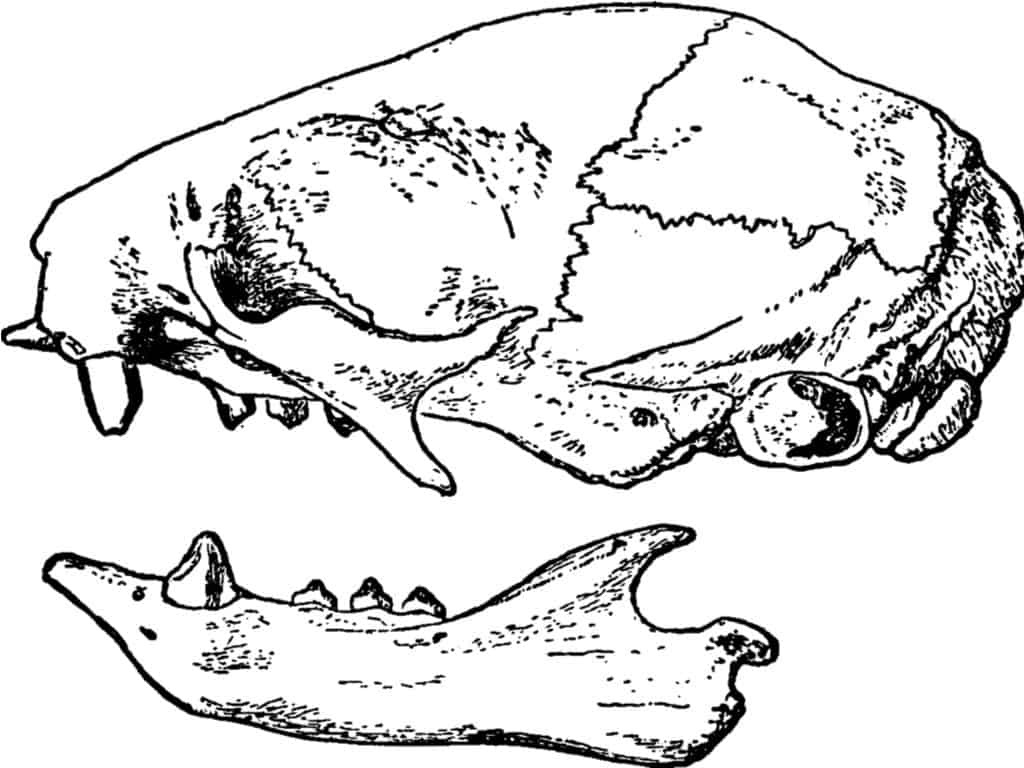
Sloths have between 16 and 18 teeth.
©Morphart Creation/Shutterstock.com
Instead of pseudo-canines and a diastema like two-toed sloths, three-toed sloths have two tightly spaced rows of molariform teeth in both their upper and lower jaws.
These different dental formulas reflect the differences in their diets. Three-toed sloths are highly specialized folivores that primarily eat leaves from a variety of tree species, with cecropia leaves being a preferred food source. Two-toed sloths are considered opportunistic omnivores that eat shoots, leaves, and fruit, while occasionally adding insects, eggs, or small lizards to their diet for additional protein.
Why Do Sloths Have Blackened Teeth?
The prominent teeth that are often seen at the front of a sloth’s mouth are usually black-hued, which is caused by their specific diet. Sloths feed mainly on leaves, which often contain tannins.
Tannins are biomolecules that give dead leaves their brown color. Unlike most mammals, sloths do not have a protective layer of enamel on their teeth, making it easier for tannins to stain them, making them appear black.
Instead of enamel, sloth teeth are made up of two types of dentine and an outer coating of cementum. These two types of dentine wear at different rates. When sloth teeth emerge, they are simple and cylindrical, lacking the cusps and basins typically found in mammalian teeth.
Do Sloths Have Baby Teeth?
Unlike most diphyodont mammals, such as dogs, humans, and sheep, sloths are not born with a deciduous set of teeth or baby teeth. Instead, sloths are born with a fully formed set of teeth that continue to grow throughout their lives.
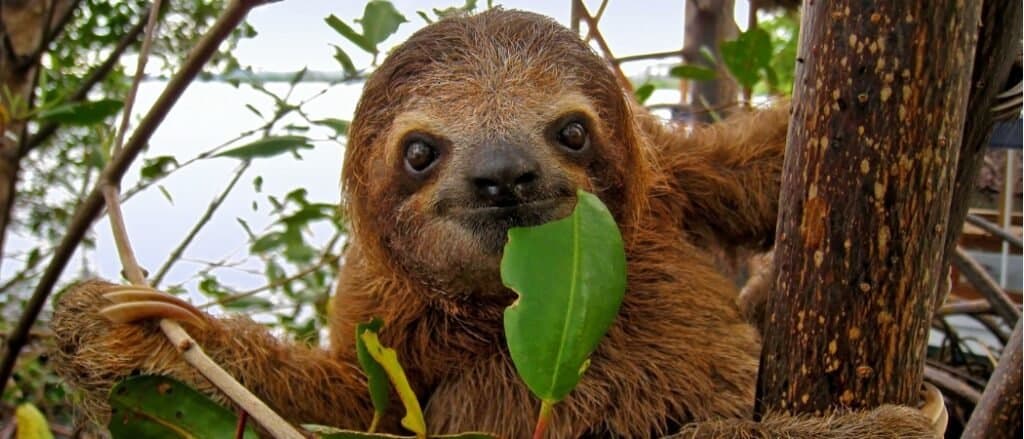
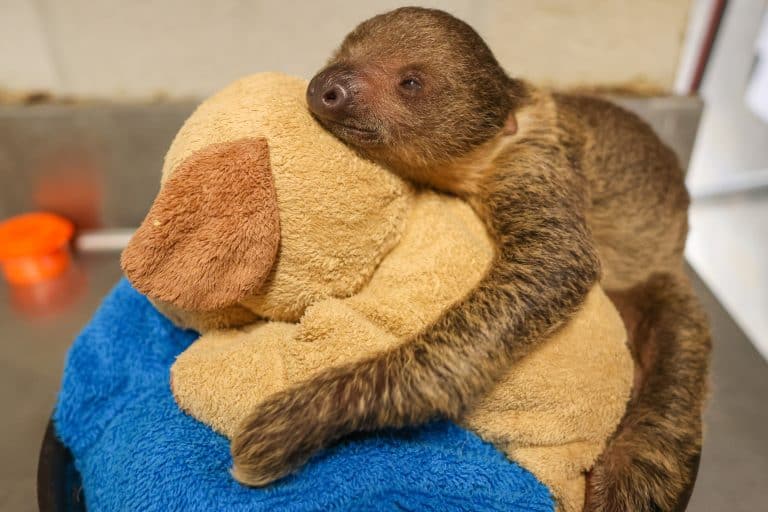
Two-toed sloths have a more varied diet than three-toed sloths.
©Damsea/Shutterstock.com
How Sloths Use Their Teeth
The sloth’s front teeth are used for nipping and biting off leaves from trees, while their jaw teeth are used for crushing and grinding plant material.
Sloths also use their front teeth to fend off predators. As the world’s slowest land mammals, sloths rely on camouflage and staying high in trees. However, when threatened, their surprisingly strong limbs, long claws, and sharp teeth become effective tools, allowing them to bite and slash at predators, including jaguars and eagles.
Do Sloths Bite?
If sloths are left alone in their natural habitat, they pose no threat to humans. However, once sloths feel they are being threatened or attacked in any way, they can lash out using their claws and can bite people. When sloths become agitated, they may bite, whether it is another sloth, a predator, or even a human attempting to interact with them.