
Quick Take
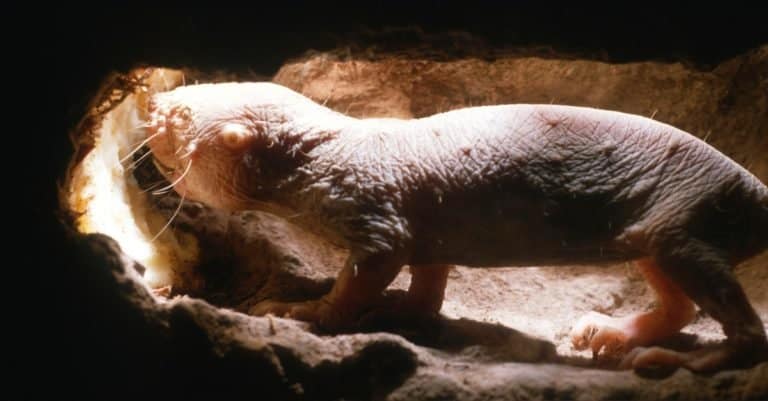
- Naked mole-rats are blind and hairless and live their entire lives underground.
- They have two large sets of front teeth, and can move their lower set of teeth independently of each other.
- Each underground colony can house up to 300 naked mole-rats, with a single queen.
- The single, breeding queen is the only one to give birth in the colony.
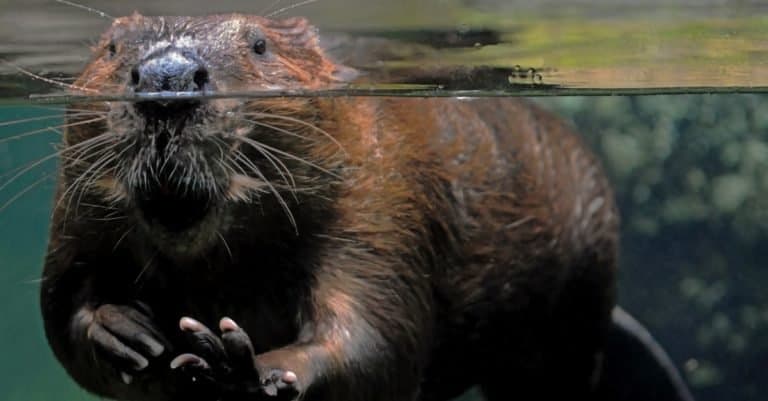
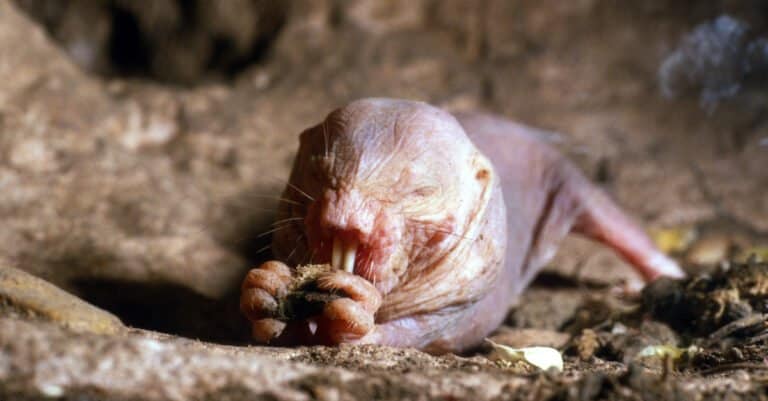
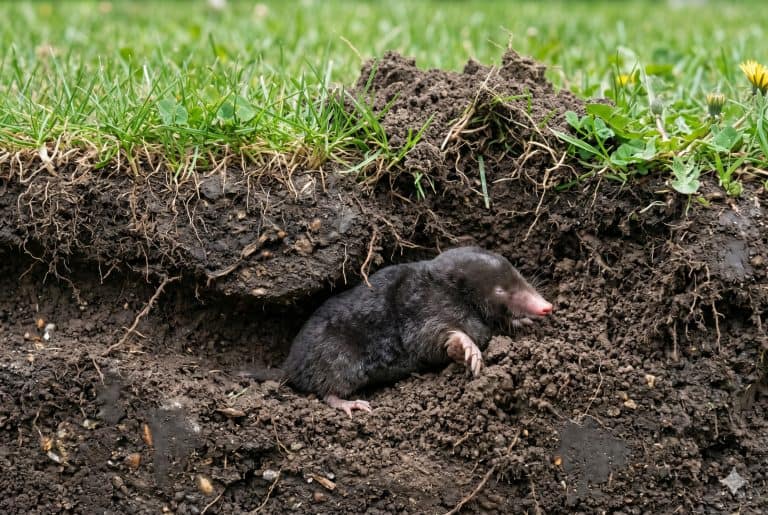
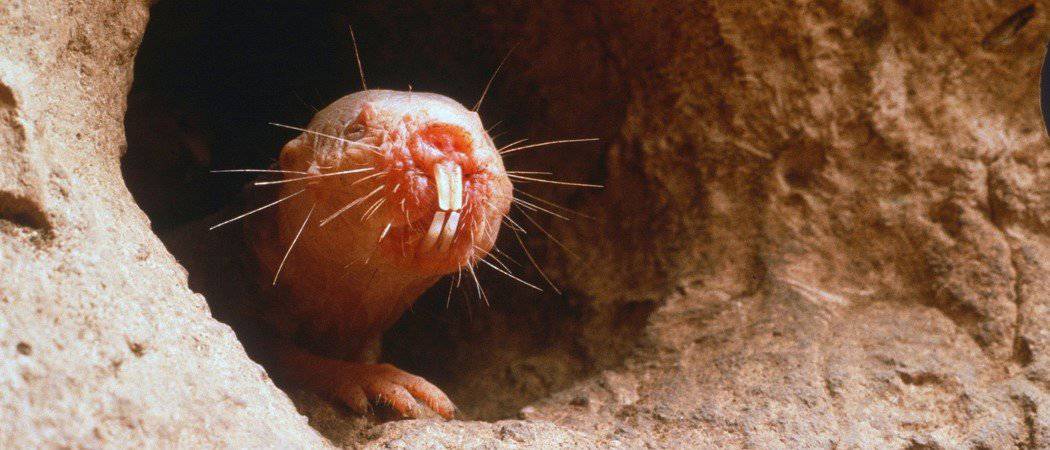
Blind and mostly hairless, with front teeth that put beavers to shame, the naked mole-rat is one of the most unusual-looking rodents you could ever see. However, you probably won’t see one, since they spend their entire lives underground. Their appearance is only part of what makes the naked mole-rat so unusual. They are unique in many other ways as well. Here are seven of the most bizarre facts about this subterranean dweller.
They Can Move Their Teeth Independently
If you thought the naked mole-rat’s teeth were bizarre-looking, it gets even crazier if you see them using those teeth. The animal can operate each of its lower front teeth separately, using them like a pair of chopsticks. Although it may sound unsettling, the ability to independently move their two lower front teeth serves practical purposes.
This motion helps the naked mole-rat dig in tight spaces, like the tunnels where they spend their entire lives. They can also grasp and manipulate objects by using their lower teeth like fingers. It also helps them transport food when necessary.
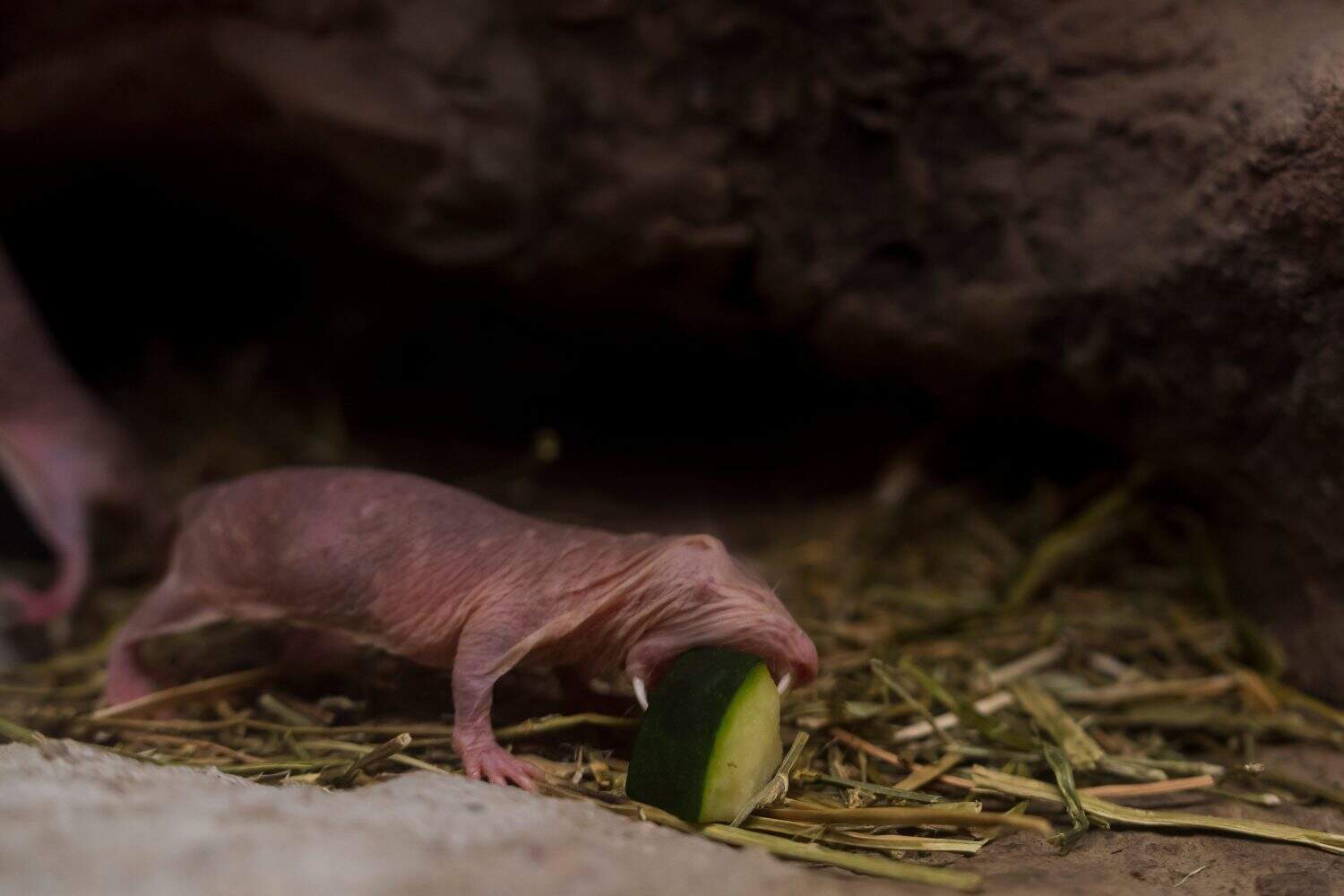
Naked mole-rats can move their lower two front teeth independently of each other.
©Aydan Metev/Shutterstock.com
The naked mole-rat has a flexible jaw joint and special muscles that make this possible. Their lower jaw is comprised of two halves, each of which can move independently from the other. They also use a lot of brainpower to make the independent movements possible.
Nearly 30 percent of the animal’s somatosensory cortex is dedicated to processing the feedback sent by its lower teeth. Evolution has also helped the naked mole-rat in another way. Its lips fully close behind its front teeth. This helps keep dirt and debris out of their mouth as they excavate their tunnel homes.
Their Jaws Contain a Quarter of All Their Muscles
A full 25 percent of the naked mole-rat’s muscle mass is concentrated in its jaws. Besides helping to move their teeth independently, their strong jaws are essential for digging through hard-packed soil. These massive muscles are the driving force behind their protruding front teeth, enabling the animal to chew through extremely hard soil. They can even gnaw through harder materials, like concrete. These powerful muscles are what give naked mole-rats an extremely strong bite force.
They Have Extraordinary Long Life Spans
In the rodent world, most species live just a few years. Not the naked mole-rat. They can live into their thirties, making them the longest-living rodents in the world. How can they live so long? They have a special protein that helps their bodies repair DNA strands, which in turn prevents the DNA mutations that typically cause cancer and aging. They also produce a special form of hyaluronic acid that helps prevent tumor growth, further protecting them from cancer.
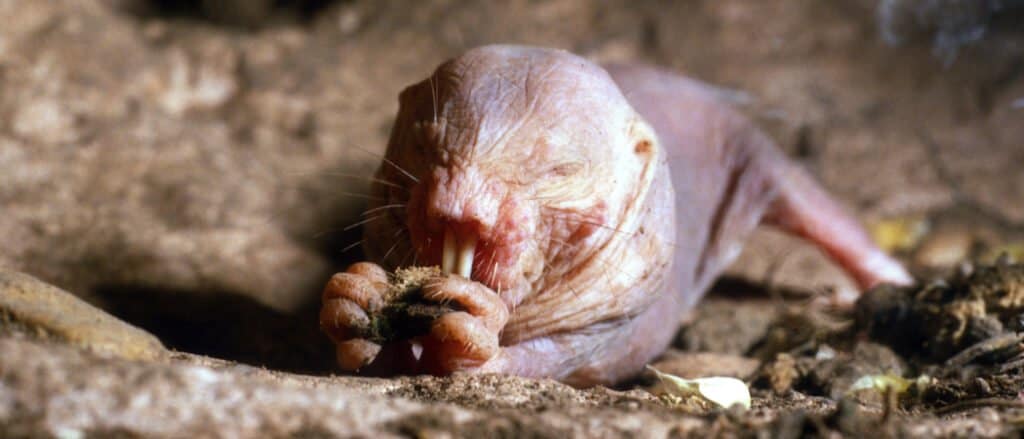
Naked mole-rats have special biological designs that help extend their lives much longer than other rodents.
©Neil Bromhall/Shutterstock.com
Finally, their subterranean habitat also helps them live long lives. They are relatively free from the stress of predators and other environmental factors that contribute to aging in animals that live above ground.
They Have a Vast Vocal Repertoire
When it comes to chattering with each other underground, they are very communicative. They can make between 17 and 25 unique sounds, including chirps, hisses, twittering, and grunting. Even more interesting, each colony of naked mole-rats has its own unique accent, demonstrated by differences in pitch, frequency, and duration. Every colony has a queen, and it is the queen who determines the colony’s accent. When the queen is replaced, the entire colony’s accent can change.
Up to 300 Naked Mole-Rats Can Live in a Single Colony
A single colony of naked mole-rats can house up to 300 individuals. All these mole-rats live in an extensive system of chambers connected by tunnels, which provide entry and exit points to the entire underground network. The colony includes the queen, her loyal subjects, and naked mole-rats who serve as soldier guards.
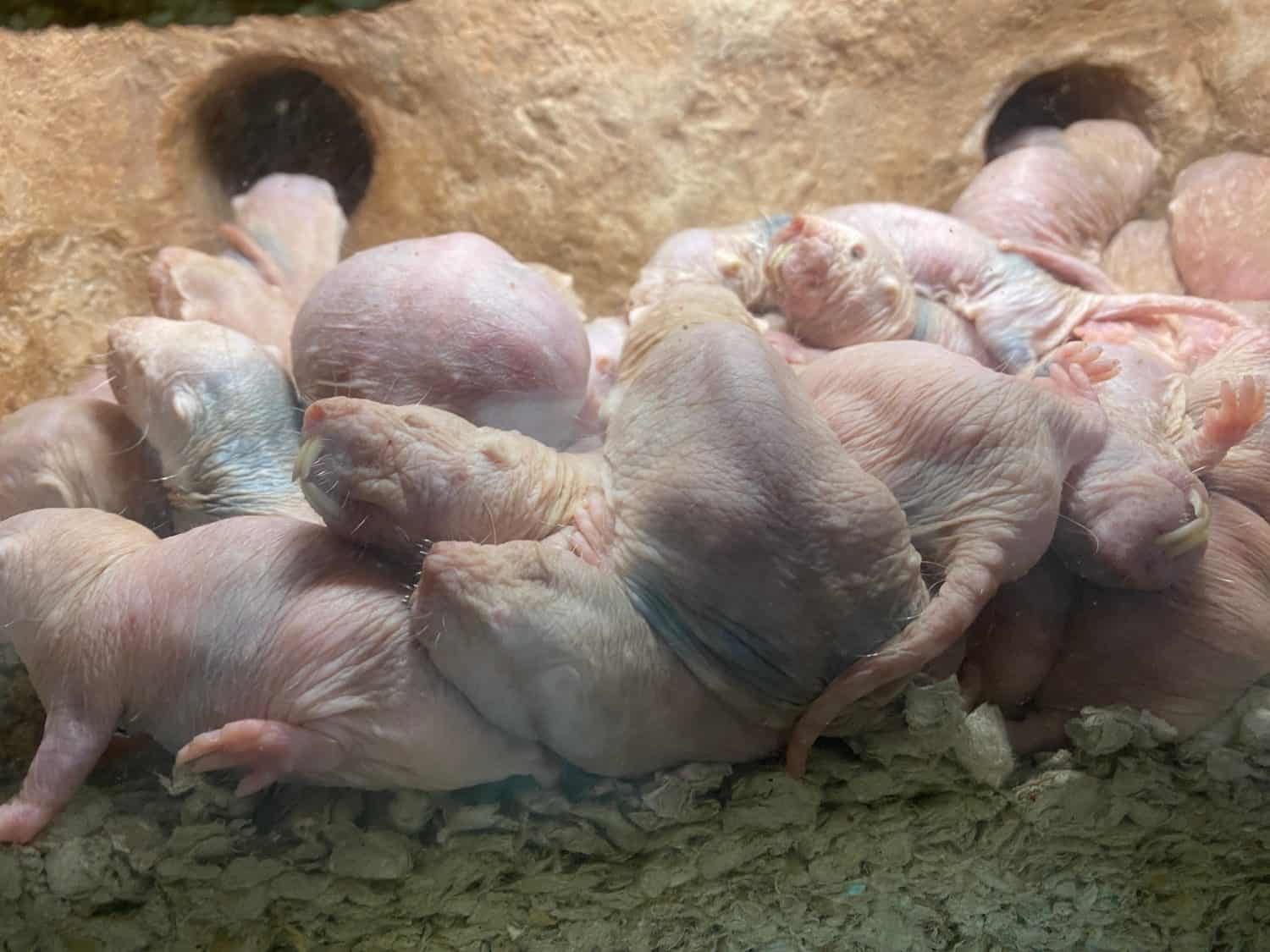
Soldier mole-rats protect tunnel entrances by piling themselves on top of each other to block entry by predators like snakes.
©christopher babcock/Shutterstock.com
The soldiers are on hand to protect the colony’s tunnels from invasion by snakes, the naked mole-rat’s primary predator. If a snake attempts to enter one of the tunnels, the soldiers create a pile that makes entry impossible.
They Don’t Drink Water, and They Eat Their Poop
Since they live exclusively underground, fresh water is not readily available to naked mole-rats. But that’s not a problem. They get all the hydration they need from the underground parts of the plants they eat. They dine on roots and tubers but never eat too much. They leave just enough to keep the above-ground portion of the plant alive. This provides a meal for another day.
Their plant-based diet doesn’t give them all the nutrients they need, but they’ve figured out a solution. They eat their poop. This is called coprophagy, and it ensures they get missing nutrients. It also helps keep their underground homes tidy.
Newborn Naked Mole-Rats Weigh Less Than a Penny
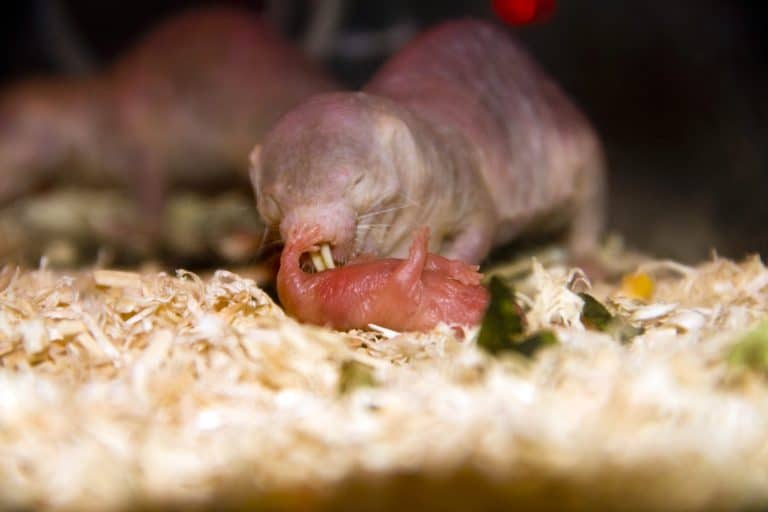
Naked mole-rats are eusocial mammals. This means that while they live in large colonies, it is only the single queen that gives birth. In fact, she is the only breeding female in any colony. Her pregnancy lasts around 70 days, after which she gives birth to a litter that averages 12 to 28 pups. That may sound like a lot, but each pup weighs only between one and two grams.
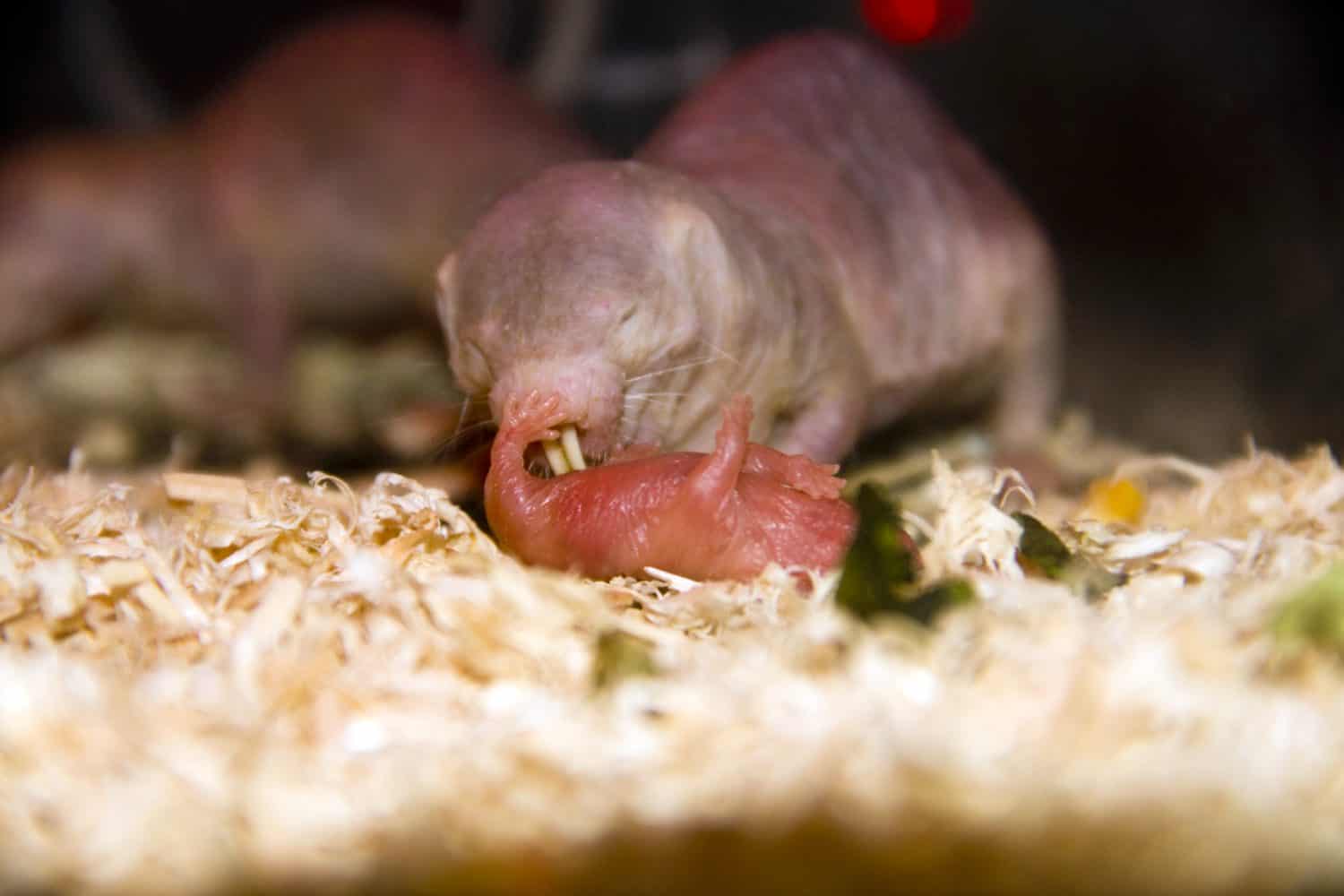
A newborn mole-rat weighs less than a penny.
©belizar/Shutterstock.com
The babies are born blind, deaf, and hairless—a condition that doesn’t change much as they grow. It takes about 228 days for females to reach maturity. Males take a bit longer, around one year.