
Quick Take
- Apes generally have omnivorous diets, but fruit is the main staple for most species.
- Apes are primarily foragers and will forage either on the ground or in the trees.
- Chimpanzees eat more meat than any other non-human primate.
- Although gorillas are generally terrestrial, they spend 20% to 30% of their time foraging in trees.
Apes include a broad range of higher primates. Apes can be divided into two families: Hylobatidae (lesser apes) and Hominidae (great apes). Lesser apes, which include around 20 species of gibbon, typically live in trees. Great apes include orangutans, gorillas, chimpanzees, and bonobos. Humans are also part of the Hominidae family and are closely related to other apes. Their closest shared ancestor is believed to have lived six to eight million years ago, but that exact ancestor has not been confirmed. Apes are some of the most intelligent animals on the planet, but what do they eat? Read on to find out.
What Do Apes Eat?
As noted above, the term “apes” includes many different species, but there are some general characteristics that most share. Apes generally have omnivorous diets, but fruit is the main staple for most species. Notably, gorillas are folivorous, meaning they mostly eat leaves, roots, shoots, and stalks. Humans have the most diverse diet of all the great apes, eating everything from fruits and veggies to meat and dairy.
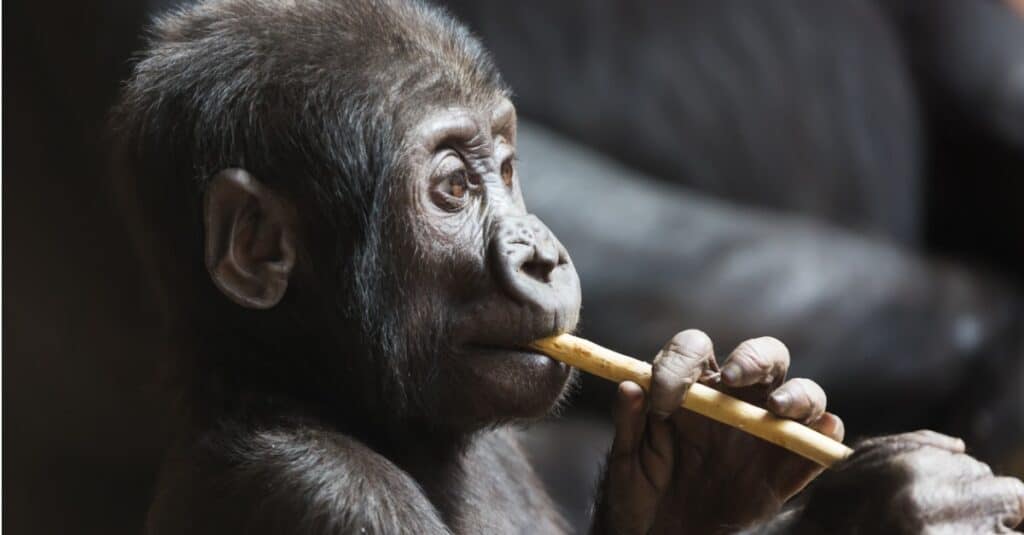
Apes mostly eat fruit but can consume meat and insects when food is scarce.
©iStock.com/nantonov
While diets vary by species and habitat, here are some of the foods that apes commonly eat:
- Fruits
- Vegetables
- Plant leaves
- Flowers
- Tubers
- Shoots
- Stalks
- Seeds
- Nuts
- Inner tree bark
- Roots
- Birds’ eggs
- Insects
- Vertebrates such as birds, reptiles, amphibians, small mammals, and fish
- Processed and cultivated foods (humans only)
Different Diets for Different Ape Species
As explained above, most apes are considered omnivores, but their diets vary between species. Below is a closer look at the foods eaten by different ape species.
Gorillas
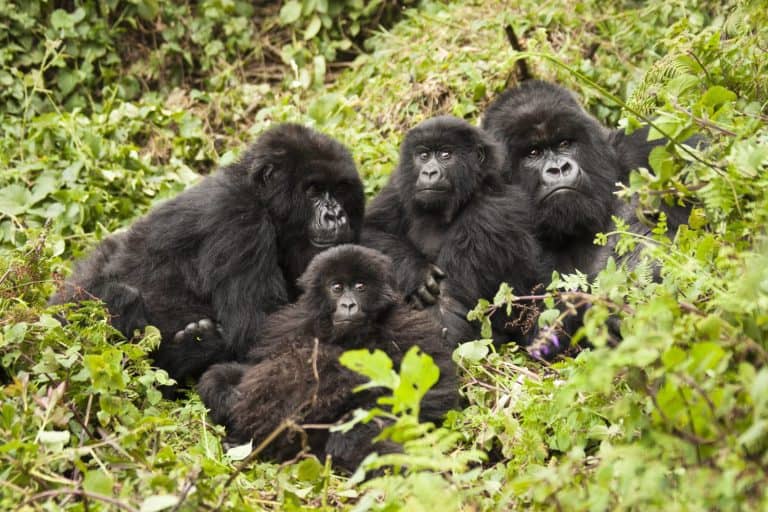
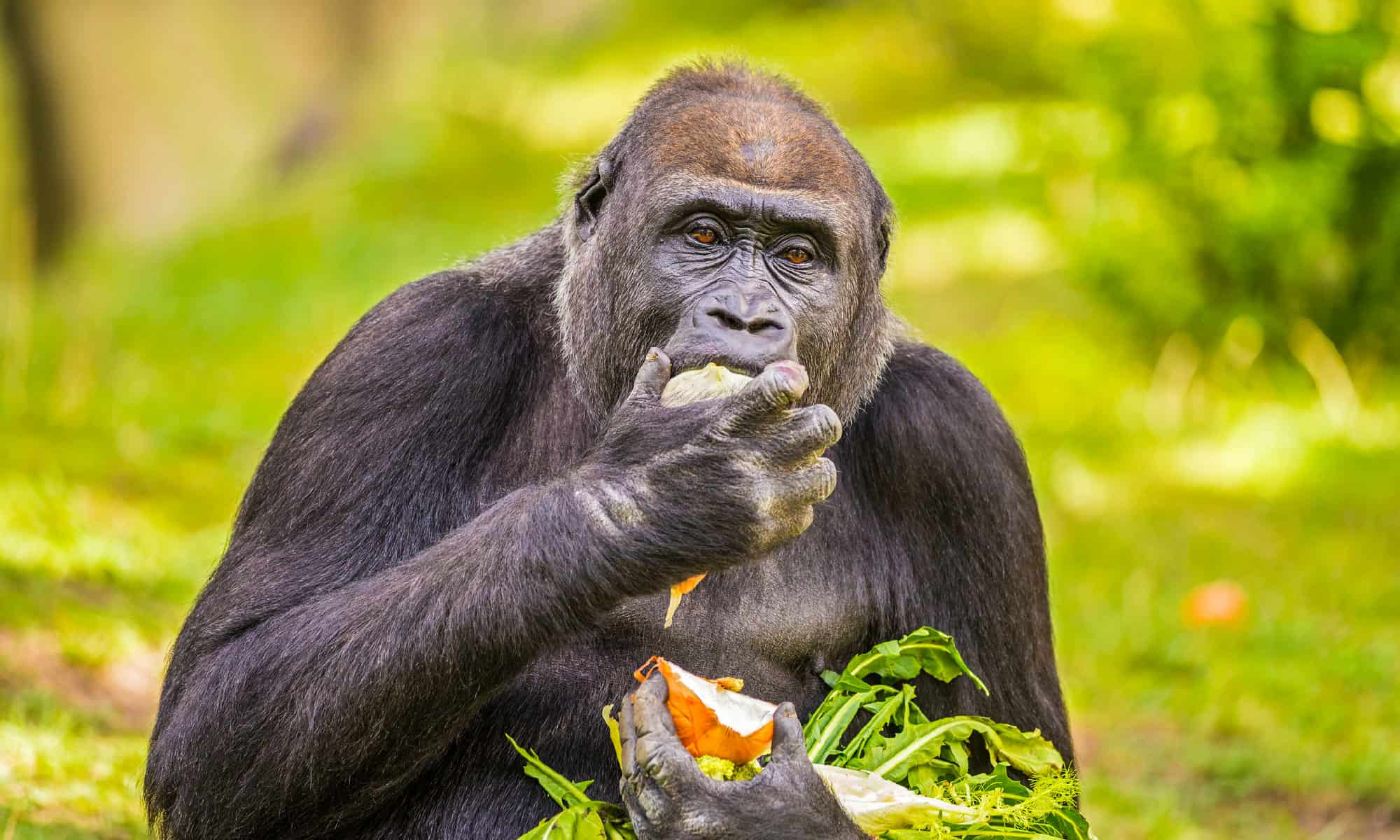
Gorillas inhabit the tropical and subtropical forests of equatorial Africa. They are predominantly terrestrial and primarily herbivorous. Since they don’t regularly climb trees, their diets reflect this lifestyle. There are two species (and four subspecies) of gorillas, all of which share a similar diet. Their main foods include stems, bamboo shoots, fallen fruit, and leaves. Western lowland gorillas, however, have a dietary specialization: they break open termite nests to feed on the insects inside and are also known to eat ants.
Orangutans
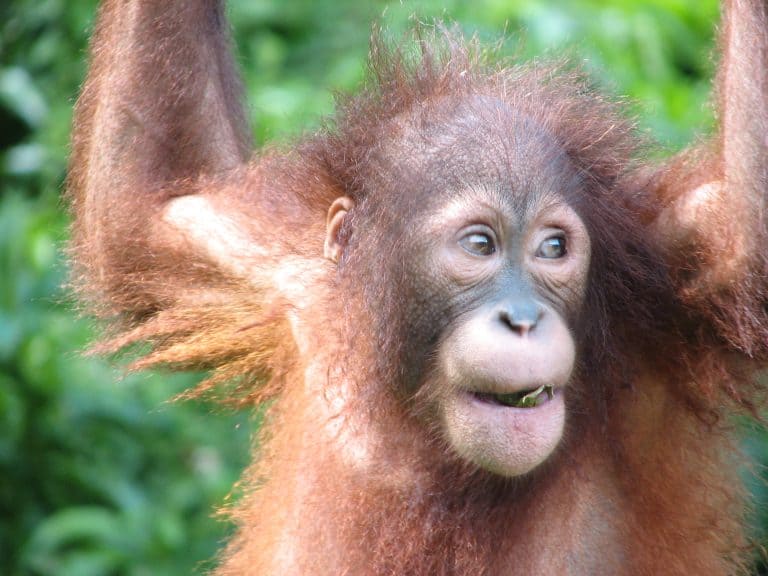
Orangutans live in the rainforests of Indonesia and Malaysia. Their diet is primarily fruit. Orangutans’ favorite foods include lychees, mangosteens, mangoes, figs, and durian. Their diet is so fruit-heavy that fruit is about 60% of their total dietary intake. Aside from fruit, orangutans eat leaves, shoots, insects, and eggs when available.
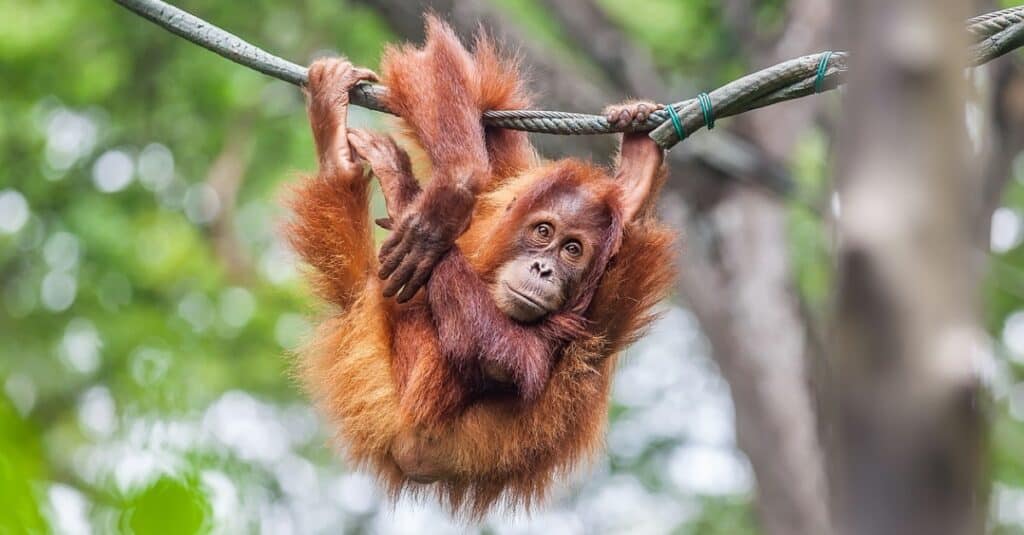
Orangutans eat primarily fruit, which is estimated to account for around 60% of their total dietary intake.
©iStock.com/molishka1988
Bonobos
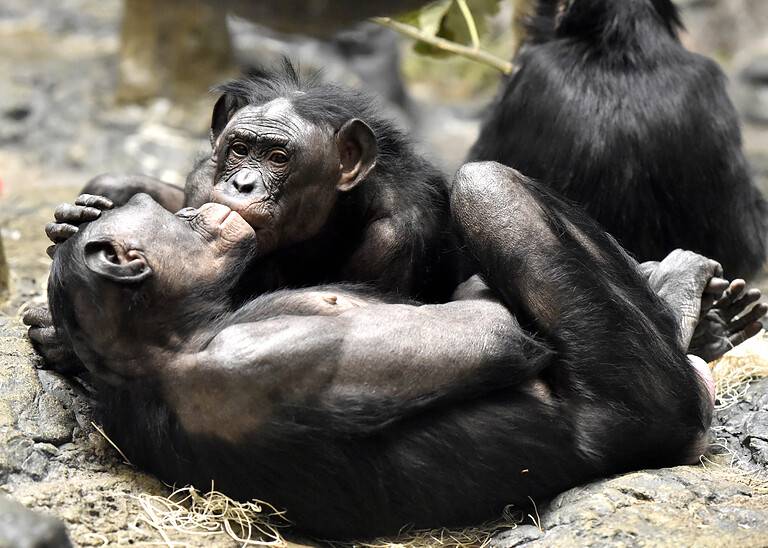
Bonobos are endangered apes that can only be found in the southern forests of the Democratic Republic of Congo. They are both terrestrial and arboreal. There are over 110 different plants that bonobos consider food. Fruit is their main source of calories, but they are omnivores and also eat leaves, flowers, seeds, insects, fungi, and honey. They are sometimes seen washing their food in water, which may be an evolutionary adaptation for disease avoidance.
Chimpanzees
Chimpanzees live in the forests and savannas of tropical Africa. Like bonobos, they are both terrestrial and arboreal. Chimps generally eat fruits, berries, leaves, and seeds. However, they are also known to eat insects, eggs, and small vertebrates such as birds, reptiles, and mammals. Chimpanzees eat more meat than any other nonhuman primate, but meat only makes up between 3% and 8% of their diet.
Gibbons
Gibbons live in tropical and subtropical evergreen rainforests from Southern China to Bangladesh. They are almost completely arboreal. Their diet is mostly fruit, making up over 60% of some species’ diets. However, like other primates, they may include leaves, flowers, shoots, insects, and eggs when other food is scarce.
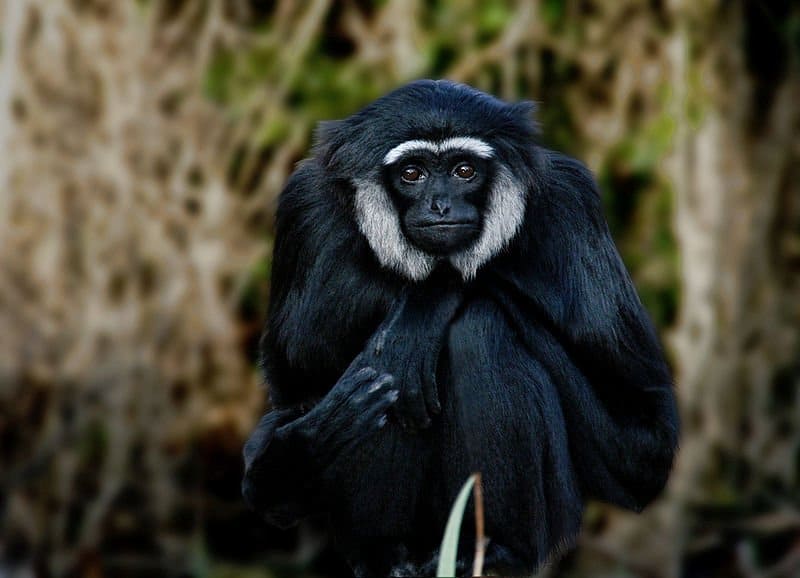
Gibbons are mostly frugivores, but they will consume other foods when fruit is scarce.
©Julielangford / Creative Commons – Original
How Do Apes Get Their Food?
Apes are primarily foragers. Terrestrial foraging helps apes find plants, leaves, shoots, fallen fruit, and nuts on the forest floor. Terrestrial foraging can be as simple as pulling leaves from a stalk or as complex as creating tools to pry insects out of dead logs or to break open termite mounds.
Although gorillas are mostly terrestrial and chimpanzees and bonobos are semi-terrestrial, most apes are also arboreal foragers. A recent study found that gorillas spend 20% to 30% of their time foraging in trees. Fruits are usually higher up in the trees, making them impossible to reach from the ground. When searching for fruit, apes climb trees and move through the canopy. When looking for plants, leaves, roots, stalks, and shoots, they stay on the ground.