
Quick Take
- One snake here is technically venomous yet completely harmless to humans. The reason why flips what most people assume about venom. About this harmless venomous snake →
- The one snake you actually need to worry about carries a venom that can permanently disfigure, and it is far more versatile in its habitat than most people expect. Rattlesnake venom dangers →
- One of North America's fastest snakes hunts near the Great Salt Lake, and its speed serves a purpose beyond chasing prey. North America's fastest snake →
- A snake named for living on land turns out to be one of the best swimmers in the region, and its reproductive strategy is just as unexpected. Surprising swimmer and live births →
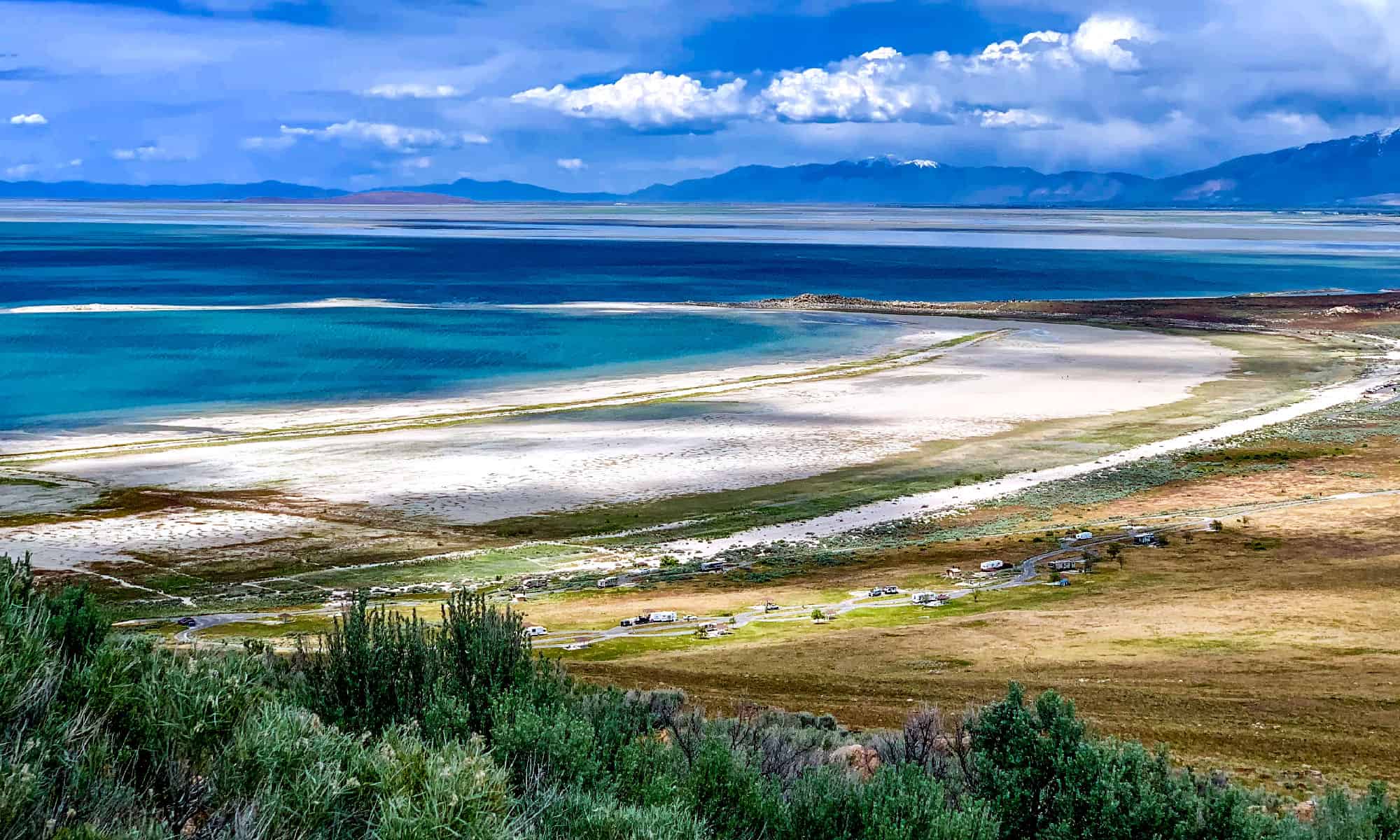
The Great Salt Lake, located in Northern Utah, is the largest landlocked body of water in the Western Hemisphere. The Bear, Weber, and Jordan rivers feed the Great Salt Lake. Although these are freshwater rivers, they contain trace amounts of minerals and salts. Because the Great Salt Lake has no outlets, the water can only escape through evaporation, leaving those minerals behind and concentrating them over thousands of years, which has resulted in the exceptional salinity of the lake’s water. The Great Salt Lake is fringed by a combination of arid and wetland habitats that foster a highly biodiverse environment, supporting numerous wildlife species, including snakes. Continue reading to discover six snakes you might encounter at Great Salt Lake, including a venomous one.
Valley Garter Snake (Thamnophis sirtalis fitchi)
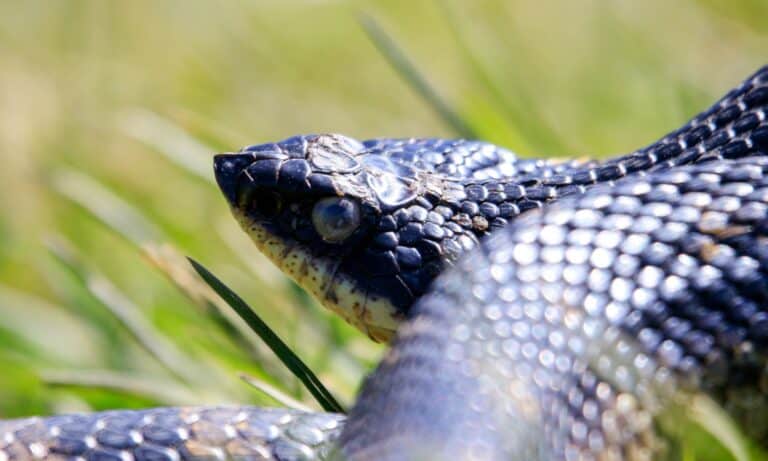
Valley garter snakes rarely stray far from water sources. Near the Great Salt Lake, they are found only in the freshwater and brackish wetlands surrounding the shoreline, as they cannot survive on the dry salt flats or in the hypersaline lake water. Valley garter snakes are strong swimmers that typically live near rivers, streams, and wetlands.
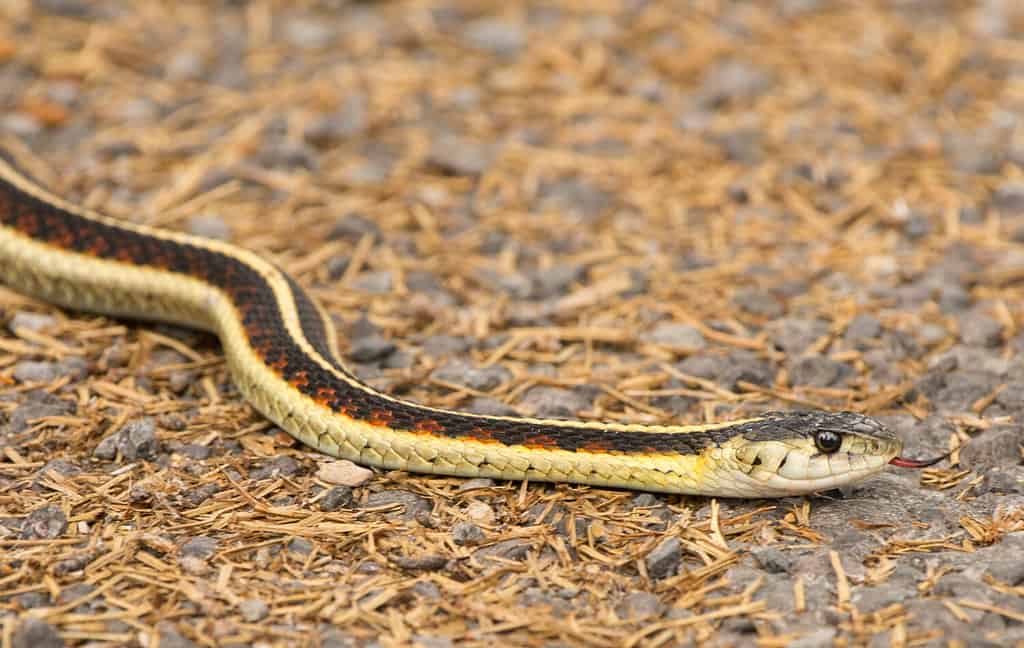
Valley garter snakes have an average length of one to two feet.
©Jennifer Bosvert/Shutterstock.com
The valley garter snake is technically venomous, but it is completely harmless to humans. Although garter snakes were long considered to be non-venomous, research in the early 21st century revealed that they possess specialized toxins capable of stunning small prey.
Western Terrestrial Garter Snake (Thamnophis elegans)
Although their name implies that these snakes would be land dwellers, Western terrestrial garter snakes are exceptional swimmers. These snakes are highly adaptable and may be found in a variety of habitats, but they are most common near streams, ponds, and lakes. Western terrestrial garter snakes are gray, brown, or green, accented by three bright stripes (one down the back and two along the sides) that range from yellow and cream to vibrant orange or white. Some may even display dark checkering or reddish flecks between the stripes.
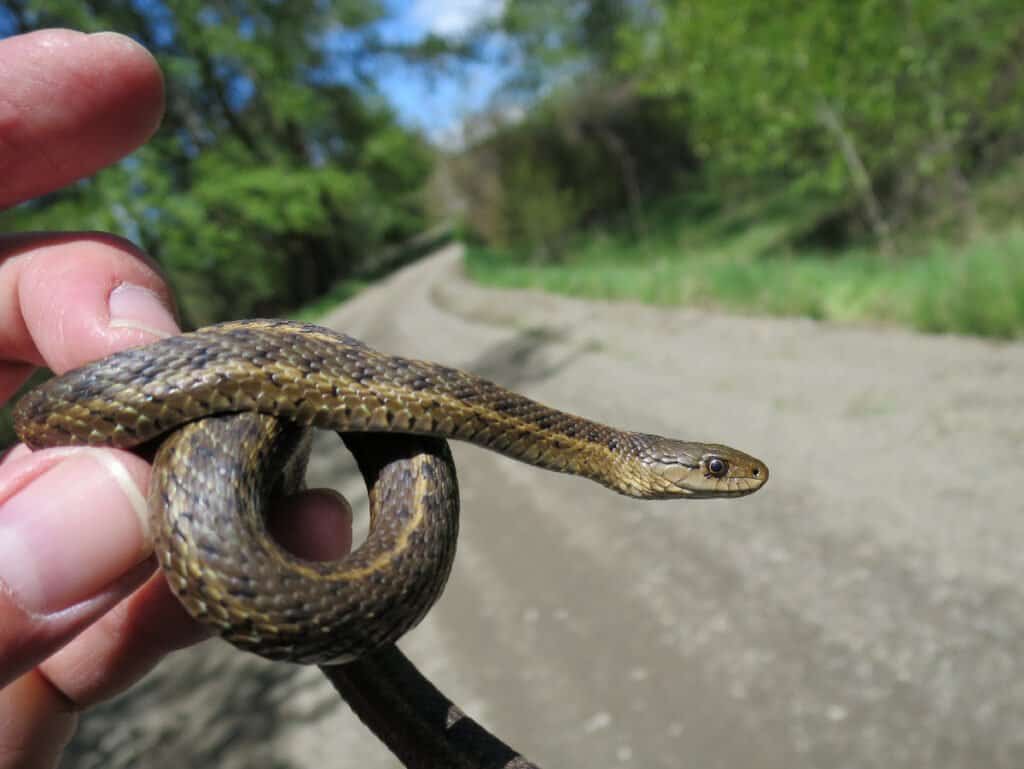
Terrestrial garter snakes are between 1.5 and 3.5 feet long, on average.
©Randy Bjorklund/Shutterstock.com
During the winter, Western terrestrial garter snakes gather in massive numbers in deep burrows or rocky dens to brumate. Unlike many snakes, they do not lay eggs; instead, they are ovoviviparous, incubating eggs inside their bodies and giving birth to live litters of 8 to 12 young.
Striped Whipsnake (Masticophis taeniatus)
Striped whipsnakes have a dark back ranging from black or dark brown to gray, with distinct pale stripes along their sides. These snakes inhabit dry, open woodlands, rocky canyons, and shrubland areas around the Great Salt Lake. Striped whipsnakes are diurnal and are considered among the fastest snakes in North America, routinely reaching speeds between 4 and 4.5 miles per hour (mph). They use their speed to escape predators and catch prey.
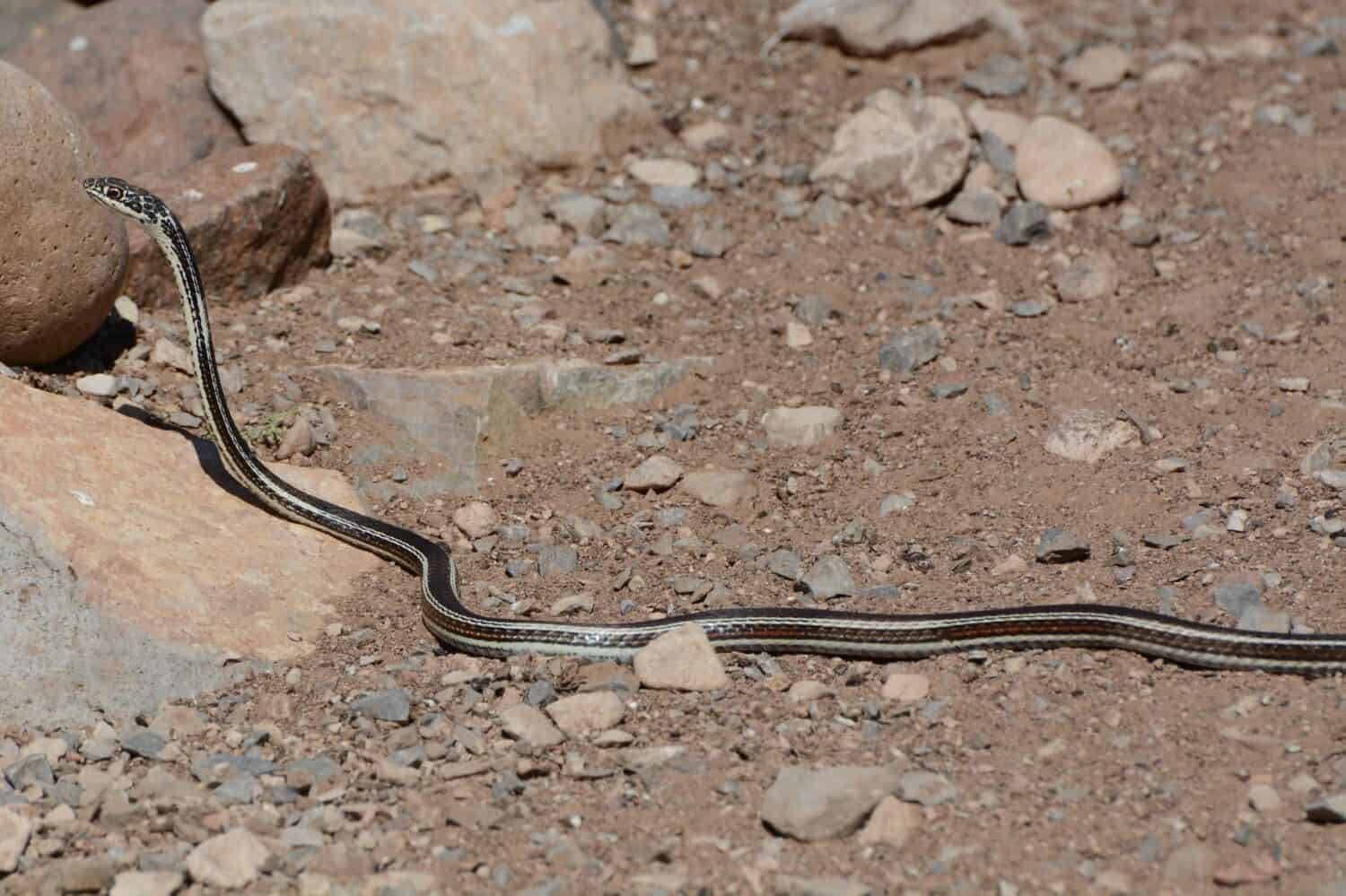
Typically between three and six feet long, striped whipsnakes are considered one of the fastest snakes in Utah.
©David Jeffrey Ringer/Shutterstock.com
Western Yellow-bellied Racer (Coluber constrictor mormon)
Western yellow-bellied racers are slender, nonvenomous snakes that are solid brown, olive-green, or blue-grey with a pale yellow underbelly. These diurnal snakes are known for being remarkably fast, attaining speeds of up to 3.5 mph, although they are not as fast as striped whipsnakes.
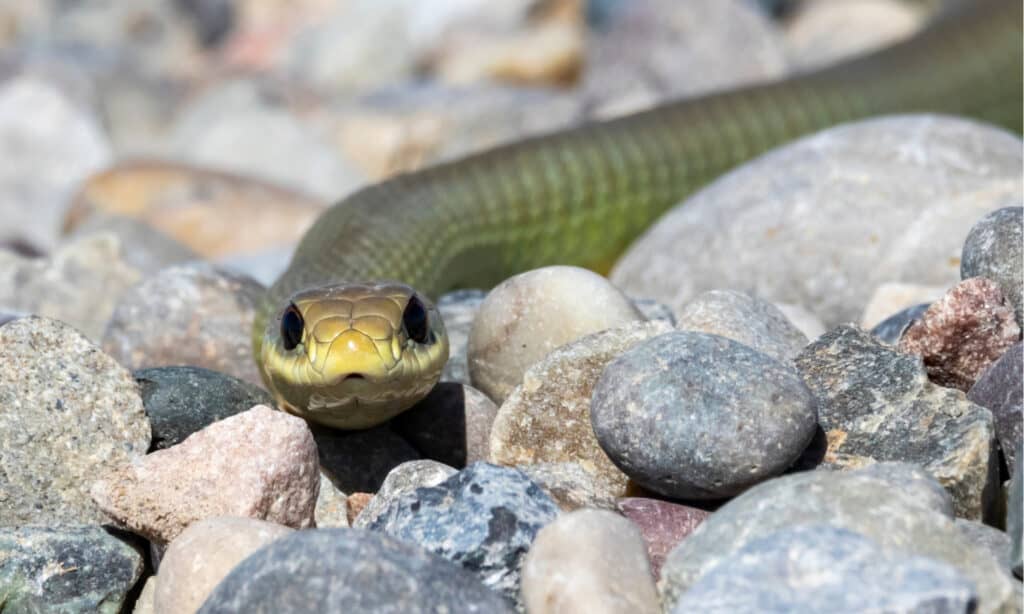
Western yellow-bellied racers are, on average, between 1.5 and 3 feet long.
©Michael Chatt/Shutterstock.com
Western yellow-bellied racers inhabit the marshes, bogs, and riparian corridors surrounding the Great Salt Lake, the area in which this subspecies was first officially documented in 1852.
Great Basin Gopher Snake (Pituophis catenifer deserticola)
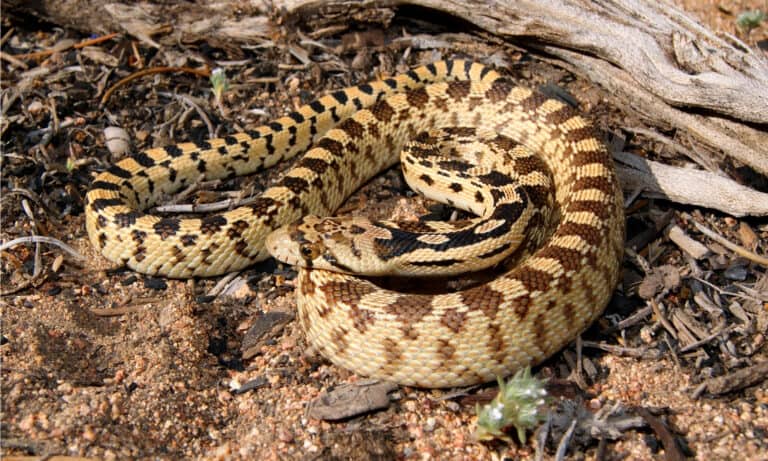
The largest species of snake in Northern Utah, the Great Basin gopher snake, can grow to be six feet long. These snakes range from light brown to cream, with a row of large, dark brown or black square-shaped blotches running down their back, with smaller markings on the sides. They prefer dry, open landscapes that offer plenty of ground cover. Great Basin gopher snakes are common in the sagebrush, rabbitbrush, and grassy hills just above the Great Salt Lake’s shoreline, where their coloration helps them blend into the landscape.
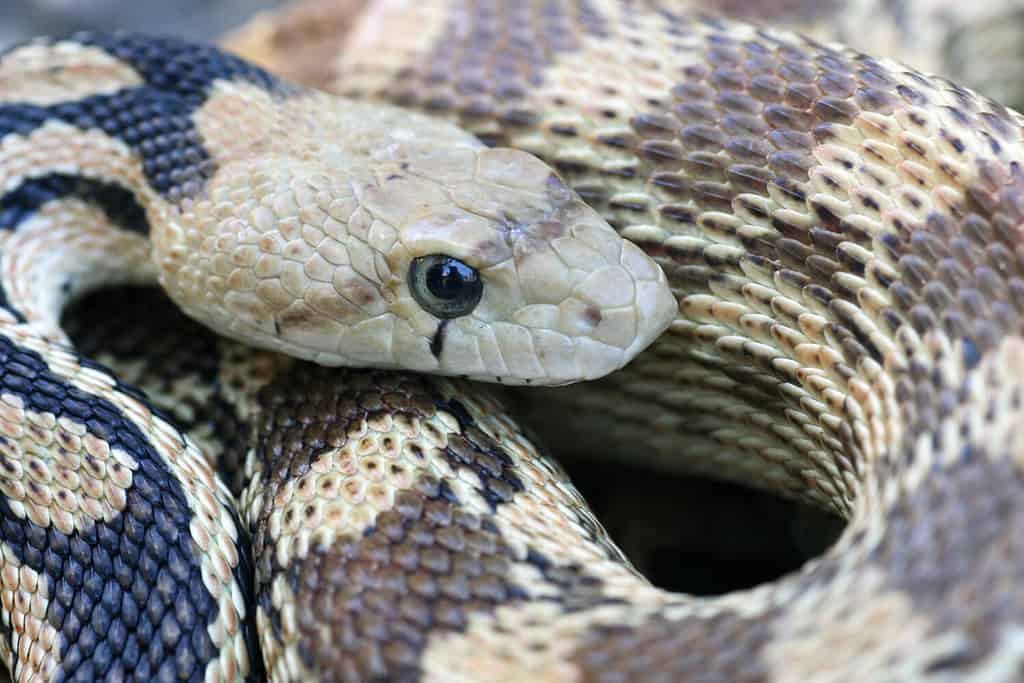
The Great Basin gopher snake is the largest snake species in Northern Utah and can grow up to six feet long.
©Michael Benard/Shutterstock.com
Great Basin gopher snakes are known as blow snakes because when threatened, they inflate their bodies and release the air, which makes a loud hissing sound. Another defense mechanism is their tendency to shake their tails, mimicking rattlesnakes.
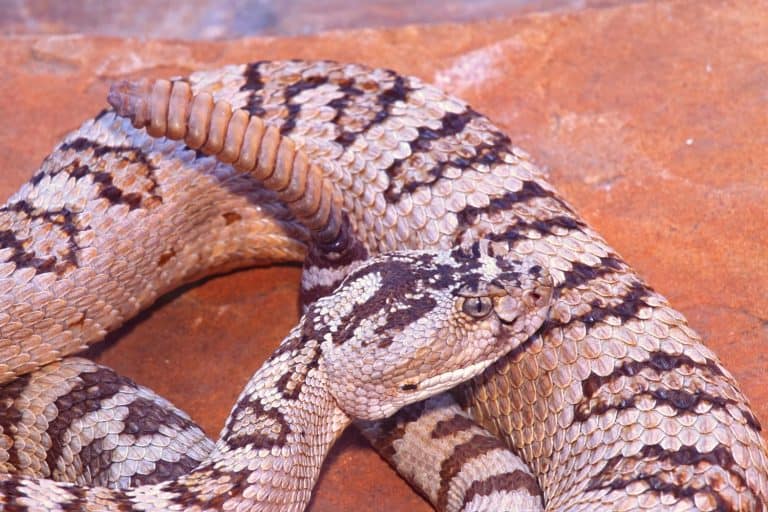
Great Basin Rattlesnake (Crotalus lutosus)
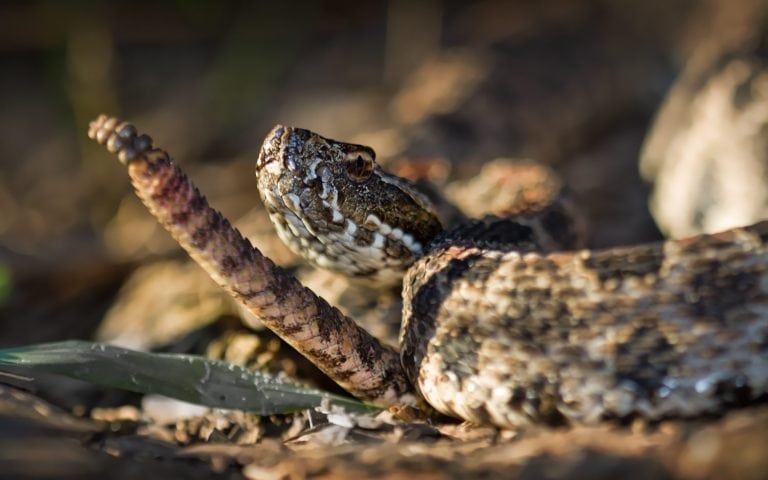
The Great Basin rattlesnake is the only venomous snake found near Utah’s Great Salt Lake. They are widespread in areas with rocky outcrops and brush. Great Basin rattlesnakes inhabit a variety of habitats around the lake, including forests, prairies, and deserts. While they primarily live on the ground, they occasionally climb trees.
The Great Basin rattlesnake has a base of pale gray, tan, yellowish-brown, or olive, overlaid with a series of darker, diamond-shaped or oval blotches down its back. This coloration mimics the surrounding environment, allowing the snake to blend into the desert landscape to either hide from predators or ambush prey.
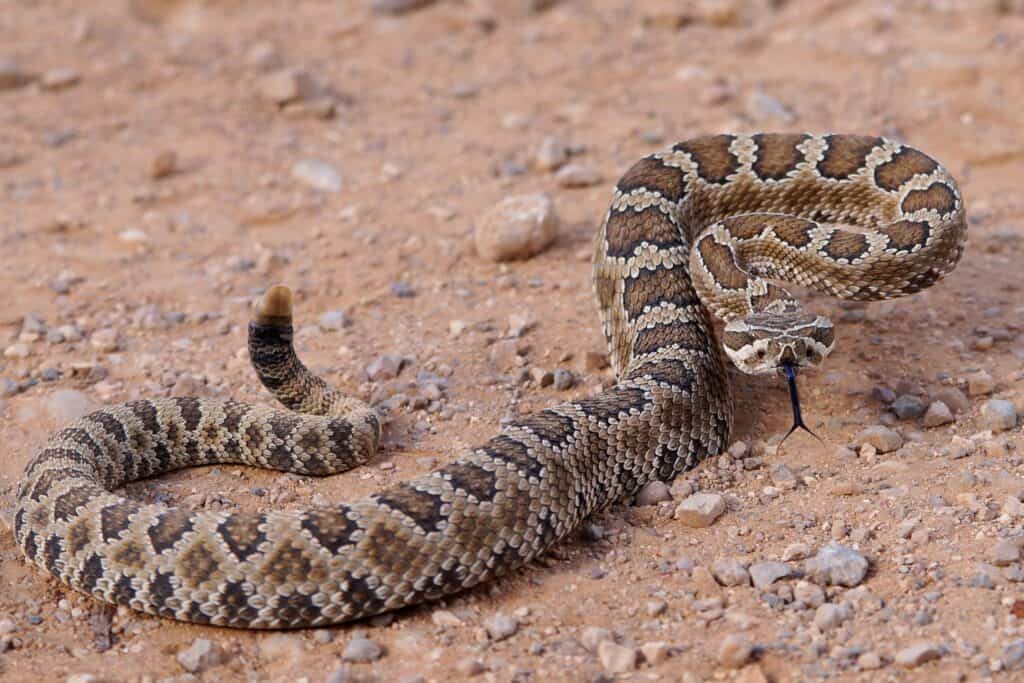
Great Basin rattlesnakes are typically between 2.5 and 4 feet long.
©Matt Jeppson/Shutterstock.com
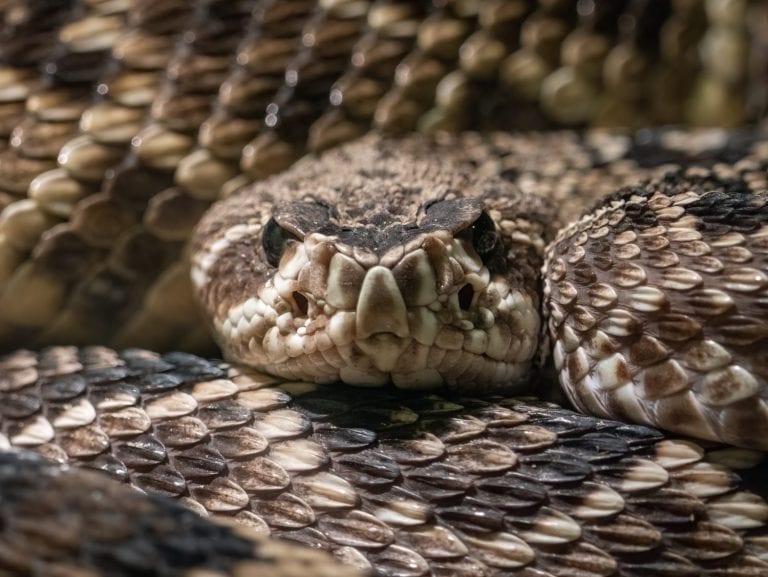
Great Basin rattlesnake venom presents a danger to humans. Their venom is a hemotoxin that destroys tissue and affects blood clotting. Their bites can cause severe tissue damage and systemic bleeding. Although fatalities from Great Basin rattlesnake bites are extremely rare in Utah, their bites can cause severe tissue damage and may result in permanent disfigurement, including, in rare cases, amputations.