
Quick Take
- Florida has dozens of brown-colored snakes, but only a handful can actually hurt you. To make matters trickier, some dangerous ones look surprisingly similar to harmless ones.
- Some Floridians misunderstand what "brown snake" actually means, and that confusion could lead you to misidentify what's in your yard.
- Two massive invasive pythons now breed in Florida, and both are brown enough to be mistaken for native species.
- Some of Florida's most venomous brown snakes only appear in specific corners of the state, and knowing where they live matters more than you'd think.
Things can get complicated when we refer to “brown snakes.” Brown snakes can mean snakes that are colored brown. However, brown snakes can also refer to the common name for non-venomous American brown snakes of the Storeria genus, which are endemic to North America and Central America. To make things even more complicated, if you’re not in North America, brown snakes may refer to snakes in the Pseudonaja genus. These snakes are highly venomous (such as the Eastern brown snake) and live in Australia, Papua New Guinea, and West Papua.
There are three species of American brown snakes (genus Storeria) that live in Florida. However, there are many more snake species in the state that are not commonly called “brown snakes,” but may be brown, tan, reddish-brown, or olive-brown. Some are brown as adults, while others display brown patterns or coloring only in their juvenile stage. In this article, we are looking at all of the brown-colored snakes in Florida, not just the common brown snake in the genus Storeria.
How Did We Come Up with Our List?
To find all the brown snake species that you may encounter in Florida, we first took a look at all of the native and non-native snakes in the state, according to the Florida Museum at the University of Florida, “Florida Snake ID Guide.” This guide lists 55 snakes. From there, we looked for all of the snakes that are either completely brown or have brown markings on their skin, whether as adults or during their juvenile stage. Check out the following list of Florida’s brown-colored snake species and subspecies.
Florida Cottonmouth (Agkistrodon conanti)
Sometimes referred to as a water moccasin, the Florida cottonmouth is a venomous snake around 30 to 48 inches long. These snakes have light to dark brown crossbands. However, as they age, the bands darken, and they may appear completely black.
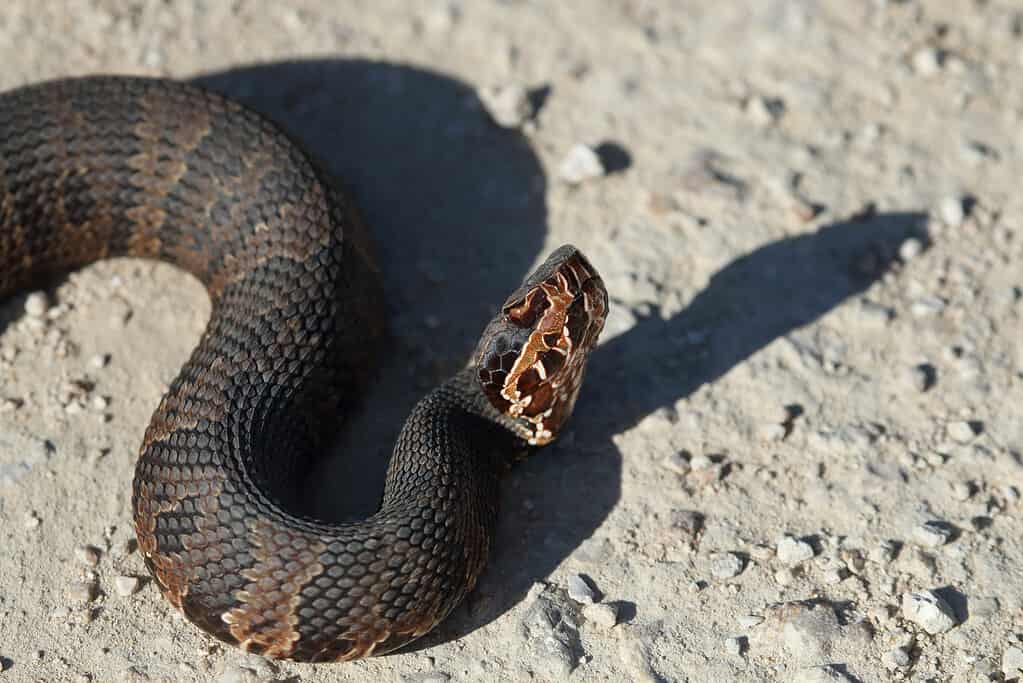
Florida cottonmouths are venomous, but they are not aggressive and will try to flee before attacking.
©iStock.com/ArendTrent
Eastern Copperhead (Agkistrodon contortrix)
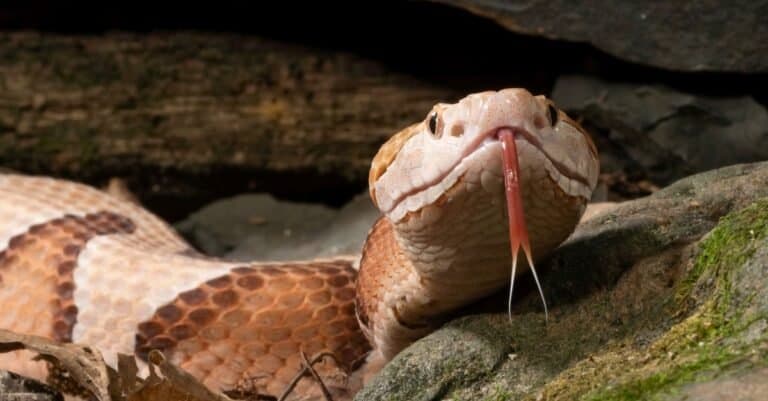
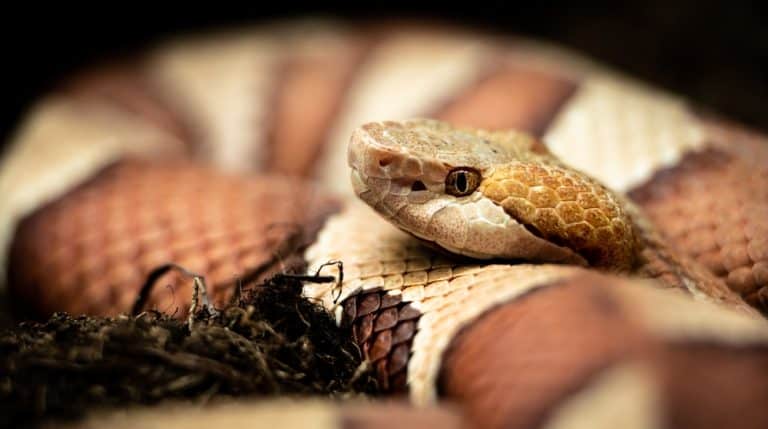
This pit viper is a venomous snake that is easily identifiable by its hourglass pattern of light and dark brown crossbands. The Eastern copperhead is about 22 to 36 inches long and can only be found in the Florida panhandle. Newborn copperheads have bright yellow tips on their tails.
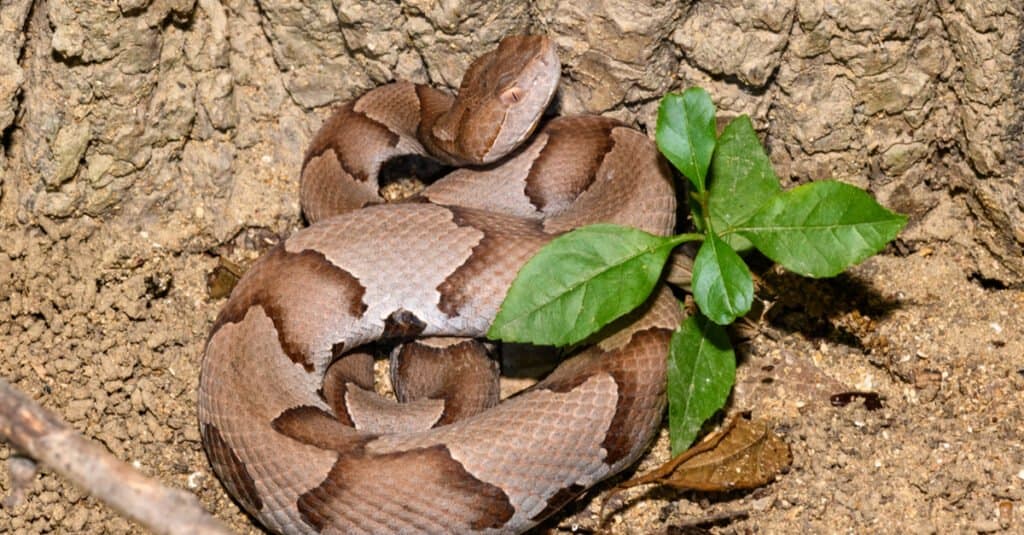
Eastern copperhead snakes bite more people than any other snake. Why? Because they get stepped on.
©Jeff W. Jarrett/Shutterstock.com
Boa Constrictor (Boa constrictor)
Although non-native, boa constrictors have been living and breeding in Florida since the 1970s, when people began keeping them as pets. Experts believe that some were either intentionally or accidentally released into the wild. Today, the only breeding population known in Florida is around the Charles Deering Estate in Miami. These large, non-venomous snakes have brown and tan markings and can grow 10 to 16 feet long.

Native to Central and South America, boa constrictors are an invasive species in Florida.
©Alfredo Maiquez/Shutterstock.com
North American Racer (Coluber constrictor)
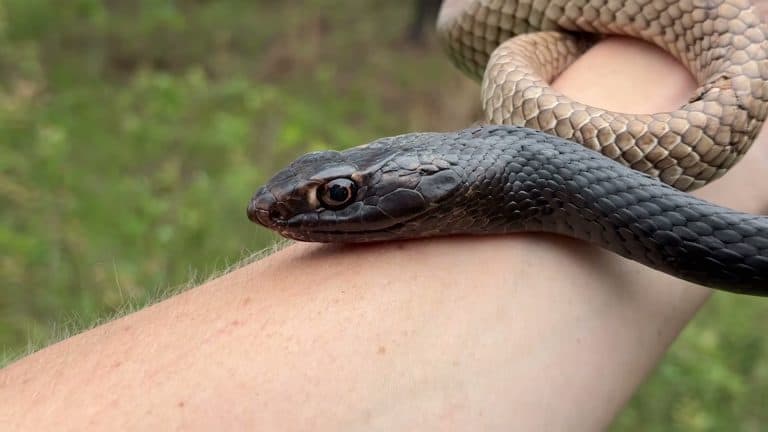
As adults, many North American racers are black, but in Florida, they can also be gray, bluish, or brownish colored. In their juvenile stage, they have grayish bodies with brown or reddish-brown markings. North American racers are around 20 to 56 inches long and are non-venomous.
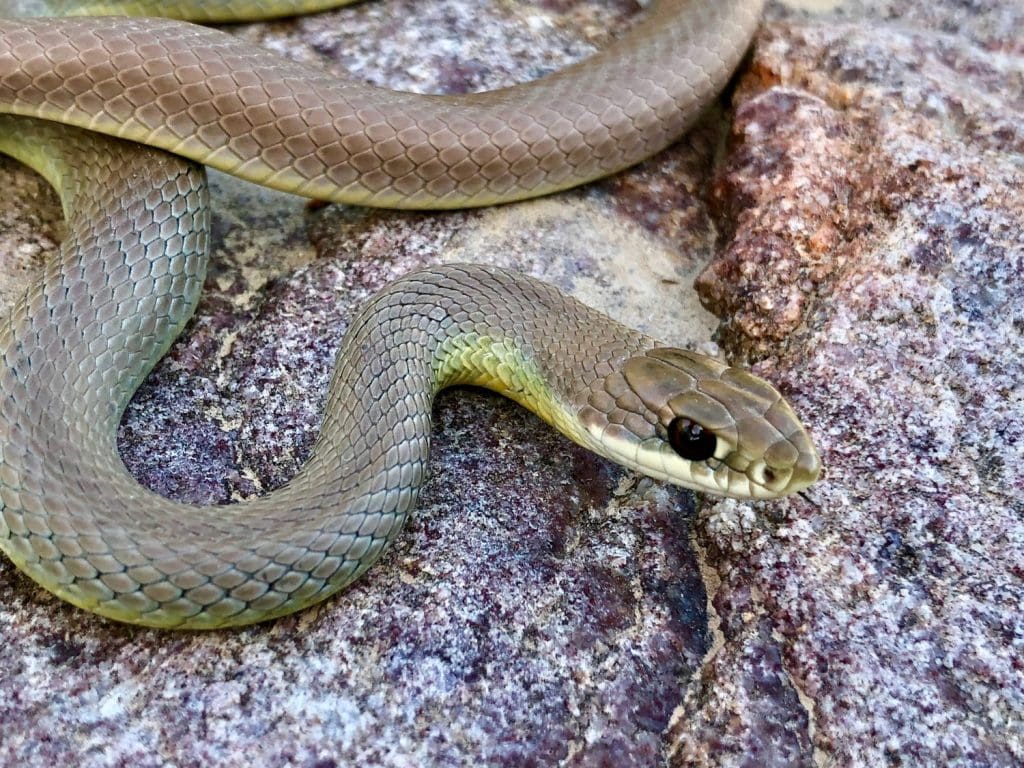
North American racers can vary in color, with black, gray, bluish, or brownish coloration as adults.
©Matt Jeppson/Shutterstock.com
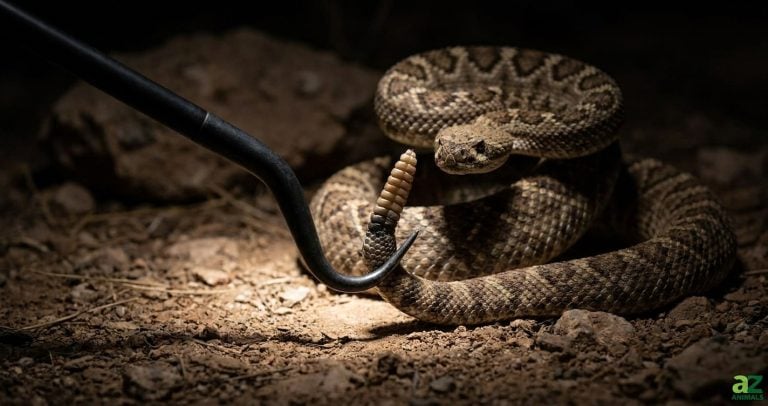
Eastern Diamondback Rattlesnake (Crotalus adamanteus)
This large pit viper only lives in the southeastern U.S. Eastern diamondback rattlesnakes are venomous snakes that range from 33 to 72 inches long. They can be identified by a row of diamond-shaped blotches with brown centers and cream borders. Their bodies are brownish, grey, or olive-green.
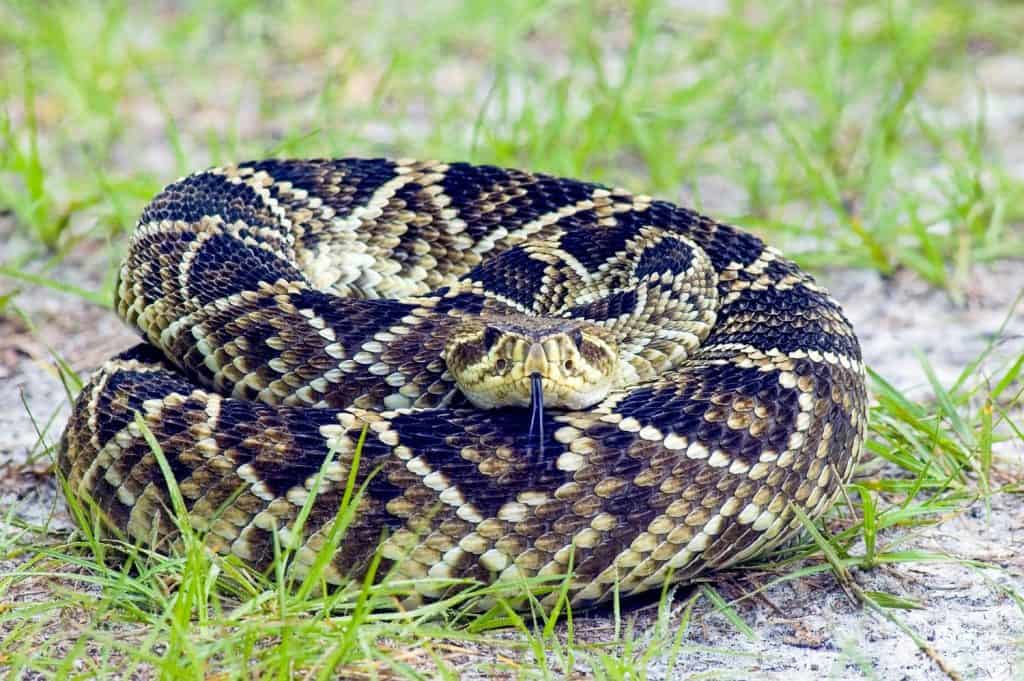
The venomous eastern diamondback rattlesnake can reach up to 72 inches long.
©Donna Bollenbach/Shutterstock.com
Timber Rattlesnake (Crotalus horridus)
Timber rattlesnakes are venomous snakes that can vary greatly in color. They can be gray or light brown, with a long stripe down their body, which may be yellow, pink, black, or brown. They are around 36 to 60 inches long and are mainly found in northern Florida.
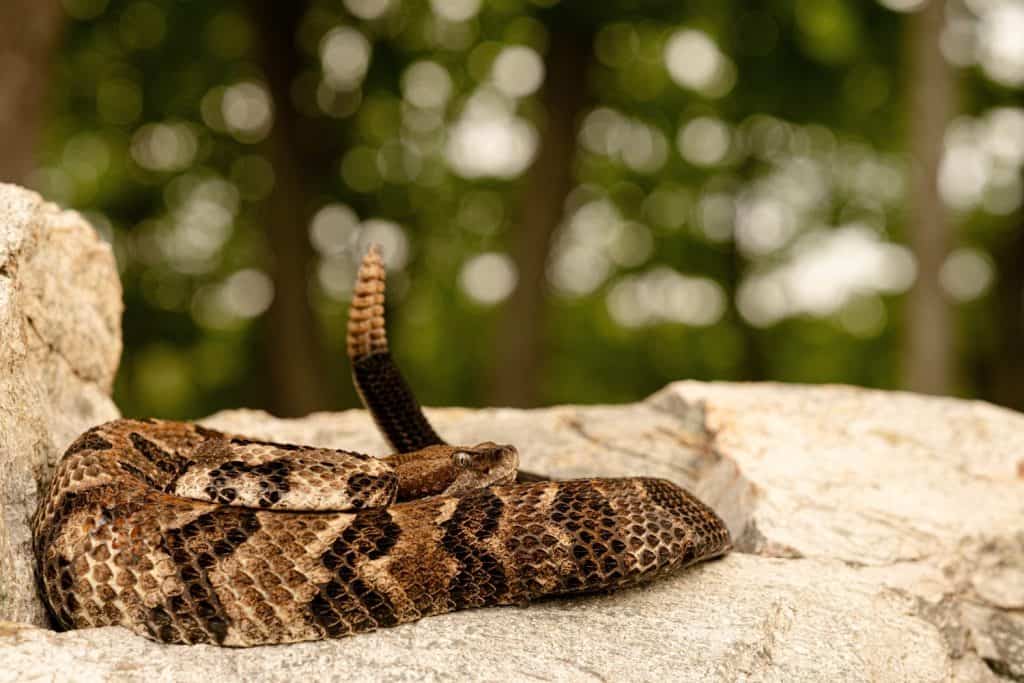
Timber rattlesnakes are mainly found in northern Florida.
©Radiant Reptilia/Shutterstock.com
Rough Earthsnake (Haldea striatula)
These small snakes only measure about 7 to 10 inches long. They are glossy brown to grayish brown in color with keeled, or ridged, scales. The rough earthsnake is non-venomous. It has a small head with a pointed snout used for burrowing.
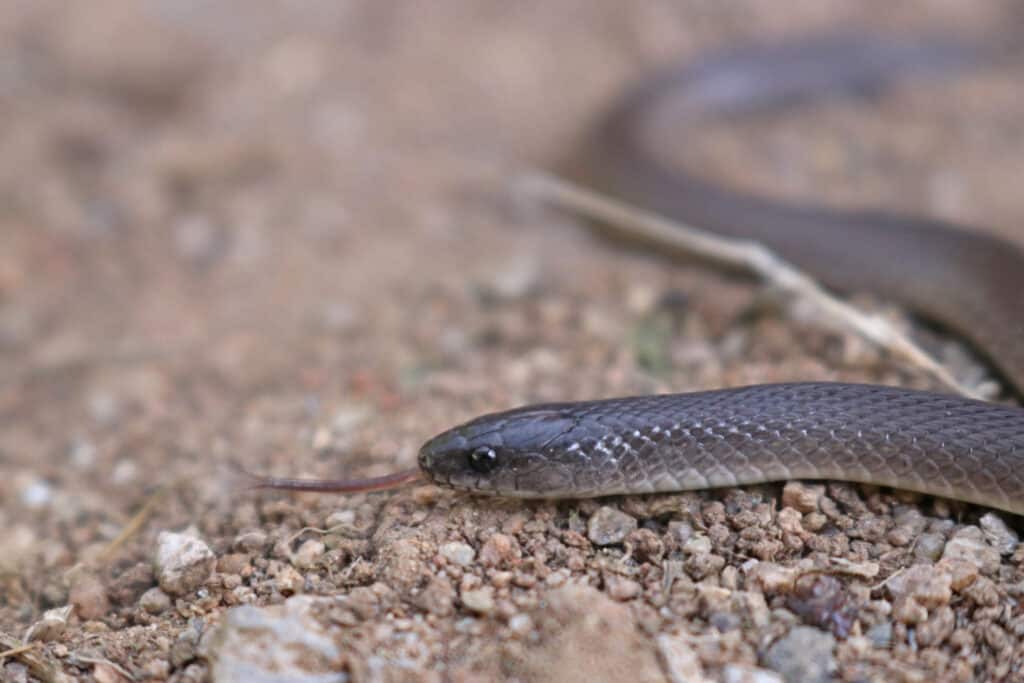
Rough earthsnakes are some of the smallest snakes in Florida.
©Creeping Things/Shutterstock.com
Smooth Earthsnake (Virginia valeriae)
Smooth earthsnakes have glossy scales and range in color from brown to reddish brown. Like the rough earthsnake, they are small, measuring only 7 to 10 inches long. These snakes are non-venomous and lack keeled scales.
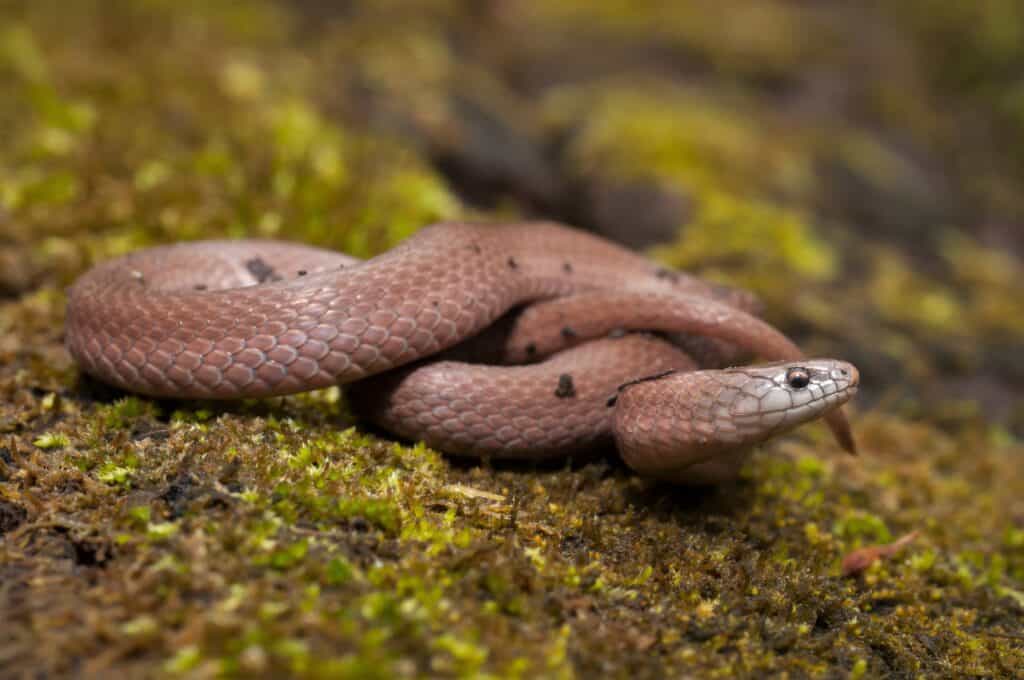
These small snakes help to keep insect populations in check.
©Mike Wilhelm/Shutterstock.com
Eastern Hog-Nosed Snake (Heterodon platirhinos)
Eastern hog-nosed snakes are non-venomous, about 20 to 33 inches long, and vary in color. They can be brown, tan, gray, olive, yellow, or reddish brown with dark brown blotches. They use their upturned snouts to root around in the ground while hunting prey.
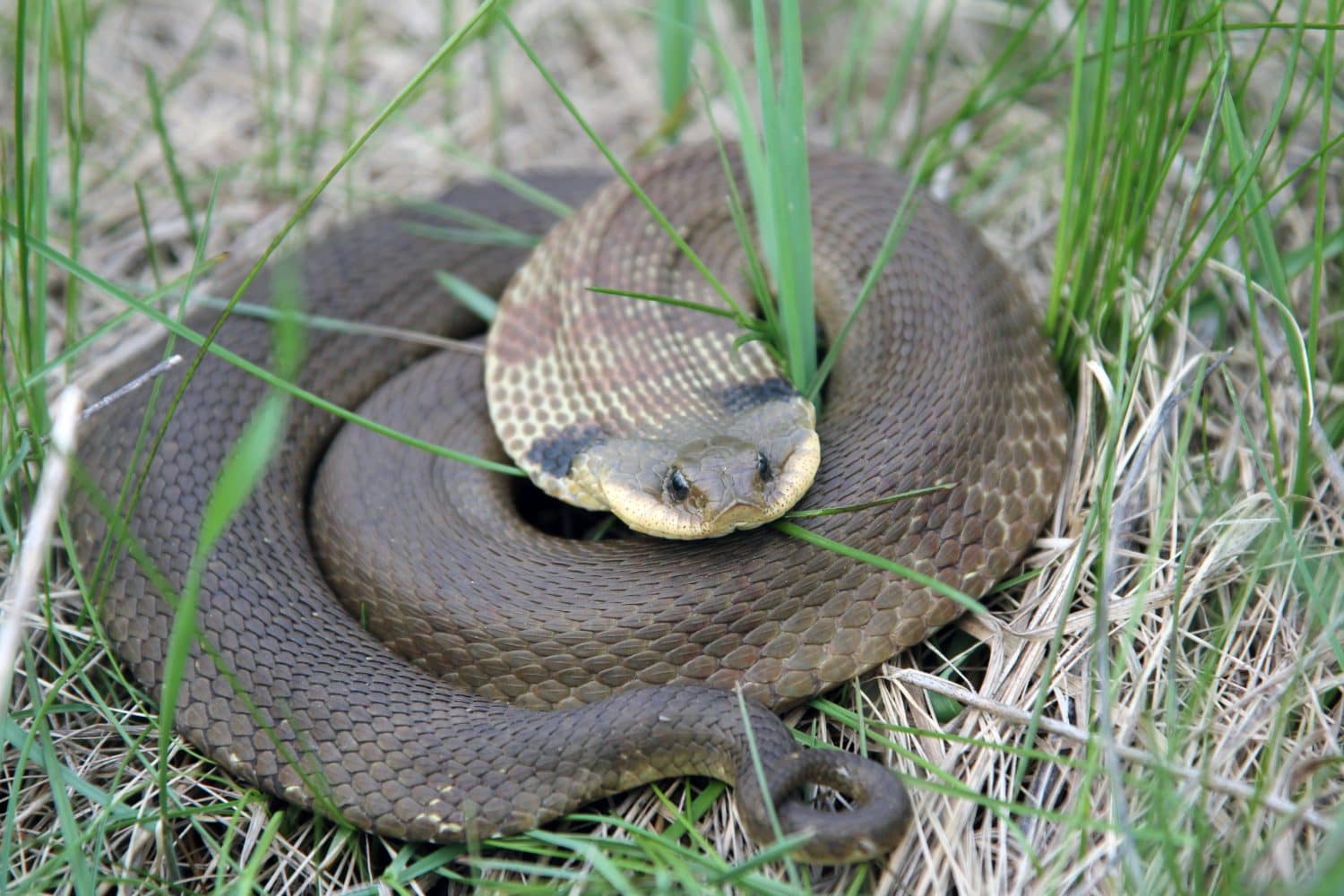
The Eastern hog-nosed snake will flatten its head to appear more threatening.
©Wxchsr/Shutterstock.com
Southern Hog-Nosed Snake (Heterodon simus)
Also known as the puff adder, the Southern hog-nosed snake will hiss and puff up its body as a defense mechanism. Despite their intimidating appearance, they are non-venomous. They are about 18 to 22 inches long and can vary in color, including yellowish-brown, tan, gray, or orange.
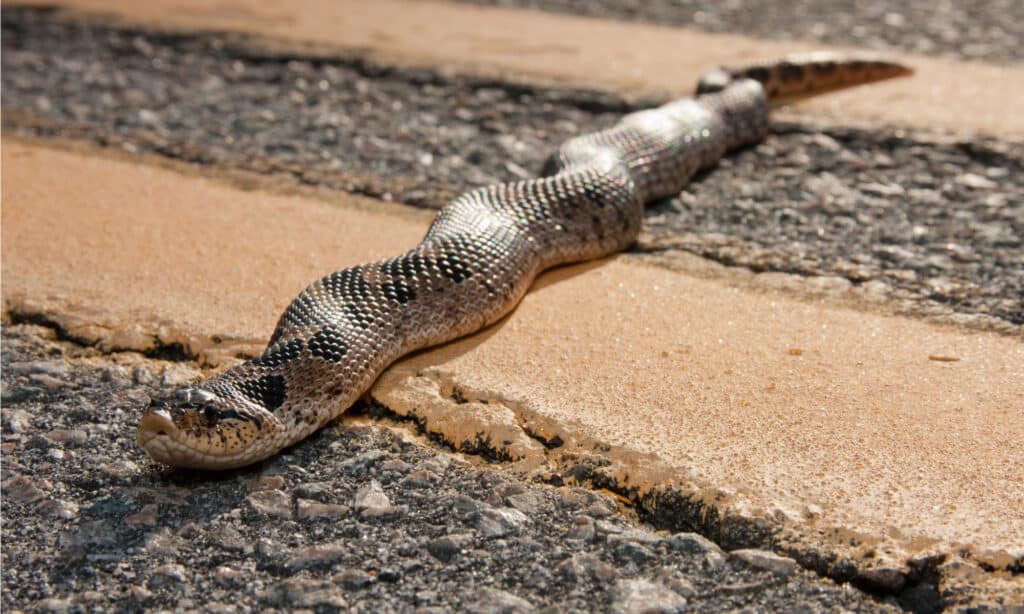
Southern hog-nosed snakes can puff up their bodies as a defense mechanism.
©Nathan A Shepard/Shutterstock.com
Brahminy Blindsnake (Indotyphlops braminus)
Brahminy blindsnakes range in color from dark brown to black to yellowish-brown to gray. These small, non-venomous snakes reach about 4.4 to 6.5 inches in length and are non-native to Florida. Experts believe they came to the U.S. on the soil of potted plants.

The tiny Brahminy blind snake can vary in color, with some appearing dark brown.
Florida Kingsnake (Lampropeltis floridana)
Florida kingsnakes are non-venomous and measure around 36 to 48 inches long. Their color can vary from brown to yellow, with yellowish crossbands. These snakes are typically found in southern Florida. They are called “kingsnakes” because they eat other snakes, even venomous ones.
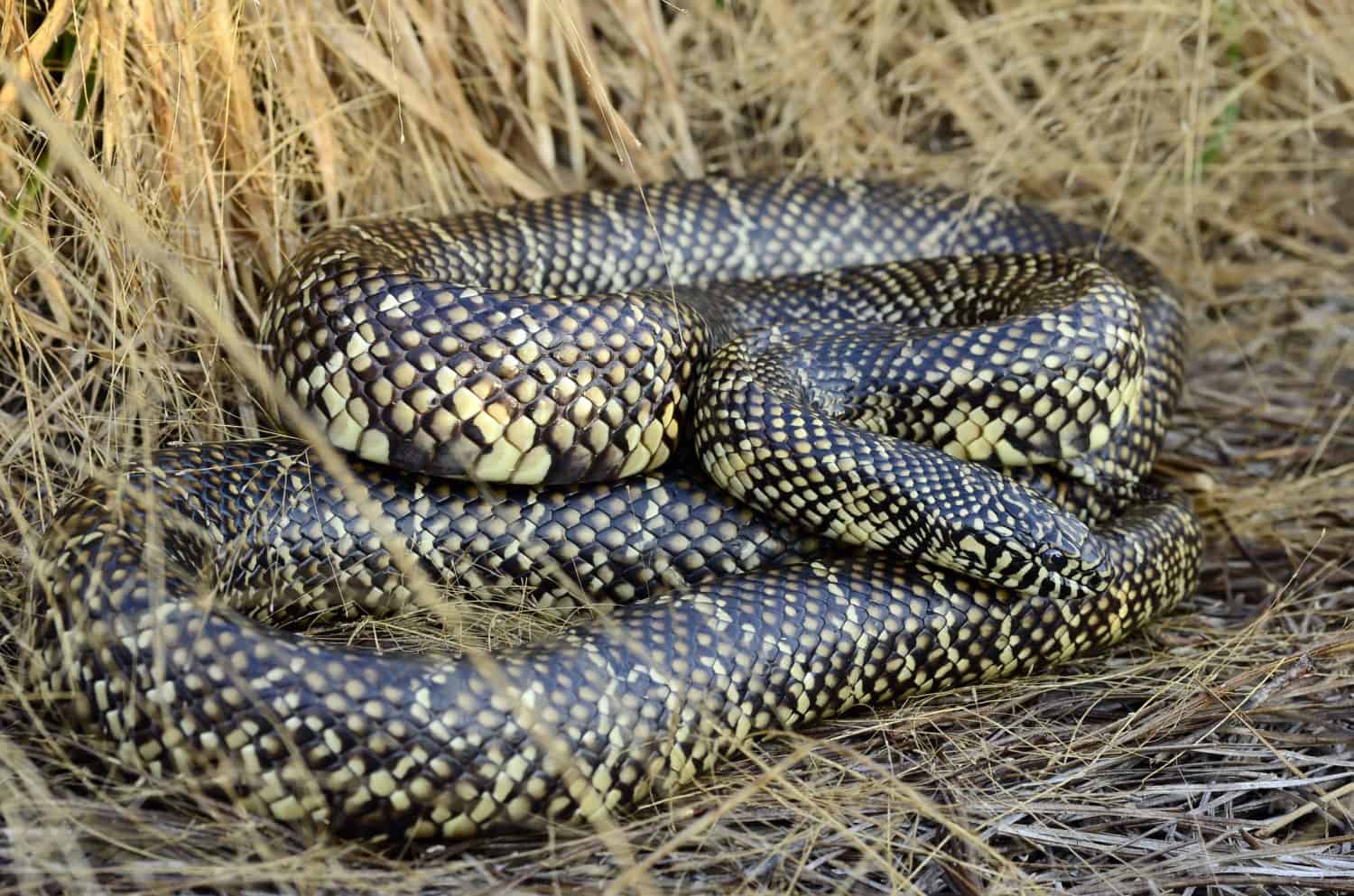
The Florida kingsnake lives in southern Florida.
©Patrick K. Campbell/Shutterstock.com
Apalachicola Kingsnake (Lampropeltis meansi)
The Apalachicola kingsnake is typically black to dark brown. They may have wide yellowish crossbands, stripes, or they may be entirely patternless. These non-venomous snakes are about 36 to 48 inches in length. This species inhabits the Apalachicola Lowlands in the Florida Panhandle.
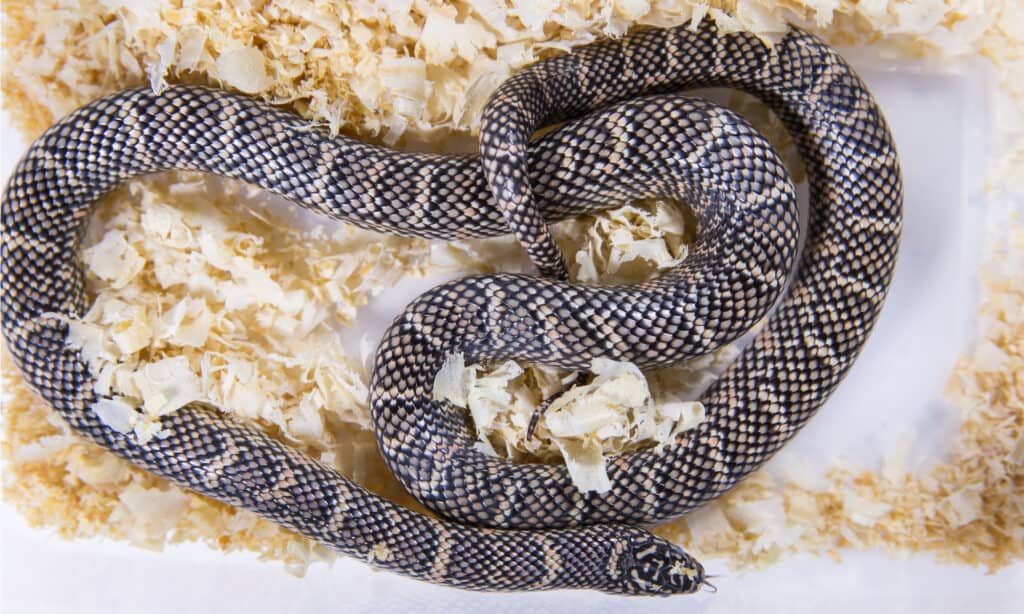
Apalachicola kingsnakes can be found in the Apalachicola Lowlands in the Florida Panhandle.
©Left Handed Photography/Shutterstock.com
Striped Swampsnake (Liodytes alleni)
Also known as the striped crayfish snake, striped swampsnakes are glossy brownish-yellow, olive, or reddish-brown with three wide, dark longitudinal stripes. They are around 13 to 20 inches long, highly aquatic, and rarely seen.
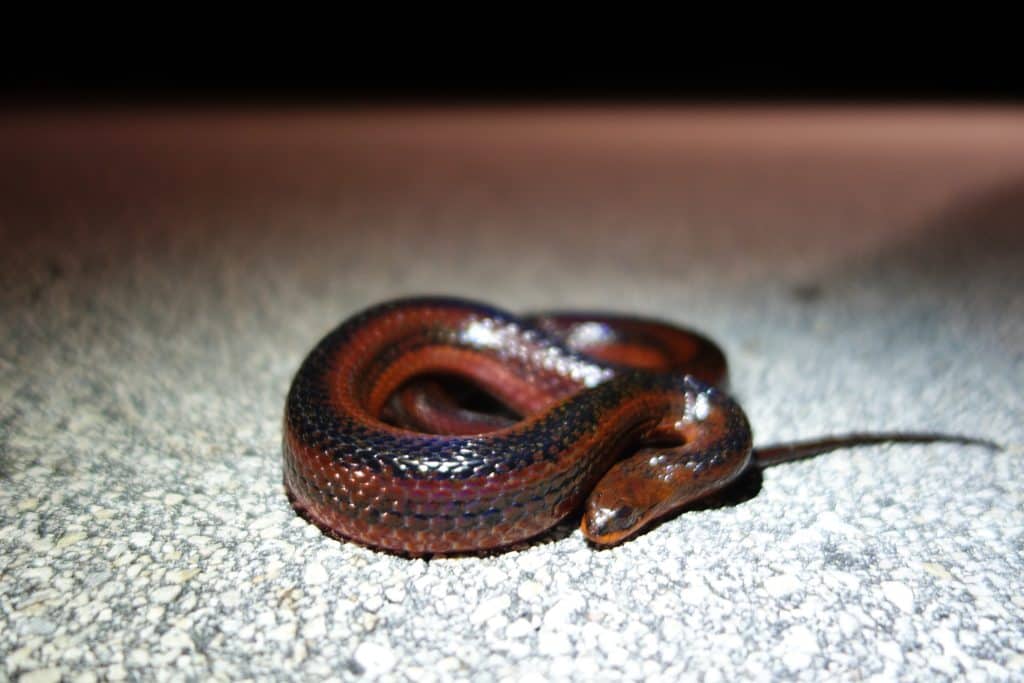
The striped swampsnake is highly aquatic and rarely seen.
©Matt Berger, CC BY 4.0, via Wikimedia Commons – Original / License
Glossy Swampsnake (Liodytes rigida)
The glossy swampsnake has dark gray to nearly black or glossy brown to olive-brown scales with pale bellies that have two rows of dark spots. These snakes are around 14 to 24 inches long and are non-venomous. Like their cousin, the striped swampsnake, they are also highly aquatic and rarely seen.
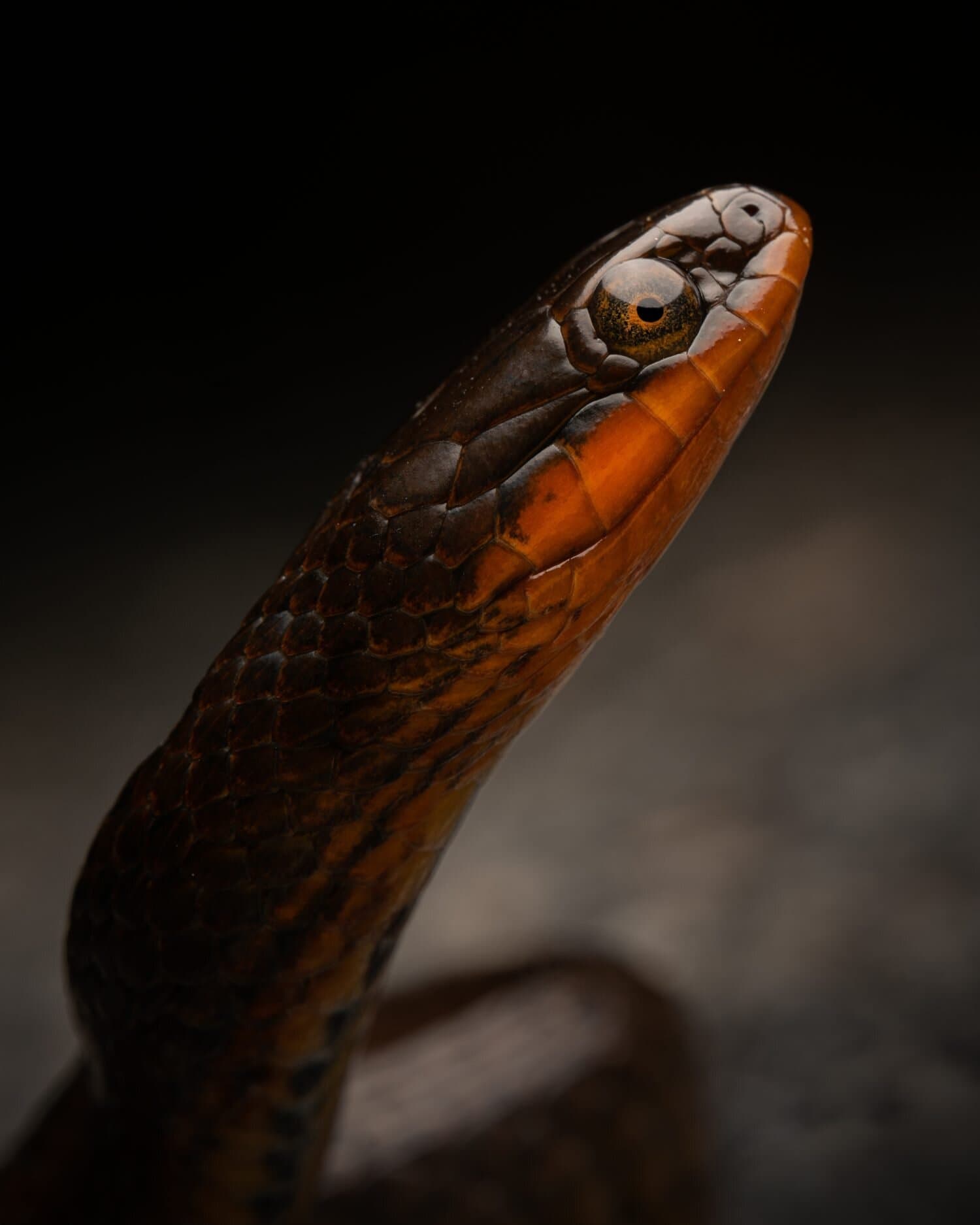
Also known as the crayfish snake, glossy swampsnakes primarily eat crayfish.
©Radiant Reptilia/Shutterstock.com
Eastern Coachwhip (Masticophis flagellum flagellum)
The eastern coachwhip is a subspecies of the common coachwhip snake. This snake is around 42 to 60 inches long and has a tan body with a darker brown head. They are non-venomous and can be found across mainland Florida, but not in the Florida Keys.
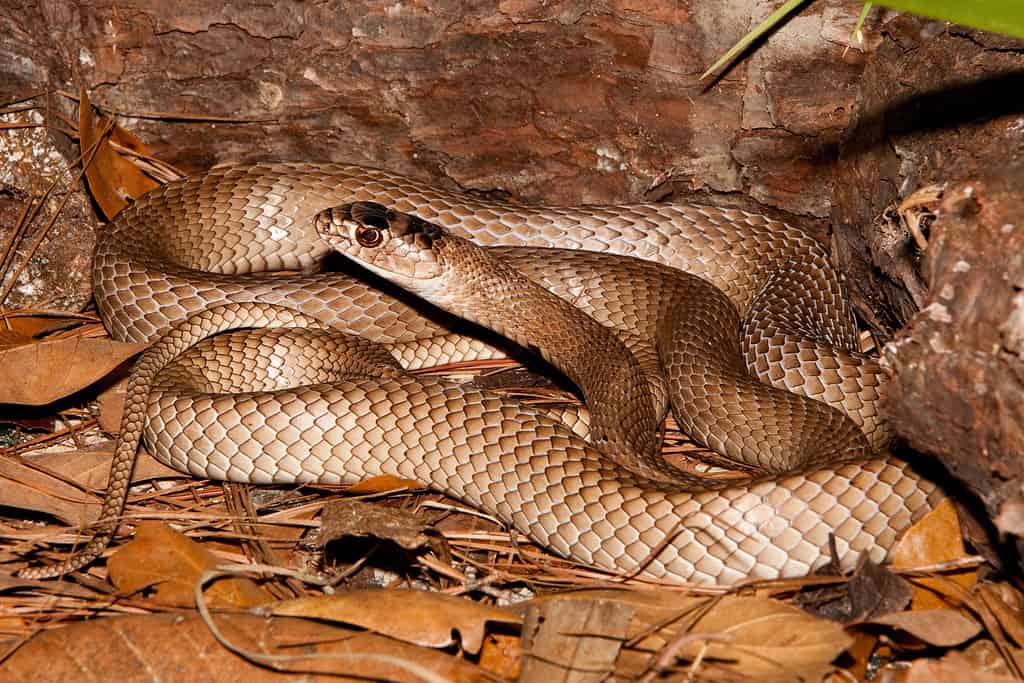
Eastern coachwhips are large snakes that can reach up to 5 feet long.
©Jay Ondreicka/Shutterstock.com
Saltmarsh Snake (Nerodia clarkii)
Also known as the saltmarsh watersnake, the saltmarsh snake varies in color, including gray, orange, black, brown, and tan. They are typically around 15 to 30 inches long, although the largest on record was 36.7 inches long. These semi-aquatic snakes are generally found in coastal brackish marshes and mangrove swamps.
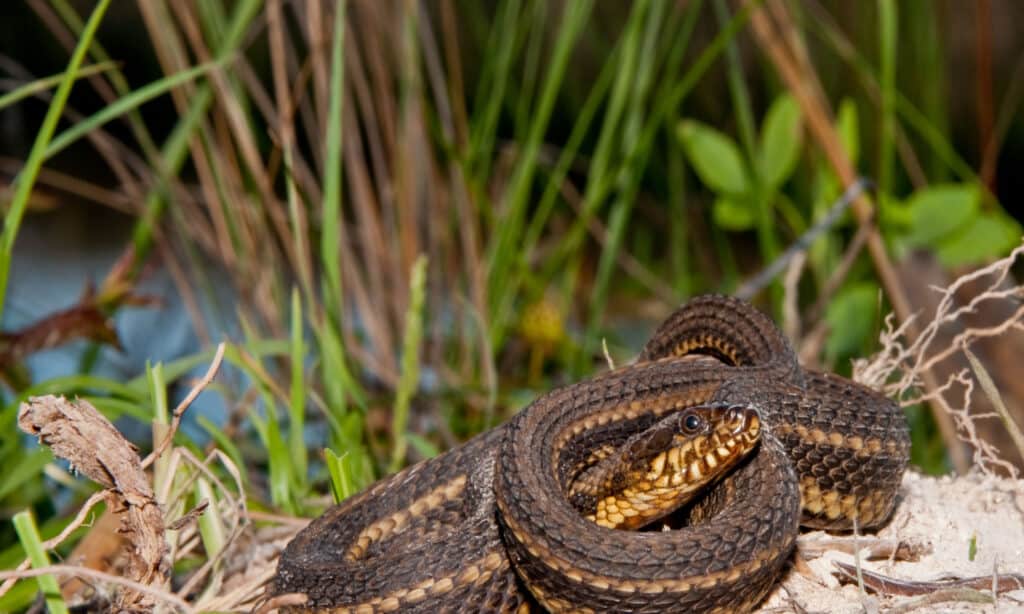
The largest saltmarsh snake on record was 36.7 inches long.
©Jay Ondreicka/Shutterstock.com
Mississippi Green Watersnake (Nerodia cyclopion)
Although it’s named the Mississippi green watersnake, these non-venomous snakes can be deep olive or brown. They are rare in the state and have only been seen in the far western panhandle. These snakes are semi-aquatic and can reach 30 to 55 inches in length.
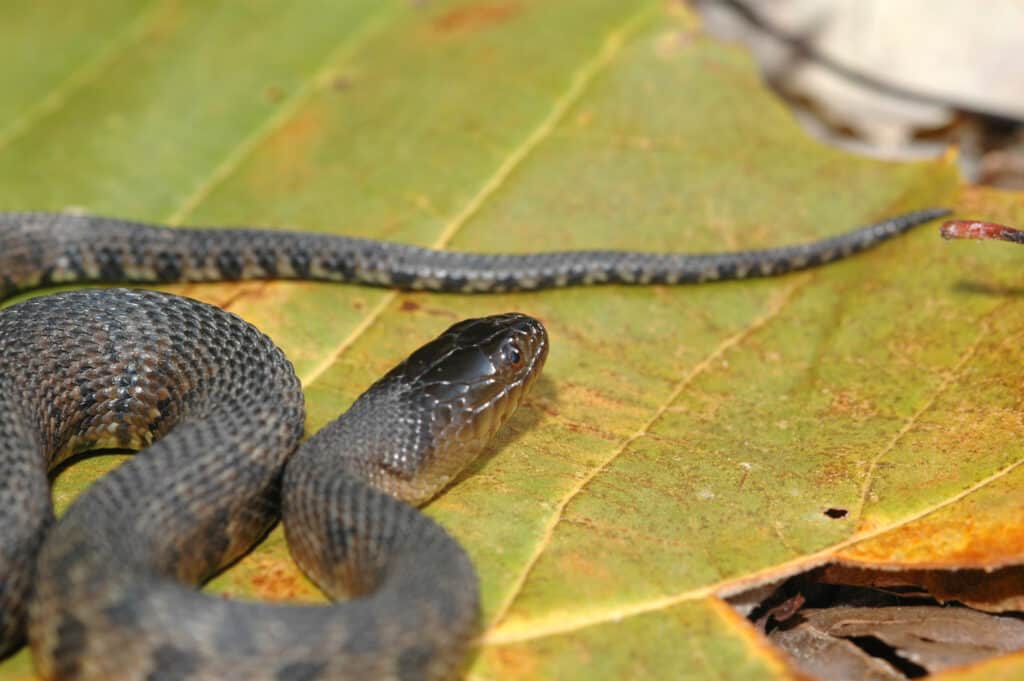
The Mississippi green water snake can also be brown, despite the name.
©iStock.com/Shoemcfly
Plain-Bellied Watersnake (Nerodia erythrogaster)
Plain-bellied watersnakes are non-venomous snakes. They measure about 30 to 48 inches long and are found around bodies of water in the Florida panhandle. Plain-bellied watersnakes are typically gray, light brown, or dark brown.
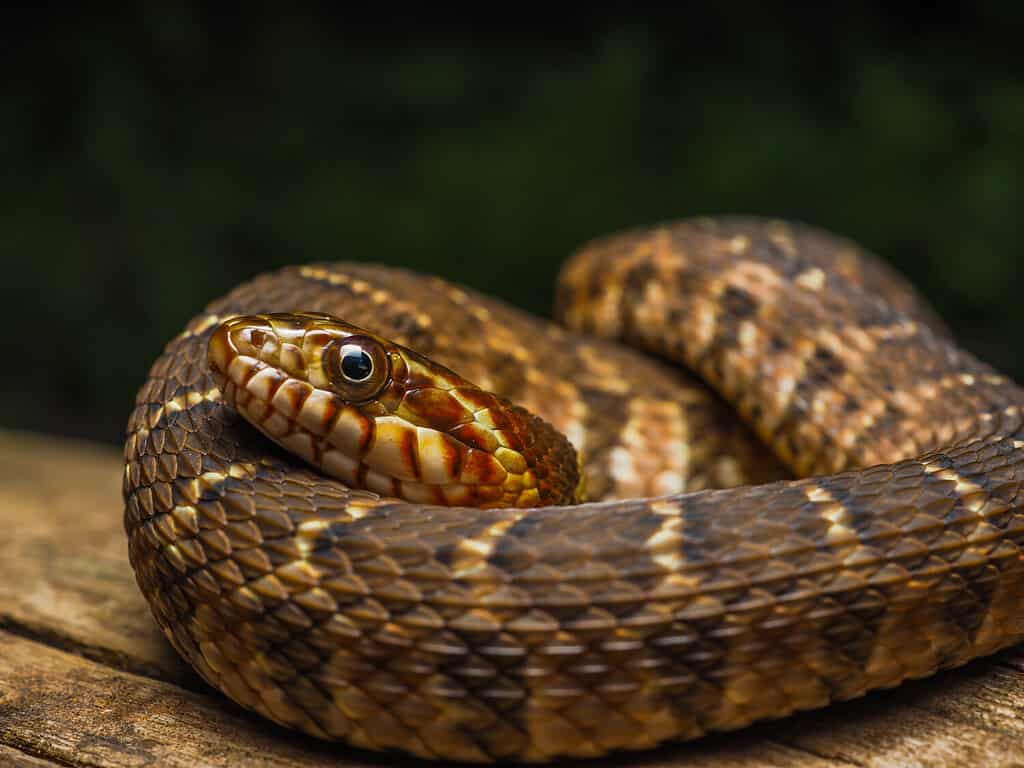
Plain-bellied watersnakes are nonvenomous.
©Tyler Albertson/Shutterstock.com
Southern Watersnake (Nerodia fasciata)
Also known as the banded watersnake or Florida watersnake, the southern watersnake’s background color may be red, brown, olive, or grey, with dark brown crossbands. These non-venomous snakes measure 22 to 42 inches long.
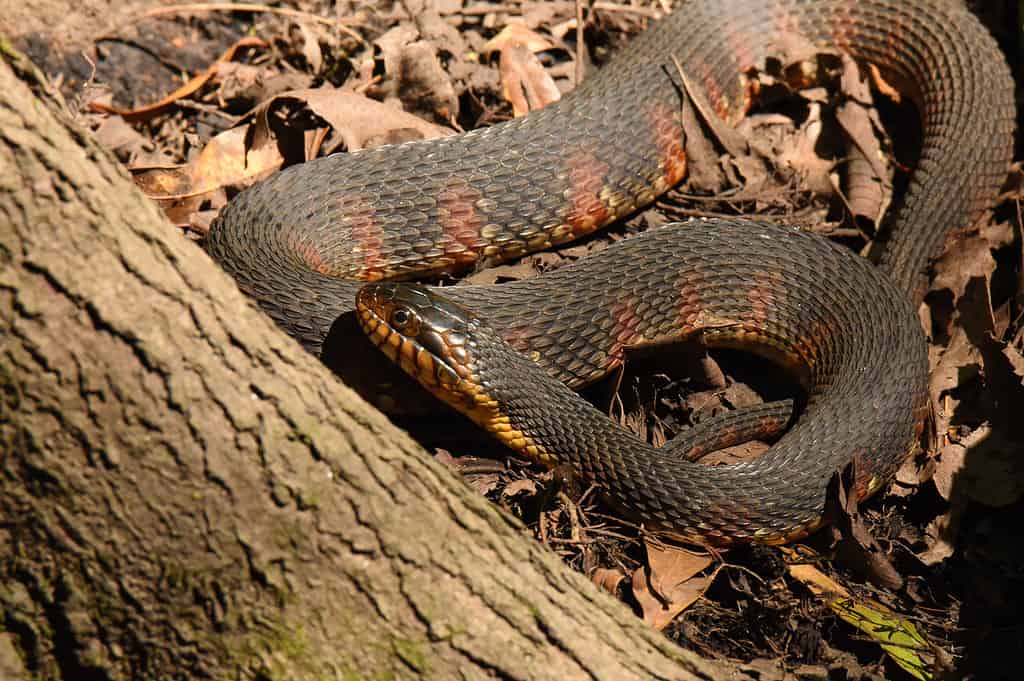
Southern watersnakes measure 22 to 42 inches long.
©Gilbert S. Grant/Shutterstock.com
Florida Green Watersnake (Nerodia floridana)
The non-venomous Florida green watersnake lives throughout mainland Florida but isn’t found in the Keys. These snakes can be brown, greenish-brown, or orange in color. It is one of the largest watersnakes in North America and can reach 30 to 55 inches in length.
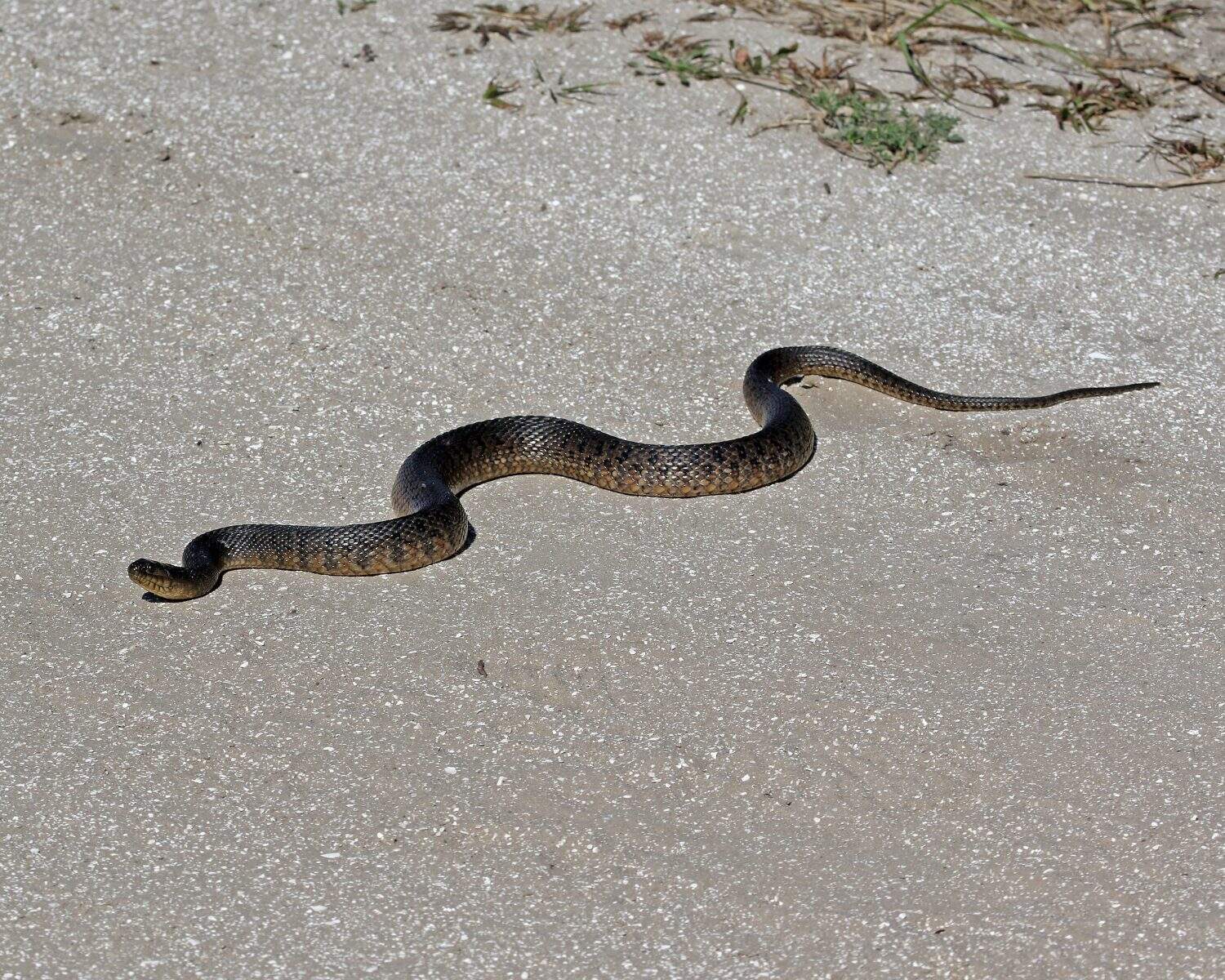
The Florida green watersnake is found throughout mainland Florida but is not found in the Keys.
©A. Viduetsky/Shutterstock.com
Midland Watersnake (Nerodia sipedon pleuralis)
In Florida, you will only find midland watersnakes in the western panhandle. These snakes are around 24 to 30 inches long and are light brown, tan, or reddish colored with dark crossbands changing to blotches closer to the tail.

Midland watersnakes prey on fish and amphibians.
©damann/Shutterstock.com
Brown Watersnake (Nerodia taxispilota)
The brown watersnake is a non-venomous snake ranging in size from about 30 to 60 inches in length. Brown watersnakes have tan bodies with dark brown blotches. Like the Florida green watersnake, brown watersnakes can be found in bodies of water throughout Florida, except in the Keys.
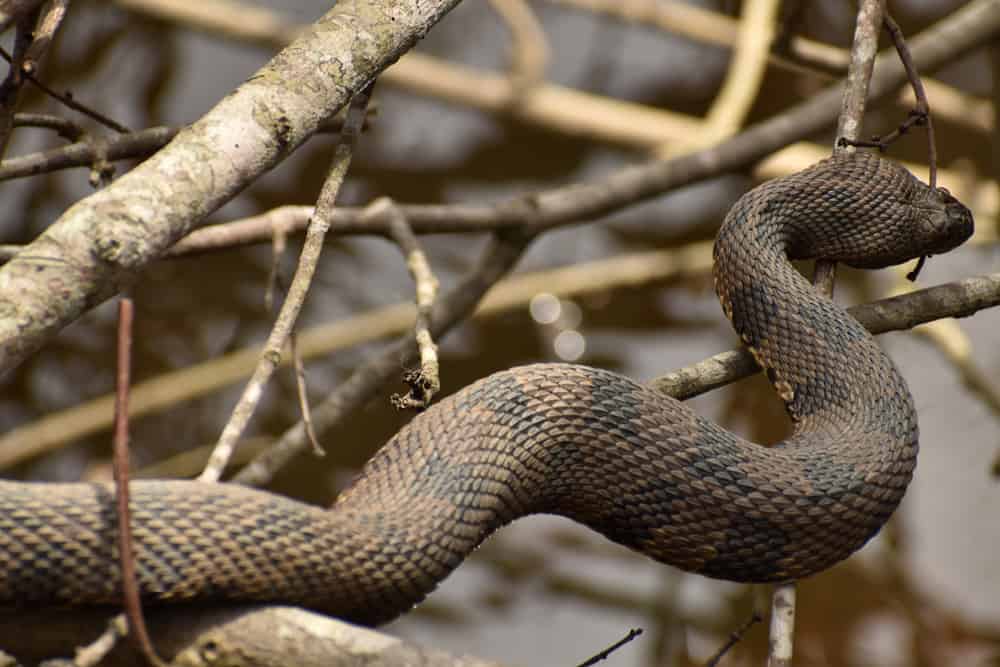
The brown watersnake lives in freshwater throughout Florida.
©Jstengel/Shutterstock.com
Eastern Ratsnake (Pantherophis alleghaniensis)
Eastern ratsnakes can vary in color, with some appearing brown. Juveniles have grey and brown blotches all over their tan bodies. Also known as chicken snakes, Eastern ratsnakes are around 42 to 72 inches long and are non-venomous.
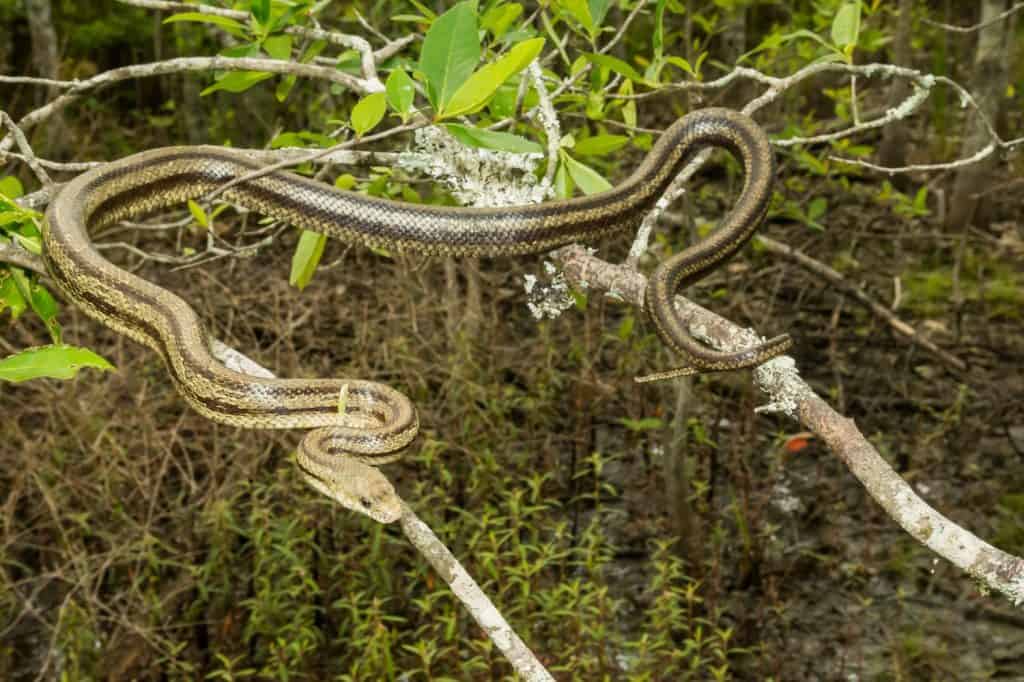
The Eastern ratsnake may be large, but it has a shy disposition.
©Jay Ondreicka/Shutterstock.com
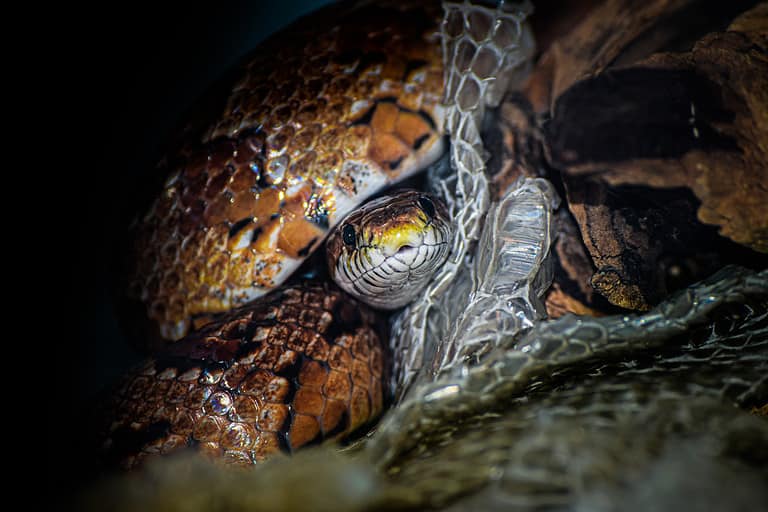
Red Cornsnake (Pantherophis guttatus)
Red cornsnakes may also be known as chicken snakes, red ratsnakes, or Eastern cornsnakes. These non-venomous snakes are about 30-48 inches long and have a brownish-orange base color with orange, red, or brown longitudinal stripes and blotches.

Also known as chicken snakes, red cornsnakes live in the southeastern U.S., including Florida.
©Scink/Shutterstock.com
Florida Pine Snake (Pituophis melanoleucus)
Sometimes known as the eastern pine snake, the Florida pine snake is around 48 to 84 inches long. It is one of the largest snakes in eastern North America. These non-venomous brown snakes have brown backs with dark, reddish-brown or dark brown blotches and a light-colored belly.
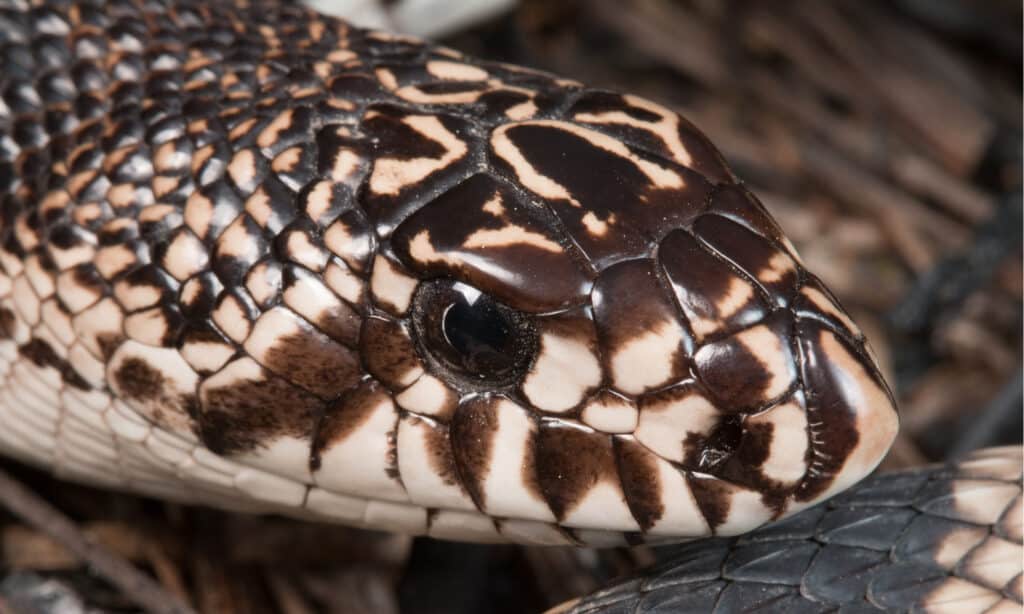
Florida pine snakes are among the largest snakes in eastern North America.
©Nathan A Shepard/Shutterstock.com
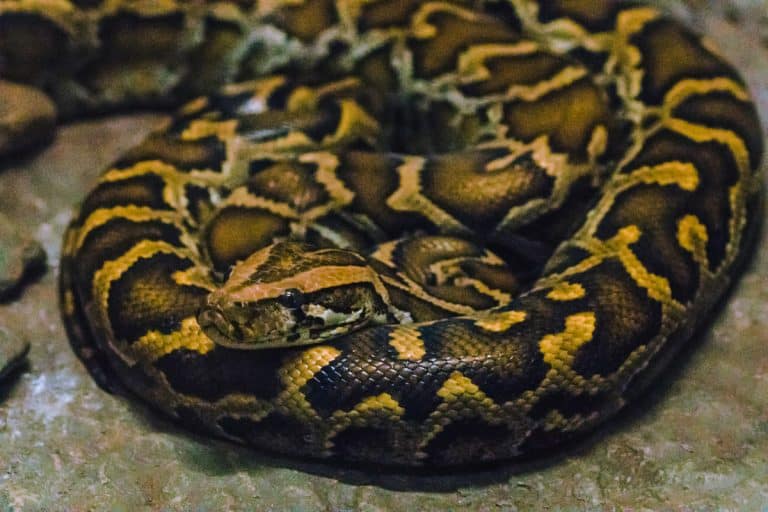
Burmese Python (Python bivittatus)
Burmese pythons are an invasive species in Florida. These snakes are native to Southeast Asia but were introduced to Florida’s ecosystem as escaped or released pets in the 1970s and 1980s. They are non-venomous and are brownish-gray in color with reddish-brown or brown patterns. Adults typically measure between 10 and 20 feet in length and can weigh up to 200 pounds. They are among the largest snakes on Earth.
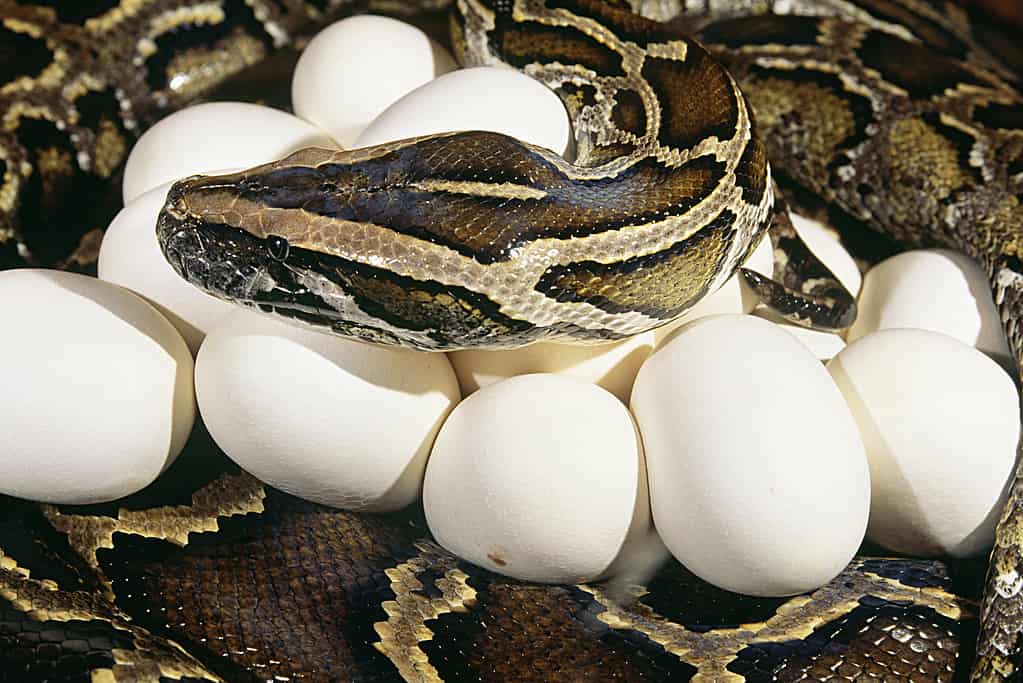
Although Burmese pythons live in Florida, they are native to Southeast Asia.
©Paul Tessier/Shutterstock.com
African Rock Python (Python sebae)
As the name suggests, African rock pythons are native to sub-Saharan Africa. They were first discovered living in Florida in the early 2000s and are considered an invasive species. These large snakes are 10 to 16 feet long and can weigh between 50 and 110 pounds. They are usually brown to tan colored with dark blotches.
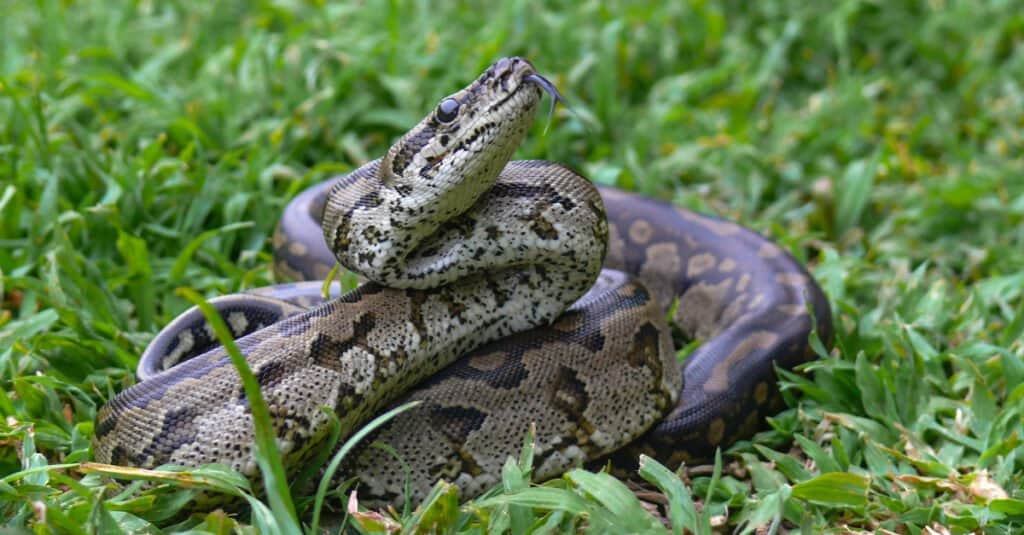
Rock pythons are native to sub-Saharan Africa, but now live in the Everglades region of Florida.
©Chris Graf/Shutterstock.com
Queen Snake (Regina septemvittata)
The queen snake is a non-venomous, semi-aquatic snake. They measure about 15 to 24 inches long, but the largest on record reached a length of 37 inches. These snakes range from olive green to brown in color and they have peach or yellow stripes that run down their sides.
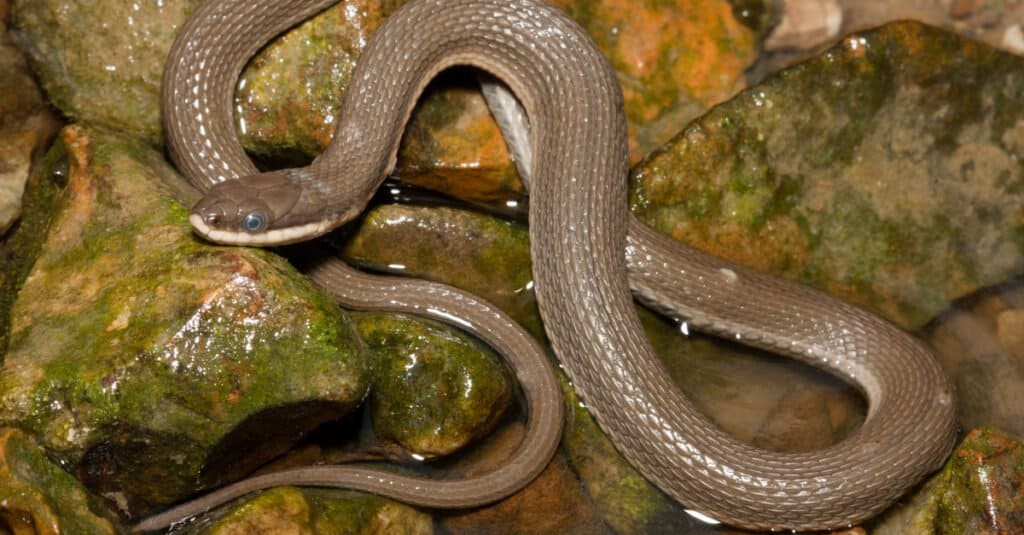
Queen snakes prefer to eat freshly molted crayfish to avoid having to digest the hard exoskeleton.
©Nathan A Shepard/Shutterstock.com
Pine Woods Littersnake (Rhadinaea flavilata)
These small, non-venomous snakes are only about 10 to 13 inches long. While some are reddish-orange, they may also be colored reddish-brown. They are also known as the yellow-lipped snake or the brown-headed snake.
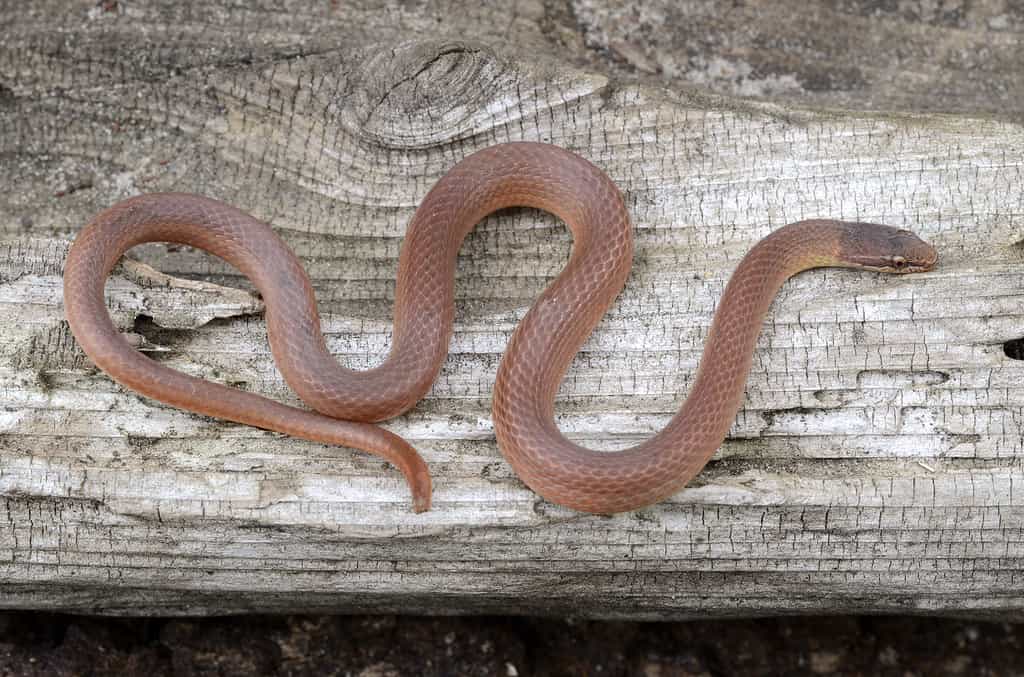
Pine woods littersnakes are nocturnal and prey on small lizards and amphibians.
©Patrick K. Campbell/Shutterstock.com
Dusky Pygmy Rattlesnake (Sistrurus miliarius barbouri)
While its body is gray, the dusky pygmy rattlesnake has a reddish-brown stripe that runs down its back. These venomous snakes are around 12 to 24 inches long. They have a slender tail that ends in a rattle, and are a subspecies of the pygmy rattlesnake.

When this small rattlesnake shakes its tail, it sounds less like a rattle and more like a buzzing sound.
©Kristian Bell/Shutterstock.com
DeKay’s Brown Snake (Storeria dekayi)
This brown-colored snake is one of three species of American brown snakes in the genus Storeria that live in Florida. Dekay’s brown snakes can be gray, tan, or brown with a faint stripe running down the middle of the back. They are small snakes about 9 to 13 inches long and can be found in Florida’s panhandle.
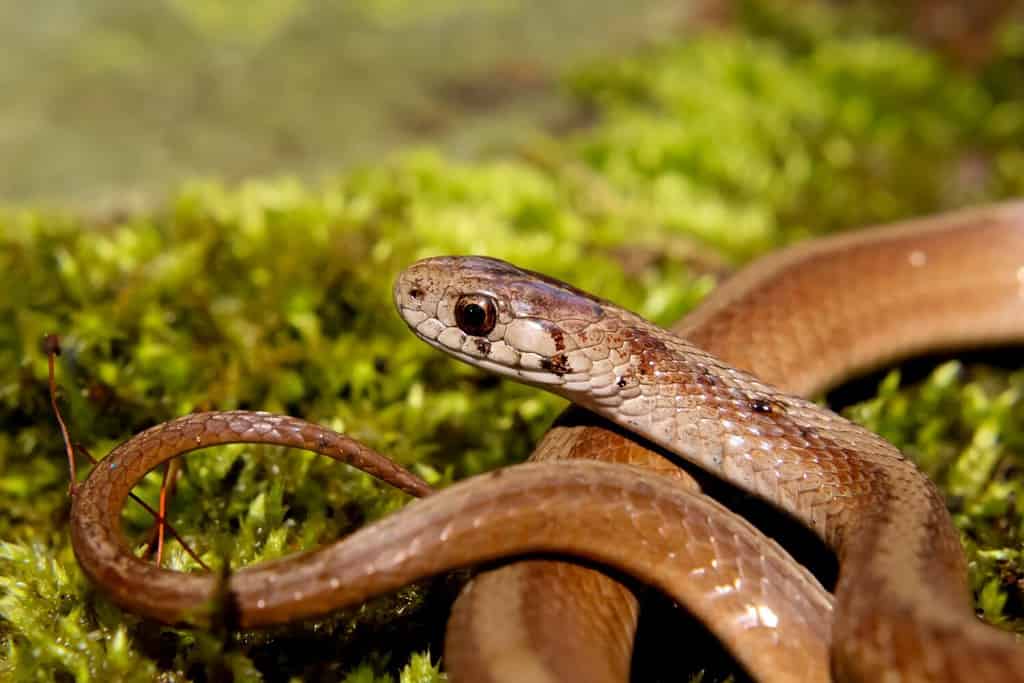
Dekay’s brown snakes are non-venomous snakes that feed on slugs, snails, and grubs.
©Christopher Troll/Shutterstock.com
Red-Bellied Snake (Storeria occipitomaculata)
Another brown snake species in Florida in the Storeria genus is the red-bellied snake. Red-bellied snakes, as their name suggests, have red stomachs. Their backs can be either brown or black. They are small, slender snakes, and only reach about 8 to 10 inches long.
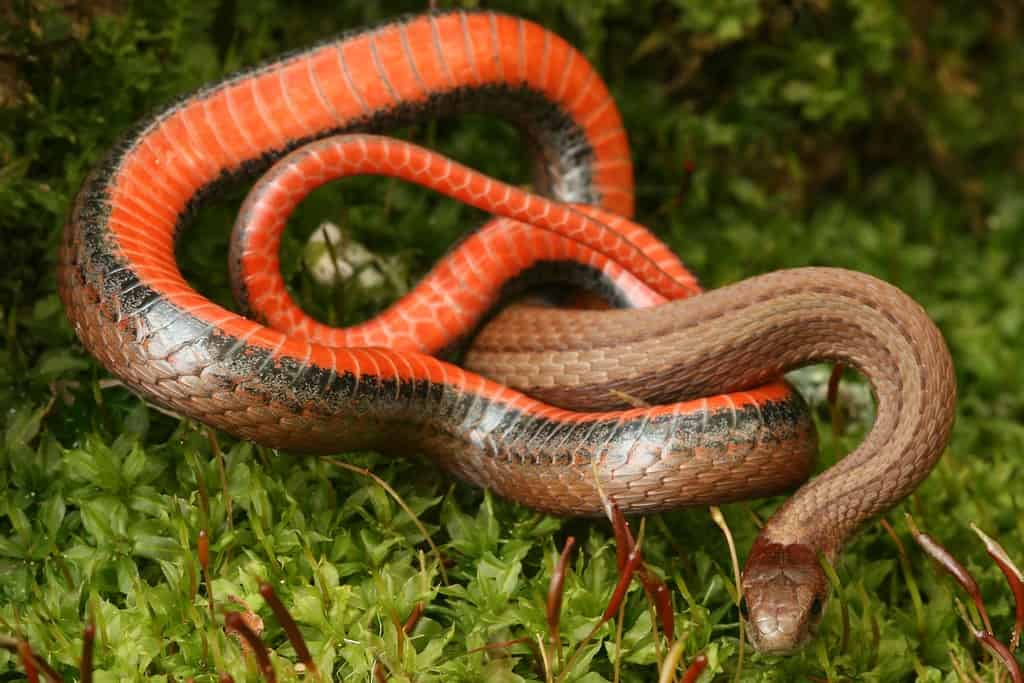
Red-bellied snakes are brown with distinctive red undersides.
©Kevin Collison/Shutterstock.com
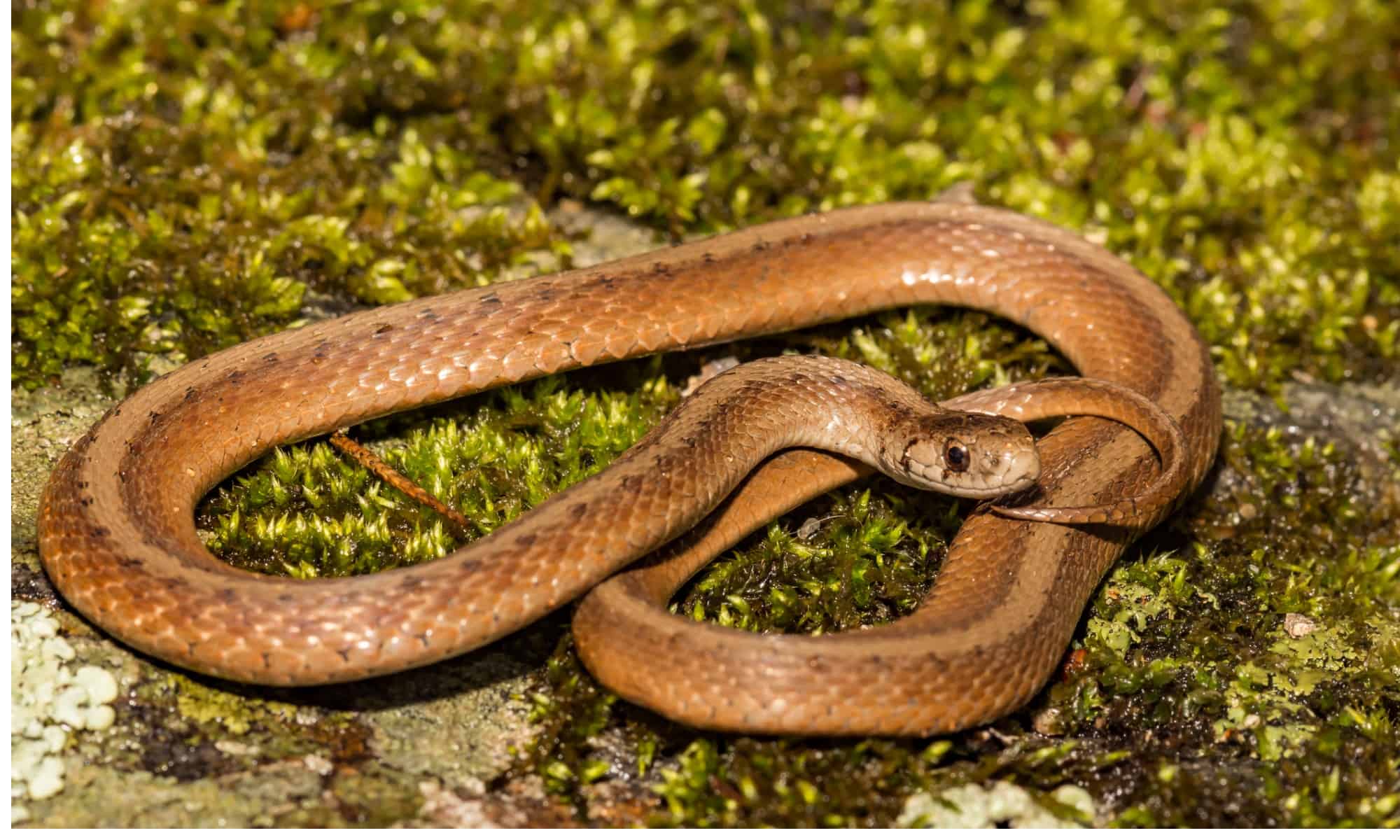
Florida Brown Snake (Storeria victa)
The third true brown snake on our list is the Florida brownsnake. These little snakes are around 9 to 13 inches in length. They are non-venomous and live in the Florida peninsula. They can be tan, rusty brown, or gray, with a light stripe down the middle that is bordered by small, black spots. These snakes may also have a pale band around their necks.
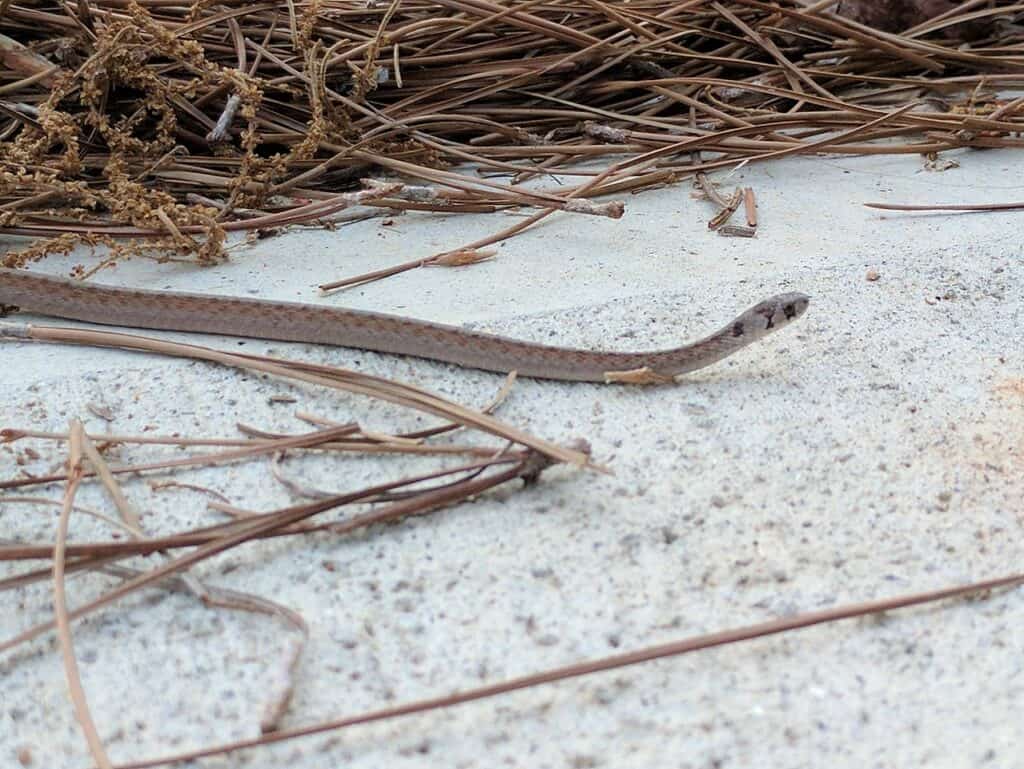
Florida brownsnakes can only be found living in Florida and Georgia.
Southeastern Crowned Snake (Tantilla coronata)
These small, non-venomous snakes measure around 8 to 10 inches in length as adults. Southeastern crowned snakes can be tan to reddish-brown in color with dark brown or black heads. They are typically found in the Panhandle.
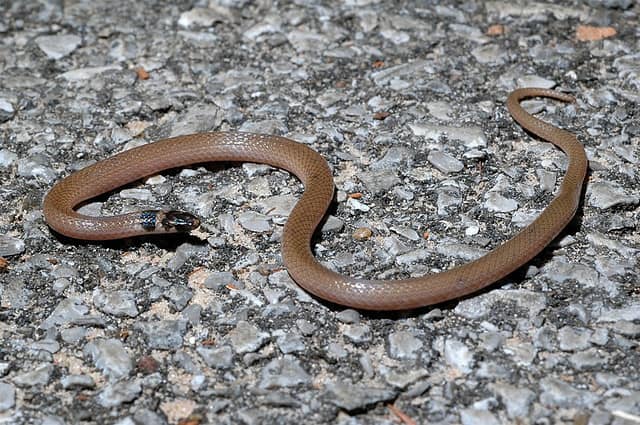
The Southeastern crowned snake is rarely seen, as they are often hidden under leaf litter and logs.
© – License
Rim Rock Crowned Snake (Tantilla oolitica)
Another small snake, rim rock crowned snakes are only 7 to 9 inches long. These non-venomous snakes can be tan or light brown with a darker head. They can only be found in southeast Florida around Miami-Dade County and parts of the Keys.
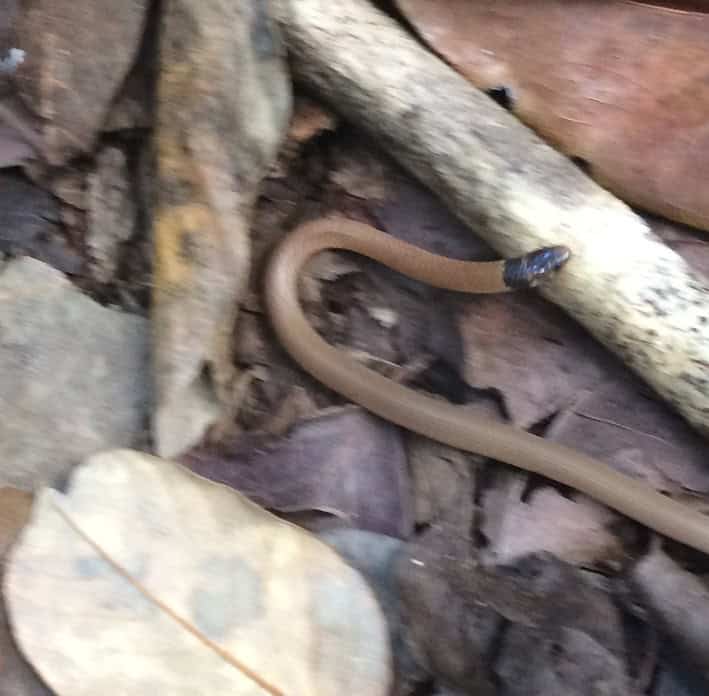
Rim rock crowned snakes are rarely seen in the wild.
Florida Crowned Snake (Tantilla relicta)
Similar to rim rock crowned snakes, Florida crowned snakes are about 7 to 9 inches long and are tan, light-brown, or reddish-brown with a darker-colored head. These snakes can be found in peninsular Florida and parts of southern Georgia.
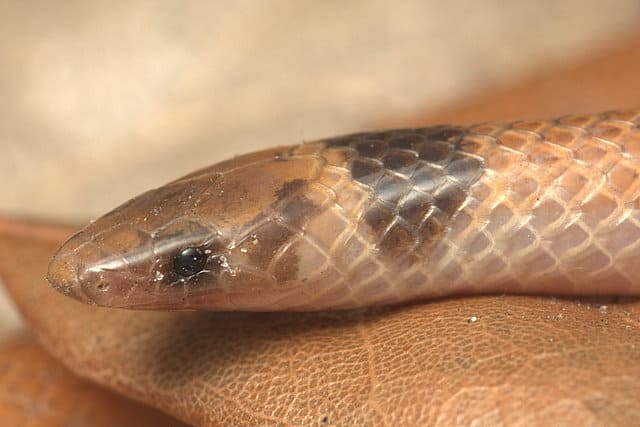
Florida crowned snakes are small snakes that prefer to live in sandy habitats.
©Alessandro Catenazzi / Creative Commons – Original / License
Eastern Ribbonsnake (Thamnophis saurita)
The non-venomous eastern ribbonsnake is a slender snake about 18 to 26 inches long. Many ribbonsnakes are brownish in color with long stripes that run down the length of their bodies. Ribbonsnakes are semi-aquatic and can be found near bodies of water throughout the state.
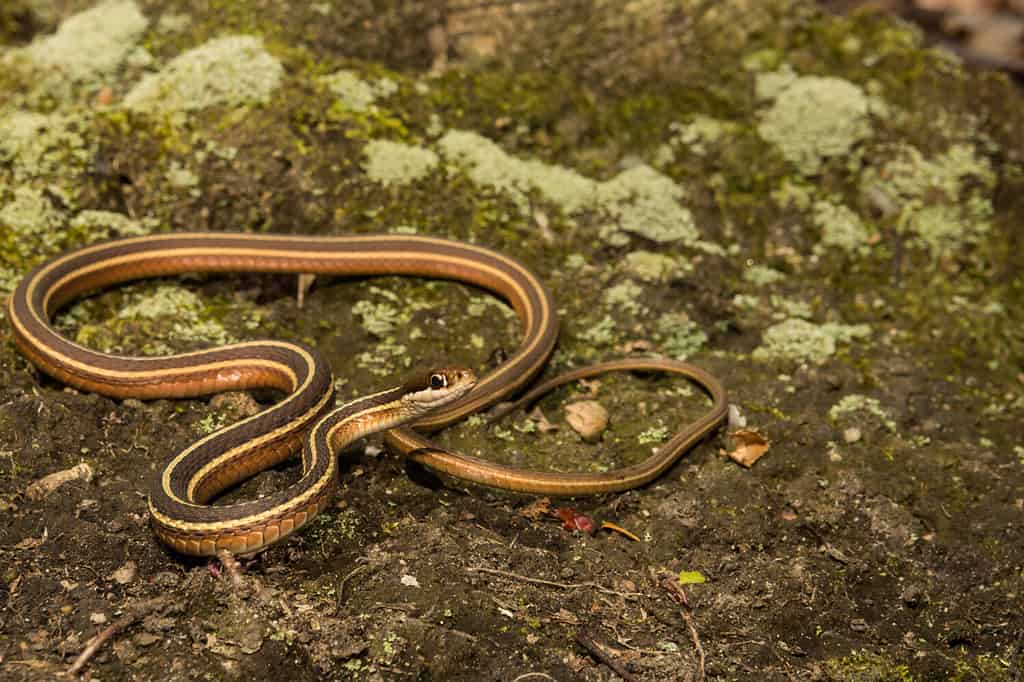
As its name suggests, the eastern ribbonsnake is a long and slender snake with longitudinal stripes.
©Jay Ondreicka/Shutterstock.com
Common Gartersnake (Thamnophis sirtalis)
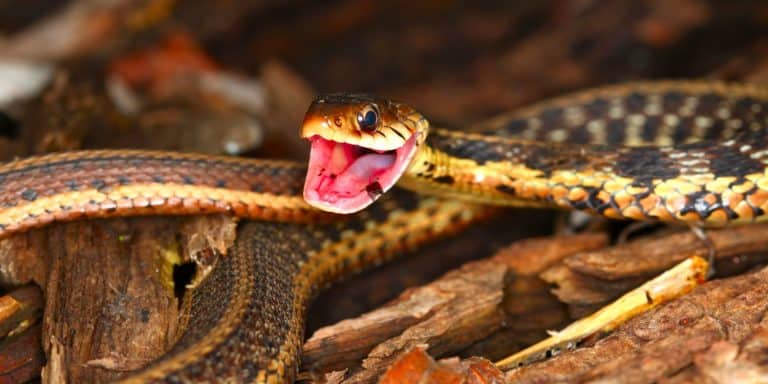
Common gartersnakes are slender, non-venomous snakes that measure around 20 to 30 inches long. These snakes are widely distributed throughout Florida. They have yellow, brown, or red stripes running down their black, brown, or green bodies.
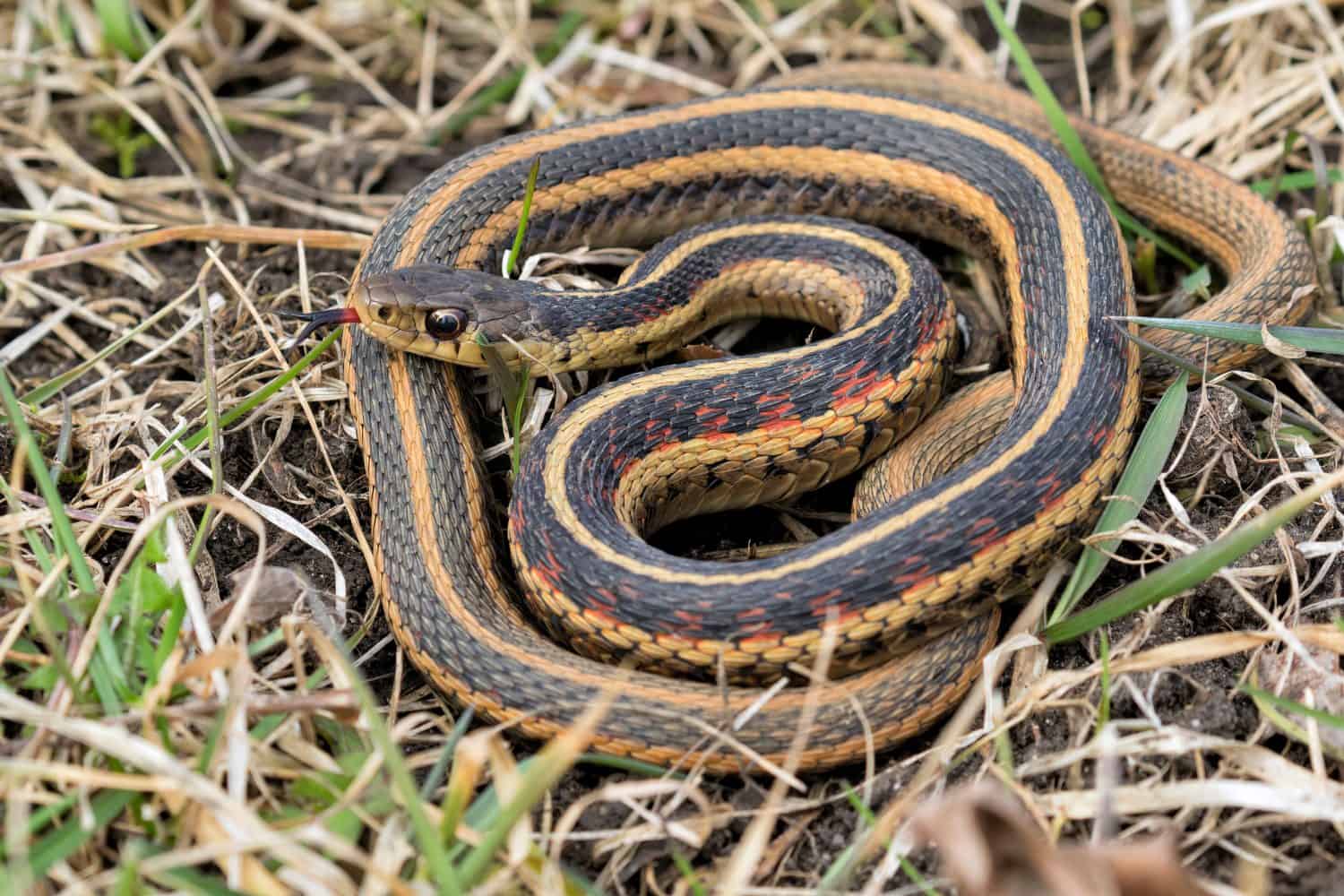
Like their name suggests, common gartersnakes are abundant across North America.
©Natalia Kuzmina/Shutterstock.com