
Quick Take
- A crocodile showed up mid-chase, though whether it actually saved the warthog is more complicated than it looks. See the crocodile encounter →
- Warthogs look slow, but their top speed might change how you think about who really had the advantage in this chase. Check the warthog's top speed →
- Lions almost never chase prey for long, and the reason reveals a hidden vulnerability even Africa's apex predator can't afford to ignore. Discover lions' hunting limits →
- The warthog's mud bath was not laziness but a survival strategy that nearly backfired in the worst possible way. Explore the mud bath strategy →
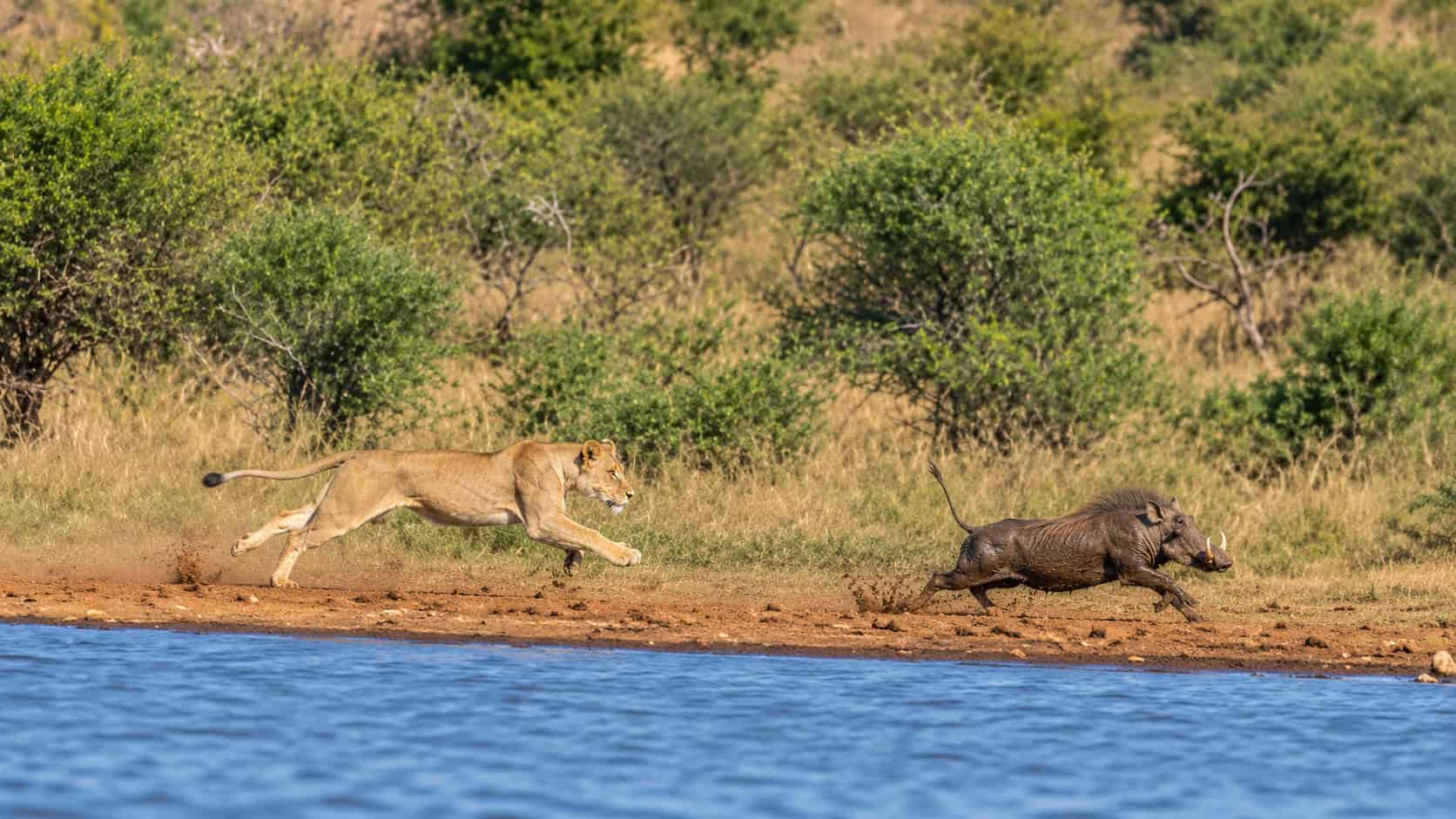
One moment, a warthog is enjoying a peaceful mud bath. The next, it’s sprinting for its life with a lion hot on its heels. The big cat appears to have caught its prey completely off guard, and for a few tense seconds, the warthog looks like it’s about to become lunch. But just when the lion seems to be closing the distance, something unexpected happens near the water’s edge.
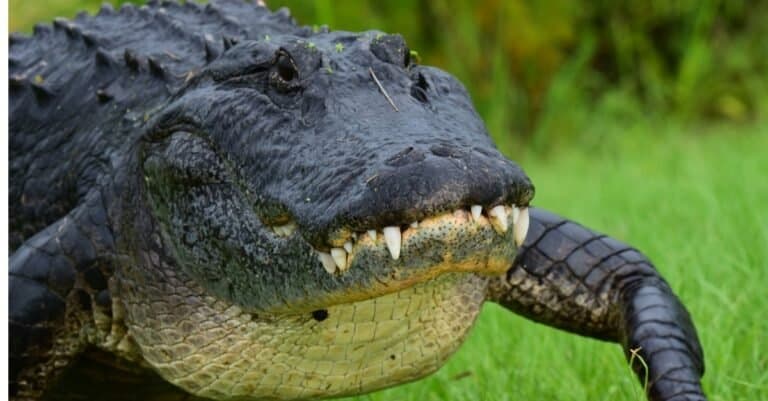
A crocodile appears to catch the lion’s attention, and the chase suddenly falls apart. The warthog doesn’t waste the opportunity. It keeps running, putting as much distance as possible between itself and the predators. Whether the crocodile actually caused the lion to abandon its pursuit isn’t entirely clear from the description of the footage, but the timing couldn’t have worked out much better for the fleeing warthog.
Watch the Warthog Sprint Away From the Lion
The encounter begins with the warthog wallowing in mud, apparently unaware of the danger approaching. A lion uses the surrounding vegetation as cover before making its move. Once the chase begins, the warthog goes from lounging to full-speed escape in a matter of seconds.
For a moment, the lion appears to have the advantage. But the warthog is no slow-moving target, and its sudden burst of speed keeps the predator from immediately closing the gap. Then comes the crocodile, adding another potentially dangerous animal to an already chaotic encounter. The lion breaks off its pursuit, and the warthog escapes the immediate threat.
It’s a fascinating example of how quickly a hunt can change. Predators don’t always succeed, even when they seem to have everything working in their favor. For prey animals like warthogs, a few seconds of hesitation can mean the difference between survival and becoming dinner.
Why Do Lions Rely on Surprise When Hunting?

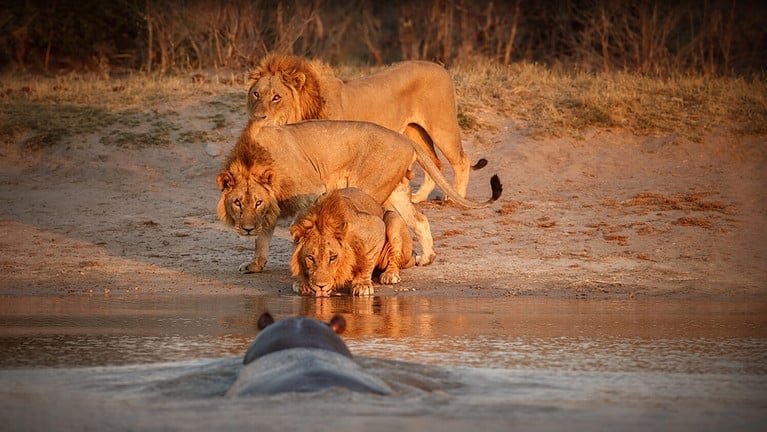
Lions frequently rely on stealth and short bursts of speed to catch prey, including warthogs.
©Mark Sheridan-Johnson/Shutterstock.com
Lions may be among Africa’s most powerful predators, but they aren’t built for endless high-speed chases. Instead, they frequently rely on stealth, patience, and the element of surprise. By moving through tall grass or approaching from cover, a lion can get close enough to launch a short, explosive attack before its target has time to react.
According to the Smithsonian’s National Zoo, lions often use direct ambush attacks when hunting smaller prey such as warthogs and gazelles. Their strategies can change depending on the animal they’re pursuing. Larger prey, including zebras and buffalo, may require coordinated efforts from several lions, while smaller animals can sometimes be captured by a single hunter.
Although lions sometimes hunt together, they are also capable of hunting alone. A solitary lioness can successfully capture a warthog, particularly if she gets close enough before being detected. However, an unsuccessful ambush can quickly become an exhausting chase. Once the prey escapes the initial rush, the lion must decide whether continuing is worth the energy and potential risk.
How Fast Can a Warthog Run?

Warthogs can reach speeds of approximately 34 miles per hour in short bursts.
©Peter van Dam/Shutterstock.com
Warthogs might look a little awkward when they’re standing around, but don’t let that stocky build fool you. According to the San Diego Zoo Wildlife Alliance, common warthogs (Phacochoerus africanus) can reach speeds of approximately 34 miles per hour in short bursts. That’s remarkably fast for an animal with a barrel-shaped body and relatively short legs.
That speed is one of their most important defenses against predators. When threatened, warthogs typically flee, often raising their tails straight into the air as they run. Their quick, springy stride allows them to cover ground rapidly, and they can use sharp turns and nearby vegetation to make pursuit more difficult.
Of course, speed alone doesn’t guarantee survival. Lions are also capable of impressive acceleration, and an ambush from close range can leave a warthog with little time to escape. In the featured encounter, the warthog manages to stay ahead long enough for the pursuit to end, although the footage alone doesn’t establish whether it would have escaped without the crocodile’s appearance.
Why Do Warthogs Take Mud Baths?

Warthogs use mud wallows to cool down and help protect their skin from parasites.
©Samuel Holland/Shutterstock.com
The warthog wasn’t simply rolling around in the mud for entertainment. Wallowing serves several practical purposes, especially in Africa’s hot savannas and grasslands. Mud helps warthogs cool their bodies, and a coating of wet earth can offer some protection against biting insects and other external parasites.
Warthogs also make use of burrows, often occupying abandoned aardvark dens rather than digging entirely new homes themselves. These underground shelters provide protection from extreme temperatures and predators. When entering a burrow, an adult warthog may back inside so its tusks remain pointed toward the entrance, ready to defend itself if necessary.
Those tusks aren’t just decorative, either. Although running is usually a warthog’s first response to danger, a cornered animal can fight back with its sharp lower tusks. Lions, leopards, spotted hyenas, cheetahs, and African wild dogs are among the predators that hunt warthogs, but catching one isn’t always as easy as it looks.
As this encounter demonstrates, even a seemingly routine mud bath can turn into a fight for survival in seconds. The lion may have had the advantage of surprise, but the warthog had speed, an escape route, and perhaps a little luck on its side. Sometimes that’s enough to make sure the predator goes home hungry.