Quick Take
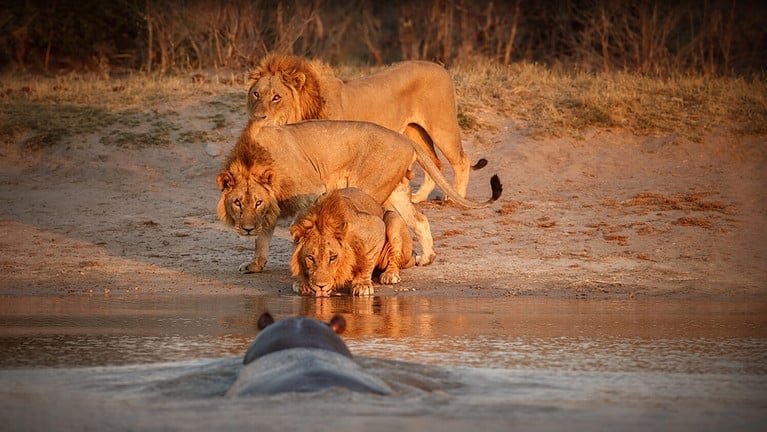
- Hippos routinely hold their ground against lions, crocodiles, and rival hippos. So what made this one turn and run? Why the hippo retreated →
- An elephant's charging speed might surprise you, and that fact changes everything about how dangerous these encounters really are. See the surprising speeds →
- Hippos don't actually swim the way most people think, and it matters more than you'd expect in a waterhole showdown. How hippos move underwater →
- If an elephant charges you on safari, staying in your vehicle may not be enough. Here's what wildlife authorities actually recommend. Safari safety advice →
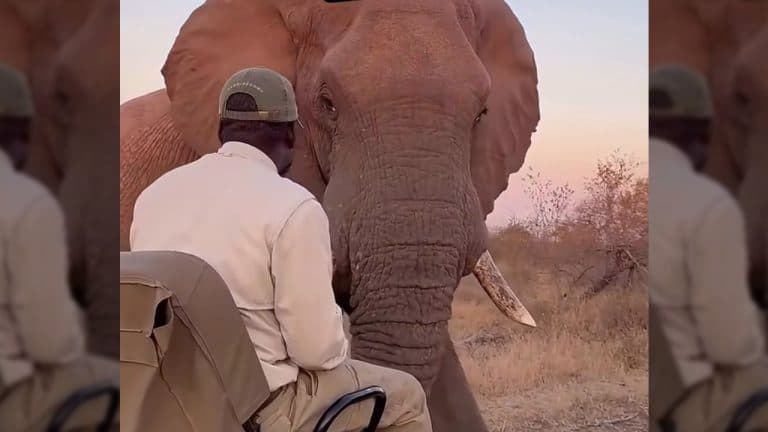
Hippos aren’t exactly known for backing down from a confrontation. These massive, territorial animals have powerful jaws, enormous teeth, and a reputation for standing their ground against some of Africa’s most dangerous predators. But what happens when a hippo finds itself facing an animal that’s even bigger? In this remarkable wildlife encounter, an elephant charges into a watering hole and sends a full-grown hippo scrambling for safety. The surprising part isn’t how aggressive the elephant gets. It’s how quickly the hippo decides this particular fight isn’t worth having. Watch the encounter above and see how it unfolds.
Elephant Charges a Hippo at a South African Waterhole
The dramatic footage comes from Pilanesberg National Park in South Africa, where safari visitor Johan Robbertse captured the unusual confrontation. The encounter was shared by Latest Sightings, a wildlife platform known for documenting everything from lion hunts and leopard encounters to battles involving crocodiles and wildebeest.
As the clip unfolds, an elephant approaches a hippo occupying the watering hole. Rather than ignoring its much smaller neighbor, the elephant charges directly toward it. The hippo immediately starts moving away, but the elephant follows it into the water. Within moments, the hippo makes its way toward the bank, with the elephant still in pursuit.
It’s quite a sight considering that hippos are usually among the most intimidating animals at an African watering hole. This time, however, the elephant clearly has the upper hand.
Why Did the Hippo Run Instead of Fighting Back?
Hippos are fiercely protective of their space, particularly in the rivers and pools where they spend much of their time. Adult males can become especially aggressive toward intruders, and their enormous canine teeth make them dangerous opponents. So why would one retreat from an elephant?
Size is probably the biggest factor. An adult African elephant can weigh several times as much as a hippo, with large bulls sometimes exceeding 13,000 pounds. Even a powerful hippo risks serious injury if an elephant knocks it down or tramples it. Avoiding a confrontation with a much larger animal can be a sensible survival strategy.
Elephants also use watering holes for drinking, bathing, and cooling themselves. Although the exact motivation behind this particular charge isn’t known, competition for space or an aggressive reaction to another animal’s presence could explain the behavior. Whatever triggered the encounter, the hippo appears more interested in escaping than testing its chances against several tons of irritated elephant.
How Fast Can Elephants and Hippos Run?

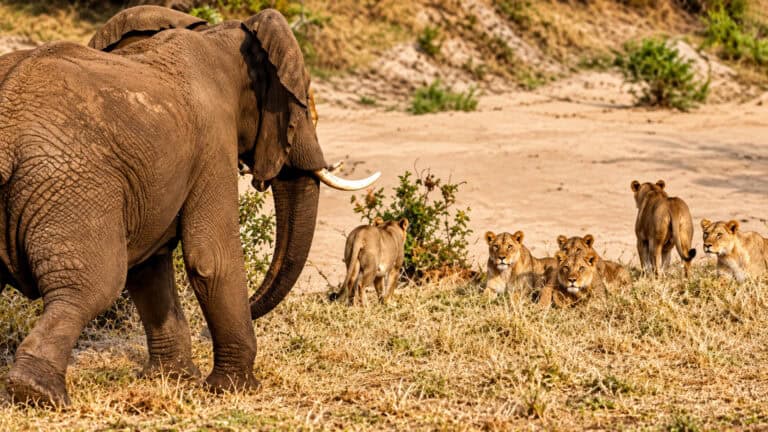
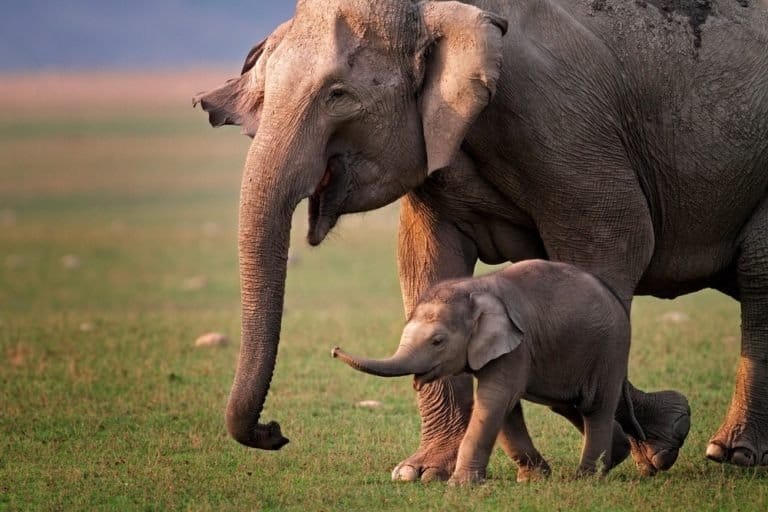
Elephants are herbivores, but their tremendous size and speed make them dangerous when threatened.
©Guenter Guni/iStock via Getty Images
Neither animal looks particularly built for speed, but appearances can be deceiving. Despite their short legs and enormous bodies, hippos can move surprisingly quickly on land. The ABQ BioPark notes that hippos can sprint much faster than humans over short distances. Estimates of their maximum speed vary, but speeds approaching 20 miles per hour are commonly cited.
Elephants aren’t exactly slow, either. According to the Texas Parks and Wildlife Department, an elephant typically walks at a comfortable 2 to 4 miles per hour but can accelerate dramatically when charging. Scientific measurements have documented elephants moving at roughly 15 to 16 miles per hour, although estimates of their absolute top speed vary.
That makes an encounter between these two giants considerably more dangerous than their bulky appearances might suggest. Hippos also move differently in water than many people realize. Rather than swimming in the traditional sense, they typically propel themselves along the bottom, using their powerful legs to move through submerged terrain.
What Should You Do if an Elephant Charges?
The African elephant is the world’s largest living land animal, and even a relatively brief charge can be extremely dangerous. While elephants generally don’t seek confrontations with humans, they may react aggressively when startled, threatened, or protecting their young.
If you’re viewing elephants during a safari, the safest approach is to give them plenty of space and follow your guide’s instructions. Never approach an elephant on foot, attempt to intimidate it, or leave your vehicle to get a better photograph. Wildlife authorities recommend remaining inside designated safari vehicles and avoiding behavior that could provoke an animal. Even a vehicle offers no guarantee of protection if an elephant becomes aggressive.
The encounter at Pilanesberg is a striking reminder of how unpredictable interactions between large wild animals can be. Hippos may be among Africa’s most formidable creatures, but when an elephant decides to claim a watering hole, even they sometimes decide that retreating is the better option.