
Quick Take
- That shaggy fur serves more than aesthetic purposes. Sloths are quietly hosting an entire living ecosystem on their bodies. Explore the fur ecosystem →
- Habitat loss is only part of the threat. There's also a surprising everyday hazard that kills sloths at an alarming rate. Discover the hidden hazards →
- Rescuing an orphaned sloth sounds heartwarming, but there's a critical reason why doing it wrong can doom the animal permanently. Learn the rescue risks →
On October 20, 2026, animal lovers from around the world will gather to celebrate International Sloth Day. It’s a chance to celebrate these creatures that are so much more than common tree dwellers. They bring us joy, and though you may not suspect it, they also play a crucial role in the health of the rainforest.
Sloths are highly specialized rainforest animals whose entire lives are built around conserving energy. They eat leaves that provide relatively little nutrition, digest their food slowly, and spend much of their lives hanging upside down in the forest canopy. Their slow lifestyle isn’t laziness. It is a natural solution to the challenge of surviving on a low-energy diet. While calling sloths “climate warriors” may be a bit of a stretch, there is still a great deal to learn about these incredible creatures and their ecological importance.
RELATED: Meet Alface the Sloth, a Sweet New Addition to Shedd Aquarium
The Secret Is In Their Speed
Sloths’ ecological role in rainforests is rooted in their slow movement. Sloths move slowly mainly because of their diet. They primarily eat leaves, along with other plant material. Leaves are abundant in tropical forests, but they aren’t especially rich in usable energy. They are also difficult to digest because they contain large amounts of fiber.
Sloths’ metabolism is extraordinarily slow. The Smithsonian’s National Zoo notes that the metabolic rate of a two-toed sloth is only about 40 to 45 percent of what would be expected for an animal of its body weight. This helps explain why sloths don’t need to constantly search for food or burn energy racing through the forest. Essentially, their bodies are designed around energy conservation.
As a trade-off, the sloth isn’t wasting many of the forest’s natural resources, but it’s also not fast enough to escape many predators — though it doesn’t need to be. Its slow movements, camouflage, and tree-dwelling lifestyle let it avoid many threats while spending relatively little energy.
Not All Sloths Are The Same

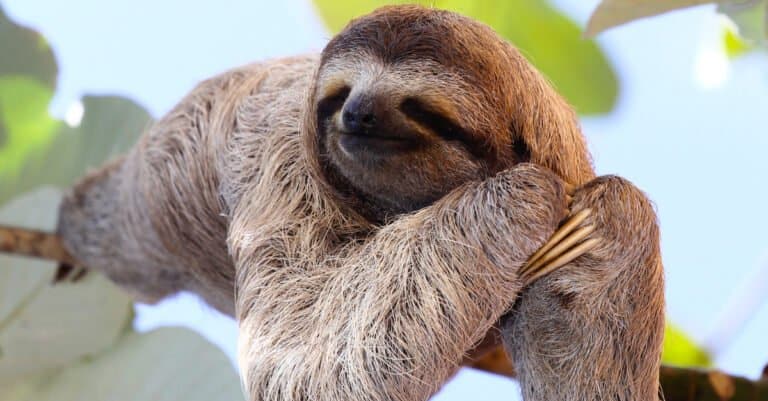
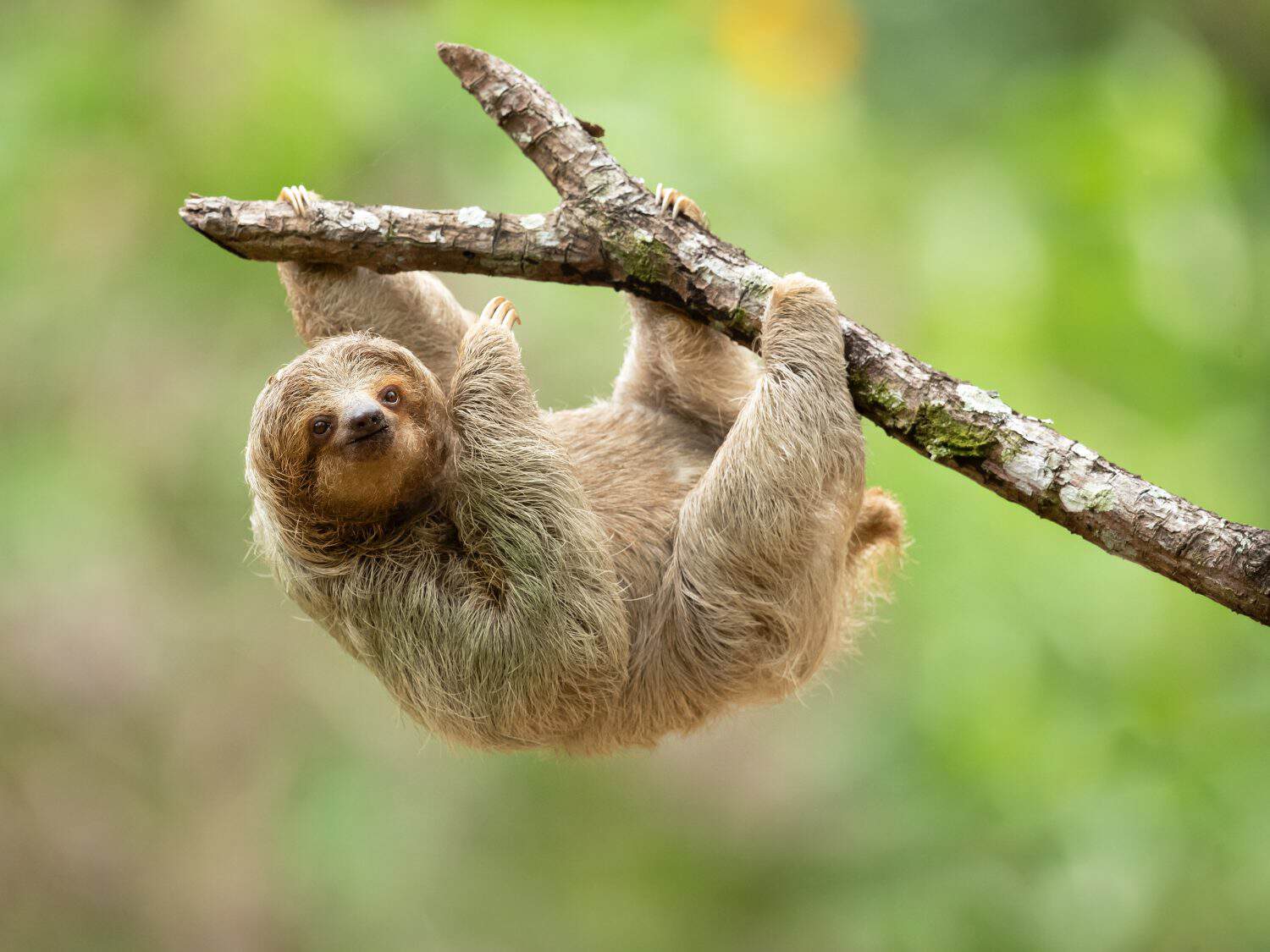
While many sloths may appear to be similar, there are differences, especially when it comes to the number of toes.
©Janossy Gergely/Shutterstock.com
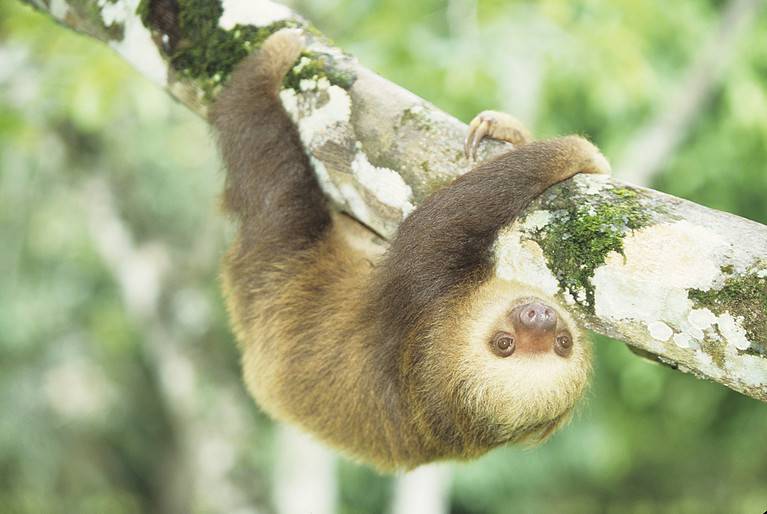
While sloths may look similar to one another, there are in fact distinct types. In particular, a common distinction is between two-toed sloths and three-toed sloths.
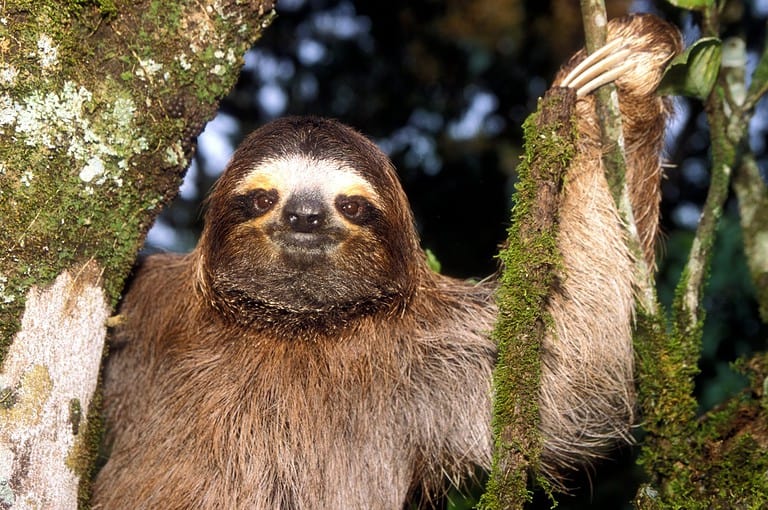
As you may have guessed, their names refer to the number of clawed digits on their front limbs. Three-toed sloths have three clawed toes on all four feet, while two-toed sloths have only two prominent claws on their front feet but three toes on their rear feet. They also differ in appearance, behavior, and diet.
The two-toed group includes species such as the Linnaeus’s two-toed sloth. These animals are found across parts of northern South America and spend most of their lives high in tropical forest canopies. Three-toed sloths include several species, including the brown-throated, pale-throated, maned, pygmy three-toed, and southern maned sloths.
These Forest Guardians Are Their Own Ecosystems
Perhaps the most remarkable fact about sloths is that, in addition to playing a positive role in the rainforest, they’re also their own tiny ecosystem.
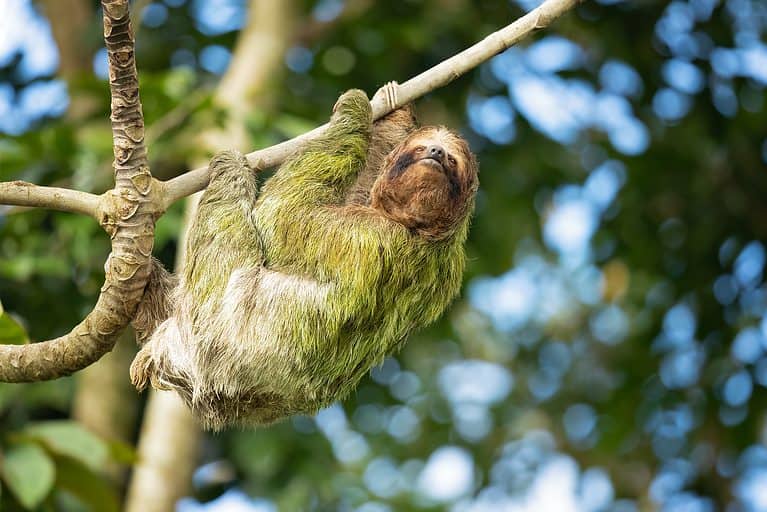
Their shaggy fur can support a miniature community of organisms, including algae, moths, and other small creatures. Some sloth hairs have grooves that retain moisture and create an environment where algae can grow. The algae can give the animal a greenish appearance, helping camouflage it against the leaves and branches of the canopy.
Research has found an intriguing connection among sloths, algae, and moths, particularly in three-toed sloths. Moths can spend part of their life cycle in sloth dung. Sloths descend from the canopy to defecate on the ground, which scientists believe facilitates moth reproduction and completes the life cycle.
After defecation, moths can reproduce in the dung. Eventually, adult moths return to the sloth’s fur. Those moths can contribute nutrients to the fur, helping support algae growth. Research has also found that three-toed sloths can consume algae from their fur, potentially gaining additional nutrients from this unconventional “garden.”
In the end, a sloth may look like a single animal hanging from a tree branch, but it can actually be carrying a small community of organisms with it.
These Forest Guardians Are in Trouble
While any animal lover will be thrilled to hear how beneficial sloths are to the natural world, not all outcomes are positive for sloths. Sloths face a big threat, and that’s habitat destruction.
As you may imagine, since sloths depend so much on the protection provided by the upper level of trees, losing trees is devastating for them. Even if the whole rainforest isn’t cut down, fragmentation of the habitat can be just as bad. A continuous rainforest allows a sloth to move through the canopy from one tree to another. When roads, buildings, agricultural land, or other development breaks the forest into isolated patches, those natural routes can disappear.
Sloths may then have to descend to the ground or cross dangerous infrastructure. Power lines can be particularly hazardous, while roads create another major threat. The Sloth Conservation Foundation identifies habitat loss and fragmentation as major dangers facing wild sloths, along with road crossings, power lines, dog attacks, wildlife trade, and inappropriate tourist interactions.
Natural threats also remain. Some sloth species depend heavily on particular forest conditions and food plants. Researchers have documented concerns about drought and changes in vegetation availability. Recurrent drought associated with climate change could also threaten three-toed sloths if trees repeatedly lose their leaves.
As if conservation wasn’t hard enough, the challenge now turns from simply keeping sloths alive to maintaining the forests that allow sloths to live their natural, happy lives.
Sloth Sanctuaries
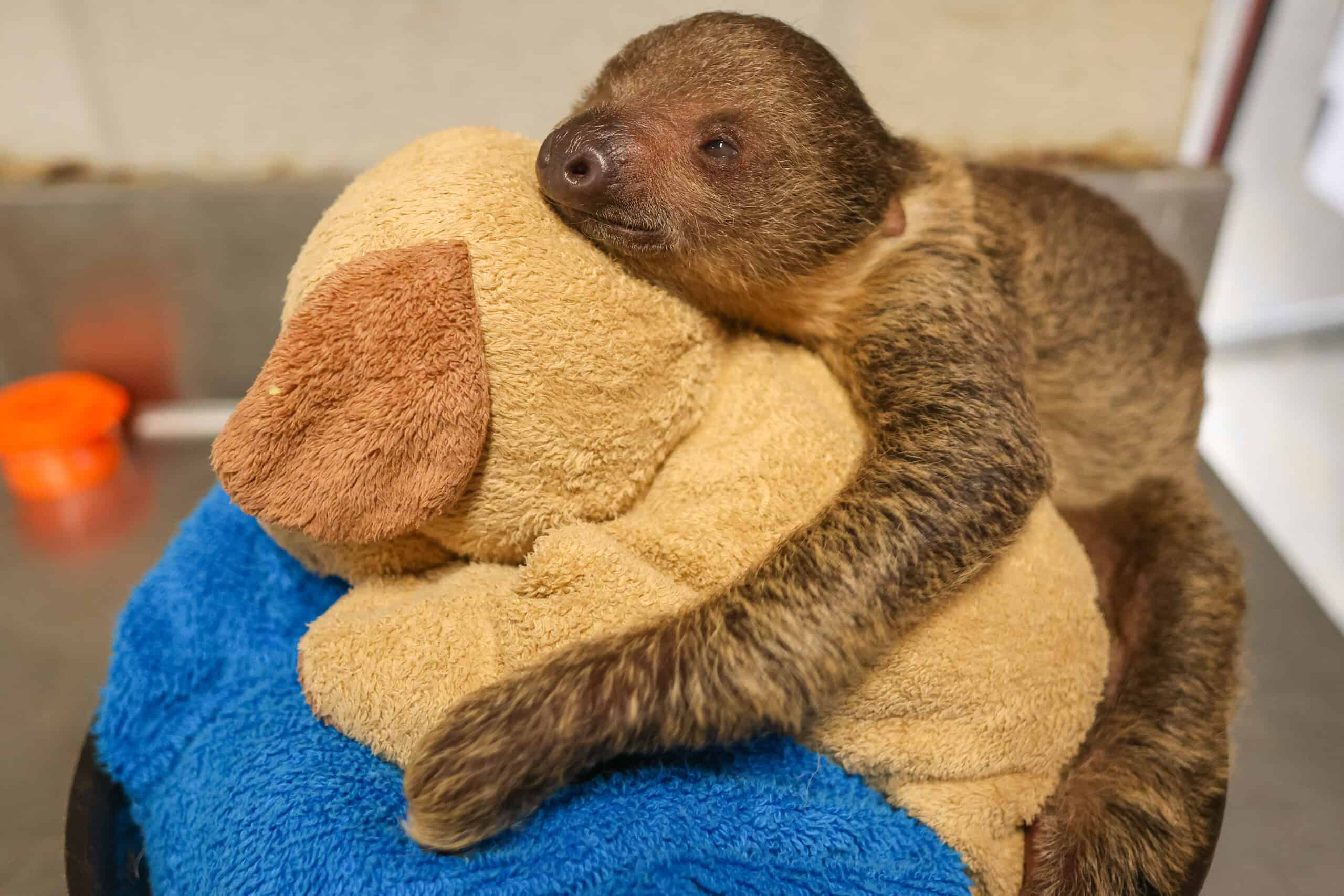
Sloth sanctuaries can do wonders to help sloths that have lost their natural habitat.
©Roger Williams Park Zoo
While sloths may be known as the forest guardians, the sad truth is sometimes they need a guardian of their own. Young animals may become orphaned. Adults can be injured by vehicles, power infrastructure, dogs, or other human-related hazards, and may also lose their forest homes. This is where wildlife rehabilitation centers can make a vital difference.
The Sloth Sanctuary of Costa Rica, for example, was officially authorized as a rescue center in 1997. Its mission includes rescuing, rehabilitating, and researching sloths, releasing animals when possible, and educating people about rainforest conservation.
There’s also the Jaguar Rescue Center in Costa Rica, which works with injured, orphaned, and sick sloths and other wildlife. Its programs include veterinary care, rehabilitation, and release. Animals that cannot safely return to the wild may receive permanent care at its sanctuary.
Rehabilitation, however, is not as simple as nursing an injured sloth back to health and releasing it into the canopy. A young sloth normally learns important behaviors from its mother, including what vegetation is appropriate to eat and how to move through its environment. Orphaned infants may lack these essential survival skills, making successful rehabilitation and release particularly challenging. That is why effective rehabilitation focuses on preparing animals to survive in the wild, rather than allowing them to become habituated to humans.
You Should Celebrate International Sloth Day
In the end, you can see how important it is to protect the noble sloth. They may move slowly, but their lives are anything but simple, and their future is inseparable from the future of the tropical forests they call home. Spread the word about the importance of these forest guardians, and you’ll be doing the natural world a great service.