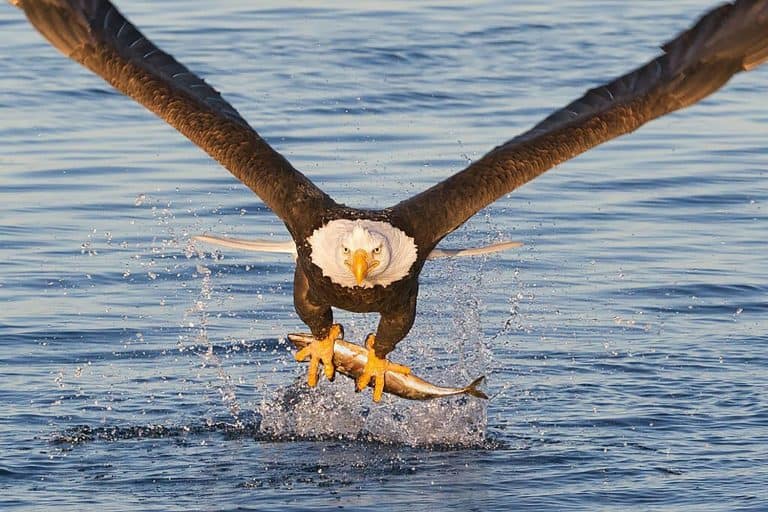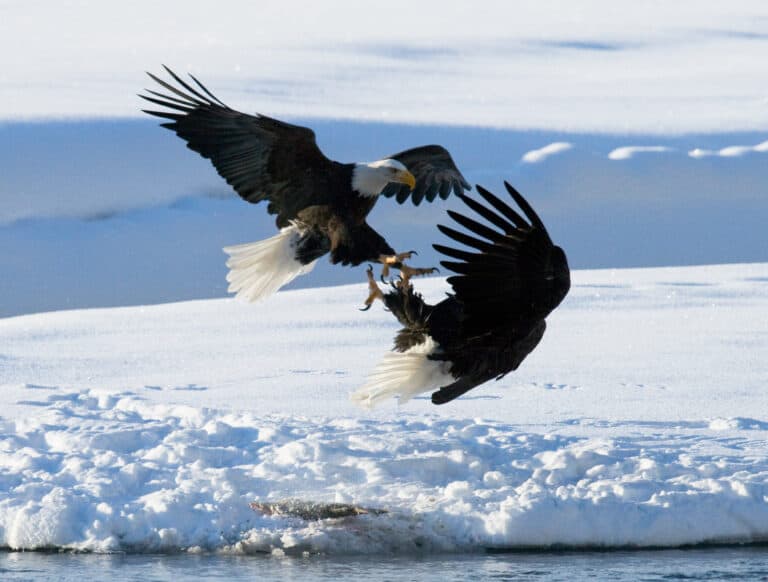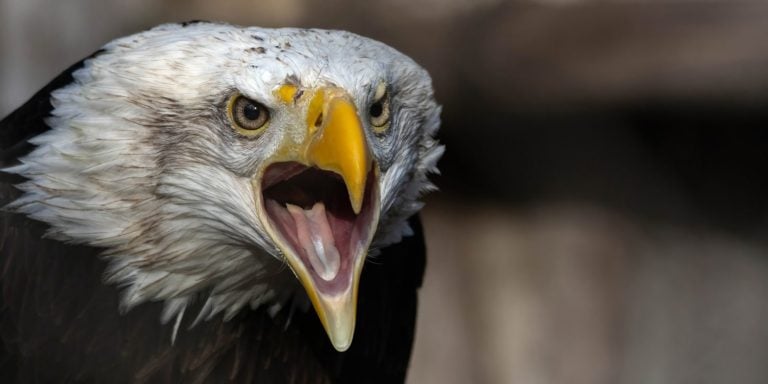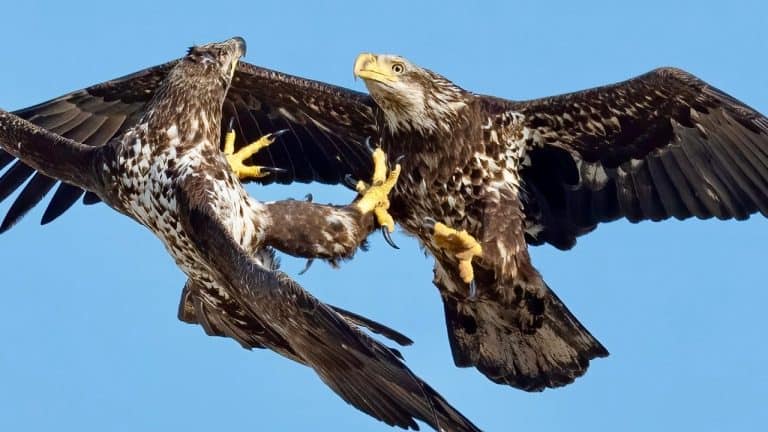

Bald eagles symbolize a lot of things. These amazing creatures are majestic, fascinating, strong, and also brave. They are associated with courage, freedom, and balance. Bald eagles are very common in the United States. While most bald eagles nest in Alaska (about 30,000), you can still find these stunning birds in Minnesota. Here we have the eleven best places and times to see bald eagles in Minnesota.
Are Bald Eagles Common in Minnesota?
Outside of Alaska, Minnesota and Wisconsin have the largest populations of nesting bald eagles in the United States. Minnesota is home to approximately 9,800 nesting pairs, most of which come back to the same location every year. This is a drastic improvement. In 2007, there were about 2,300 nesting pairs.
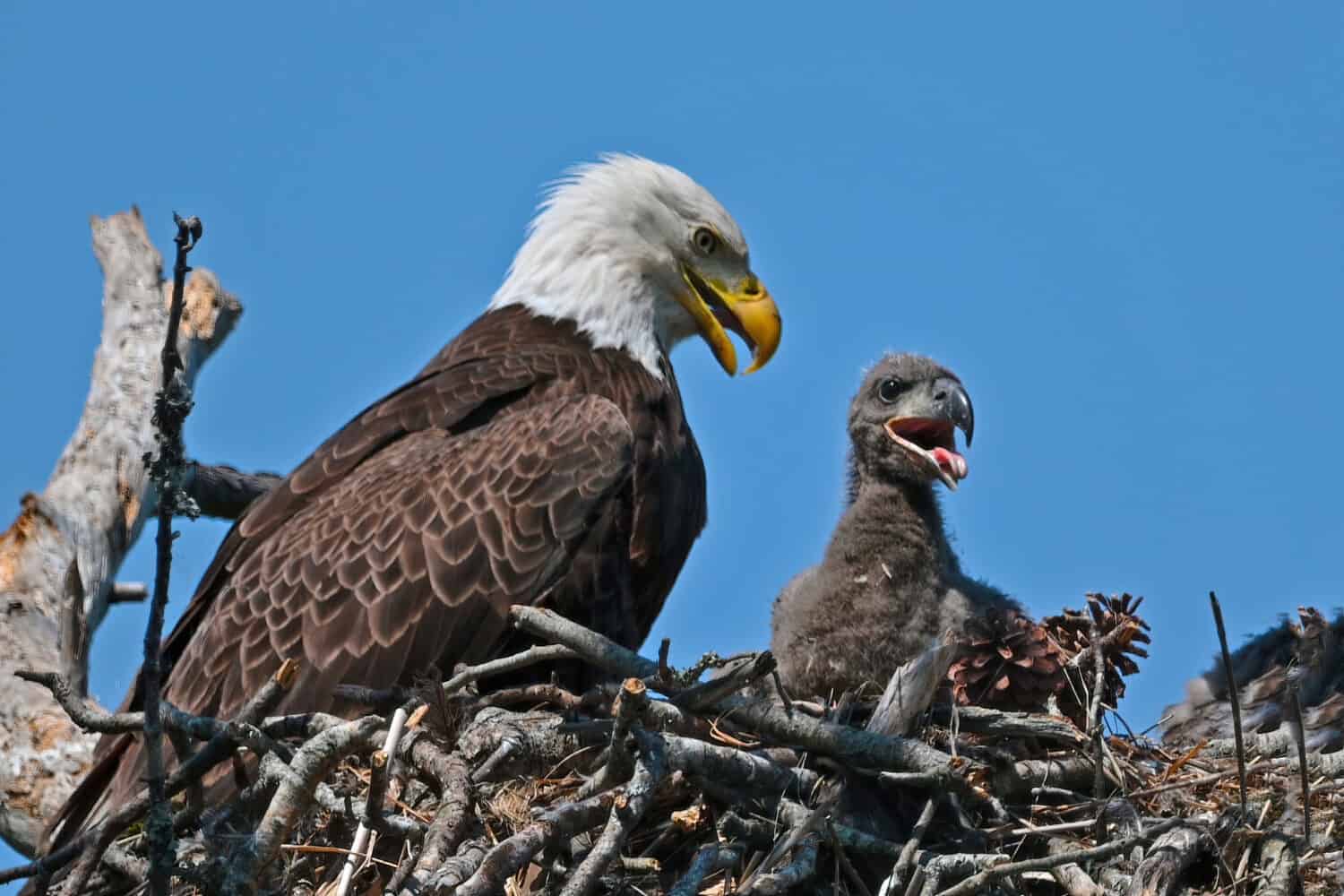
Bald eagles are beautiful and large birds of prey native to North America. You can find this lovely migratory bird in the United States from Alaska to Canada, Florida, and northern Mexico. These large eagles are very distinct and unique. They have white heads and brown wings. Males and females share the same appearance, although females are about 25% larger than male bald eagles. Bald eagles have feather-less legs and sharp and powerful talons they use to grab their prey. Possibly the most amazing thing about the bald eagle though is its size. Bald eagles aren’t very heavy, but they can get very tall and wide! A bald eagle’s wingspan ranges from 5.5 to 8 feet long. They are also generally about 6.6 to 14 pounds.
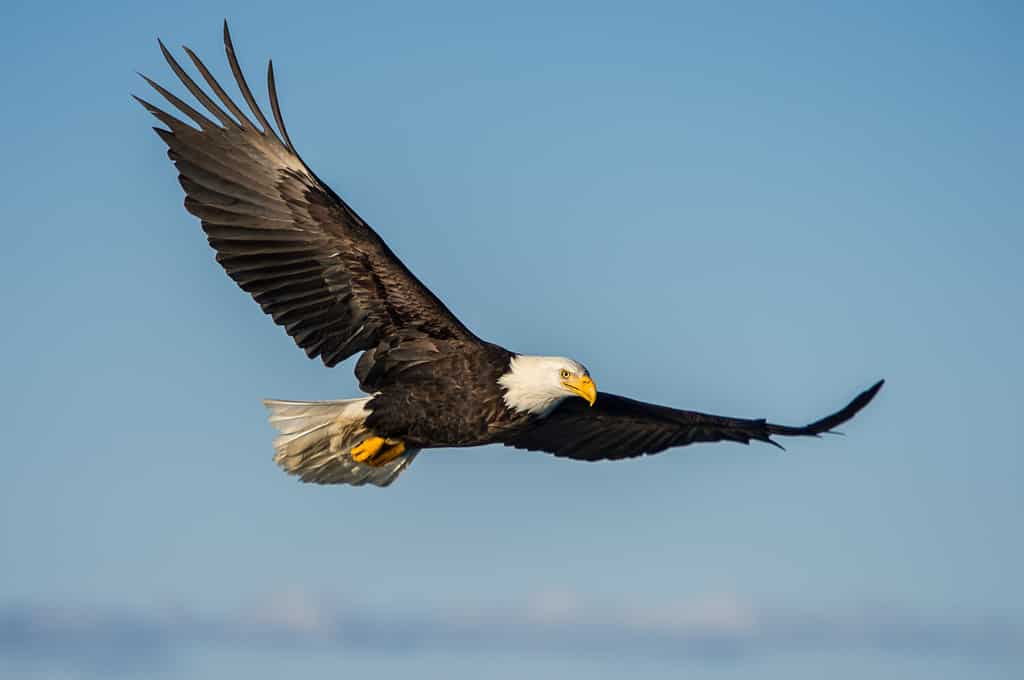
Minnesota is one of the states with the most nesting bald eagles in the United States.
©FloridaStock/Shutterstock.com
The Best Time to See Bald Eagles in Minnesota
Luckily, you have a good chance of spotting a bald eagle in Minnesota as you can see them during the summer and in winter. The best times to see a bald eagle in the state are from November to April. By August, there are few bald eagles within the area. You can also view them live on the EagleCam. However, the EagleCam won’t be up and running until at least November. Although they are in Minnesota from November to April, the best time to see these wintering birds is from December to March. They are easiest to spot near lakes and during early morning and evening, feeding.

In Minnesota, bald eagles frequently nest alongside lakes.
©JB Manning/Shutterstock.com
The Best Places to See Bald Eagles in Minnesota
You aren’t limited to just this list. Bald eagles can be found throughout Minnesota, especially when flying. They are most commonly spotted alongside lakes and sometimes resting on tree branches. However, bald eagles may also land in residential neighborhoods.
1. The National Eagle Center
The first place on our list is the National Eagle Center in Wabasha. This is a great place to safely view and learn about eagles in a museum setting. The National Eagle Center is open daily from 10 am to 5 pm. This museum is situated on the Mississippi River, where many bald and golden eagles winter. From May through October, the center offers interactive and educational National Eagle Center River Cruises. They last about two hours. The Center also has some resident Eagle Ambassadors, including Angel, a female bald eagle found as a fledgling on the ground near an eagle’s nest. Sadly, she had a broken wing but was transported to the Center in 2000.
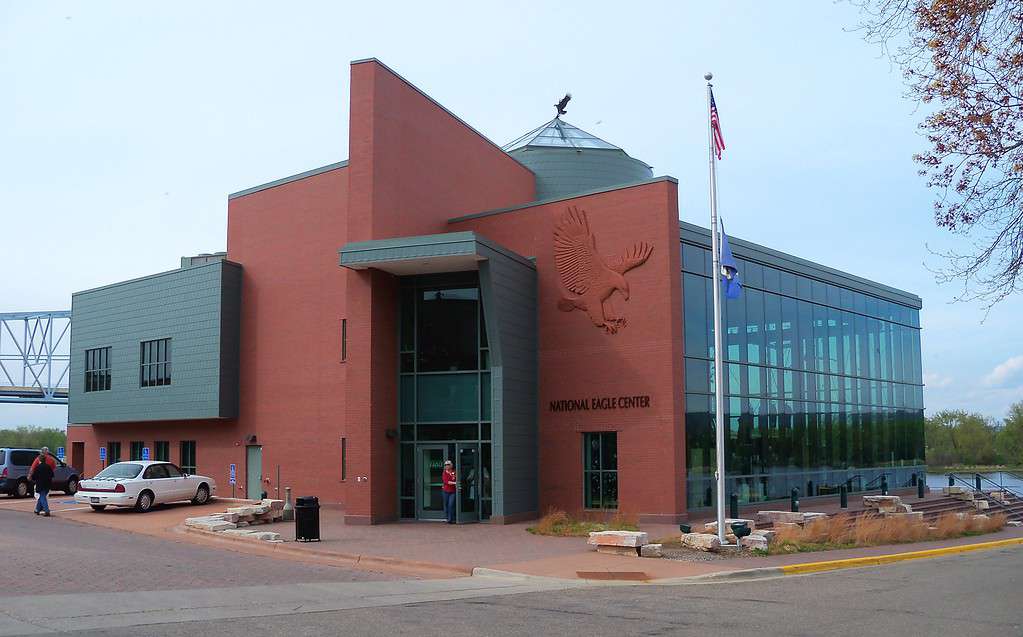
The National Eagle Center is on the Mississippi River.
2. Tamarac National Wildlife Refuge
Another excellent place to view bald eagles in the wild in Minnesota is the Tamarac National Wildlife Refuge. This wildlife refuge is in Rochert, Minnesota. It was established in 1838 and sits on about 42,724 acres of land. Bring a pair of binoculars as you won’t run out of opportunities to view birds. This lovely national wildlife refuge isn’t just home to majestic bald eagles. You can also spot wood ducks, pileated woodpeckers, trumpeter swans, and scarlet tanager. This wildlife refuge is well worth a visit, especially to the Tamarac National Wildlife Refuge Visitor Center.
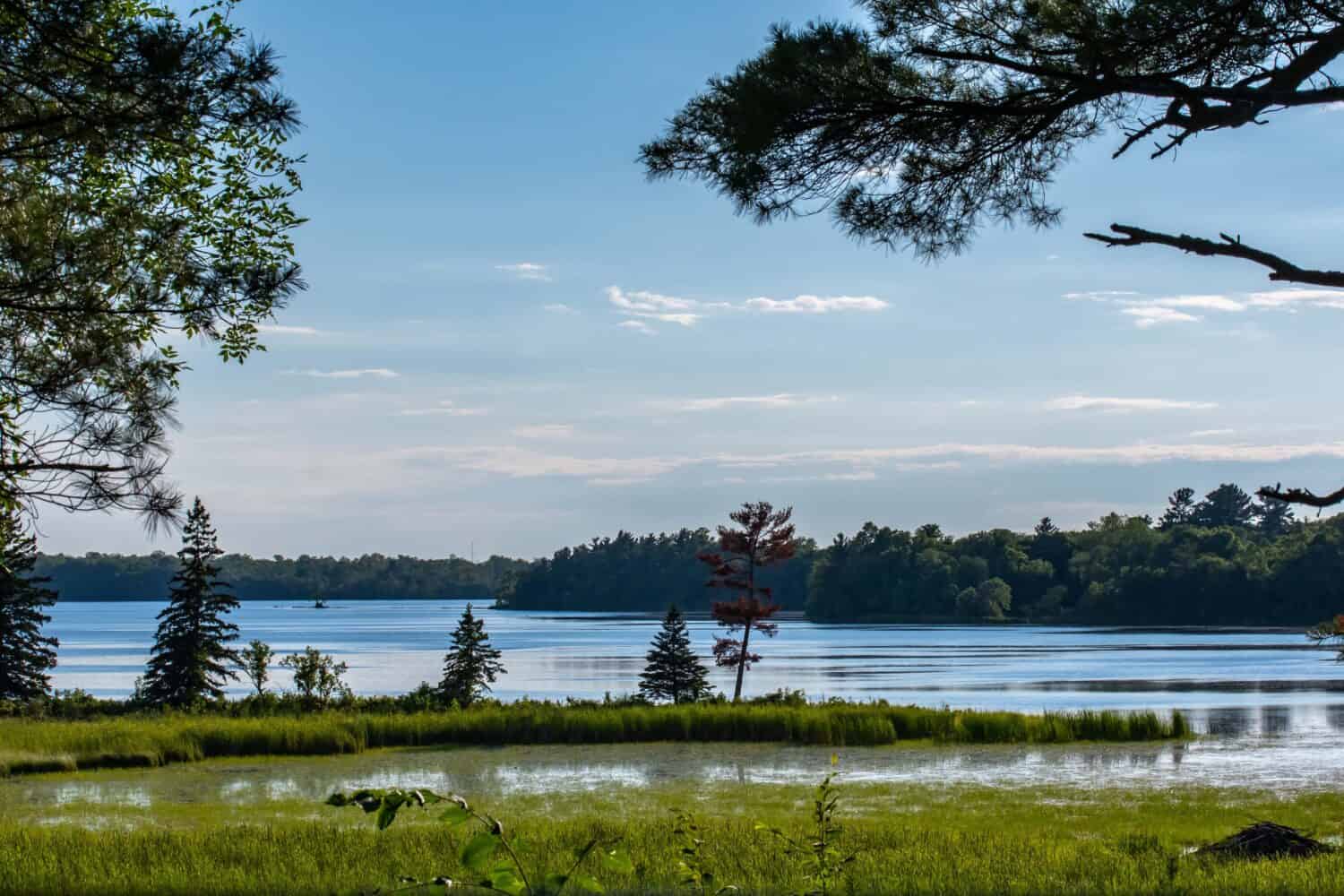
The Tamarac National Wildlife Refuge has a surface area of 42,724 acres.
©Cheri Alguire/Shutterstock.com
3. Voyageurs National Park
Third on our list is Voyageurs National Park in northern Minnesota. This stunning national park covers 218,200 acres. It’s within both Saint Louis County and Koochiching County. There is so much to do in this national park! During the fall and winter months, you can try your luck at searching for bald eagles. Your best chance of seeing a bald eagle is near the lake. Look up at the trees to find bald eagles nesting, resting, and hunting for food. Popular lakes in Voyageurs National Park include Sand Point Lake, Namakan Lake, and Rainy Lake.
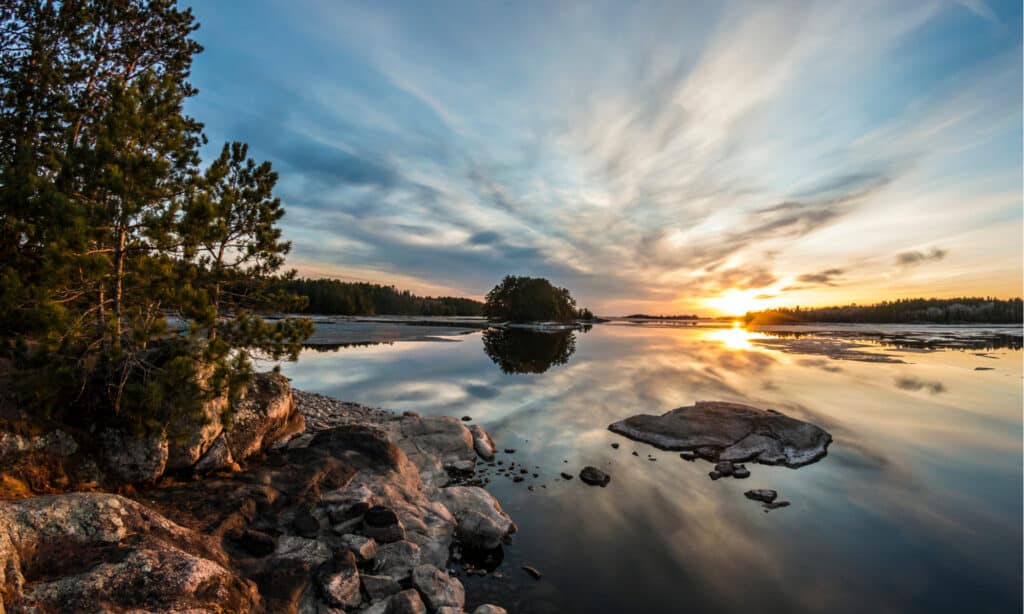
Voyageurs National Park is a 218,200-acre national park in northern Minnesota.
©BlueBarronPhoto/Shutterstock.com
4. Superior National Forest
You can also spot bald eagles in the Superior National Forest. This national forest is in the Arrowhead Region of the state of Minnesota. It’s within the greater Boundary Waters region. This massive national forest has a surface area of 3,900,000 acres. Out of the nearly 4 million acres of land, about 445,000 acres is water!
Superior National Forest was established on February 13, 1909. While here, you can camp, hike, bike, fish, bird watch, kayak, and more. Some wildlife, other than bald eagles within the forest include walleye, western moose, black bears, and Canadian lynxes.
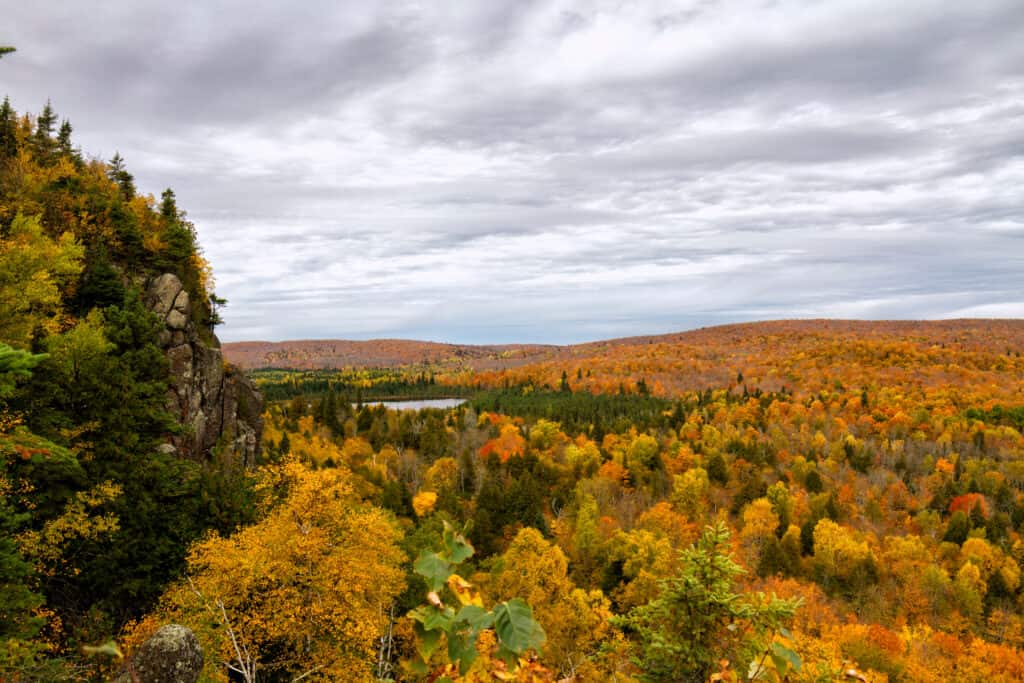
The Superior National Forest is massive and has a surface area of about 3.9 million acres!
©Natalia Kuzmina/Shutterstock.com
5. Cross Lake
Another spot you can sometimes find bald eagles nesting is Cross Lake, near Ox Lake. This area is within and near Crosslake, which is a city in Crow Wing County. According to Minnesota’s Department of Natural Resources, you find a specific eagle nest on the road along County Highway 6. They advise you to stay at least 75 yards from the nest and observe it from a distance.
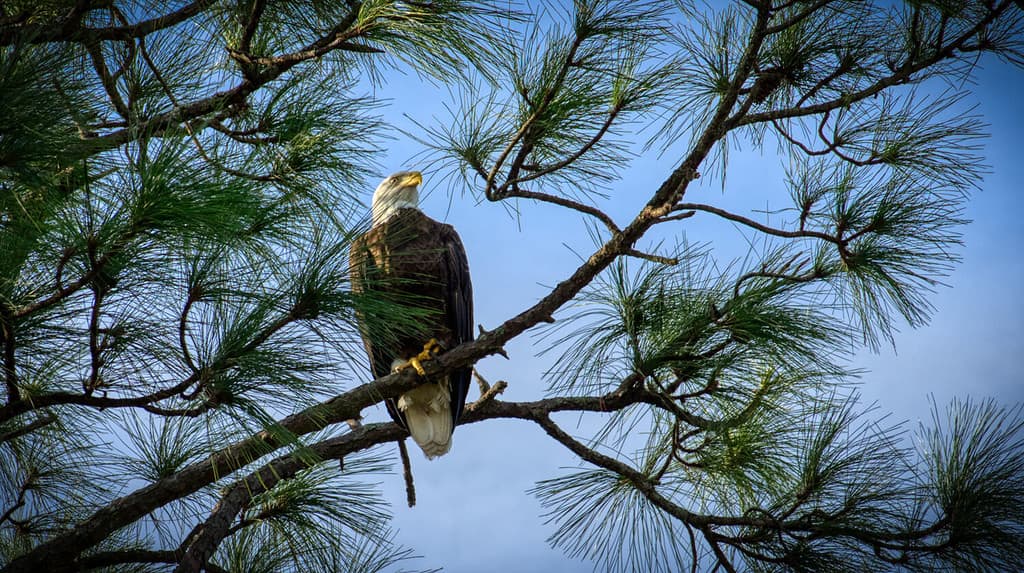
Bald eagles symbolize many things, including bravery, courage, and belief.
©WebGuNet/Shutterstock.com
6. Trout Lake
Bald eagles are also found near and in Trout Lake in Minnesota. Trout Lake is in Coleraine, a class 22 lake in Itasca County. You may find bald eagles feeding in the area. So far, three nests have been observed at the lake. One bald eagle nest is on the southwest end of the lake, while the other two are in the middle and north end of the lake. The best way to see these bald eagle nests, and possibly others in the area, is by boat.
Trout Lake has about 14 miles of shoreline and has a maximum depth of 135 feet. Fishing is very popular at the lake. You can find brown bullhead, yellow bullhead, lake whitefish, spot tail shiner, burbot, and largemouth bass.
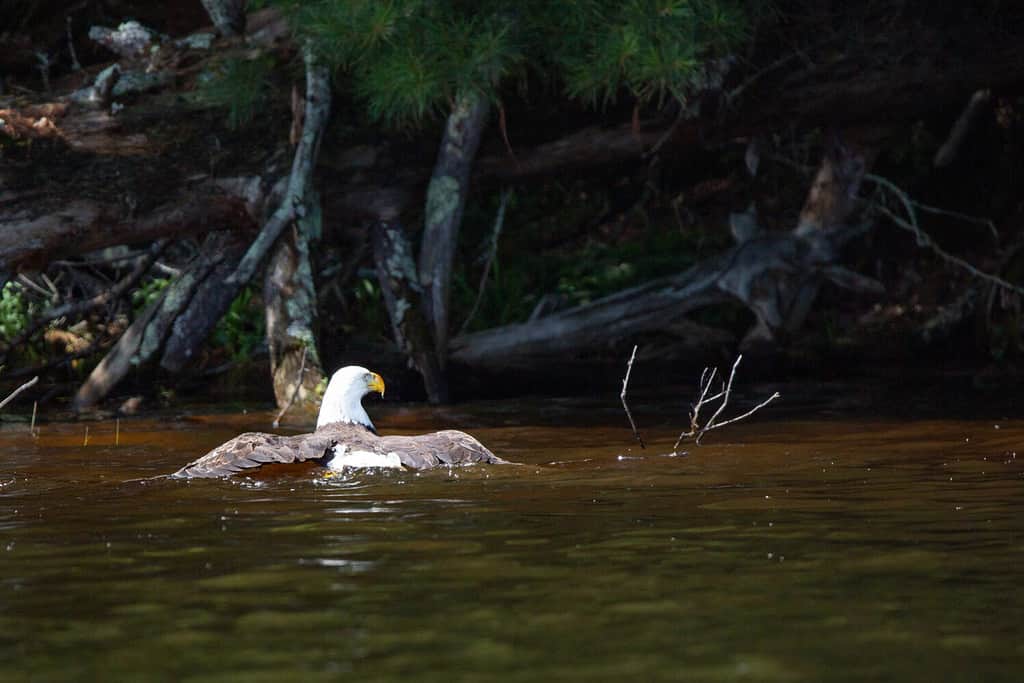
Bald eagles have a wingspan of up to 8 feet long.
©Michael Tatman/Shutterstock.com
7. Chippewa National Forest
One of the most common areas to spot bald eagles throughout the year in Minnesota is the Chippewa National Forest. This lovely national forest is located in north central Minnesota in the counties of Itasca, Cass, and Beltrami. It was established in 1908. Before Chippewa National Forest became a national forest, it was the Minnesota Forest Reserve.
Within the national forest, you can find over 3,000 archeological and historic sites. Not only can you explore old and fascinating archeological sites, but also hike, camp, bike, snowmobile, and bird watch.
You can find bald eagles within this forest by the many lakes. Some of the best lakes to view bald eagles are Cass Lake and Deer River. Cass Lake is about 10 miles long and 7 miles wide. It has a surface area of 15,958 acres and a maximum depth of 120 feet.
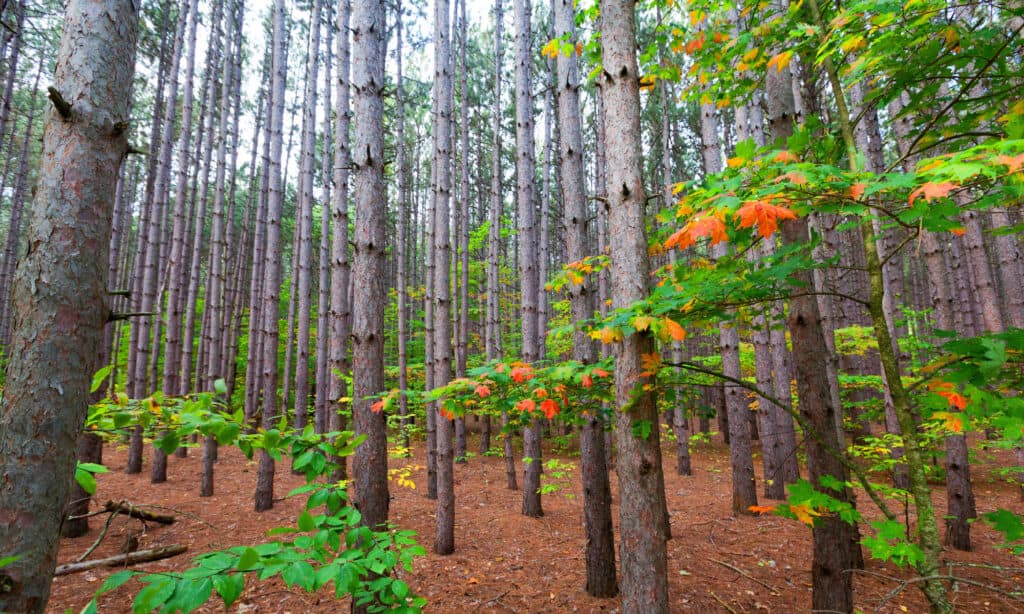
Chippewa National Forest has over 3,000 archeological and historic sites.
©iStock.com/csterken
8. Lac qui Parle Wildlife Management Area
Have you ever heard of the Lac qui Parle Wildlife Management Area? This management area is also an excellent spot to view bald eagles. It’s also home to the southwestern-most bald eagle nest site in the state. There may be other nests, just not yet recorded. However, near the lakes within the management area, you can sometimes see bald and golden eagles diving in for fish.
The surface area of the Lac qui Parle Wildlife Management Area is 24,828.38 acres. The nearest town to this wildlife management area is Watson. Also in the management area are multiple counties, Chippewa, Swift, Big Stone, and Lac Qui Parle County.
9. Bear Head Lake State Park
The ninth best place to see bald eagles on our list is Bear Head Lake State Park in the Boundary Waters region. Bald eagles are common within this state park. You can spot them in many locations. Bear Head Lake State Park has a surface area of about 4,373 acres and sits at an elevation of 1,506 feet. This lovely state park was established in 1961. The main attraction of this state park is the large Bear Head Lake. This lake has a surface area of 670 acres. The average depth of the lake is 12 feet.
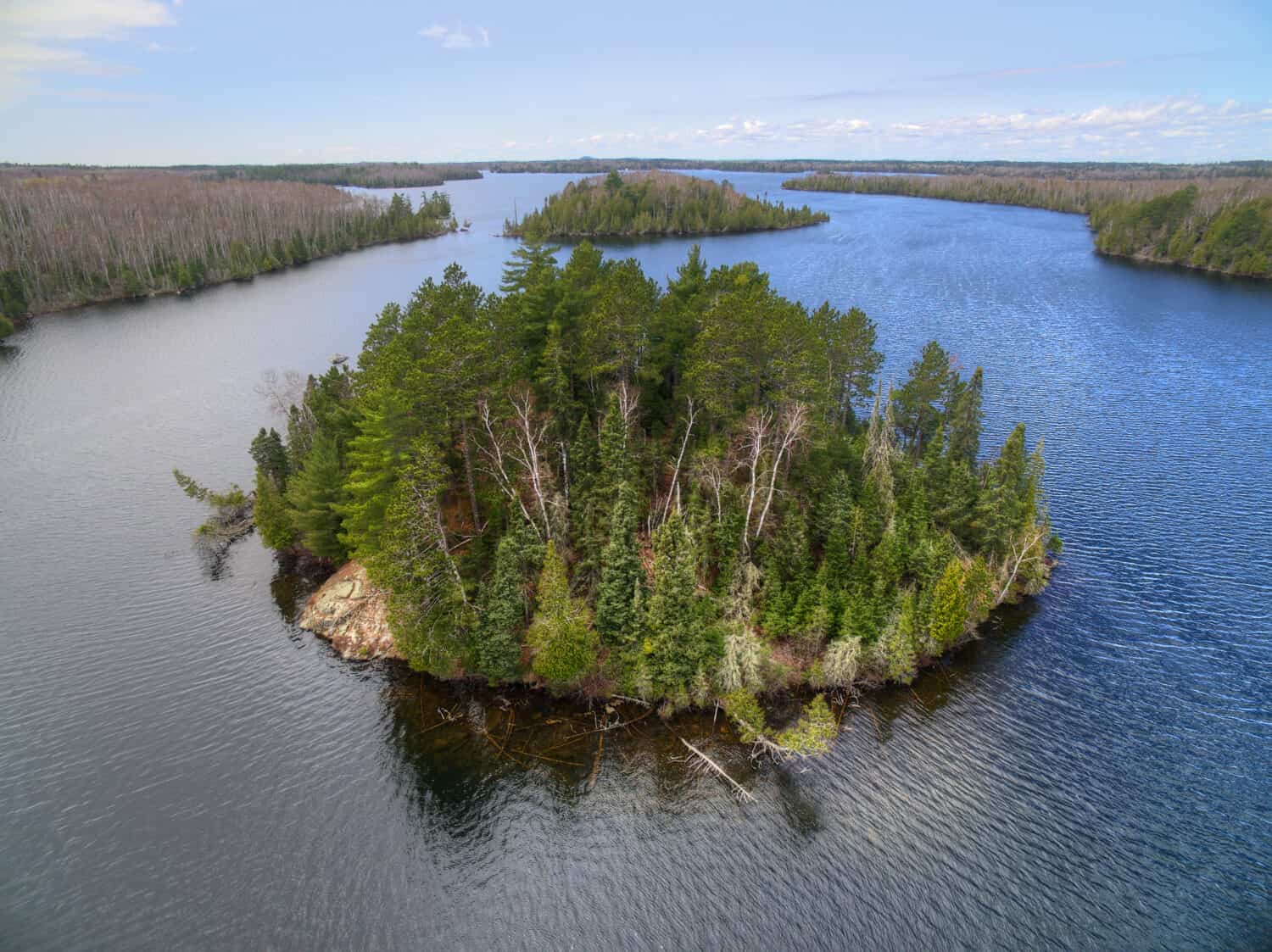
Bear Head Lake State Park has a surface area of about 4,373 acres and sits at an elevation of 1,506 feet. The average depth of Bear Head Lake, the main attraction of the state park, is 12 feet.
©Jacob Boomsma/Shutterstock.com
10. Sherburne National Wildlife Refuge
Next on our list of the best places to see bald eagles in Minnesota is Sherburne National Wildlife Refuge in Sherburne County. This lovely national wildlife refuge protects many animals and plants on about 30,700 acres of land. The Sherburne National Wildlife Refuge is home to over 230 bird species, making it a hot bird-watching spot. Also within the park are nearly 60 species of mammals. Apart from watching bald eagles and other species, hiking, cross-country skiing, and snowshoeing opportunities are available. Currently, there are two recorded official pairs of eagles nesting in the area. The nearest city to this wildlife refuge is Zimmerman.
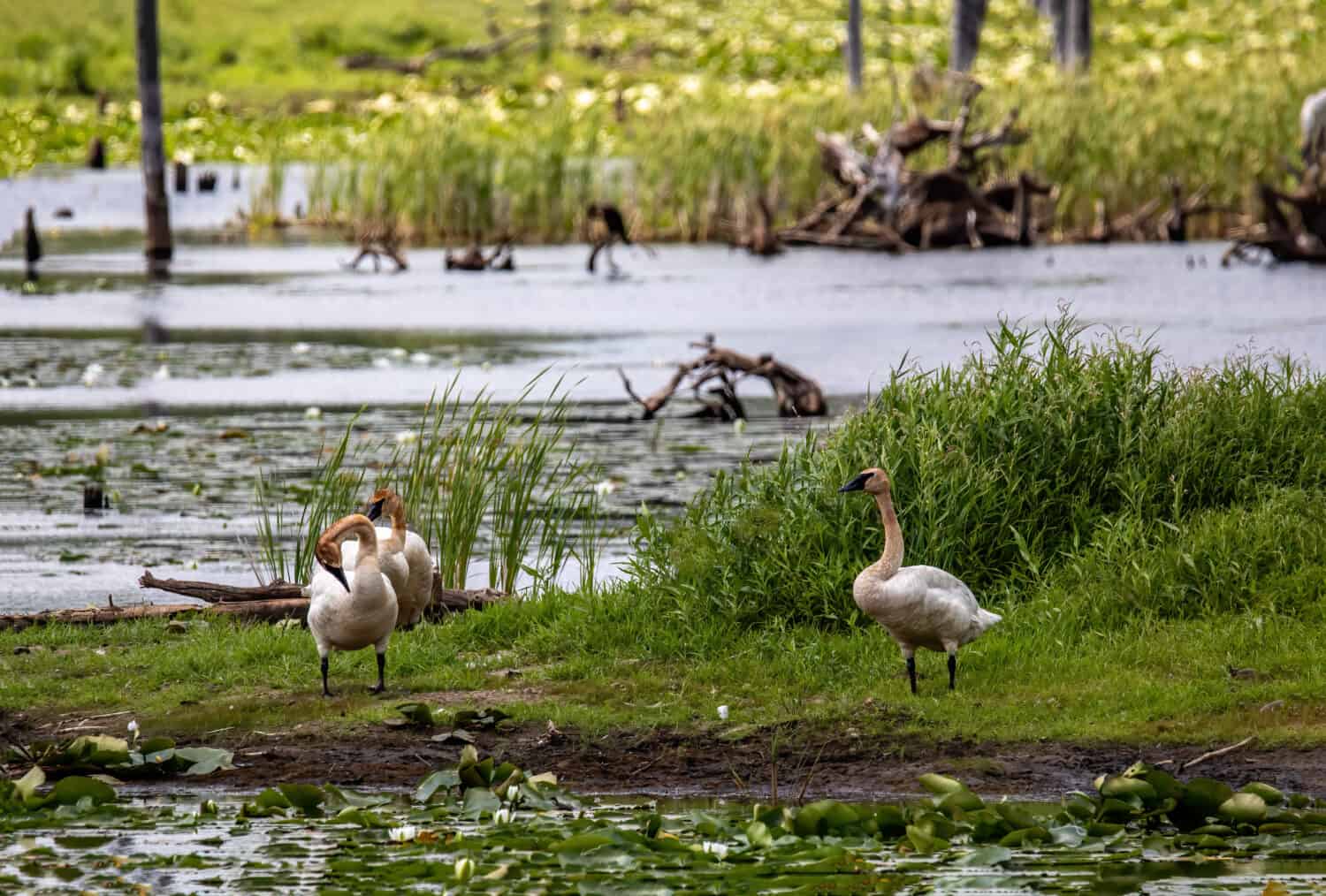
Sherburne National Wildlife Refuge in Sherburne County is home to over 230 bird species.
©Linda McKusick/Shutterstock.com
11. St. Croix National Scenic Riverway
Last but not least is the St. Croix National Scenic Riverway. This lovely riverway is hard to look away from, especially when eagles rest and hunt along the water. The St. Croix National Scenic Riverway protects 252 miles of rivers in Wisconsin and Minnesota. This riverway runs through three Minnesota counties, Chisago, Pine, and Washington. Fishing is one of the most popular activities to do within the scenic riverway. Common fish in the upper St. Croix are largemouth bass, brook trout, northern pike, and sturgeon.
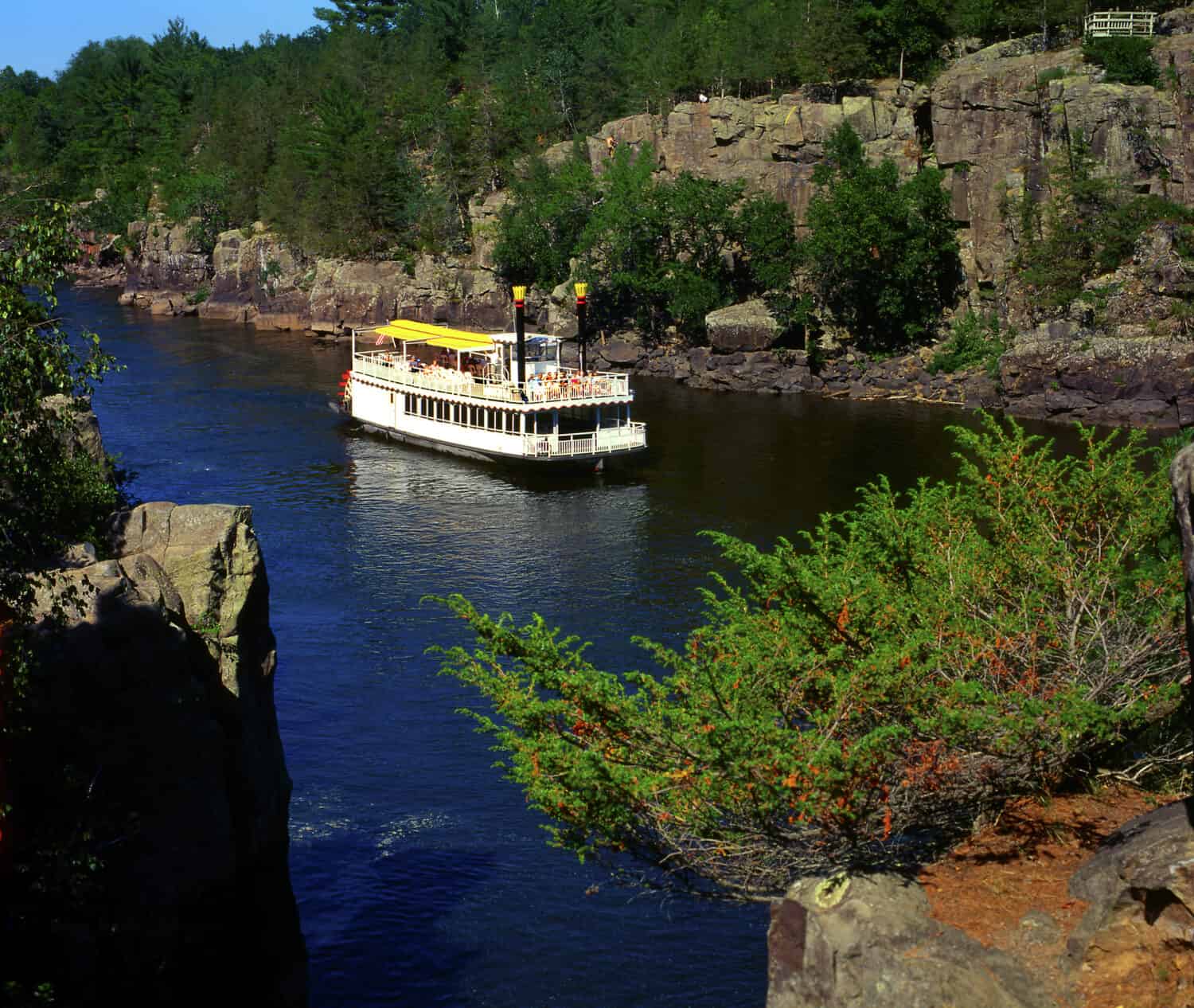
The St. Croix National Scenic Riverway protects 252 miles of rivers in Wisconsin and Minnesota. It covers an area of about 92,738 acres.
©Pecold/Shutterstock.com