
Quick Take
- Both male and female turkey vultures can reach up to 2.6 feet tall and weigh up to 4.4 pounds.
- A turkey vulture’s wingspan can measure up to 6 feet.
- Turkey vultures often use thermal columns to scout for food before approaching a carcass.
- The vulture wobble is an unusual flight technique that helps vultures navigate small-scale turbulence.
Turkey vultures (Cathartes aura) are some of the most common vultures in the Americas. They are easily identifiable with their brownish plumage and red heads, resembling turkeys. Turkey vultures are often seen circling in the air or perched high up in the trees. These vultures may seem small from a distance, but is that the case up close? Let’s take a look at their true size and wingspan to learn just how big turkey vultures are.
How Big Are Turkey Vultures?
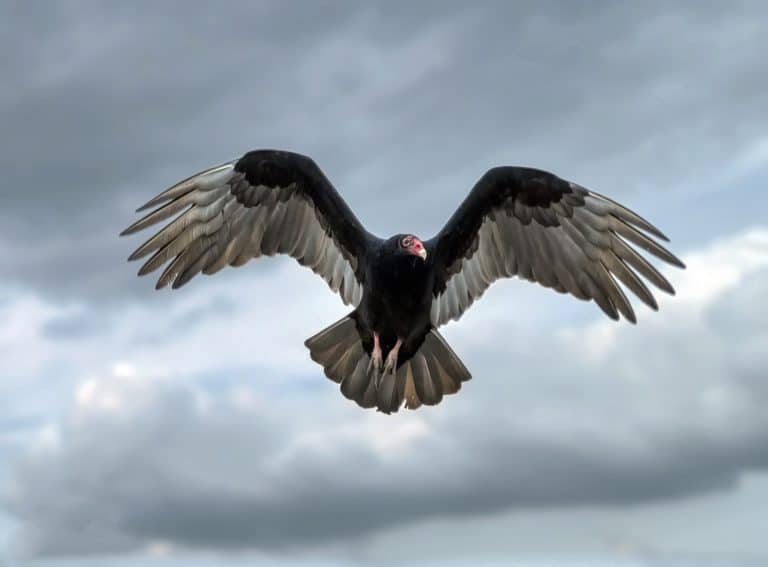
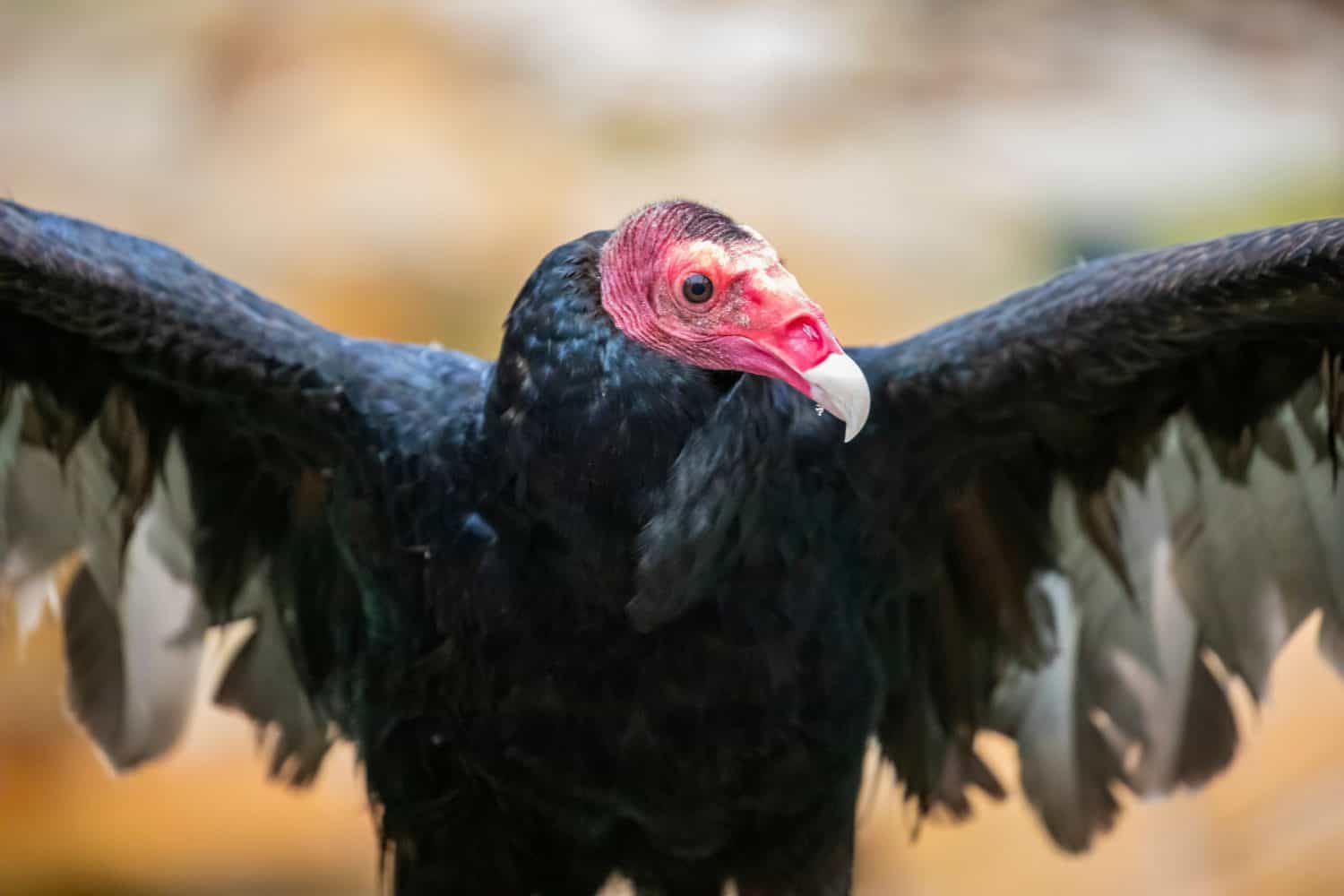
On average, turkey vultures grow to lengths of 25 to 32 inches and weigh up to 4.4 pounds. Their wingspans can reach nearly 6 feet, which is quite large relative to their body size and weight. Unlike most other birds of prey, male and female turkey vultures are similar in size. Their appearance is also identical. Both males and females have brownish-black feathers with lighter undersides and reddish-colored heads.
Turkey vultures reach maturity at around two years of age, at which point their heads fully redden and they reach their full weight and size. They are fairly long-lived birds, with the oldest recorded banded wild bird reaching 16 years old. However, there are many examples of turkey vultures that have lived to be older than 30 in captivity. Nero, the turkey vulture ambassador at the University of Minnesota’s Raptor Center, lived to be 47 years old.
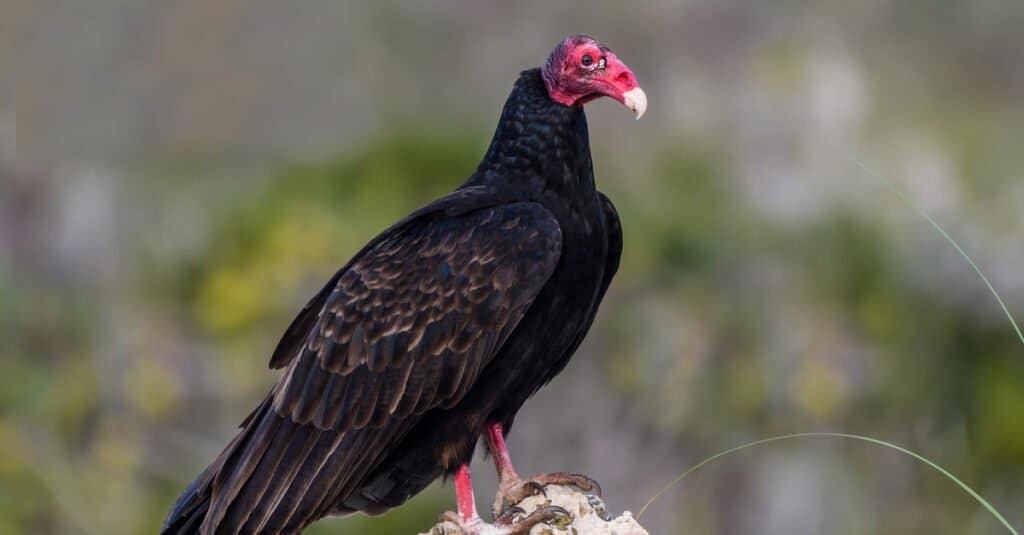
A turkey vultures can stand up to 2.08 to 2.6 feet tall and weigh up to 4.4 pounds.
©FotoRequest/Shutterstock.com
Turkey Vulture Flight
Turkey vultures rely on thermal columns, which are rising pillars of warm air, to help them stay aloft while flying. When a vulture encounters one of these columns, it spreads its large wings to ride the rising air upward. Since they don’t have to flap to remain airborne, this way of flying is easier and less strenuous for them.
A distinctive feature of vultures in flight is their classic “wobble.” This wobble is seen in their circling patterns and while at low altitudes. This wobble, known as “contorted soaring,” helps vultures use small-scale turbulence to remain airborne longer. The wobbling is caused by air currents moving them around, similar to the sensation of bouncing on the back of a bus.
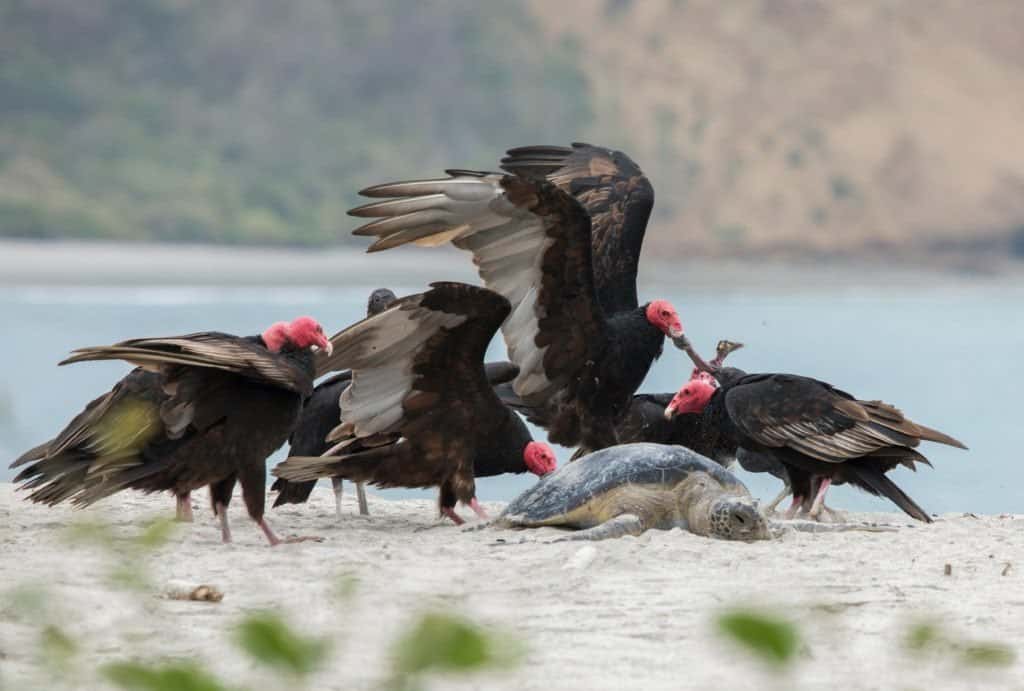
Vultures circle to find food, not to wait for living things to die.
©Ana Dracaena/Shutterstock.com
Why Turkey Vultures Circle
Turkey vultures, like many other vulture species, circle in the sky for several reasons. However, contrary to popular belief and movie depictions, vultures are not circling because they are waiting for an animal to die. When vultures are circling, they are usually searching for food and have not yet located it. Circling allows vultures to use thermals to travel long distances while conserving energy.
Another reason a vulture may circle is that it has found food but wants to ensure there are no predators nearby. Turkey vultures are unique in the vulture world since they have an incredibly developed sense of smell. Most vultures have a poor sense of smell and rely on sight to find carrion. Turkey vultures have one of the most highly developed senses of smell among birds, making them exceptional at locating carrion. In fact, their sense of smell is so good that black vultures will often circle above the turkey vultures, waiting for them to pick up the scent of dead meat. Once a turkey vulture has found food, black vultures will follow them to the feast.