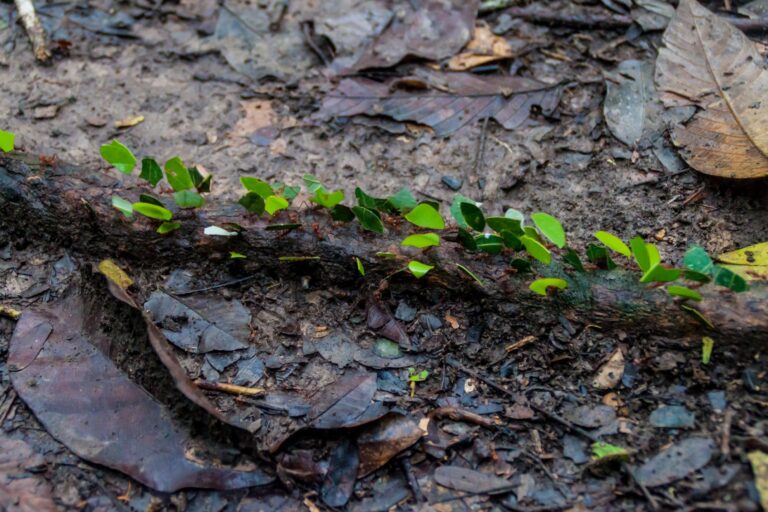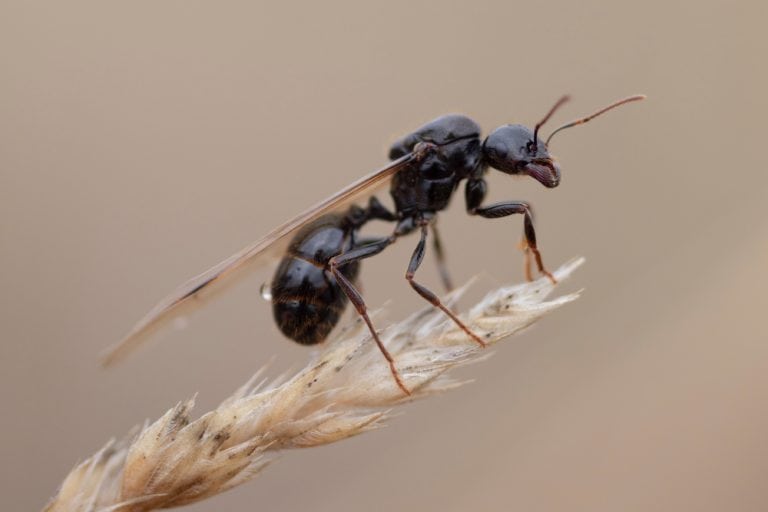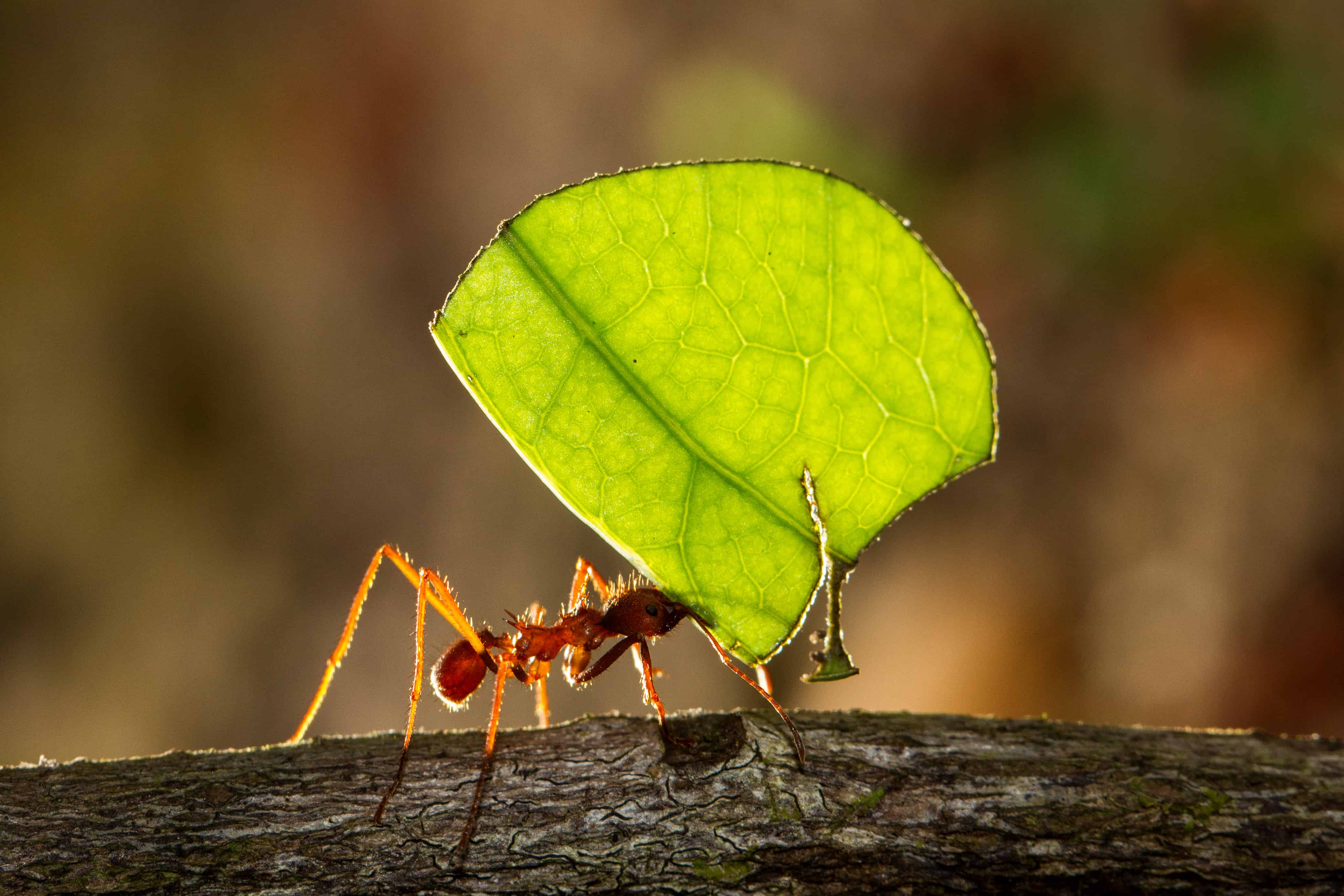

For centuries we have believed that humans were unique in the ability to farm and cultivate food. However, it turns out that ants have been growing their own food well before humans ever planted a seed. Have you ever seen a trail of ants carrying green leaves back to their colony? They’re collecting this plant matter to cultivate their own farms!
This post was updated on October 14, 2025 to clarify the evolution timeline, leafcutter ant U.S. range, rare documentation of exchanging fungal material with other colonies, ant castes, and fungus reclassification.
When Did Ants Start Farming Their Food?
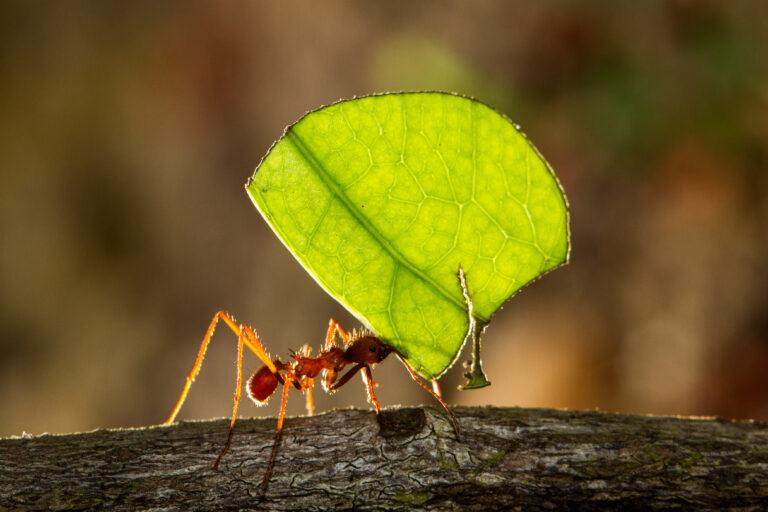
Leafcutter ants can carry 20 times their body weight.
©iStock.com/scigelova
Most organisms forage, hunt, or use photosynthesis to source food, but fungus-farming (attine) ants originated roughly 45–60 million years ago. These tiny critters began cultivating and growing their own food. Some species even took it a step further and domesticated their fungi, much like humans domesticated certain animal species. This specialized fungus can no longer reproduce on its own and needs the ants to survive. The fungi produce gongylidia, which are little nutrient-filled powerhouses for ants. Most ant species cultivate a single fungal strain, though some have been observed hosting multiple strains or exchanging fungal material with neighboring colonies.
Ant Farming 101
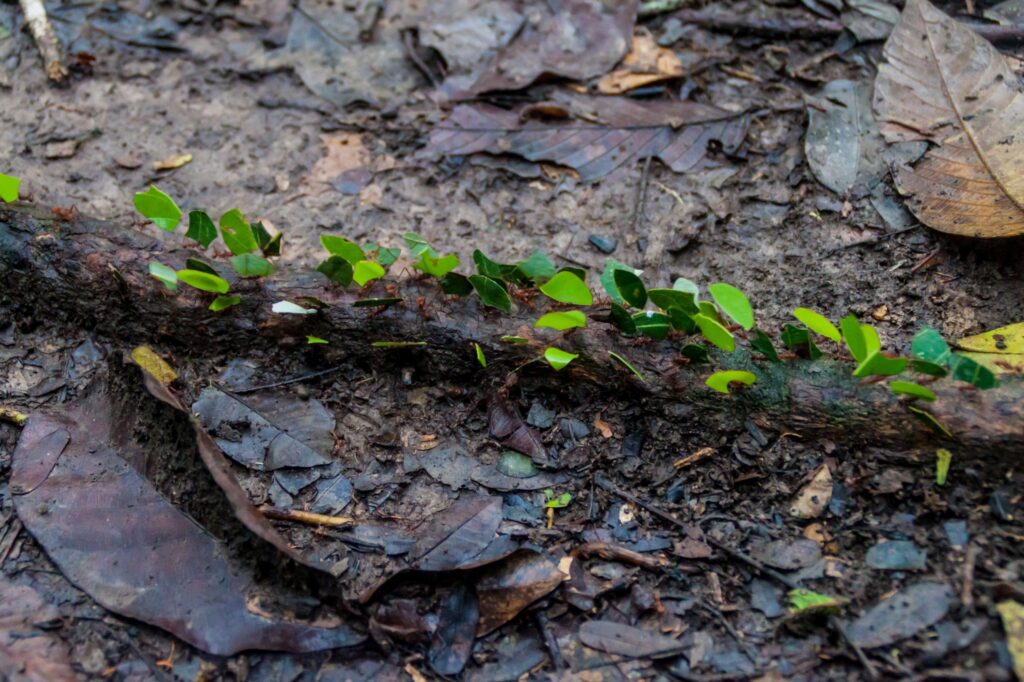
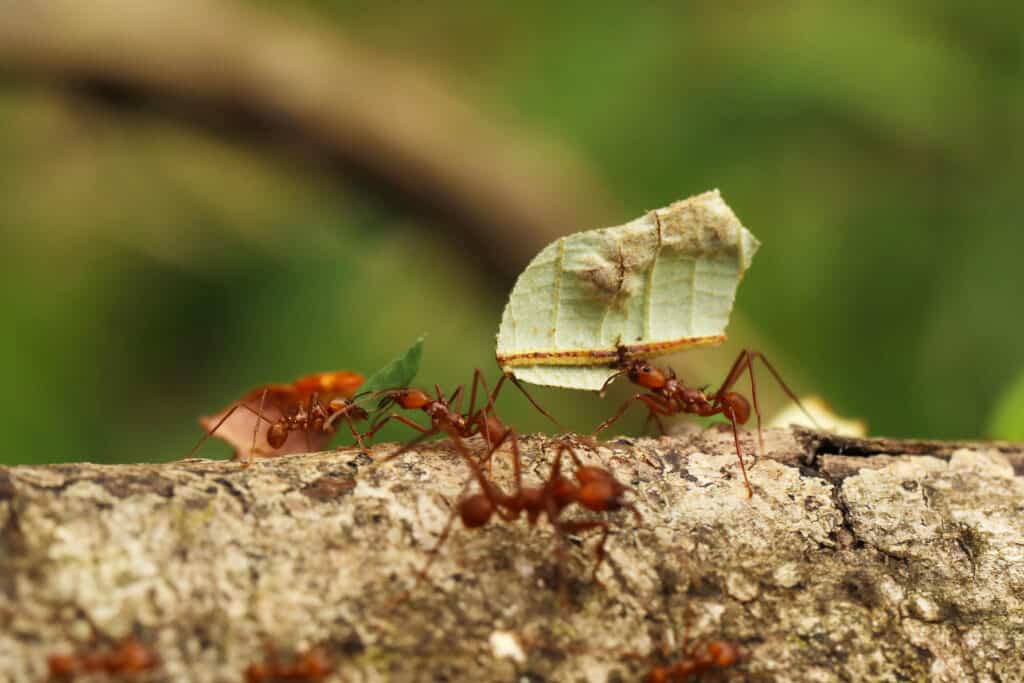
A colony of leafcutter ants can defoliate an entire tree in a single day.
©Matyas Rehak/Shutterstock.com
Leafcutter ants are found across South and Central America, Mexico, and extend slightly into southern Texas and western Louisiana.
There are around 50–60 recognized species of true leafcutter ants, primarily in the genera Atta and Acromyrmex, with some species now reclassified under Amoimyrmex. While the Amoimyrmex ants typically have three ant castes (different types of ants), Acromyrmex and Atta usually have four. These castes, or groups, are ranked by size and function:
- Minims
- Minors
- Media
- Major (sometimes called “soldiers”)
Minims are the smallest members of a leafcutter ant colony and serve as the dedicated caretakers of the fungus gardens. After foraging ants bring back leaf fragments, minims chew them into a pulpy substrate for the cultivated fungus (Leucoagaricus gongylophorus). They also tend the fungal growth, remove contaminants, and apply antibacterial secretions from symbiotic Pseudonocardia bacteria to prevent mold. Despite their tiny size, minims are essential to the colony’s survival, maintaining the health and productivity of its underground farms.
Minor workers are slightly larger than minims and act as the colony’s patrollers and defenders along foraging trails. They accompany the larger workers to guard against parasitic flies and other small predators that might attack foragers carrying leaf fragments. Minors also help process leaves once they arrive at the nest and assist in transporting smaller pieces deeper into the fungal chambers. Agile and vigilant, these ants form the colony’s first line of defense during everyday operations.
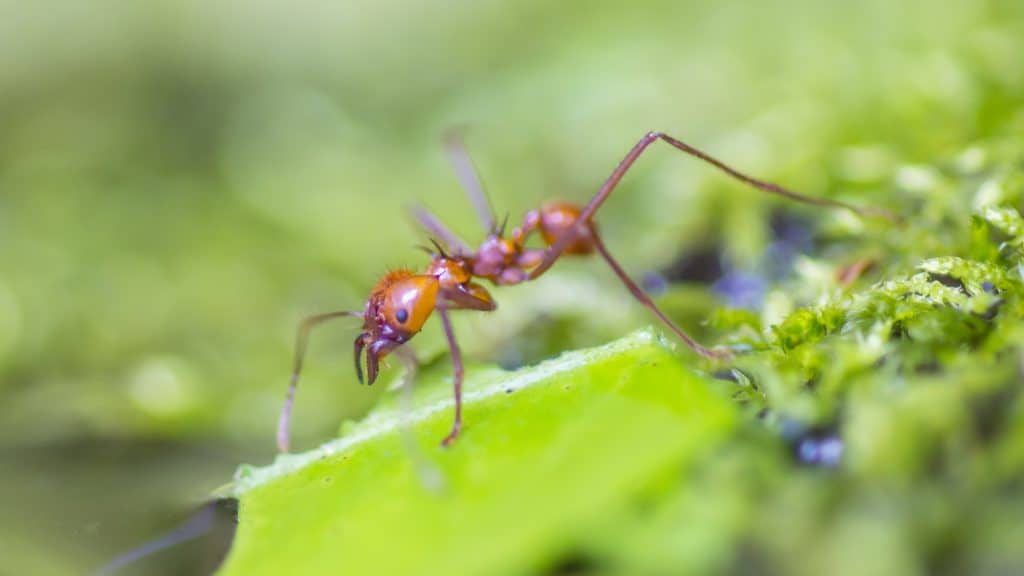
Media ants are the medium-sized workers responsible for cutting and carrying leaves. These ants are super strong and can carry 20 times their own body weight! Their powerful, sharp mandibles are perfect for cutting out pieces of leaves and other vegetation for their fungus farms. Media ants carry the leaves back to the nest using the specialized grooves on their heads.
Major ants, also known as soldier ants, are the largest of them all. Like their name, major ants serve as the colony’s military force, defending the colony from predators. Majors also help clear and widen foraging paths, breaking down obstacles so smaller ants can pass freely. Some major ants can grow 16mm long, which is pretty big for an ant!
Mutualism Between Ants and Fungi
Leafcutter ants build massive nests that can reach 20 feet deep.
©© 2017 Kryssia Campos/Moment via Getty Images
Leafcutter ants cultivate a specialized fungus (Leucoagaricus gongylophorus) from the family Agaricaceae, (once classified within Lepiotaceae) in a symbiotic relationship. The ants care for and protect the fungi, providing them with plenty of nutritious plant matter and antimicrobial bacteria to fight off harmful microorganisms. The ants are incredibly sensitive and can detect even the slightest disturbance in their farms. They observe how the fungi react to different plant materials and will signal to the media ants to find other types of plants if necessary. The fungi, in turn, provide food and essential nutrients for the ant colony, which are particularly beneficial for young ant larvae.