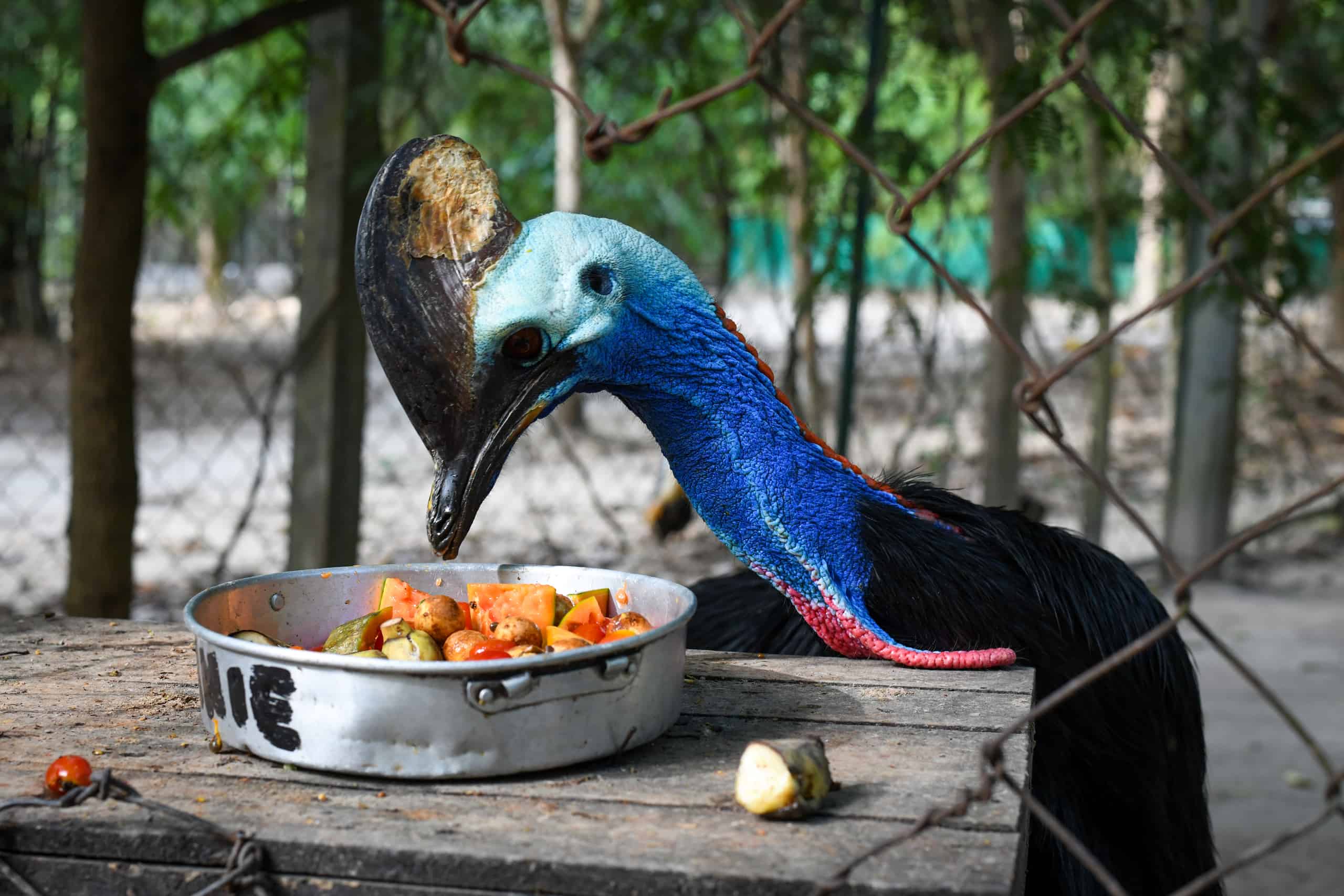

Cassowaries are among the most interesting-looking creatures in the entire animal kingdom. They have crests on their heads made out of the same material as rhinoceros horns, feet with dagger-like nails that look like dinosaur feet, and unique, bright blue heads. Given their appearance, it’s easy to see why cassowaries are known as the “most dangerous birds on Earth.” However, what does the most dangerous bird on Earth eat? Are they vicious predators or harmless herbivores? Find out what these impressive birds eat, how they hunt for food, and why they are so important to the rainforest ecosystem they inhabit.
The Cassowary Diet
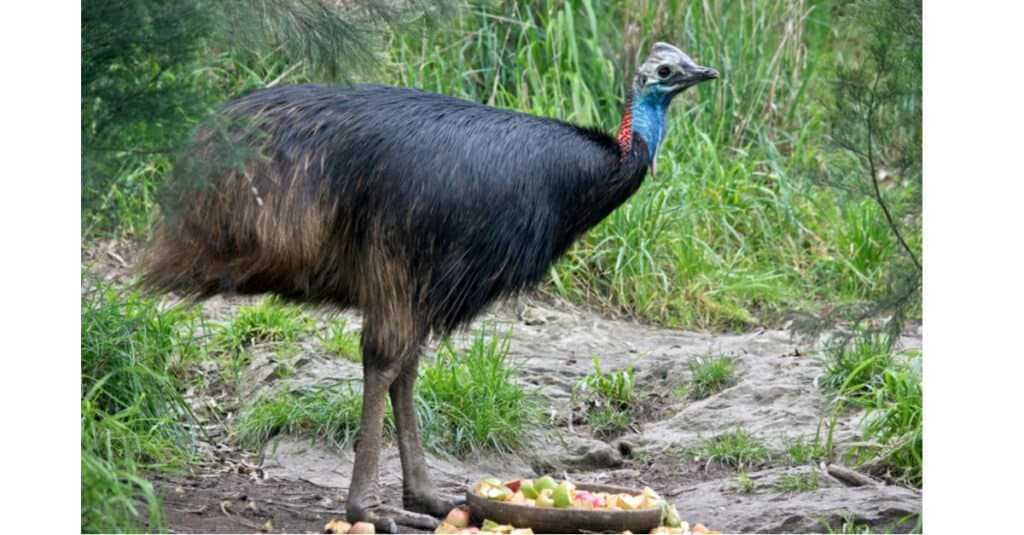
Cassowaries eat the fruit from over 200 different plant species.
©Susan Flashman/Shutterstock.com
Cassowaries are not carnivores or herbivores. They are actually frugivores, with as much as 90%-99% of their diet consisting of fruits. The cassowary’s diet is actually closer to that of a fruit bat than to that of another bird. Cassowaries prefer seasonally fruiting plant species with larger fruits that have nutritious coverings, but they do not get any nourishment from the seeds. Researchers note that 238 plant species have been observed in the southern cassowary diet.
Some important plant families in the cassowary diet include:
- Lauraceae: laurel, walnut
- Myrtaceae: satinash, white apple, river cherry
- Arecaceae: palms
- Elaeocarpaceae: quandong
- Cunoniaceae: Davidson’s plum, crabapple
When cassowaries require more protein, they will eat fungi, bird eggs, invertebrates such as insects and snails, and small vertebrates like reptiles, frogs, fish, rodents, and birds. Southern cassowaries have also been observed eating carrion.
How Do Cassowaries Find Food?
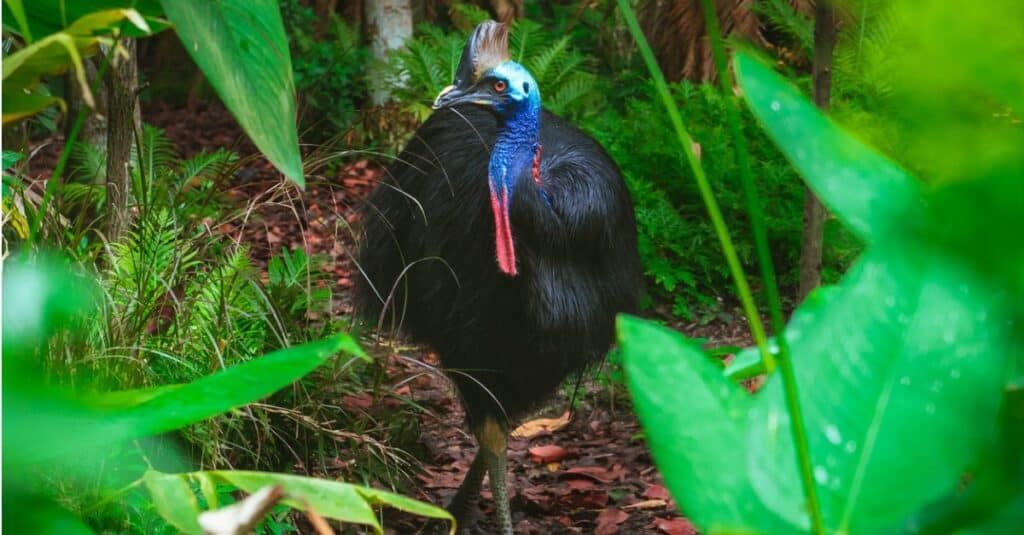
Cassowaries forage for fruit on the rainforest floor.
©iStock.com/Henry Soon
While other large birds like ostriches and emus inhabit savannas, shrub lands, and desert-like landscapes, cassowaries live in dense rainforests and wetlands. Cassowaries typically use their feet to forage for fruit on the forest floor. Although they prefer to find their food on the ground, sometimes fruit may be eaten directly off of low-hanging foliage. Cassowaries can also jump up to seven feet in the air to reach higher fruit still on the trees.
Fruit is most abundant in their usual habitats from June to October. However, when there is less fruit available, cassowaries may raid orchards, gardens, and commercial crops. They have even been reported stealing food from people on the beaches of Queensland, Australia.
The Importance of the Cassowary Digestive System
Cassowaries are important to the rainforests of New Guinea and Northern Australia because they disperse the seeds of so many plants. In fact, they are believed to be the only species able to widely distribute large, seeded fruits. They do this by swallowing the entire fruit, digesting it, then passing the intact seeds in piles of their waste, which they leave all over the rainforest. Other small mammals feed on the seeds in these droppings, which also helps to further the seeds’ distribution.
Since cassowaries have short digestive tracts, their dung can contain hundreds, possibly even thousands of seeds. Scientists have found that some of these seeds germinate in the cassowary’s digestive system. They have also determined that many seeds must pass through the cassowary’s digestive tract before they can even sprout. Conservationists have called cassowaries a keystone species because of their impact on the ecosystem.