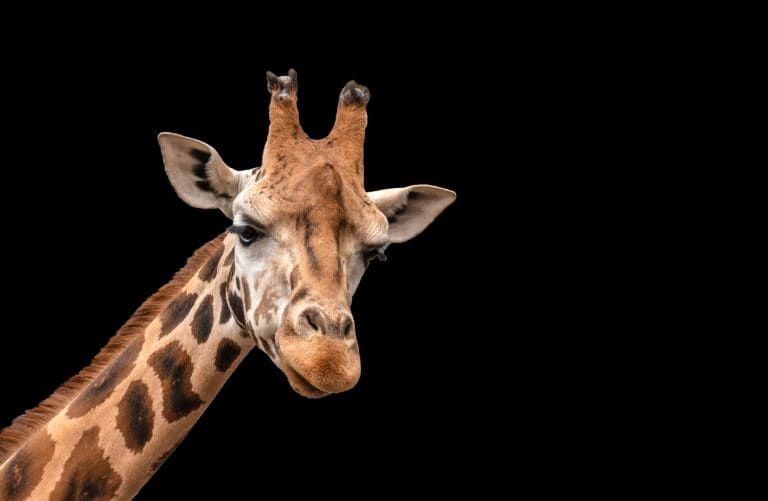

Giraffes are the tallest animals in the world. Reaching heights of 18 feet and weighing over 4,000 pounds, the giraffe is also the eighth heaviest land mammal. Such large bodies require a great deal of energy, so giraffes are constantly eating and foraging.
In a land filled with predators like lions and hyenas, the giraffe is strictly an herbivore. They belong to the group of even-toed ungulates, which also includes sheep, deer, cattle, and other related animals. Let’s take a look at what a giraffe eats and how it finds its food.
What Do Giraffes Eat?
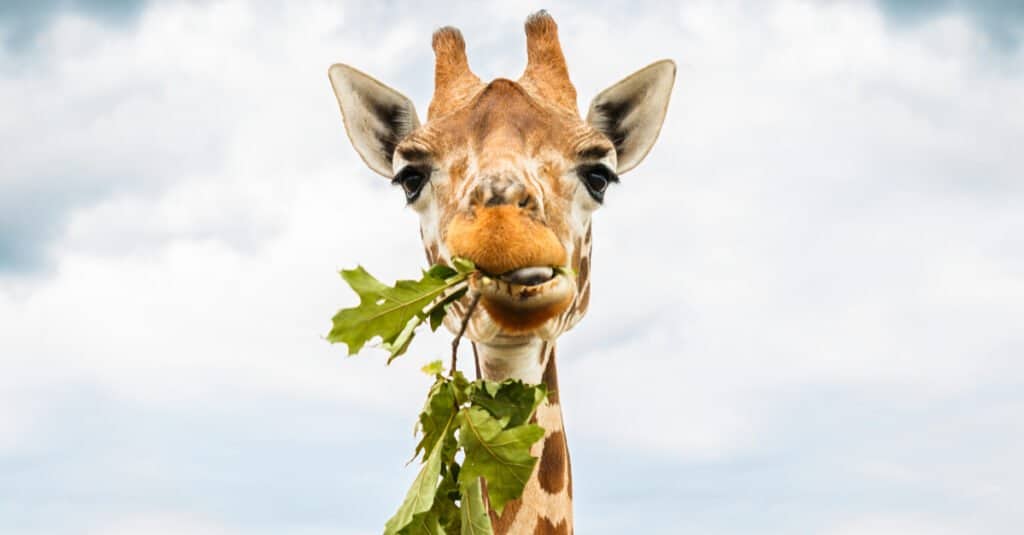
Giraffes prefer the leaves of acacia, mimosa, and apricot trees.
©Koverninska Olga/Shutterstock.com
Giraffes are herbivores, which means they feed on plants. The leaves of the acacia, mimosa, and apricot trees are their favorite foods. However, they will also eat other leaves, seeds, buds, branches of trees, and occasionally grass. In fact, academic research shows that giraffes can eat up to 85% of new acacia shoots. They are considered browsers, not grazers, meaning they mostly eat leaves and twigs from trees and shrubs rather than grass and low-growing plants.
Giraffes also chew on the bones of other animals to obtain nutrients that are lacking in their plant-based diet, particularly calcium and phosphorus. The behavior is called osteophagy. Giraffes chew and suck on the bones to extract nutrients. They typically spit the bones out, but they may sometimes swallow bone fragments.
Giraffes eat foods that include:
- Acacia trees
- Mimosa trees
- Apricot trees
- Leaves
- Seeds
- Buds
- Branches
- Fruits
- Flowers
- Grass
- Bones
How Does A Giraffe Eat?
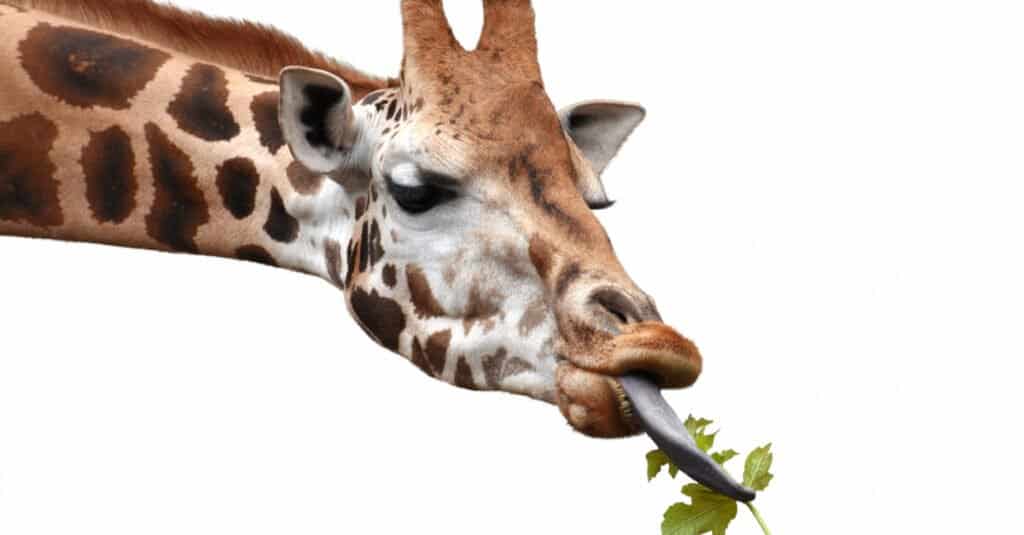
A giraffe’s tongue is dark purple to protect it from the sun.
©NAPA/Shutterstock.com
One of the most interesting things about the giraffe’s diet is the way it eats. They have many adaptations that help them eat, as they spend around 18 hours a day foraging for food. Giraffes have evolved to be efficient eaters, which allows them to consume up to 75 pounds of food a day. In general, giraffes eat between 1.6% and 2.1% of their body weight per day.
Some of the adaptations that help giraffes eat include:
- Long necks
- Long, dark, tough tongues
- The lack of upper front teeth
- Rumination
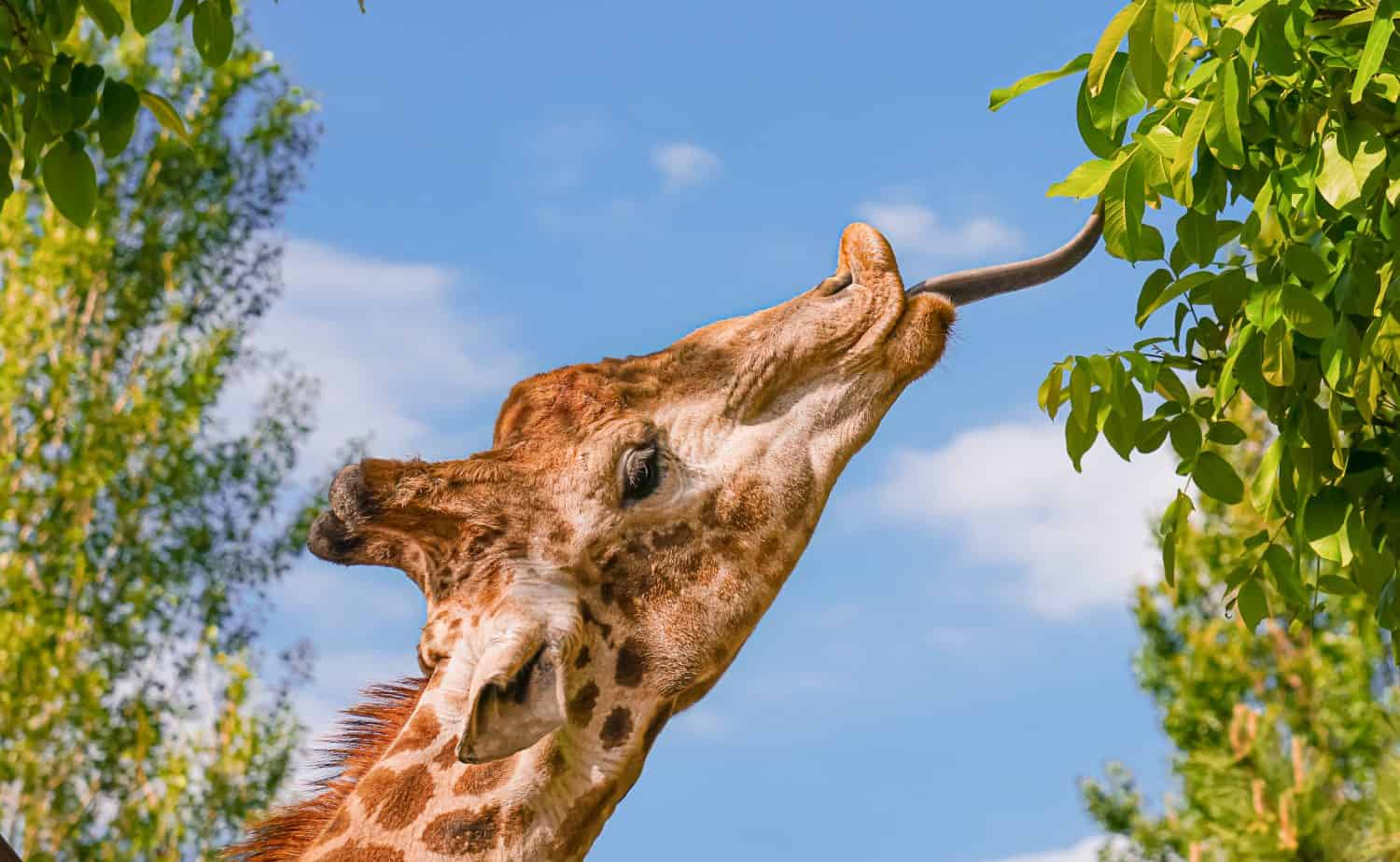
A giraffe’s long tongue, along with its height, helps it reach food high up in trees. The tongue has a dark purple coloring to protect it from the sun. It is also thick and tough to protect it from thorns. Giraffes lack upper front teeth, which allows them to more easily strip leaves from branches. Like cows, giraffes are ruminants. They are unable to directly break down the cellulose in the plants they eat, so they regurgitate this material, called cud, to chew it again and break it down further for easier digestion.
What Do Giraffe Calves Eat?
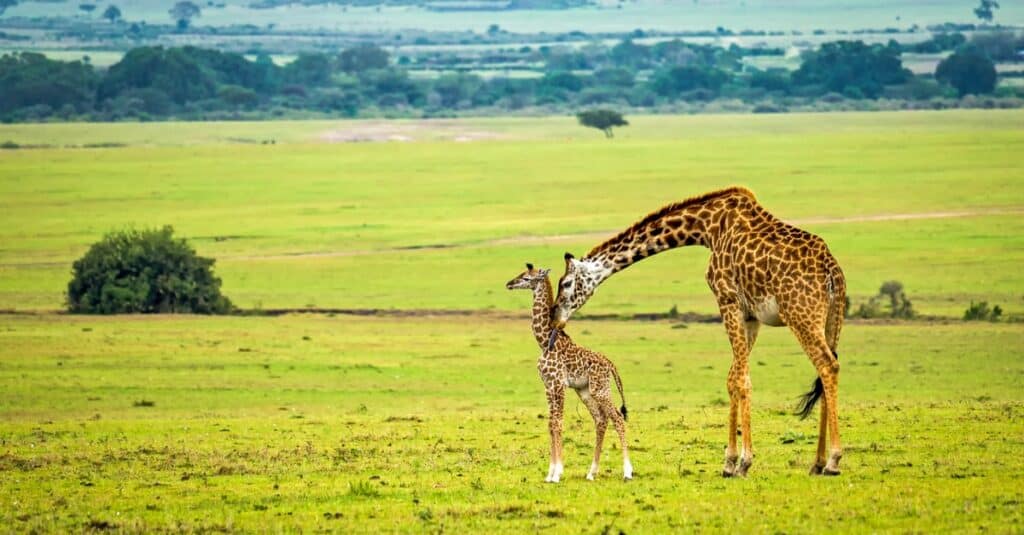
Baby giraffes are six feet tall at birth.
©iStock.com/miroslav_1
Baby giraffes are literally dropped into the world, falling about six feet to the ground during birth, which snaps the umbilical cord. They are about six feet tall at birth and they can stand within the first hour, which allows them to immediately begin nursing from their mothers.
The calves drink only milk for about the first four months. Then, they slowly add leaves to their diet. The calves will continue to eat some solids and drink milk until they are weaned at about 9 to 12 months old. The calves nurse for an extended period while they learn how to ruminate, or chew cud, like adult giraffes.