The walrus (Odobenus rosmarus) is a large marine mammal with large tusks that lives in the Arctic. Walruses are found in the Arctic and sub-Arctic regions of the Northern Hemisphere. They have thick, leathery skin, long tusks (which are actually oversized canine teeth that grow throughout their lives), and whiskers. Adult males can weigh up to two tons, and females can weigh over one ton. Walruses are social animals that spend time both in the water and hauled out on ice or land.
What Do Walruses Eat?
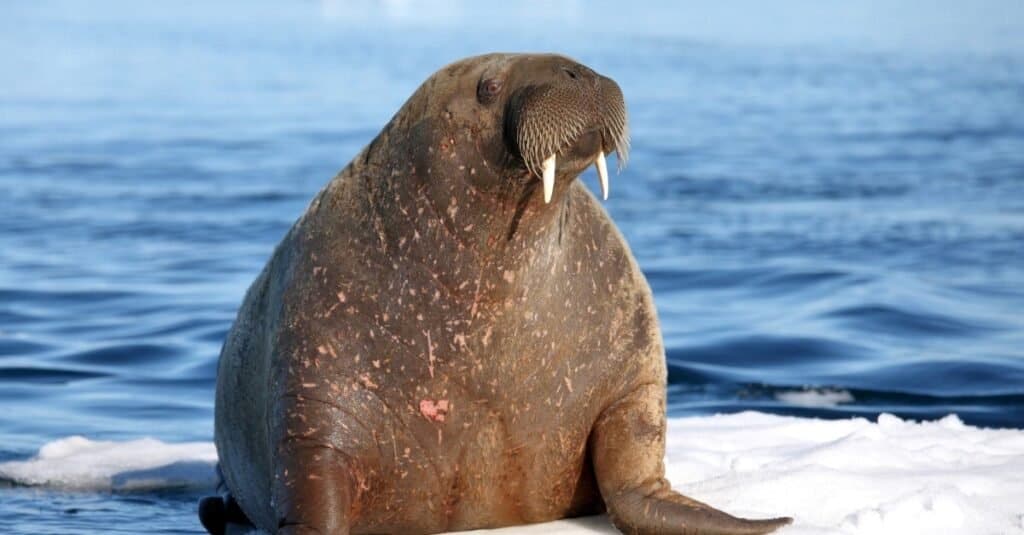
Walruses eat clams, crustaceans, mollusks, and fish.
©iStock.com/zanskar
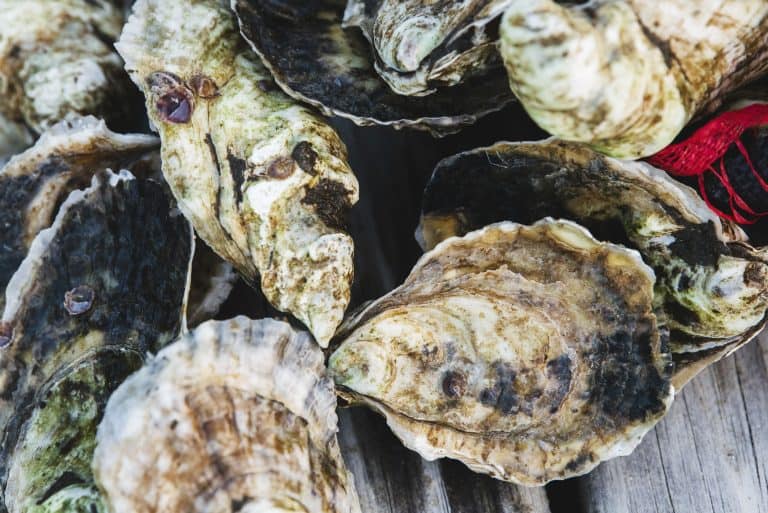
There are two subspecies of walrus: the Atlantic walrus (O. r. rosmarus) and the Pacific walrus (O. r. divergens). Atlantic and Pacific walruses eat a very similar carnivorous diet, which primarily consists of benthic (bottom-dwelling) invertebrates. The primary prey for both subspecies are bivalve mollusks, such as clams and mussels, sometimes reported as up to 95% of their diet. They use their sensitive whiskers (vibrissae) to locate food in the dark, murky sediment of the seafloor and a powerful suction method to extract the soft parts of their prey from its shell.
Walruses supplement their diet of clams and mussels with crustaceans, shrimp, fish, and other animals. While their main diet is largely the same, some individual walruses, usually older and larger males, in both populations, have been known to occasionally prey on other animals, including fish, seabirds, and even seals. These instances tend to be opportunistic, especially when their primary food source is scarce.
Like most marine mammals, walruses cannot stay underwater for extended periods and must surface regularly to breathe. They can dive up to 295 feet deep and remain at the bottom of the ocean for about 30 minutes.
The 14 foods walruses are known to eat are:
- Clams
- Worms
- Mollusks
- Snails
- Crustaceans
- Soft shell crabs
- Sea cucumbers
- Shrimps
- Gastropods
- Cephalopods
- Fish
- Carcasses
- Seals
- Seabirds
How Much Do Walruses Eat?
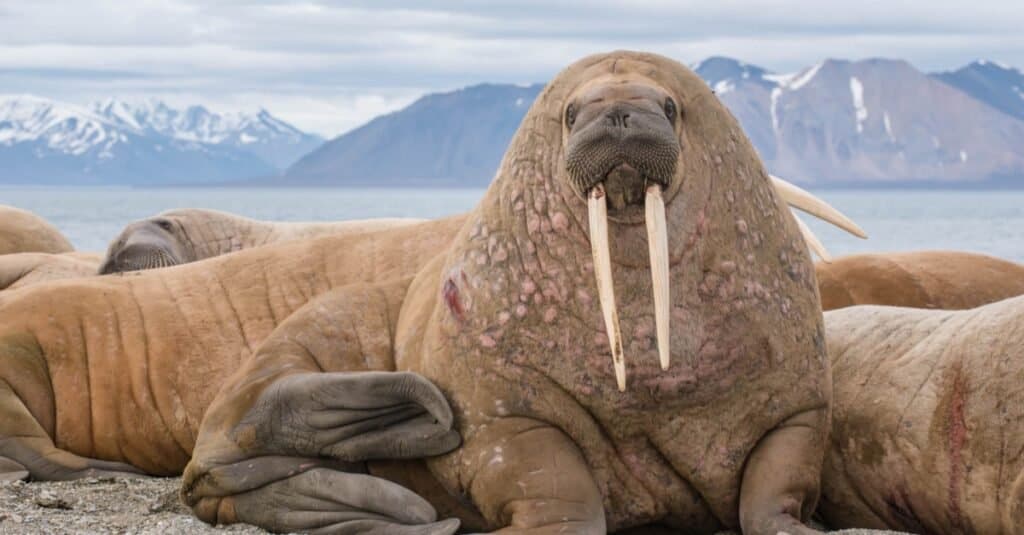
Adult walruses may eat 3,000 to 6,000 clams in one feeding session.
©Mikhail Cheremkin/Shutterstock.com
Because their diet consists of very small animals, walruses must eat large quantities to meet their nutritional needs. Each time a walrus dives to the ocean floor, it can forage and eat about 60 clams. Adult walruses eat 3,000 to 6,000 clams in one feeding session. Walruses eat twice a day, filling their stomachs during each feeding session and then resting while they digest.
Adult male walruses can reach lengths of up to 12 feet and weigh between 1,764–3,748 pounds. Females are typically around 10 feet long and weigh between 882–2,756 pounds. Walruses consume 3% to 6% of their weight in a day.
How do Walruses Hunt for Food?
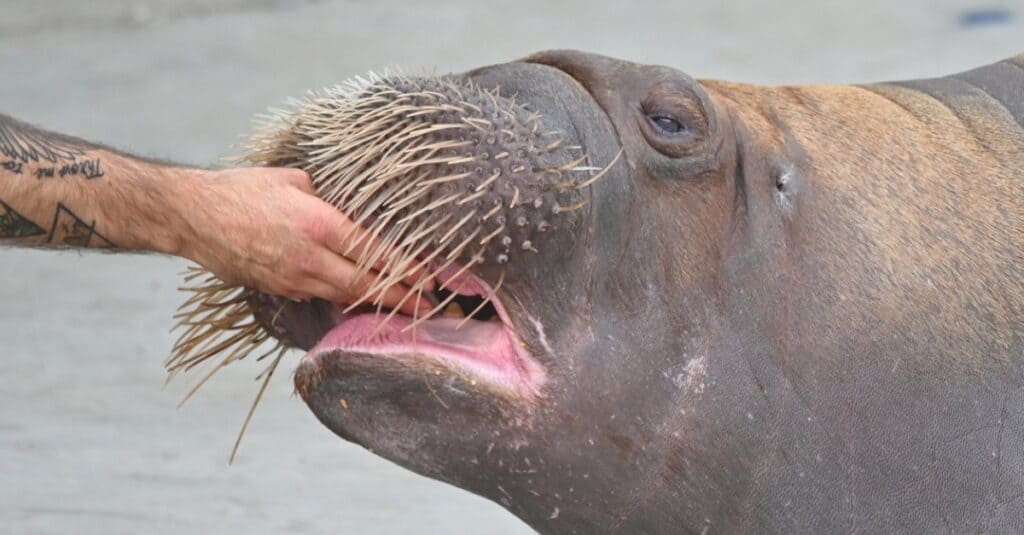
Walruses can eat up to 6,000 clams in one feeding session.
©iStock.com/Dimitri Lefebvre
Walruses forage for food by sweeping the ocean floor. Most of their food is usually found between 33 and 165 feet below the water’s surface.
Walruses use their sensitive vibrissae to locate their food. As the ocean waters are usually dark due to a lack of direct sunlight, walruses use their vibrissae to vacuum the seabed and detect food. Like other animals with whiskers, a walrus’s vibrissae are specialized to sense its environment. Walruses show abrasion patterns on their whiskers, indicating that they drag them along the ocean floor.
Their flippers are also helpful in locating food, as they wave them over the seafloor to uncover prey hiding under the sediment.
How Do Walruses Eat?

Walruses can create suction along the ocean floor to extract soft-bodied prey, such as clams, from their shells and the sediment.
©Aleksei Verhovski/Shutterstock.com
Although walruses eat a wide variety of food, they feed primarily on mollusks. Once they have located a mollusk, they create a seal with their muscular lips and rapidly pull their tongue back in a piston-like motion, creating a strong vacuum inside their mouth. The vacuum force is powerful enough to suck the soft parts of the prey directly out of the shell, which is then swallowed whole. The empty shells are typically discarded back onto the seafloor.