
Quick Take
- The right age to sterilize your rabbit is not a single number. Breed size shifts the window in ways most owners don't expect. See breed-based timing →
- Skipping a spay doesn't just affect your doe's fertility. It sets off a biological clock that puts her life at serious risk by middle age. See the cancer risk →
- Wild female rabbits share the same reproductive biology as your pet, yet almost never face the same deadly disease. The reason is counterintuitive. Explore the wild rabbit contrast →
- Neutering a buck goes well beyond managing bad behavior. There is also a health benefit that most rabbit owners have never considered. Discover the health benefit →
Domesticated rabbits are intelligent and affectionate animals that make splendid indoor pets. While there are over 300 domestic rabbit breeds, only 40 to 50 are commonly kept as pets. Pet rabbits are litter-trainable, social, and range in size from tiny two-pound dwarfs to 20-pound giants. Domesticated rabbits have a lifespan of 5–15 years, and getting your rabbit neutered or spayed can improve their health and longevity. Continue reading to learn when and why you should have your pet rabbit neutered or spayed.
When Should Your Pet Rabbit Be Sterilized?
It is recommended to consult a veterinarian with experience treating rabbits to determine the best time for sterilizing your pet rabbit, as the timing may vary slightly depending on the breed. As a general rule, bucks (males) can be neutered as soon as the testicles descend.
In the majority of breeds, this will happen when the buck is between three and five months old. Larger breed rabbits generally have their testicles descend later than smaller breeds, as they mature more slowly. While small to medium breeds may have their testicles descend as early as three months, giant breeds’ testicles will become visible between four and nine months of age.

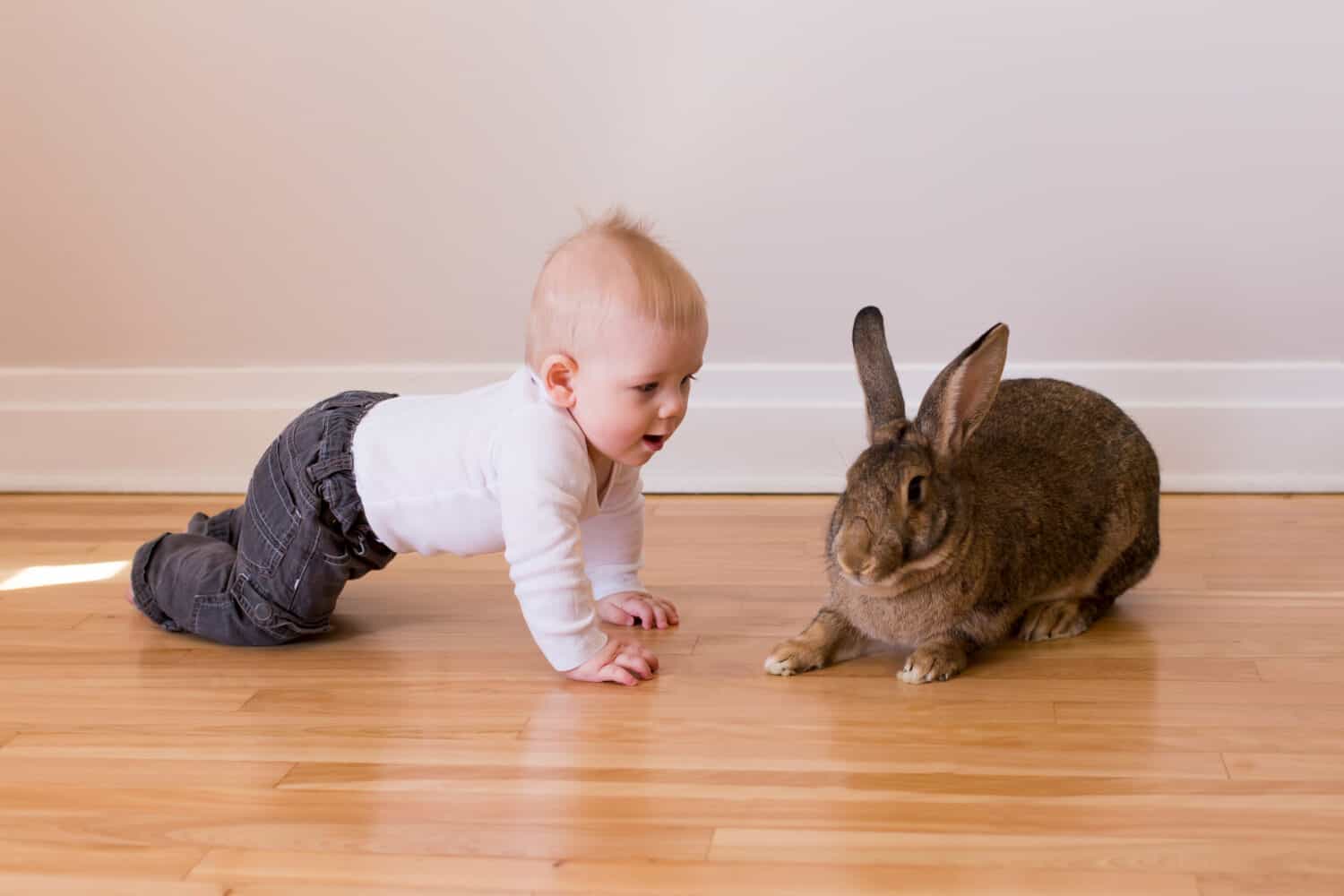
The size of your pet rabbit will determine when it should be sterilized.
©Opat Suvi/Shutterstock.com
Female rabbits, called does, are typically spayed between four and nine months of age. However, the optimal timing depends on the size and breed of the doe. Although a doe is born with her uterus and ovaries, these organs change significantly as she matures. The best time for spaying depends on her physical size, tissue maturity, and hormonal development.
Small and dwarf breeds hit sexual maturity and can be spayed early, usually around four to five months of age. Giant breeds mature much more slowly and are typically spayed between six and nine months. If a doe remains unspayed for nine to 12 months, heavy fat reserves can develop around the uterine blood vessels, making the procedure more complex and increasing the risk of bleeding.
Why Should I Have My Pet Rabbit Spayed?
It is imperative to spay your pet doe, as her life may literally depend on it. Unspayed does have an 80% hance of developing uterine cancer by the age of five or six years. Because does are adapted for high fertility, the tissue lining their uterus naturally undergoes rapid cellular changes and accumulates collagen over time. Consequently, any unspayed rabbit surviving beyond five years old faces a steep, progressive risk of developing uterine adenocarcinoma
This risk does not apply to wild rabbits, primarily due to their vastly shorter lifespan. While wild female rabbits possess the same highly active reproductive system, they rarely face the threat of uterine cancer simply because they do not survive long enough.

Wild female rabbits are not likely to get reproductive cancers because they don’t live long enough.
©Rabbitti/Shutterstock.com
Uterine cancer is a disease of longevity. This only becomes a major health concern for domestic pet rabbits, as they often live in safe, predator-free environments and can easily reach eight to 12 years of age.
Why Should I Have My Pet Rabbit Neutered?
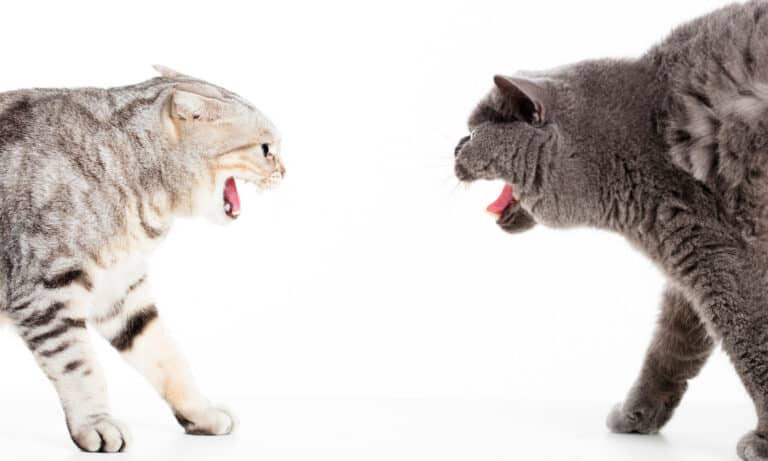
Reducing aggression and marking behaviors are two of the primary reasons why owners choose to neuter male rabbits. Unneutered bucks may display aggressive behaviors such as lunging, biting, boxing, and chasing other rabbits, pets, or humans. Intact bucks frequently spray strong-smelling urine on furniture and other surfaces to mark their territory. Neutering typically eliminates or greatly reduces these behaviors.
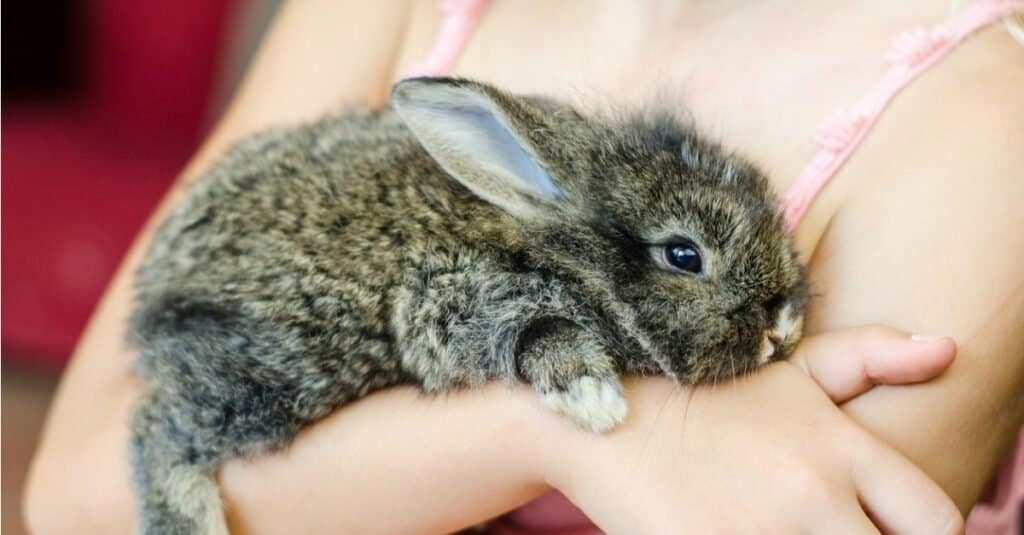
Neutered bucks are less aggressive than intact bucks.
©iStock.com/KatarinaGondova
Although the risk is much lower than the 80% uterine cancer rate found in female rabbits, neutering eliminates a buck’s risk of developing testicular cancer or testicular abscesses. While testicular cancer is rare in male rabbits, veterinarians still recommend neutering to eliminate this risk and prevent other health and behavioral issues.