
Rabbits might seem cute and quiet to us, but they are constantly communicating. In fact, their complex language of body movements, ear positions, sounds, and scents is so important that September 27, National Bunny Day, is set aside to honor these amazing animals. Rabbits use a combination of these special signals to “talk” to one another, expressing everything from irritation to affection and even social status. Have you ever wondered what your bunny is saying? Or how wild rabbits talk to one another? Here is your guide to the science of rabbit communication!
Decoding Rabbit Body Language
Rabbits primarily communicate through body language. Even the slightest twitch of an ear or subtle shift in posture can convey a specific message to other rabbits.
Ears Forward

Rabbits are very intelligent animals.
©Andres Loero/iStock via Getty Images
When a rabbit holds its ears straight and pointed up or forward, it means they are on high alert. The rabbit may be feeling curious, frightened, or anxious and is focused on something unusual, whether it’s a sound or sight that is interesting or potentially threatening to them.
Ears Back
When a rabbit holds their ears back against their head, it can mean two very different things depending on the situation.
If the rabbit is tense, its ears will be pinned back tightly against its head. This often signals that the rabbit feels threatened and doesn’t want to be touched. In this state, a rabbit might also raise its tail, growl, or even lunge forward.
However, if a rabbit is relaxed and resting, its ears will also lie back against its head. The rest of its body will be loose and relaxed, its eyes might be half-closed, and it may tuck its front legs underneath its body, creating the classic “brick” or “bread loaf” shape.
One Ear Back

Rabbits can rotate their ears almost in a full circle.
©Alexandr Macovetchi/Shutterstock.com
A rabbit with one ear forward and one ear back is an excellent multitasker. Rabbits can move their ears independently, acting like two separate satellite dishes. This allows them to monitor two different directions at once.
For example, a rabbit might keep one ear pointed forward to listen for interesting sounds in front of them while keeping the other ear turned back to monitor their surroundings or listen to a sound behind them. This allows the rabbit to stay aware of their environment without needing to give their full, undivided attention to just one thing.
Tail Down
A rabbit’s tail is another key part of their communication and emotional expression. When a rabbit holds its tail down, it is a sign of submission or nervousness. This can happen if the rabbit is feeling intimidated or is deferring to another rabbit.
Tail Up
When a rabbit lifts its tail, it’s often a sign of confidence, alertness, or irritation. For example, a pet rabbit might raise its tail if it feels scolded or unhappy about something its human did. A wild rabbit might do the same when it spots a potential threat or is focused on something intently. This is the rabbit’s way of signaling that it’s on high alert, ready to either pounce or defend itself if needed.
Tail Wagging
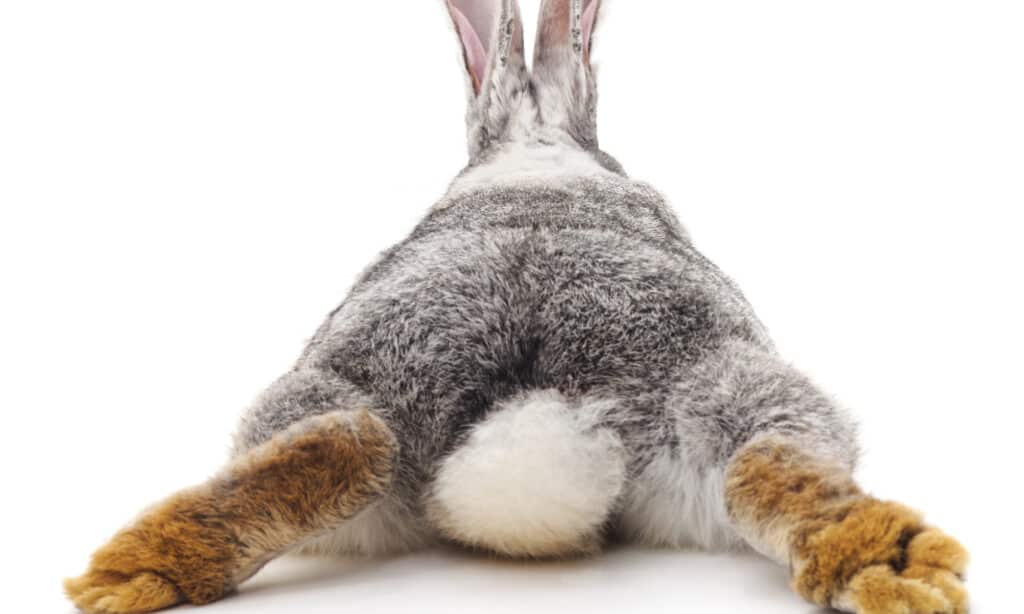
Rabbits are very social animals and do best in groups or pairs.
©Oleksandr Lytvynenko/Shutterstock.com
A rabbit wagging its tail is a polite way of saying “no.” This is how they signal to another rabbit, or even a human, that they are not interested in playing or interacting at the moment and would prefer to be left alone.
Third Inner Eyelid Showing
Rabbits have a third inner eyelid to protect their sensitive eyes. You might see it on occasion when they’re sleeping or resting, but if it’s visible while they are awake, it’s a sign that they are feeling very stressed, trapped, or frightened. When the third inner eyelid is visible in the corner of a rabbit’s eye, the rabbit likely needs space to calm down and decompress.
How Rabbits Use Movement to Communicate
Rabbits often communicate and express their feelings through specific movements. From a subtle nose twitch to a joyful binky, these gestures can help you better understand your rabbit’s needs, and ultimately learn what you can do to help them feel safe and live a happy, healthy life.
Nose Wiggling
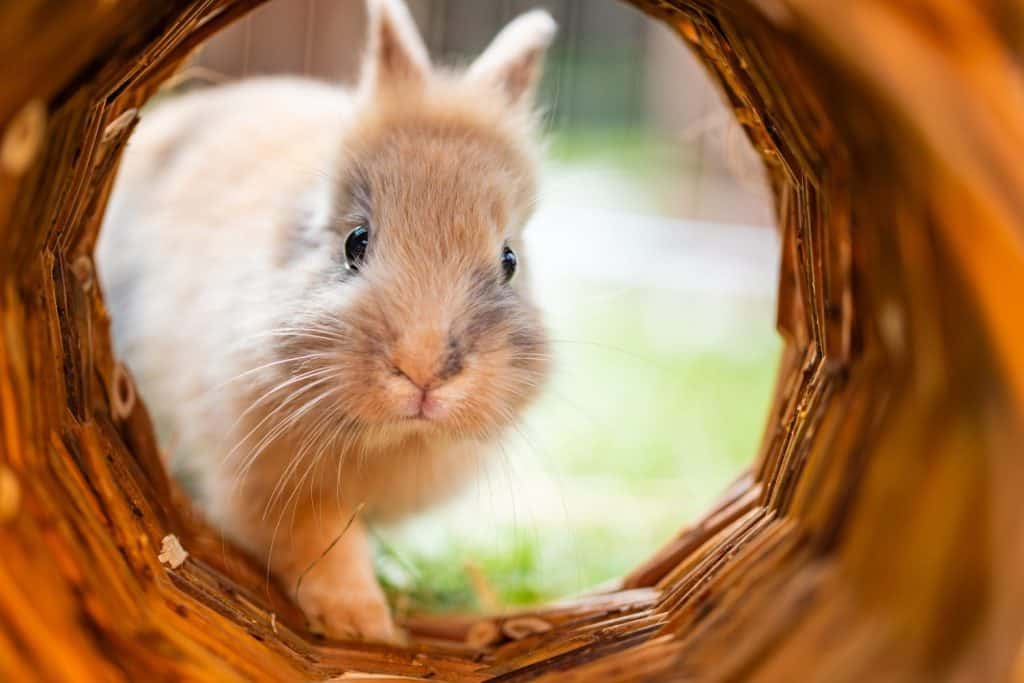
Rabbits have long whiskers on their face to help them feel and navigate small spaces.
©Przemek Iciak/Shutterstock.com
When a rabbit twitches or wiggles its nose, it is taking in new information about its environment. Calm and relaxed rabbits may not move their noses at all, while curious, alert, or stressed rabbits will wiggle their noses very quickly.
Thumping
Thumping is one of the loudest sounds a rabbit can make, and it is a powerful form of communication. Rabbits make this sound by forcefully hitting their back legs against the ground, creating a loud thud that can be heard and felt through strong vibrations. Thumping is a rabbit’s primary way of warning others that a predator is nearby. The thumping sound and vibrations travel through the ground, alerting other rabbits in a burrow to take cover.
A rabbit may also thump when it’s upset about something, such as being startled or not wanting to be pet. In some cases, a rabbit might even thump in anticipation of something good, like a treat or a favorite toy.
Periscoping
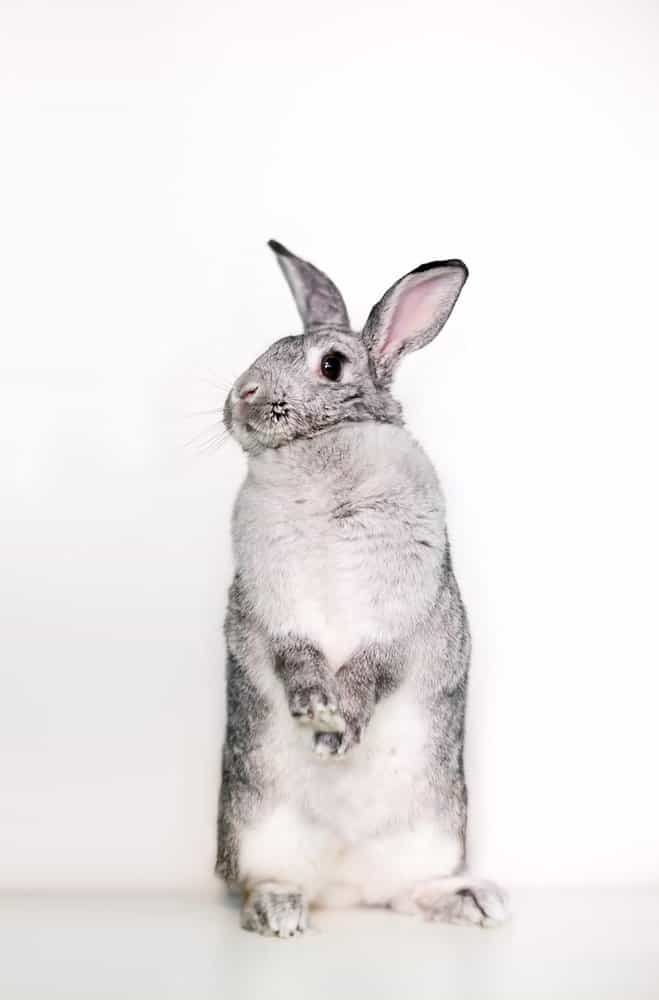
There are many different breeds of rabbit, ranging in size from around 8 inches to 2.5 feet long.
©Mary Swift/Shutterstock.com
When something catches a rabbit’s attention, the rabbit will often rise up on its hind legs to get a better look, a behavior called periscoping. In this position, the rabbit is alert with its ears up and nose twitching, as it tries to get more information about what it saw, heard, or smelled.
Tooth Grinding or Purring
When a rabbit is feeling content or relaxed, it often will grind its teeth together in a way that sounds like a soft purr. You might even feel a gentle vibration in the rabbit’s head if you’re petting them at the time. When rabbits grind their teeth together, it is a soft sound and can sometimes be easy to miss. This is a sign of deep relaxation and trust, very similar to a cat purring.
Tooth Grating
While teeth grinding is a sign of contentment in rabbits, tooth chattering or clicking is a sign of serious pain or discomfort. Unlike the soft sound of a contented purr, this noise is noticeably louder and sounds more like grating, clicking, or even snapping. A rabbit chattering or clicking its teeth will often hunch over and move little, and they may have a decreased appetite. If you hear your rabbit making these sounds, they need to see a veterinarian right away.
Nipping and Biting
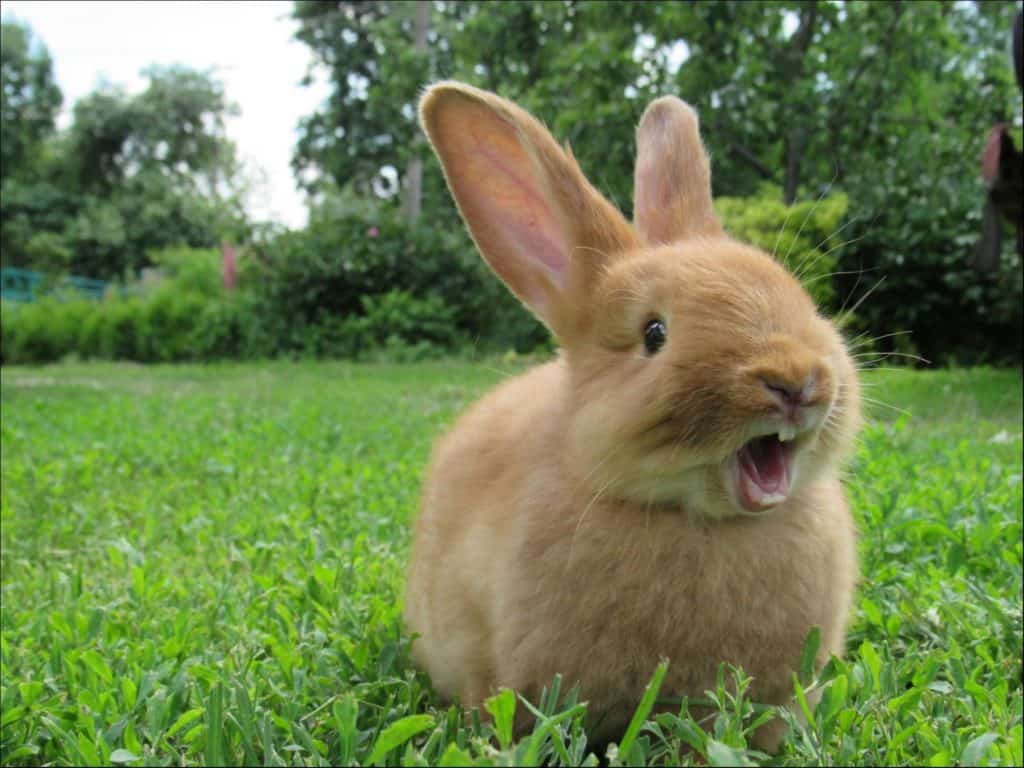
A rabbit’s teeth continually grow throughout its life.
©Victoria Paladiy/Shutterstock.com
While nipping or biting are often defensive or aggressive, rabbits use them to express many different emotions.
Rabbits may nip to defend themselves, their territory, or to show dominance. This is often a sign of irritation or anger. An un-neutered rabbit may also nip to signal that they are looking for a mate.
On the other hand, a rabbit’s nip can also be a way of communicating affection or getting attention. A rabbit may nip at their human or another rabbit to get attention or as a way of reinforcing a friendship, similar to how rabbits groom one another.
Lunging and Boxing
Lunging and boxing are two of the most aggressive behaviors a rabbit will use to communicate and are clear warnings to back off. A rabbit that is about to lunge will often crouch low to the ground with its tail raised and ears pinned back. This is a clear signal that it feels threatened and is ready to defend itself.
When boxing, a rabbit will stand on its back legs and hold its front paws up like a boxer. This is a direct challenge to an aggressor or a way of telling another animal or person to stay away. In a fight, rabbits may kick and punch with their front and back legs, scratching and digging at their opponent.
Nudging or Nose Bumping
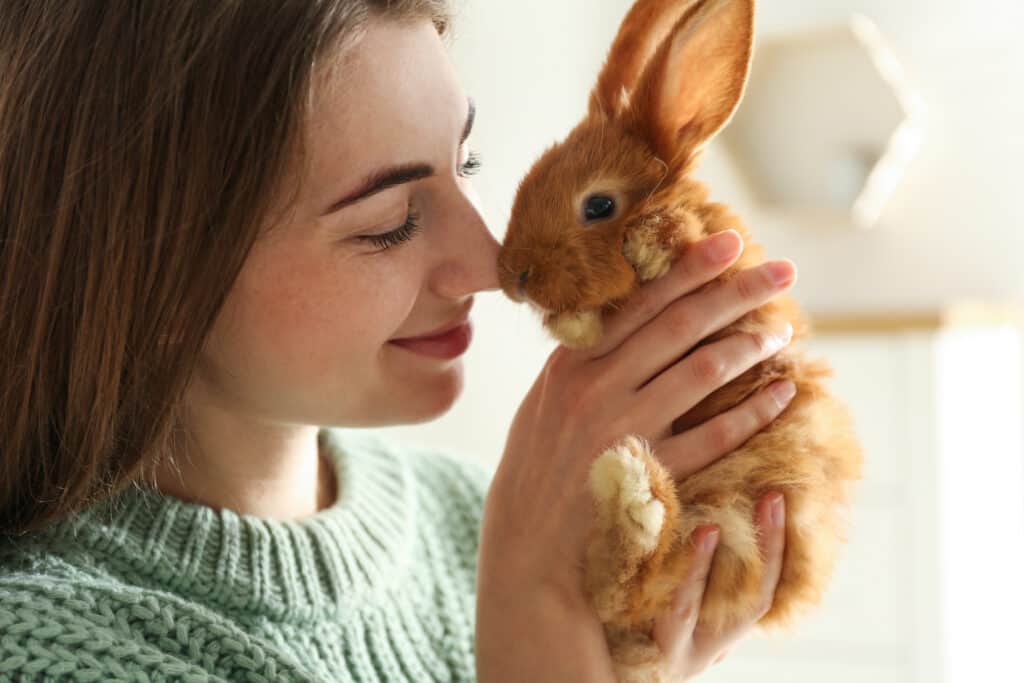
Rabbits are intelligent animals with deep emotions, and can form close bonds with their human caretakers.
©New Africa/Shutterstock.com
A gentle nudge from a rabbit can mean two different things: seeking attention or asserting dominance. A rabbit that trusts you may nudge you with its nose to ask for attention, pets, or to play. In contrast, a rabbit may nudge another rabbit or person to get them to move. This is a subtle way of saying, “You’re in my spot,” or “I want to get to the food.”
Circling
When a rabbit is feeling happy and energetic, it might run around in wide circles, similar to when a dog gets the “zoomies.” This is often directed at a person they trust or another rabbit, and it is a clear sign of joy and playfulness. Un-neutered male rabbits also do this as part of a courtship ritual.
However, a rabbit running in a tight, fast circle with another rabbit is a sign of aggression. It is often a prelude to a fight and may be accompanied by growling or biting.
Binkies and Jumping
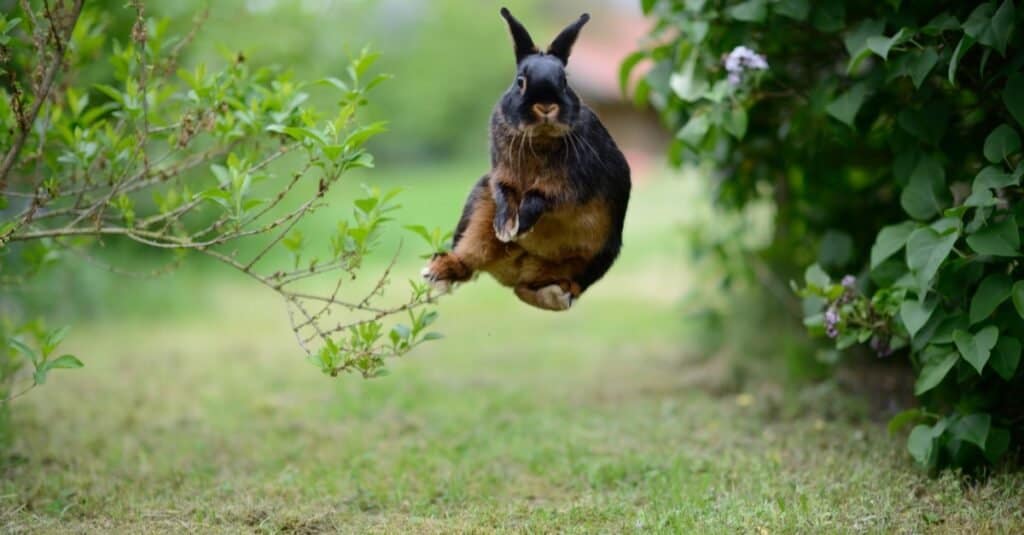
A rabbit will jump in the air, often twisting or kicking, when it experiences excitement and releases dopamine.
©Sven Boettcher/Shutterstock.com
In addition to circling, rabbits often express their happiness and excitement through binkies. A binky is a jump, leap, or twist in the air, often accompanied by running and hopping. It is a joyful, acrobatic display that shows a rabbit is feeling completely content.
Licking and Grooming
When a rabbit licks someone, it is a sign of trust, affection, and a close bond. They often groom one another to reinforce their social relationships, particularly after a conflict or disagreement. Sometimes, a rabbit will approach another and appear to “bow.” This is its way of asking to be groomed.
Flopping
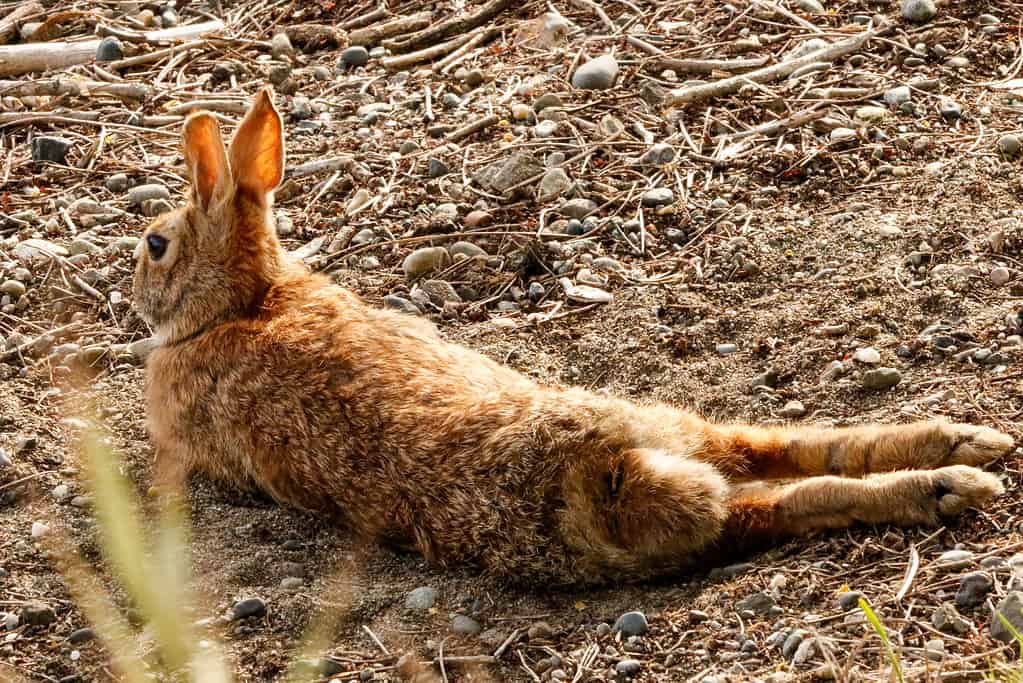
Rabbits will often flop when they are tired or need a break.
©Alia Thorpe/iStock via Getty Images
When a rabbit suddenly “flops” onto its side, it means it is very happy and relaxed. This can happen mid-play or after a period of activity, demonstrating that the rabbit is tired but content. Other times, a rabbit might just flop over without warning, which means it feels safe and comfortable.
Mounting
Rabbits use mounting for two reasons: courtship and dominance. Even if a rabbit is spayed or neutered, it may still mount another rabbit to show that it is in charge. This is how rabbits assert their higher status within a group.
The Secret Language of Rabbit Sounds
Although they are often quiet, rabbits occasionally communicate through a variety of sounds. They can distinguish between a wide range of pitches using two different methods. For high-pitched sounds, rabbits use their inner ear to pick out the distinct pattern of different high-frequency tones. This allows them to hear specific, individual sounds within a complex noise. For lower-pitched sounds, rabbits are more sensitive to the overall rhythm and pattern, as their hearing is especially attuned to detect subtle vibrations and movements in their environment.
Screaming
Rabbits often wait to signal their pain until it is unbearable.
©Victoria Paladiy/Shutterstock.com
Like many animals, a rabbit’s scream is a sound of extreme pain or terror. This high-pitched, piercing cry is an unmistakable sign that the rabbit is experiencing great distress, often because it is dying or believes it is about to die. Rabbit screams are both startling and heartbreaking to hear.
Honking
When a rabbit “honks,” it makes a soft sound similar to a grunt or a buzz. This is a sign of excitement or happiness, and you’ll often hear it when the rabbit runs in happy circles. Honking is also a key part of courtship behavior, even in spayed or neutered rabbits. Since the sound is very quiet, it can be difficult to hear.
Growling
Like many animals, growling in rabbits is an expression of anger or fear. The sound is often a low, vibrating snort or soft squeak and means the rabbit feels threatened and wants you to back off. A growling rabbit is a clear warning that it might lunge or bite. When a rabbit growls, you’ll often see its tail raised and its ears angled back at about 45 degrees. This is the rabbit’s way of saying it’s scared, angry, or wants to be left alone.
Hissing
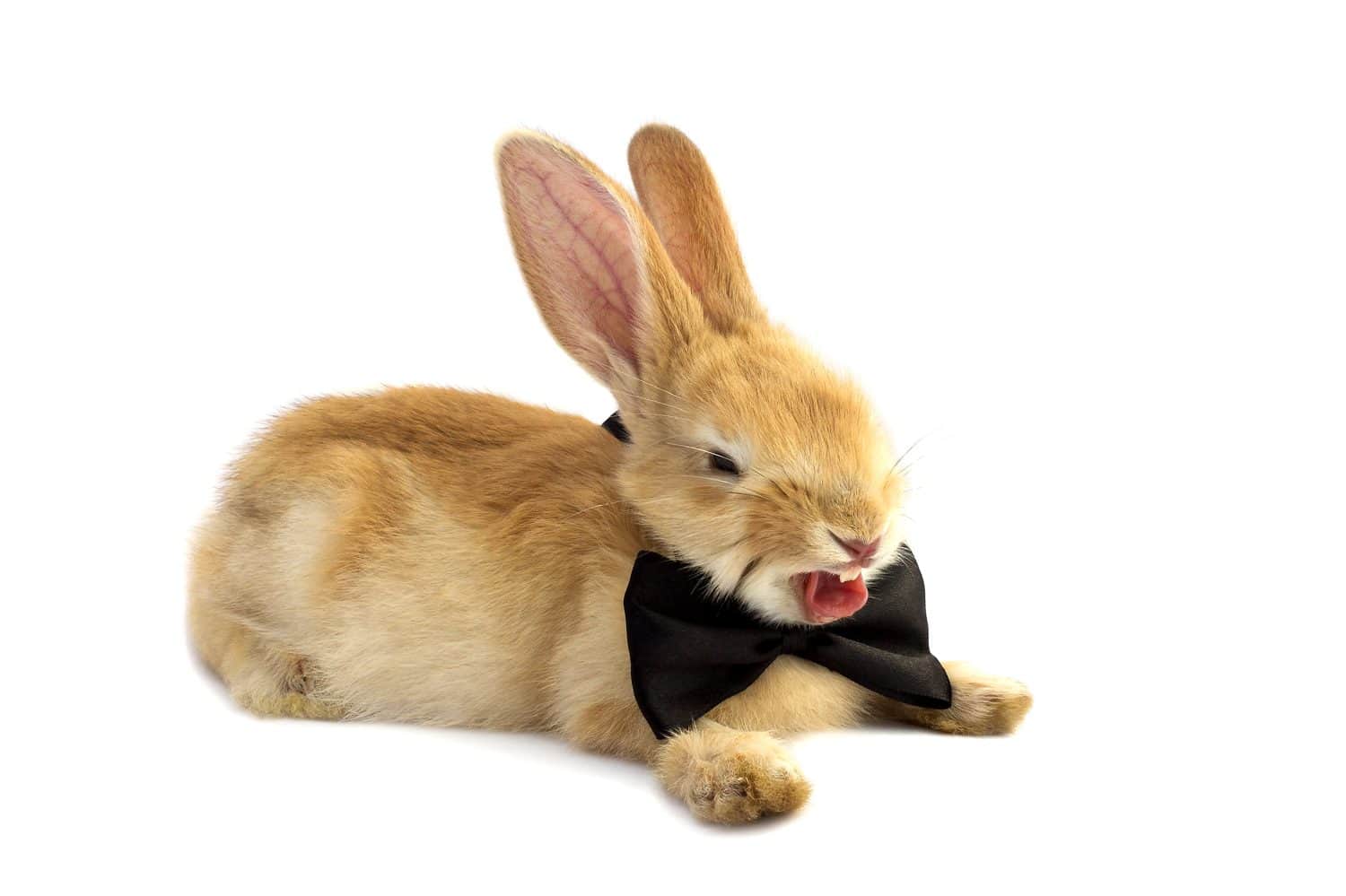
When a rabbit hisses, they are essentially telling you to leave them alone.
©Sviatlana Kandratsik/Shutterstock.com
Although rare, rabbits may hiss when they feel extremely threatened and want a perceived danger to back off. Just like a cat, a rabbit’s hiss is a clear warning to “go away.” A hissing rabbit may also lunge or swipe at the threat.
Squealing
A rabbit that’s squealing is likely afraid or uncomfortable. You might hear this sound if your rabbit doesn’t want to be held or feels trapped.
Grunting
Rabbits often grunt as a warning, expressing that they feel threatened and want to be left alone. While not as common as growling, grunting is usually a higher-pitched sound that can almost sound like a repeating squeak. You may hear a pet rabbit grunt if you’re trying to pick them up when they don’t wish to be held, or when they want to be left alone.
Clucking

Rabbits are herbivores and enjoy a plant-based diet.
©Rabbitti/iStock via Getty Images
When a rabbit clucks, it means they are feeling content, much like a cat purring. Although not especially common, some rabbits will make clucking sounds when they are enjoying a tasty treat.
Whimpering or Whining
If a rabbit whimpers or whines, it’s a sign that they’re feeling uncomfortable, scared, or helpless. A rabbit making this sound will often have a tense or timid posture. When a rabbit whimpers, it is best to give it some space so it can feel safe and secure again.
How Rabbits Communicate with Scent
In addition to body language, movements, and sounds, rabbits rely on scents to communicate with one another. Their incredible sense of smell is far more developed than a human’s and allows them to leave and interpret a silent, invisible language of chemical signals.
Chinning or Chin-Marking
If a rabbit cannot properly clean itself, their scent glands can become clogged or infected.
©Altrendo Images/Shutterstock.com
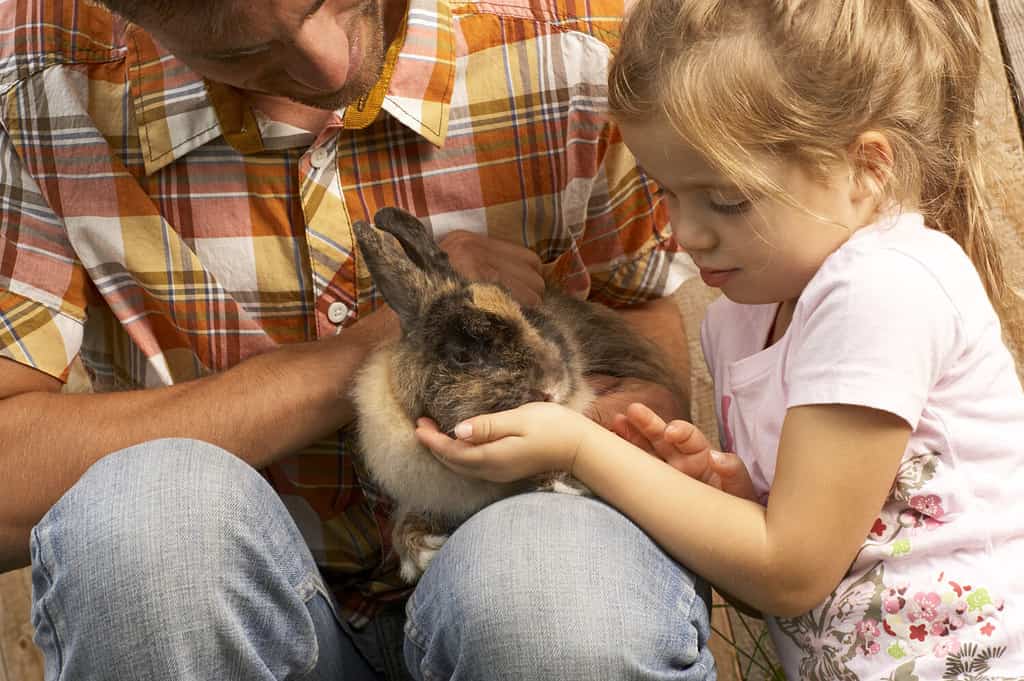
Rabbits communicate using special scents produced by glands under their chins. This is most common during mating and courtship, where they may rub their chin on objects or mark using urine and droppings. Rabbits also use chinning to claim their territory. A pet rabbit may rub its chin on furniture, doors, or even humans to mark its home area. Both male and female rabbits use this behavior to claim their turf.
Spraying
Spraying is another common way for a rabbit to mark its territory, especially among those who haven’t been spayed or neutered. Both male and female rabbits often spray to claim their space when they encounter a new object, a new environment, or an unfamiliar rabbit.