
Burmese and Bombay cats are popular pets among cat fanciers. Not only are they both beautiful, but they are also known to be very people-oriented, making them great companions and lap cats. Bombays are a hybrid of the American shorthair and the Burmese cat, so it is no surprise that Burmese and Bombays have a number of characteristics in common. But are some Burmese really black like Bombays? How do these similar breeds differ? Read on to discover what these cats have in common and what sets them apart in our comparison of black Burmese cats and Bombay cats.
Black Burmese Cats vs. Bombay Cats Quick Comparison
| Black Burmese | Bombay | |
|---|---|---|
| Origin | Found on Malay peninsula; most Burmese are descendants of a cat brought to America in 1930 | First bred in 1966; hybrid of black American shorthair and Burmese |
| Size | Medium-sized; 8-14 pounds | Medium-sized; Slightly longer torso than Burmese; 8-15 pounds |
| Build | Muscular and compact; rounded head; short, broad muzzle; wide-set ears; nose break | Solid and muscular; rounded heads with short, wide muzzles; wide-set ears; nose stop; longer torsos |
| Coat | Not truly black but dark brown, or sable; fine, short, satin-like coat | Solid, true black; dense, short, glossy coat; |
| Eyes | Large, rounded, and wide-set; yellow to gold | Large, rounded, and wide-set; gold to copper |
| Personality Traits | Affectionate, playful, and people-oriented; intelligent and curious | Easy going, fun-loving, and very affectionate; intelligent and adaptable |
| Inherited Health Concerns | Older cats may be predisposed to diabetes, but heritability is inconclusive | Issues with teary eyes; hypertrophic cardiomyopathy has been found in Bombay cats |
How Do Black Burmese Cats and Bombay Cats Compare?
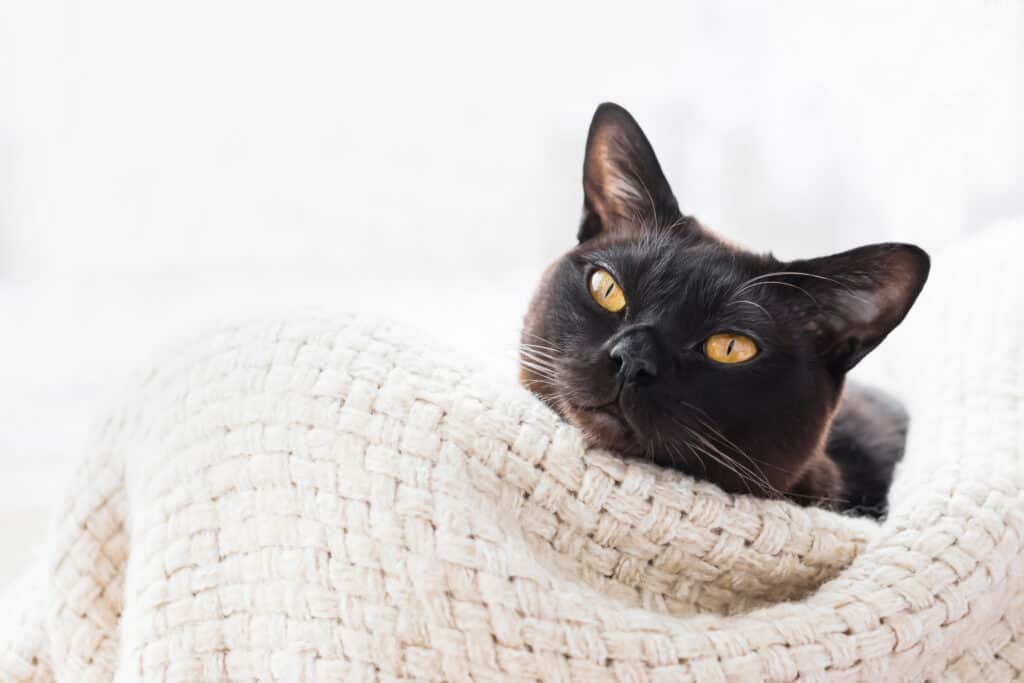
Burmese cats are a naturally occurring breed found on the Malay Peninsula.
©iStock.com/laimdota
Burmese cats and Bombay cats are very similar. The International Cat Association (TICA) standards are nearly identical for both the Burmese and Bombay groups. The primary difference is coat color, discussed in greater detail below. However, there are a few other differences between the two. The following paragraphs offer an in-depth comparison of their origins, respective sizes, builds, coats, eyes, personality traits, and inherited health concerns.
The Origins of Burmese and Bombay Cats
Burmese cats are naturally found on the Malay Peninsula, including the countries of Burma (Myanmar), Malaysia, and Thailand. In the U.S., most Burmese cats are said to have originated from a single cat named Wong Mau, who was brought to America in 1930. She was said to have been a walnut brown color with darker fur on her head, legs, and tail. She was bred with a Siamese, and had three different-looking types of kittens. Some resembled their Siamese father, some looked like their mother, and some were a solid, dark brown color. It was the solid brown cats that bred true, and these were the Burmese cats that would be registered with the Cat Fanciers’ Association (CFA) beginning in 1936.
In contrast, Bombay cats are not naturally occurring; they are a hybrid breed. in 1966, a Kentucky breeder bred a black American shorthair cat with a Burmese. Bombays were bred to have the characteristics of both parents but to be distinct enough to become their own breed. These cats were specifically bred to only have black coat colors, which remains the standard today. According to the TICA, they were bred to resemble mini panthers. Bombay cats were accepted as a breed by the CFA in 1970.
How Do Burmese and Bombay Cats Differ in Size?
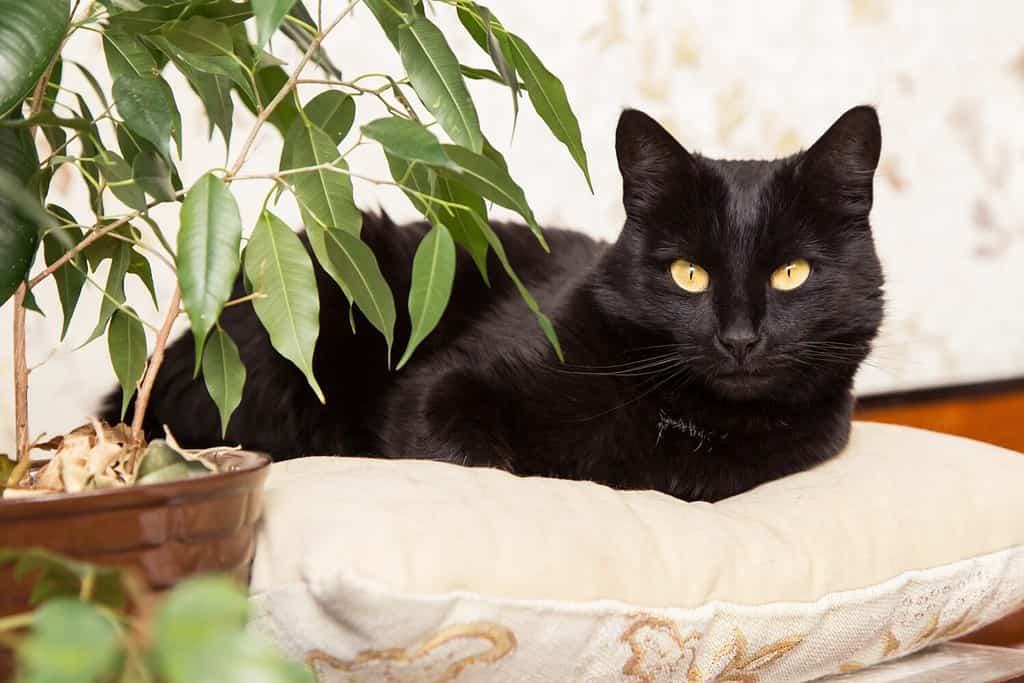
Bombay cats typically weigh between 8 and 15 pounds.
©Viktor Sergeevich/Shutterstock.com
The Burmese is a medium-sized cat. They generally weigh between 8 and 14 pounds. Mature males can reach 12 pounds or more, but mature females are typically smaller.
Bombay cats are also considered to be a medium-sized breed. They typically weigh between 8 and 15 pounds, with males being larger. Both animals are considered to be surprisingly heavy for their size.
Differences in Build
Burmese cats and Bombay cats are also very similar in build. They have rounded heads with wide-set ears. The ears have rounded tips and tilt slightly forward. They have short, wide, rounded muzzles. In Burmese cats, there should be a noticeable “break” in the nose, which is an indentation where the nose meets the forehead. In contrast, Bombay cats should have a noticeable “stop,” which is a more pronounced change in the direction of the cat’s profile at the bridge of the nose.
When it comes to their bodies, both breeds have compact, muscular builds with broad rib cages and ample, round chests. They have sturdy, well-proportioned legs with a straight, medium-length tail that has a blunt tip. However, according to TICA breed standards, Bombay cats have slightly longer torsos than Burmese cats. This can sometimes make them appear to have a rangier build.
Coat Colors and Textures
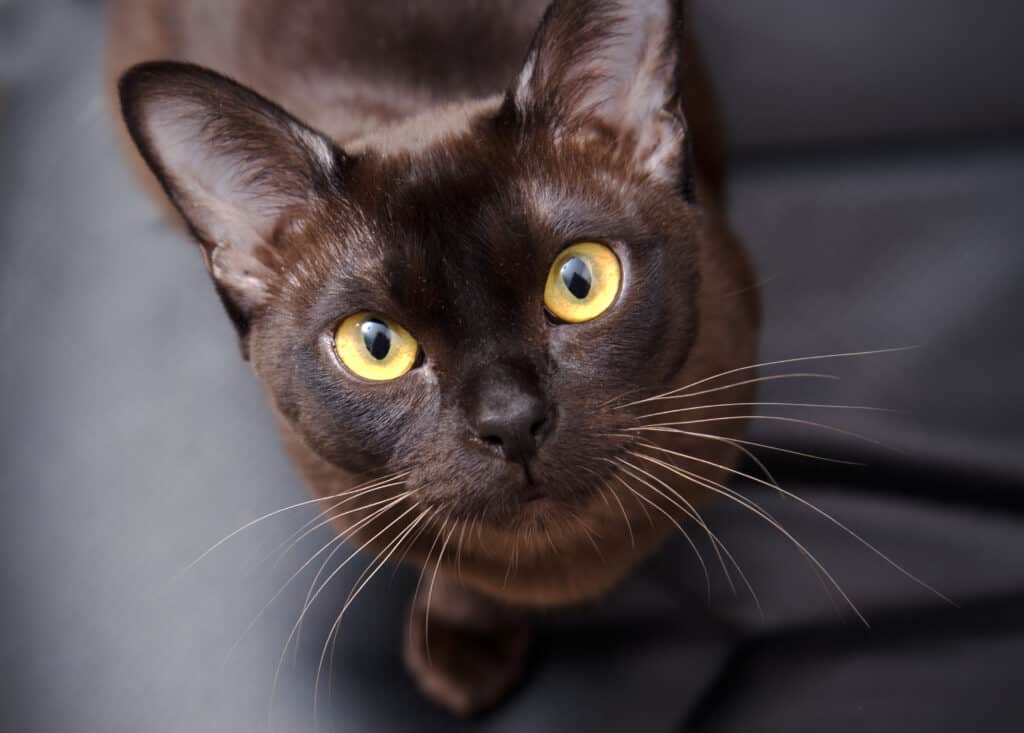
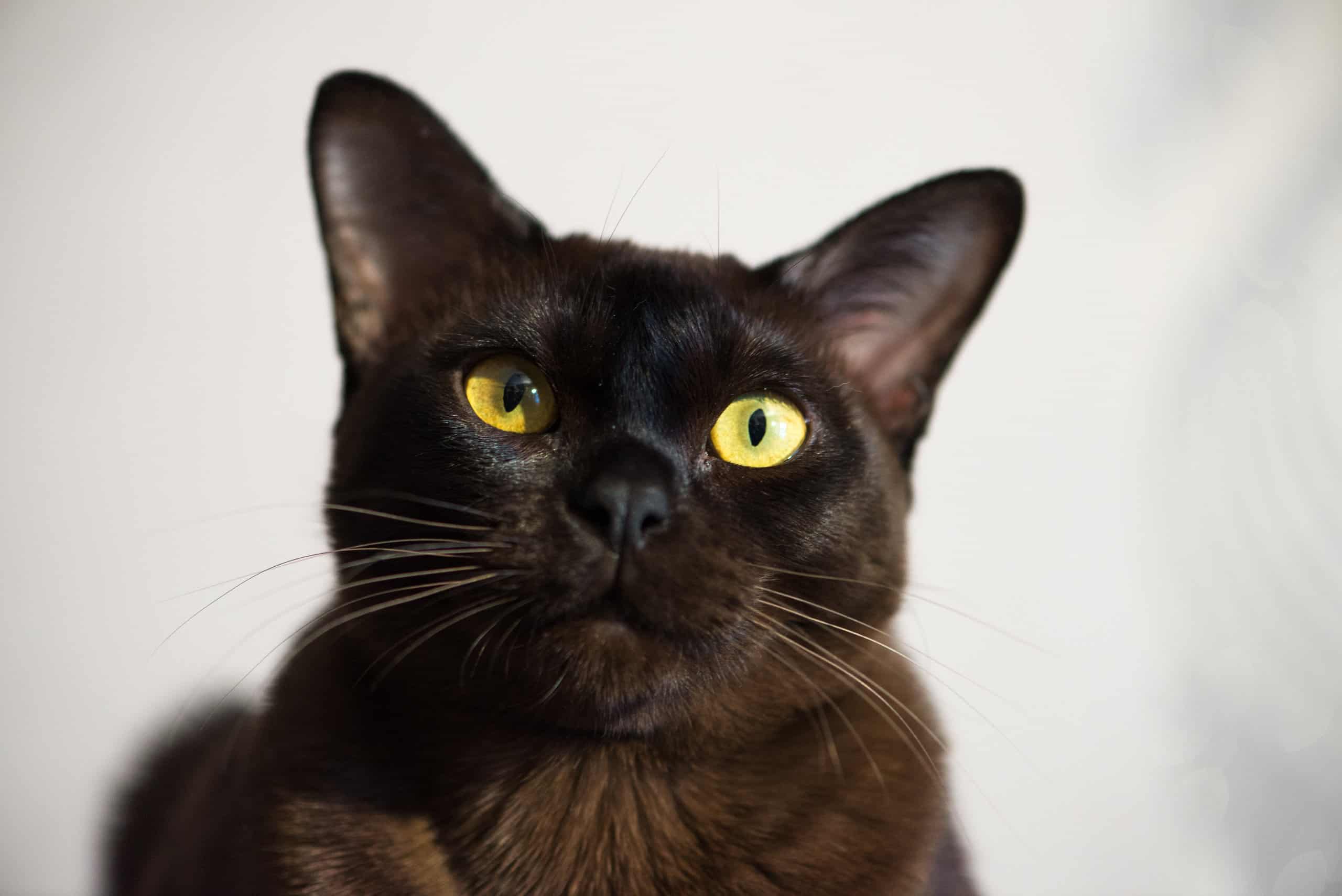
Black is not a Burmese color due to genetics. They may sometimes appear black because their coats are such a dark brown.
©woff/Shutterstock.com
Technically, there are no black Burmese cats. This is because Burmese cats have two copies of the allele (cb), which causes black to change to a sepia tone and orange to change to yellow, with the extremities often being darker. The only recognized Burmese colors are sable, champagne, blue, and platinum with slightly paler underparts. Sable Burmese cats, which are the most common color, can be such a dark shade of brown that they may appear black. In sable cats, both the nose and the paw pads are brown, which may also give the illusion that the cat is darker. Their fur is fine, short, and lies close to the body. It has a satin-like texture, and there is minimal shedding.
However, Bombay cats are only a solid black color. Mature cats are black all the way to their roots, but kittens and younger cats darken and become sleeker as they age. Bombay cats have dense, short, and glossy coats, which are often said to have a patent leather shine. Like Burmese cats, their fur also lies close to their bodies, and shedding is minimal to moderate.
Eye Shape and Color
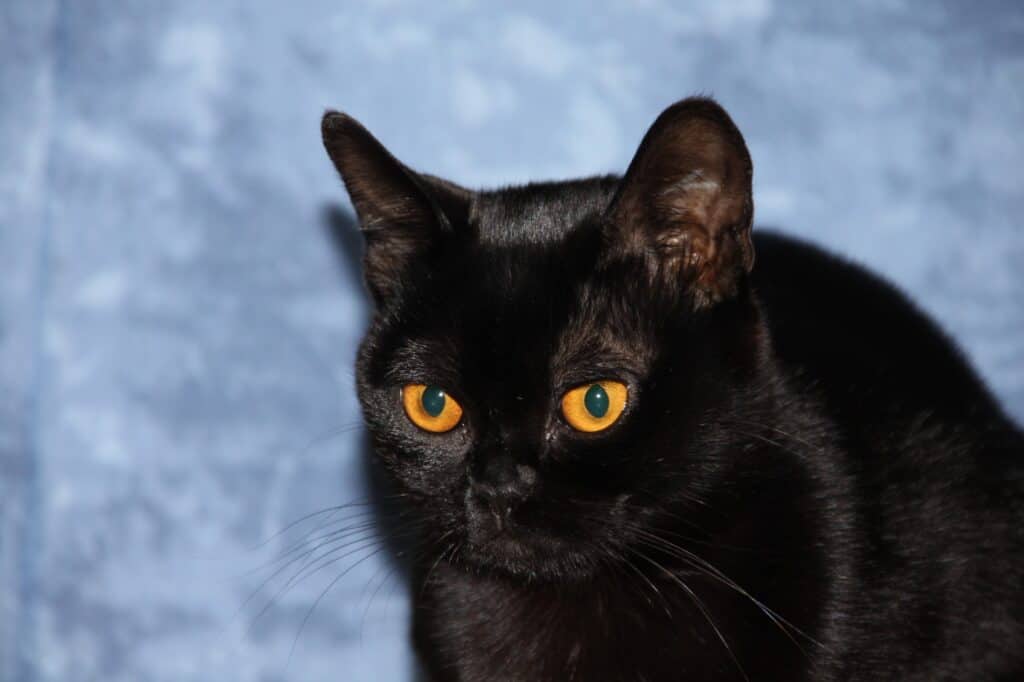
Bombay cats are always black and have gold or copper eyes.
©Bombaycats, CC BY-SA 3.0 <https://creativecommons.org/licenses/by-sa/3.0>, via Wikimedia Commons – Original / License
Burmese cats have large, rounded, and wide-set eyes. Their eye color can vary from yellow to gold. TICA breed standards indicate that their eyes should be in line with the base of their ears.
Bombay cats also have large, rounded, and wide-set eyes, which are meant to resemble those of a panther. Unlike Burmese, their eye color ranges from gold to copper. The copper color of their eyes is sometimes referred to as “new penny.” A Bombay cat’s eyes should also be in line with the base of its ears.
Personality Traits
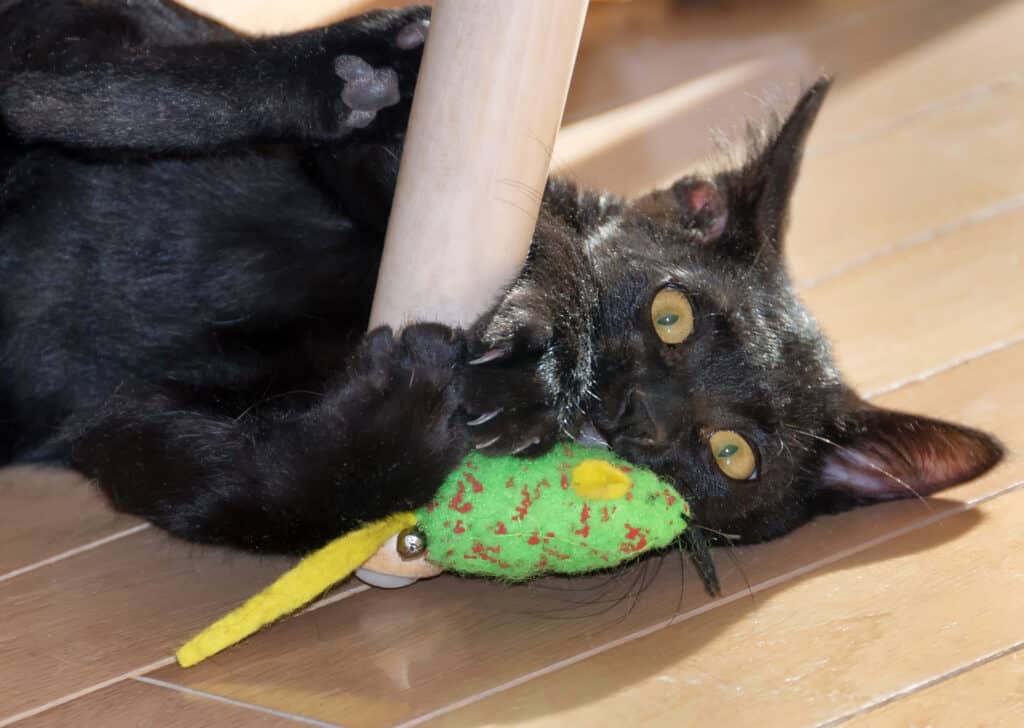
Bombay cats are energetic, so owners need to keep them stimulated with a wide variety of cat toys.
©Lux Blue/Shutterstock.com
Burmese cats are affectionate, playful, and people-oriented. These clever cats can learn to fetch and do other tricks. They are very tolerant of children of all ages, as well as other pets. These social cats are happy to climb into any available lap. They can get lonely when left for long periods, so they do best with homebodies and families that can provide them with plenty of attention.
Bombays are similar in temperament to their Burmese relatives. They are known to be easygoing, fun-loving, and very affectionate companions. They are energetic as kittens, but calm down as they mature. Bombay cats are intelligent, curious, and adaptable. They love toys and games. These lap-loving cats get along well with children and other animals when properly introduced. They do best with families that can give them the attention they need.
Inherited Health Concerns
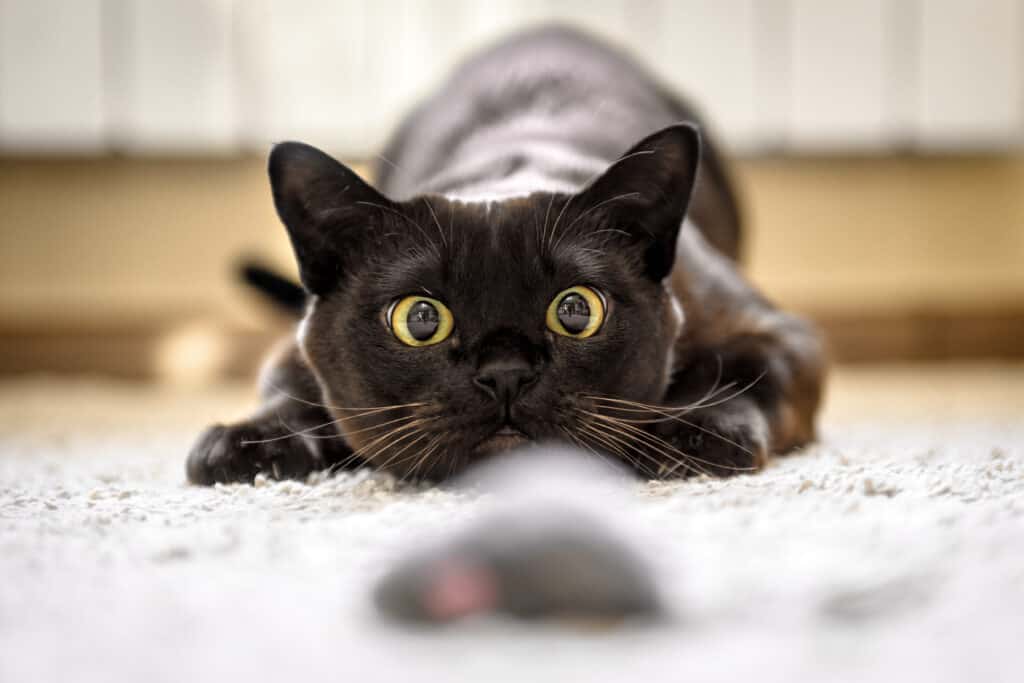
Burmese are one of the longest-lived cat breeds.
©Viacheslav Lopatin/Shutterstock.com
As a naturally occurring breed, Burmese cats are known to be relatively healthy. However, globally, Burmese are at a higher risk of developing obesity and diabetes. Incidences are especially prevalent in the U.K., New Zealand, and Australia. While a predisposition for diabetes has not been found in Burmese cats in the U.S., it is important to ensure your cat maintains a healthy weight and gets plenty of exercise to decrease the risks of developing the disease. Burmese cats generally have a lifespan of 12-16 years, with the average being 14.42 years, the highest recorded average among all cats surveyed.
Bombay cats are also considered a generally healthy breed. However, they are known to have teary eyes. They are also at risk of the most common heart problem in cats, hypertrophic cardiomyopathy. This disease does have a genetic component, so it is important for both breeders and pet owners to ensure their animals have an echocardiogram to screen for the disease. It may not always present when the animals are young, so routine screenings are recommended. Like the Burmese, Bombay cats are longer-lived cats, with a lifespan of around 12-16 years, although some individuals may live longer.