
Quick Take
- Most US owners who think they have a Brazilian black tarantula almost certainly don't, and Brazil's laws explain exactly why. Meet the Uruguayan lookalike →
- This spider can outlive your dog, your next dog, and possibly you, a fact that reframes what it actually means to call it a 'beginner pet.' See the long-term commitment →
- When a Brazilian black refuses food for months straight, most owners panic, even though that instinct can make things worse. Understand its feeding behavior →
- Its nickname in the keeper community sounds nothing like what you'd call a spider, and the name is completely earned. Explore its calm temperament →
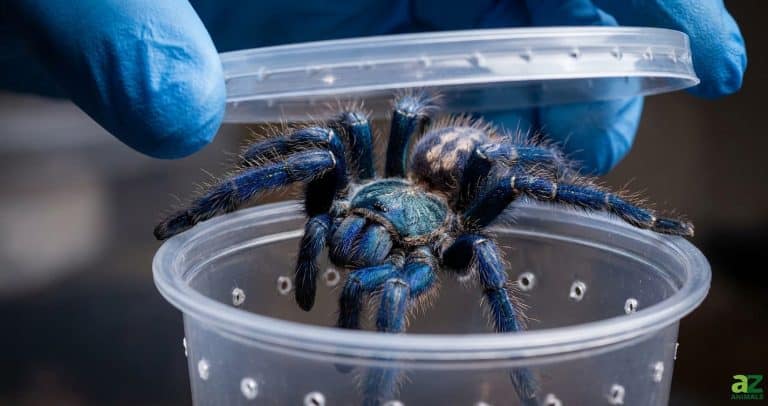
The Brazilian black tarantula (Grammostola pulchra) is one of the most popular spiders among exotic pet owners. Its scientific name comes from the Latin word pulchra, which means “beautiful,” and it certainly fits. Full-grown adults are covered in a soft, velvety black coat and can reach a leg span of six to seven inches. Females live for 25 to 30 years in captivity. Males are smaller, lighter, and usually only live six to eight years, a common life-expectancy gap between male and female tarantulas.
Species Origins
Scientists first recorded this species in 1921. In the wild, it lives in the grasslands of southern Brazil. Rather than spending huge amounts of energy digging their own homes from scratch, these tarantulas make smart use of space: they move into existing burrows left behind by rodents, snakes, or other tarantulas, or dig out spots between tree roots on grassy slopes.
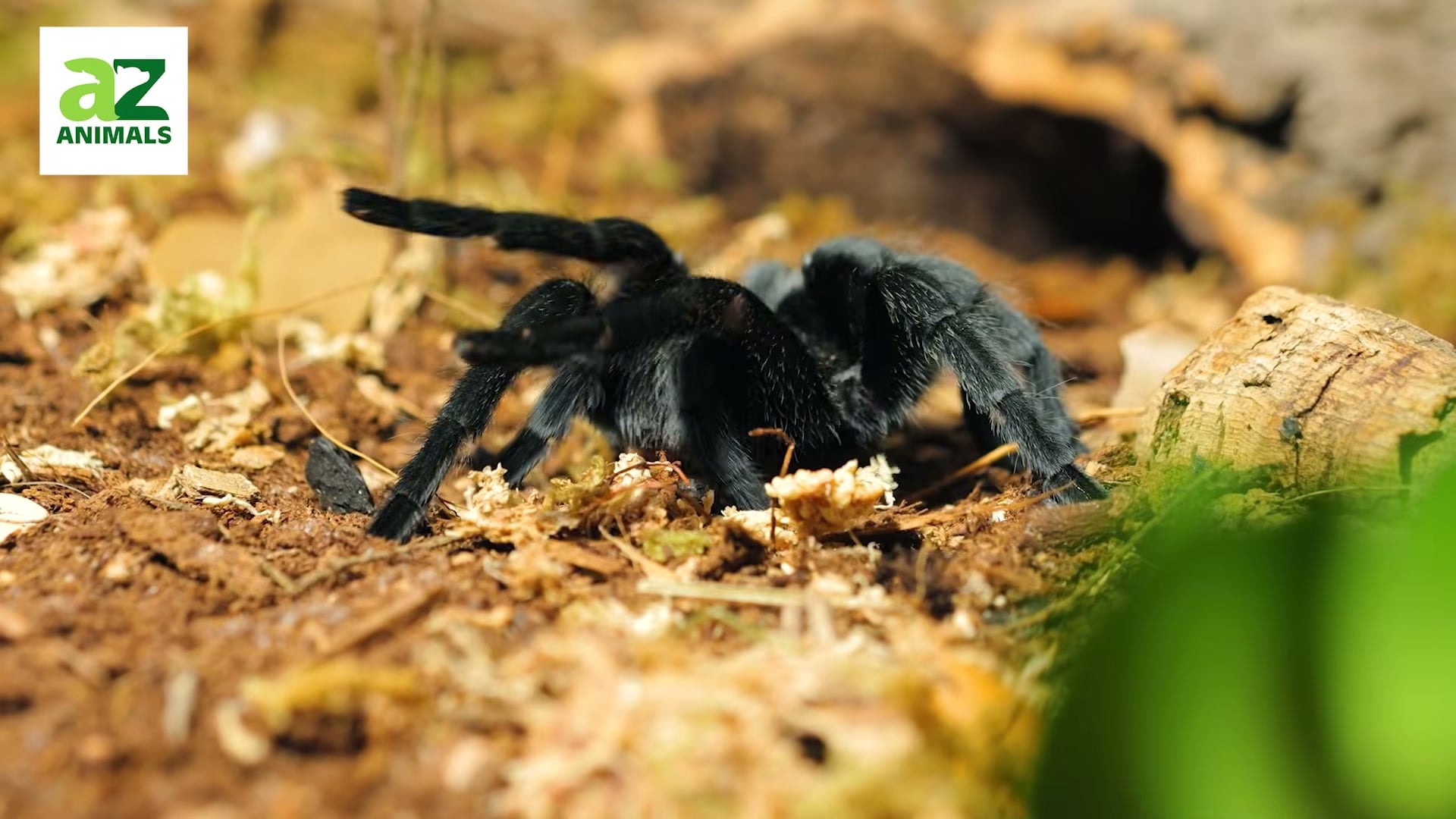
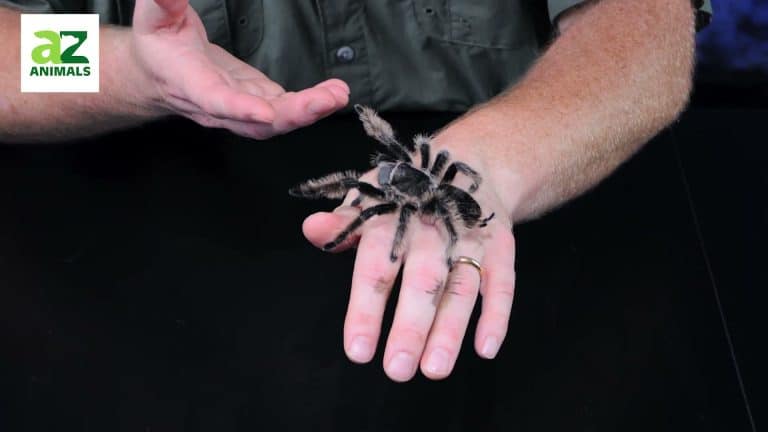
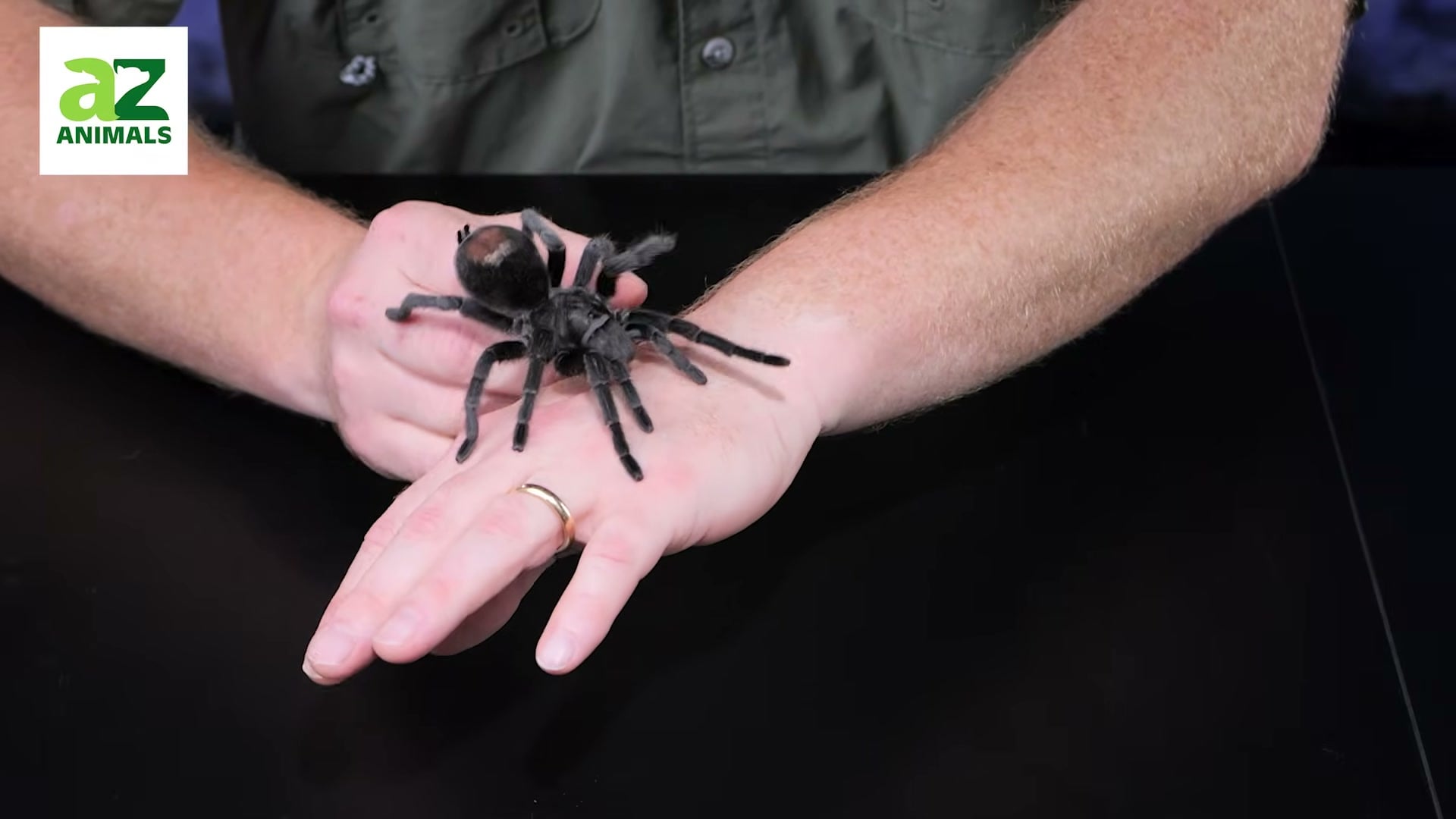
The Brazilian black tarantula (Grammostola pulchra) is a popular species among exotic pet enthusiasts.
©A-Z-Animals via YouTube — used under fair use – Original / License
If you own one of these spiders in the US, there is a good chance it is actually a Grammostola quirogai, a nearly identical cousin from neighboring Uruguay. Brazil has strict laws against exporting native animals, so wild-caught spiders almost never leave the country legally. The two species look so similar that you can only tell them apart under a microscope, by checking their family line, or through DNA tests. Researchers only officially named this Uruguayan cousin as a separate species in 2016, solving a long-running mix-up among spider enthusiasts.
Care, Temperament, and Conservation
These tarantulas grow very slowly. It can take 10 to 15 years for a tiny baby spider (a spiderling) to reach its full adult size and deep black color. Young spiders spend most of their early years tucked safely inside their burrows, sometimes staying out of sight for weeks. Staying underground protects them from predators like birds, mammals, spider wasps, and even bigger tarantulas. As they grow bigger and safer, they start hanging out near their burrow entrances to pounce on passing food, making them much easier to spot.
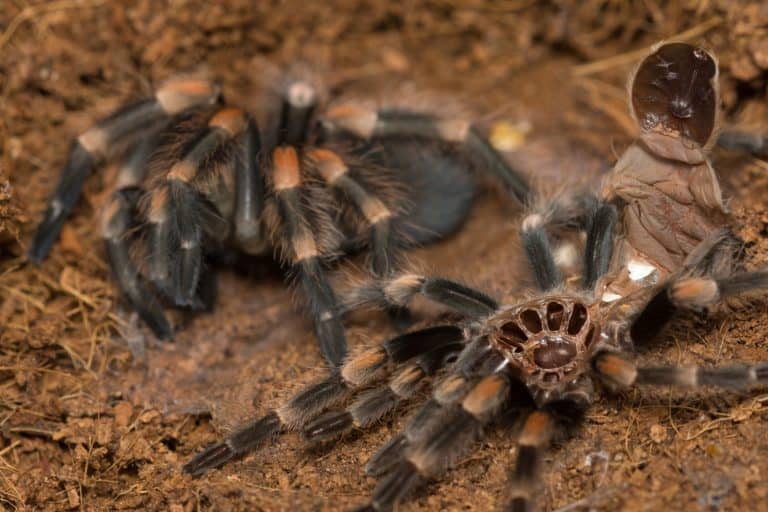
While they are famous for being gentle, they are active hunters when it comes to dinnertime. They will eagerly pounce on bugs like crickets and roaches that are up to two-thirds their own size, and wild tarantulas occasionally catch tiny backboned animals. It is completely normal for them to go on long hunger strikes, especially before shedding their outer shell, a process called molting. Spiders stop eating while their old shell separates and a new skin forms underneath, a natural process that can take weeks or months in full-grown adults.
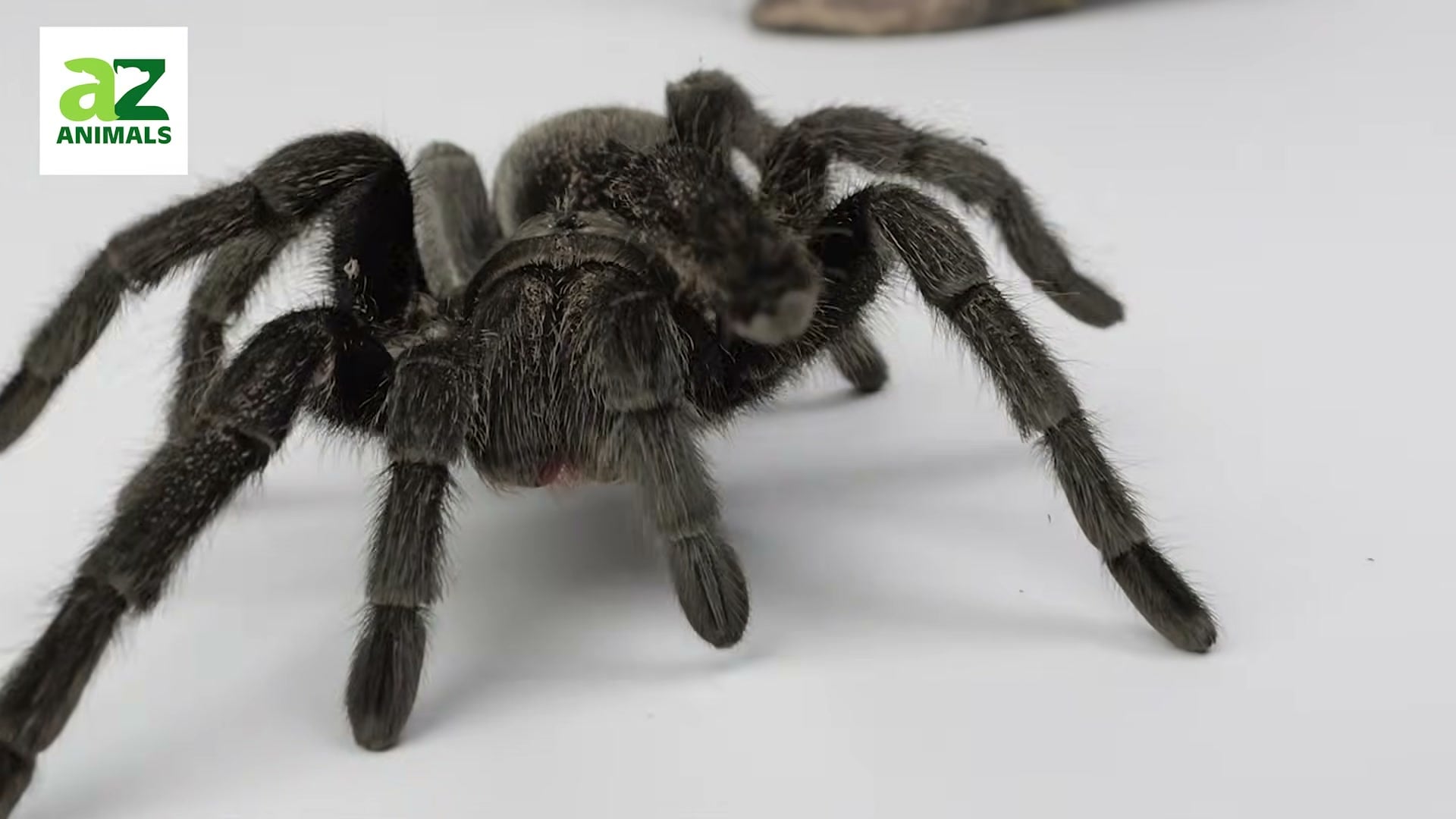
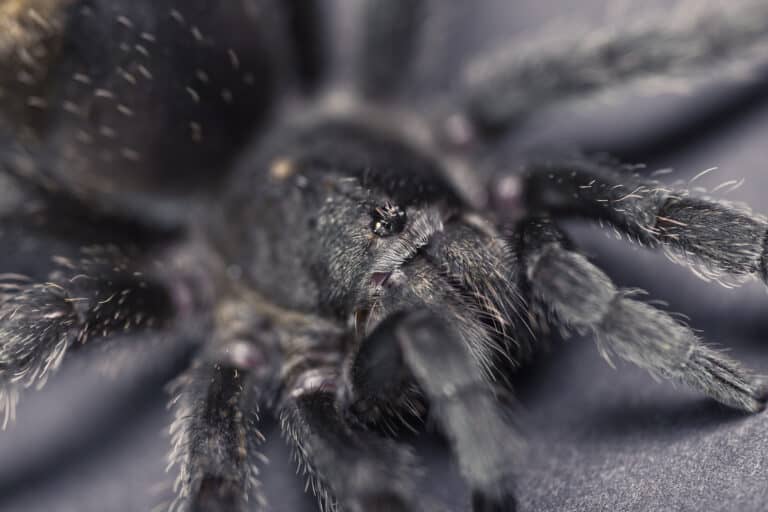
Often called the “black Labrador of tarantulas,” this species is consider gentle-natured.
©A-Z-Animals via YouTube — used under fair use – Original / License
Keepers often call this spider the “black Labrador of tarantulas” because of its remarkably calm and gentle nature. Unlike more aggressive spider species that readily kick off prickly hairs or raise their front legs to strike, the Brazilian black rarely gets defensive. However, any tarantula will bite if pushed, and the microscopic prickly hairs on their backs can cause skin rashes or throat irritation if inhaled. Holding them is not recommended. Handling stresses the spider out, and a sudden drop can easily break its delicate belly, which is usually fatal. Most spider experts strongly advise keeping handling to a minimum.
In the Wild
In the wild, habitat loss is their biggest threat. The South American grasslands where they live are rapidly being plowed over for crops and cattle farms, destroying over half of the native plant life in some regions. Capturing wild spiders for the pet trade adds extra pressure. The good news is that these tarantulas breed easily in captivity. Reliable breeding programs in North America and Europe now supply the pet market so wild spiders can be left alone. Buyers can protect wild populations simply by purchasing from breeders who can prove their animals were born in captivity.
Getting a Brazilian black tarantula is a major, long-term commitment similar to getting a parrot or a tortoise. A baby female spider might outlive several family dogs over her lifetime. While day-to-day care is simple — just a secure cage with a deep layer of soil, a water dish, medium moisture, and room temperatures between 70 and 80 degrees Fahrenheit — you are signing up for a pet that will be with you for decades.
Make sure to check out The Tarantula Collective on YouTube for even more amazing tarantula facts!