
Quick Take
- One spotted animal's markings work exactly like human fingerprints, and scientists have found a clever way to exploit that fact. How whale sharks are identified →
- Dalmatians aren't born with their iconic spots, and what that reveals about their coat is more surprising than it sounds. Dalmatian coat development →
- Some animal spots don't hide the creature at all. They're designed to do the exact opposite, and it works just as well. Spots as a warning signal →
- One of the most vividly colored animals on this list almost never surfaces above ground, which raises a question about who its bright spots are actually for. The underground spotted salamander →
The wild is full of fascinating patterns, including stripes, geometric shapes, and other bold designs. Some of nature’s most stylish animals even sport polka-dots. Spots aren’t just aesthetically pleasing; they can help animals hide, communicate, warn predators, or attract mates. In some species, the dots fade with age, while in others they stay visible for life. These eye-catching patterns are not habitat-specific, appearing on creatures living in forests, oceans, deserts, and grasslands. Here are some of the most fascinating animals covered in polka dots.
Cheetah
©A-Z Animals
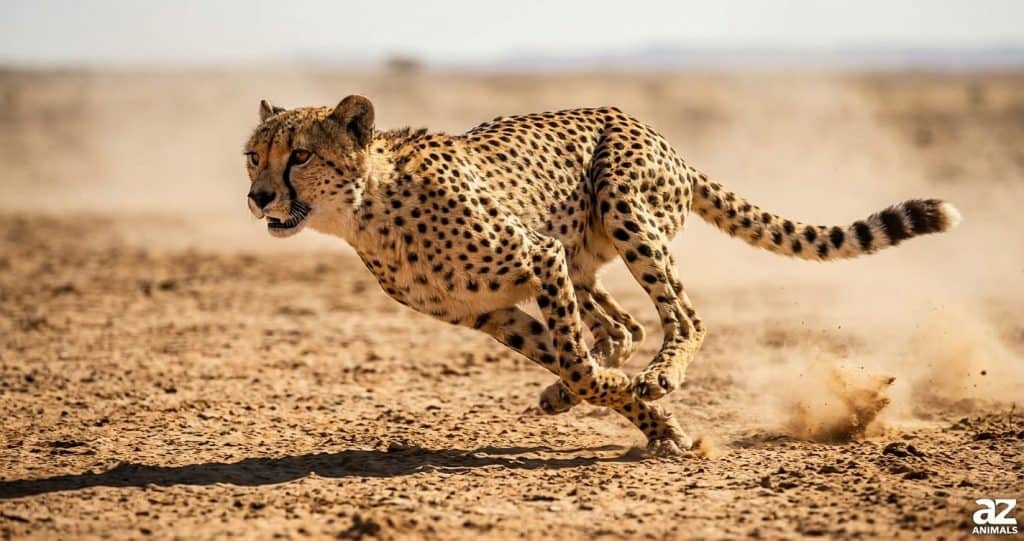
The cheetah is one of the most recognizable spotted animals on Earth. Its golden fur is covered in thousands of small black dots. Unlike leopards, which have rosettes (dark outer rings with light centers), cheetahs have solid dots. These work as a form of camouflage, helping to break up its outline in tall grasses so prey won’t see the wild cat coming. The spots may also absorb heat to warm the cats during periods of chilly weather on the African savanna. Combined with its incredible speed, the cheetah’s spotted coat makes it one of the most well-recognized wild cats on Earth.
Whale Shark
©Aaronejbull87/Shutterstock.com
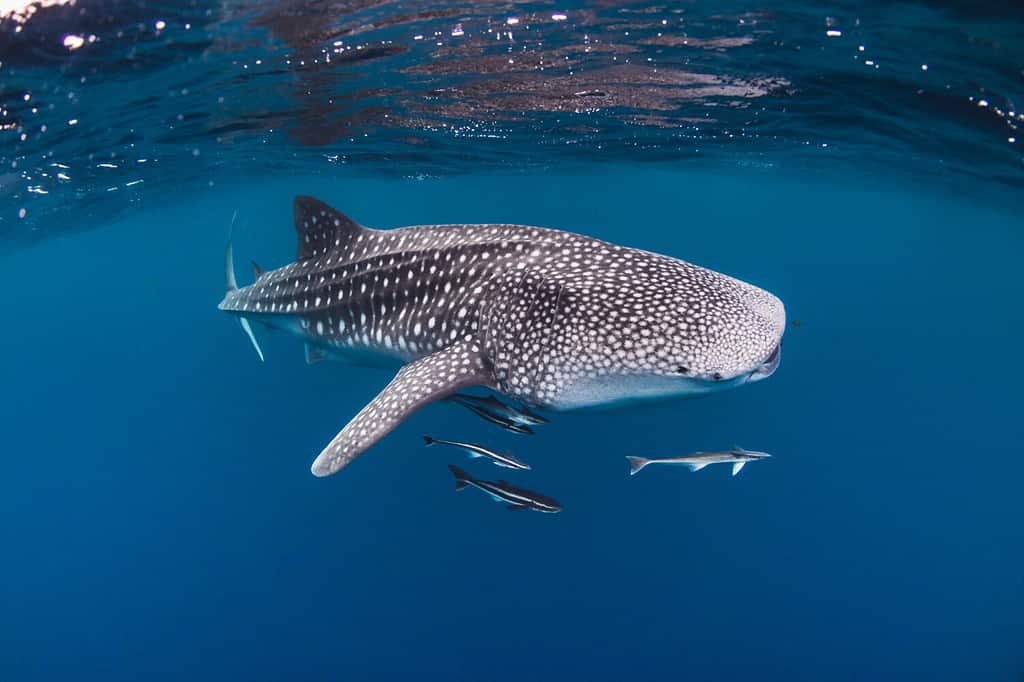
The whale shark looks like it was painted with white polka dots. These massive marine animals are the largest fish in the world, capable of growing over 40 feet long. Their spots are actually highly unusual because they each form unique patterns, somewhat like human fingerprints. Scientists actually track and identify individual whale sharks through photographs of the spots. Researchers believe the polka-dot pattern may help camouflage them in sunlit ocean waters.
Fallow Deer Fawn
©gudfoto/Shutterstock.com
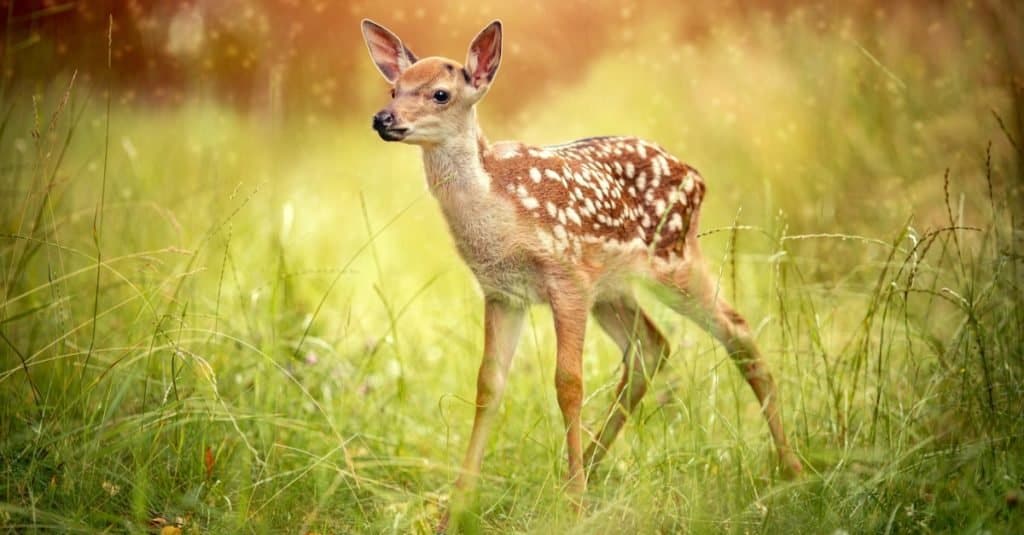
Young fallow deer are born with coats covered in bright white spots. These gorgeous spots help them blend into rays of sunlight shining through forests. The dots make it so that predators have a hard time distinguishing the motionless fawns from leaves, light, and shadows. In some fallow deer populations, individuals keep spotted coats into adulthood. The pattern gives these deer a striking appearance, as though they were splattered with white paint.
Ladybug
©Protasov AN/Shutterstock.com
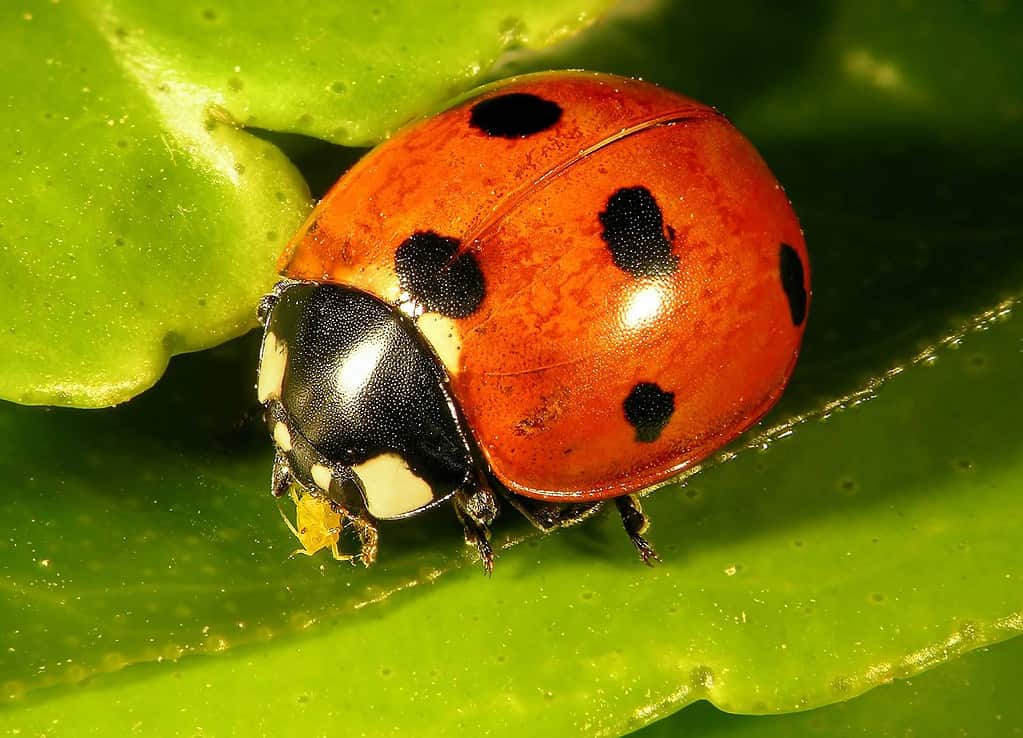
Ladybugs are maybe the most famous polka-dotted creatures on the planet. They are known for their bright red wings decorated with black dots. Different species can have anywhere from a few spots to more than twenty. Scientists think the spots might be warning signals to predators that the insects may taste foul. In fact, bright red coloration combined with black dots is a warning pattern often repeated in nature. Their unique and cheerful coloration has made ladybugs favored insects around the world.
Spotted Eagle Ray
©iStock.com/eaglerayjoel
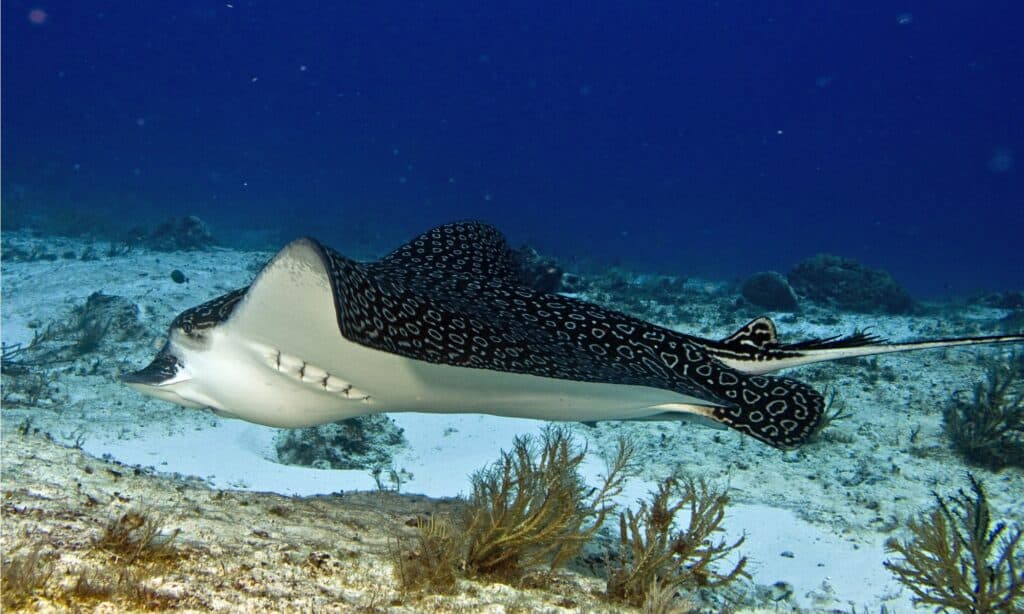
The spotted eagle ray is a beautiful sea creature that glides through tropical oceans in style. Its dark body is covered with bright white spots and rings that stand out underwater. The “eagle” part of their name comes from their ability to leap completely out of the water and soar briefly through the air. Their spots stay consistent throughout their lifespan and help distinguish them from other ray species. This marine animal has somehow managed to make polka-dots appear elegant.
Dalmatian

©iStock.com/Eugen Fedorov
The Dalmatian is certainly the most famous polka-dotted domestic animal. Puppies are born completely white and develop black spots as they grow. These spotted coats are unique, with no two Dalmatians having exactly the same pattern. Their black and white look helped make them stars in books, firehouse history, and one very popular Disney movie. The breed’s coat is one of the prettiest in the canine world.
Leopard Shark
©WASOK/Shutterstock.com
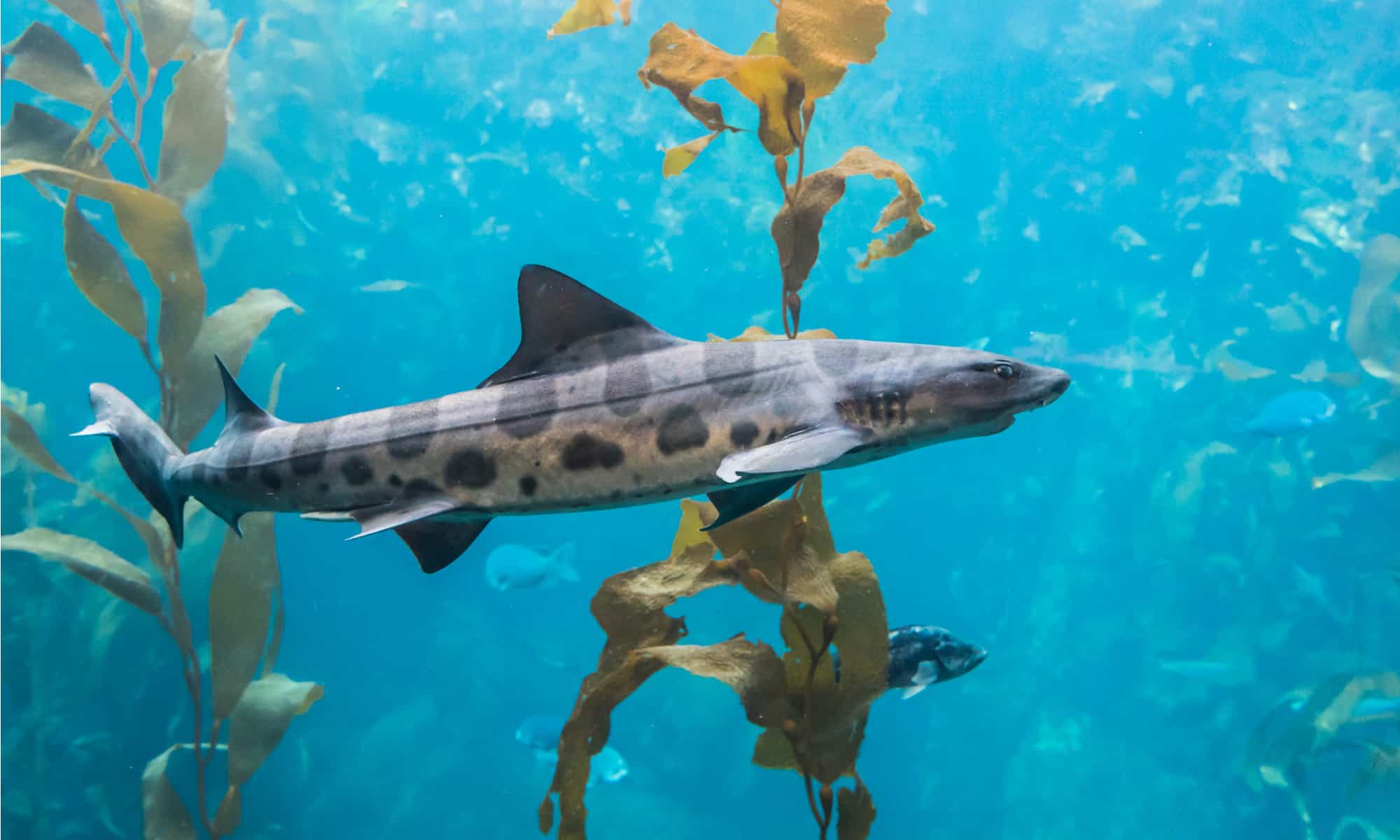
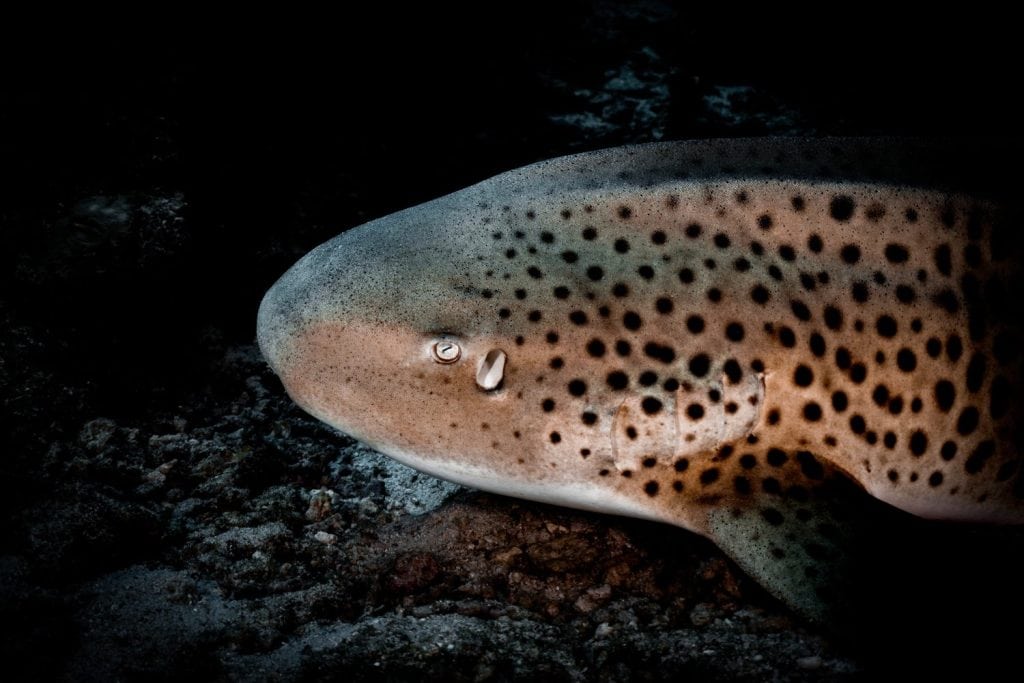
Leopard sharks spend much of their lives navigating shallow coastal waters. Their bodies have dark markings mixed with a multitude of spots. The pattern acts as camouflage, helping them blend into sandy ocean floors and marine plant matter. These sharks are gentle and harmless to humans despite their fierce-sounding name. Their spots are reminiscent of a leopard’s coat, which inspired their name. However, leopard sharks tend to have darker, more uniform spots that differ from the more complex rosettes seen on wild leopard cats.
Spotted Salamander
©A-Z Animals
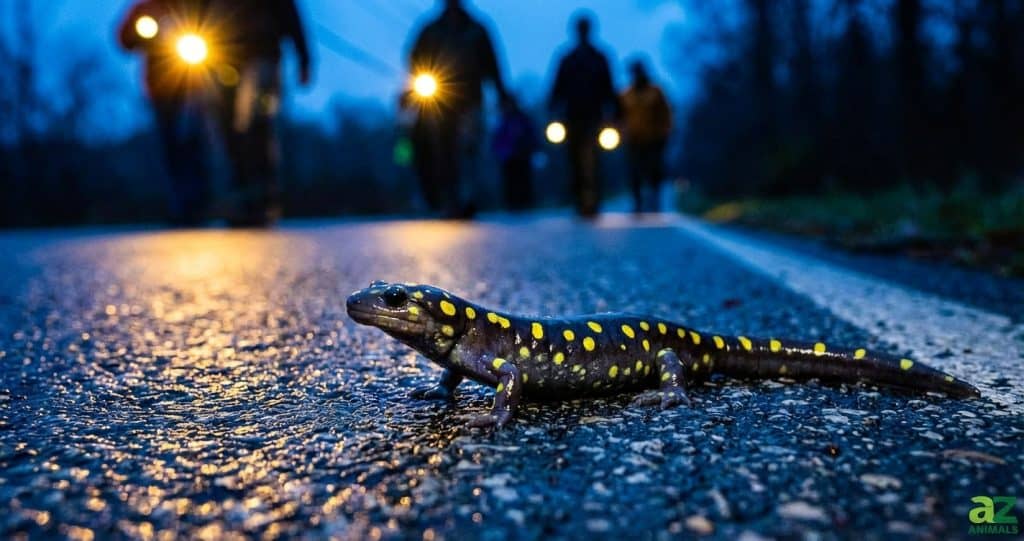
The spotted salamander is a beautiful amphibian found in eastern North America. Its glossy black body is accented with bright yellow or orange spots. These vivid markings make it stand out and easy to identify within its habitat. However, they aren’t the easiest critters to spot, as adults spend much of their lives hidden underground, coming out during rainy nights to breed. Their festive and colorful markings have made them a favorite among amphibian enthusiasts.