Quick Take
- Famotidine is sold over the counter, but giving it to your cat without knowing one critical timing rule could make it completely ineffective. See the timing rules →
- A cat that skips just one day of meals faces a cascading health crisis that has nothing to do with its stomach ulcer, and famotidine plays a role in preventing it. Understand the eating risk →
- Vets regularly prescribe famotidine for cats even though the FDA hasn't approved it for that purpose, and a specific legal reason exists for why that practice is perfectly allowed. Explore the off-label use →
- There's one type of cat for whom famotidine can quietly become less effective over time, and most owners never notice until it stops working. See who loses effectiveness →
Famotidine is an H2 histamine blocker, also referred to as an H2-receptor antagonist, that decreases the production of stomach acid. It does this by binding to the receptors within the stomach that instruct it to create acid. Essentially, it blocks those receptors from signaling the stomach to make acid. Famotidine is widely considered safe for use in humans, cats, dogs, and horses. However, as with any medication, it is essential to consult your veterinarian before giving it to your kitty. Read on to learn more about famotidine usage in cats.
Famotidine in Veterinary Medicine
According to the Federal Drug Administration (FDA), using famotidine in cats, dogs, and small mammals to treat ulcers is “off-label.” This means the drug has not been approved for this purpose, but veterinarians may choose to use it anyway. Off-label prescriptions are allowed in veterinary medicine because it’s covered under extra-label drug use (ELDU).
Dr. Julie Parks, a Doctor of Veterinary Medicine at Northwood Hills Animal Hospital, told A-Z Animals, “Famotidine is an over-the-counter drug we primarily use to treat gastric ulcers. Occasionally, for pets that are very sensitive to non-steroidal anti-inflammatory drugs, we use famotidine to help prevent ulcers. We hardly ever see side effects.”
Some studies report prolonged administration results in diminished effects in cats as well as humans and other animals. If the medication prescribed for your cat is not helping or has stopped being effective, contact your veterinarian to discuss next steps.

Only veterinarians should decide if it’s safe to use famotidine for your cat.
©Irzhanova Asel/Shutterstock.com
What Is Famotidine Used for in Cats?
Because famotidine reduces the production of stomach acid, it has many uses in cats, especially for those suffering from gastrointestinal problems. The gastrointestinal system includes all the body parts used to eat and process food — the mouth, esophagus, stomach, and intestines.
Famotidine can be given to cats by mouth, intravenously (injected into a vein), or intramuscularly (injected into the muscle). Veterinarians must use caution when giving this drug intravenously because giving it too quickly can cause vomiting and irregular heartbeat (arrhythmia).
Let’s learn about the most common uses of famotidine in cats!
Stomach Ulcers
A stomach ulcer occurs when the natural acid within it erodes the protective lining. This condition causes a burning sensation in the stomach and may lead to nausea, vomiting, and reduced appetite. Because cats are so sensitive to going without food, inappetence (not wanting to eat or not feeling hungry) becomes a major concern quickly.
Because cats are so sensitive to going without food, inappetence (not wanting to eat or not feeling hungry) becomes a major concern quickly. A cat that doesn’t eat for as little as 24 hours or for several days in a row may be at risk for fatty liver syndrome (hepatic lipidosis). Cats refusing to eat may require intensive care hospitalization with intravenous fluids and even a nasogastric feeding tube. This is a thin rubber tube placed through the nose and into the stomach by your veterinarian while your cat is sedated. It allows food to be passed directly into the stomach.

Drooling can be a sign of nausea in cats.
©Schearbl/iStock via Getty Images
Stomach Inflammation Secondary to Kidney Disease
Kidney disease is common in senior cats, with prevalence rising significantly with age. Studies have shown it affects an estimated 40% of cats aged 10 and older and as many as 80% of cats aged 15 and older. Unfortunately, a symptom of this reduced kidney function can be inflammation within the stomach.Unfortunately, a symptom of this reduced kidney function can be inflammation within the stomach. Just like with ulcers, this can cause nausea, vomiting, and inappetence. Veterinarians may choose to administer famotidine to help with the symptoms of these stomach problems. Famotidine used in this manner may also encourage cats to continue eating since it will help soothe their aching stomach.
Esophageal Ulceration or Inflammation
Famotidine is used in cats to soothe the irritated, inflamed, or ulcerated esophagus. The esophagus is the part of the throat that carries food from the mouth into the stomach. Occasionally, it can become inflamed or even develop an ulcer.
Although very rare, inflammation of the esophagus can occur after surgery that requires the cat to be intubated. Intubation is when a breathing tube is inserted into the trachea. This tube delivers anesthesia and oxygen to the patient during surgery. Because the trachea and esophagus sit so closely together, some inflammation can occur during intubation. For most cats, this inflammation goes away on its own. However, some cats are more sensitive than others.
Other times this problem can occur with repetitive vomiting, acid reflux, or from some medications such as doxycycline. Doxycycline capsules and tablets can damage the esophagus if they begin to dissolve before reaching the stomach. For this reason, following doxycycline with a small amount of water from a syringe is highly recommended by most veterinarians.
Another possible cause is electrocution. If kittens or cats play with electrical wires and bite into them, they can get electrocuted. This painful accident usually causes burns in the mouth and throat. Famotidine may be used for cats in this predicament. Veterinarians may use sucralfate in combination with famotidine because of its ability to coat the mouth, throat, and stomach, which helps relieve the pain of the burns.
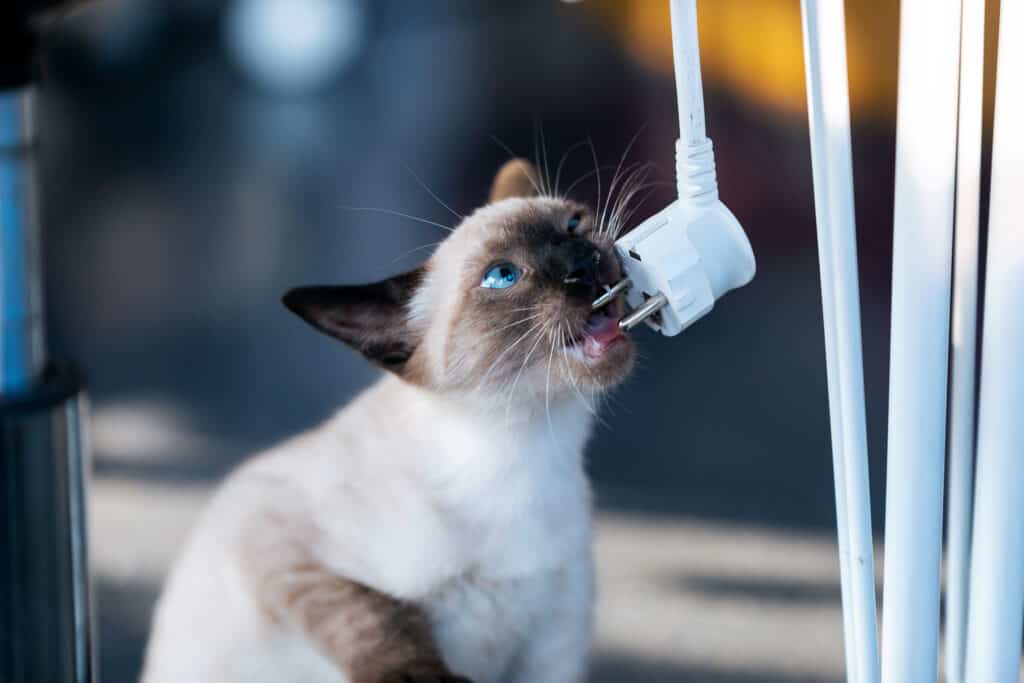
Never let your cat play with electrical cords, as it can lead to electrocution and severe burns in the mouth and throat.
©iStock.com/nensuria
Side Effects and Allergic Reactions
Although side effects are generally rare and mild, they can include vomiting, diarrhea, a temporary decrease in appetite, and low energy. Cats who receive injects may experience bradycardia, or low heart rate. However, intravenous (IV) famotidine administration is typically done in a clinical setting under the care of a veterinarian.
Signs of overdose or severe reaction can include vomiting or diarrhea lasting more than 12 to 24 hours, extreme lethargy, and a complete refusal to eat. Hives, facial swelling, or difficulties breathing can be signs of an allergic reaction. Signs of a possible overdose can include pale gums, restlessness, or even collapse. If you think your cat is experiencing side effects or an allergic reaction, call your veterinarian immediately.
When Should Cats Not Take Famotidine?
In elderly pets, famotidine should be used at a reduced dose and with caution. This is especially true for intravenous injections; pets with heart disease should also be closely monitored. Any cats already experiencing liver or kidney disease should take famotidine only with careful observation.
Dosage Chart for Famotidine in Cats
Always follow your veterinarian’s instructions exactly and finish the prescribed course unless otherwise instructed, even if your cat appears to be feeling 100% better. The typical famotidine dose for cats is 5 mg every 12 to 24 hours. If your cat must take famotidine for an extended period, your veterinarian will likely instruct you to use the minimum effective dose (MED). The MED is the least amount of a drug a patient can take and still experience the desired results.
Famotidine for cats should be given on an empty stomach at least 30 minutes before any food or other medications. The best results occur with dosing before the first meal of the day. If your cat becomes nauseated or vomits after taking famotidine, you can try giving the medication with a small amount of food or a treat.
However, if your cat is unable or unwilling to take pills, liquid famotidine may be available. If liquid medication is still not an option, your veterinarian may be able to administer famotidine intravenously or intramuscularly. These dosage forms are especially useful for nauseated or vomiting cats.
| Cat’s Weight in Pounds | Famotidine Dosage |
|---|---|
| All Weights | 5 mg per dose |
Famotidine for cats is useful in preventing or treating stomach and esophageal ulcers or inflammation. Very rarely, cats may experience side effects when taking famotidine. Most side effects are mild and non-life-threatening. As always, owners should never give a cat any medication without first discussing it with their veterinarian.