
Quick Take
- Skunk mating season brings increased movement, aggression, and spraying as males roam miles in search of females.
- Skunk spray is a powerful chemical defense based on sulfur compounds that cling to fur, skin, and fabric.
- Simple precautions like leashing dogs, using lights, and removing attractants can drastically reduce spray encounters.
If you’ve been thinking your evening walks suddenly smell a little skunkier than usual, that’s because they probably do. But don’t worry—the increase in skunk activity is only seasonal, not an ongoing problem. Late winter into early spring is peak skunk mating season across much of North America. During this time, male skunks leave the relative safety of their dens and roam far and wide in search of females. At this time of year, they’re more active (especially at dawn and dusk), less cautious, and far more likely to spray. For pet owners, that combination can turn a routine nighttime potty break into an olfactory nightmare.
But it’s preventable. Skunks don’t spray casually, and they don’t spray without reason. The infamous smell is directly tied to biology, chemistry, and mating behavior. Understanding how, why, and when skunks spray can help you keep your pets safe and avoid unpleasant encounters.
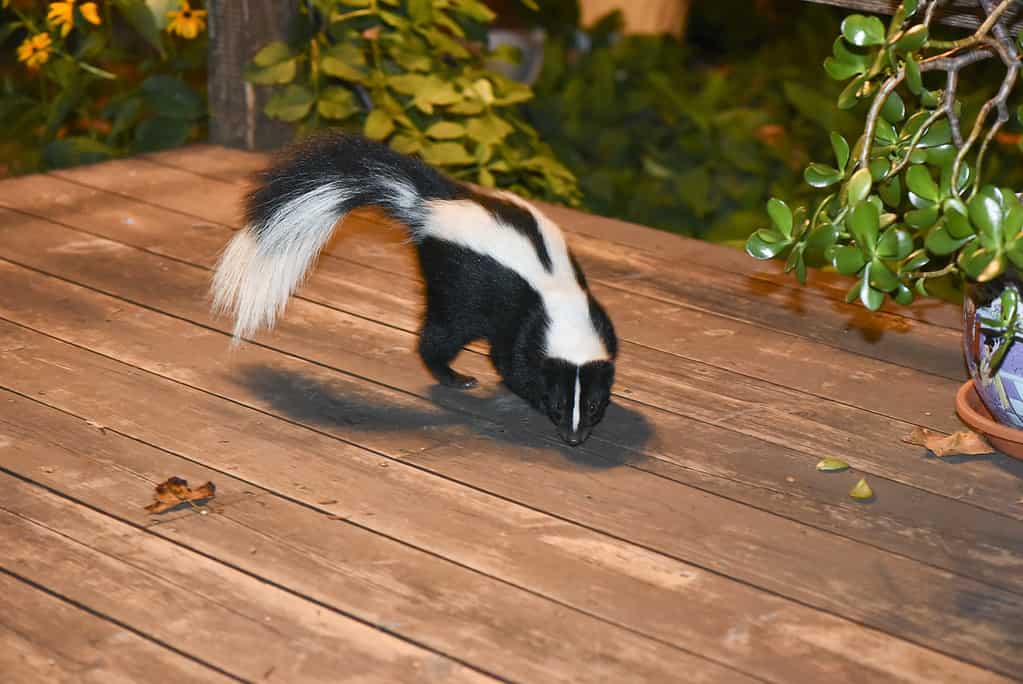
The striped skunk thrives in suburban neighborhoods, where easy food sources and shelter make backyards ideal habitat.
©Photon-Photos/iStock via Getty Images
Behind the Smell: Meet the Skunk
The most widespread species involved in these encounters is the striped skunk. Found across most of the United States and southern Canada, it thrives in suburban neighborhoods just as easily as it does in forests and fields. Skunks are nocturnal omnivores that eat insects, rodents, fruit, and human leftovers, making backyards an ideal habitat.
For most of the year, skunks keep a low profile. They move slowly, forage quietly, and avoid conflict when possible. Breeding season changes that. From January through March in colder regions and a bit earlier in warmer areas, male skunks begin traveling far beyond their usual home ranges. Studies have shown that males may roam several miles in a single night as they search for receptive females.
This increased movement puts skunks in places they normally wouldn’t visit, including sidewalks, driveways, dog yards, and front porches.
Why Skunks Spray in the First Place
Skunk spray evolved as a defensive weapon, not an offensive one. The chemicals are produced in two anal glands, located on either side of the anus. Each gland holds roughly one tablespoon of liquid, and a skunk can accurately spray up to about 10 feet. The spray is oily, sticky, and persistent, which is why it clings so stubbornly to fur, fabric, and skin.
The active ingredients are sulfurous compounds called thiols. Without getting into too much chemistry, just understand that thiols bind easily to proteins, including those in your nose and on your dog’s coat. That’s why the smell is so intense and why it can linger for weeks if not treated properly.
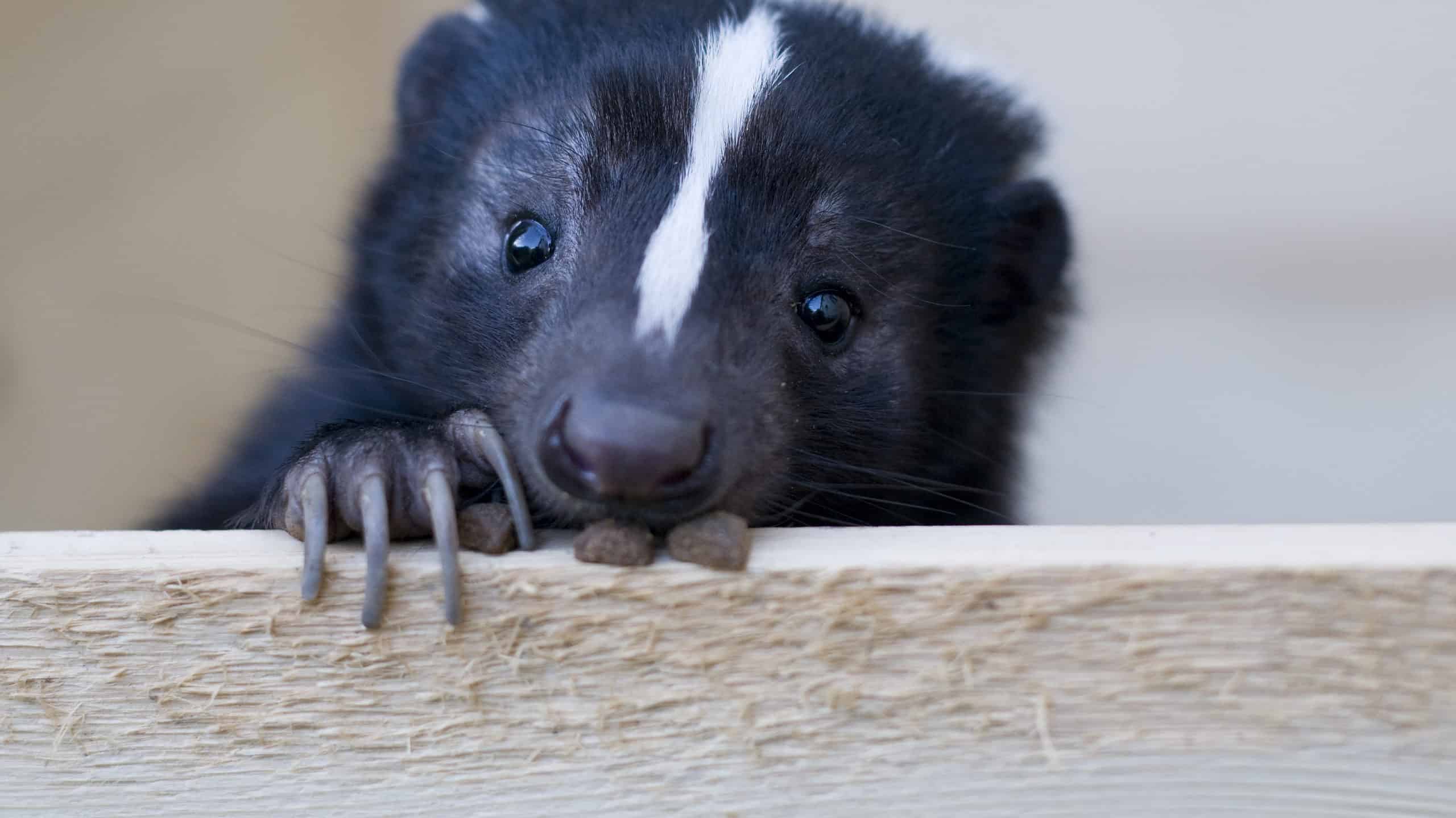
The good news is that a skunk would prefer not to spray. Once emptied, it can take more than a week for the glands to fully replenish. Before spraying, skunks usually give plenty of warning. They stomp their front feet, raise their tail, hiss, and turn their rear end toward the threat. The bad news is: curious dogs often ignore every one of those signals.
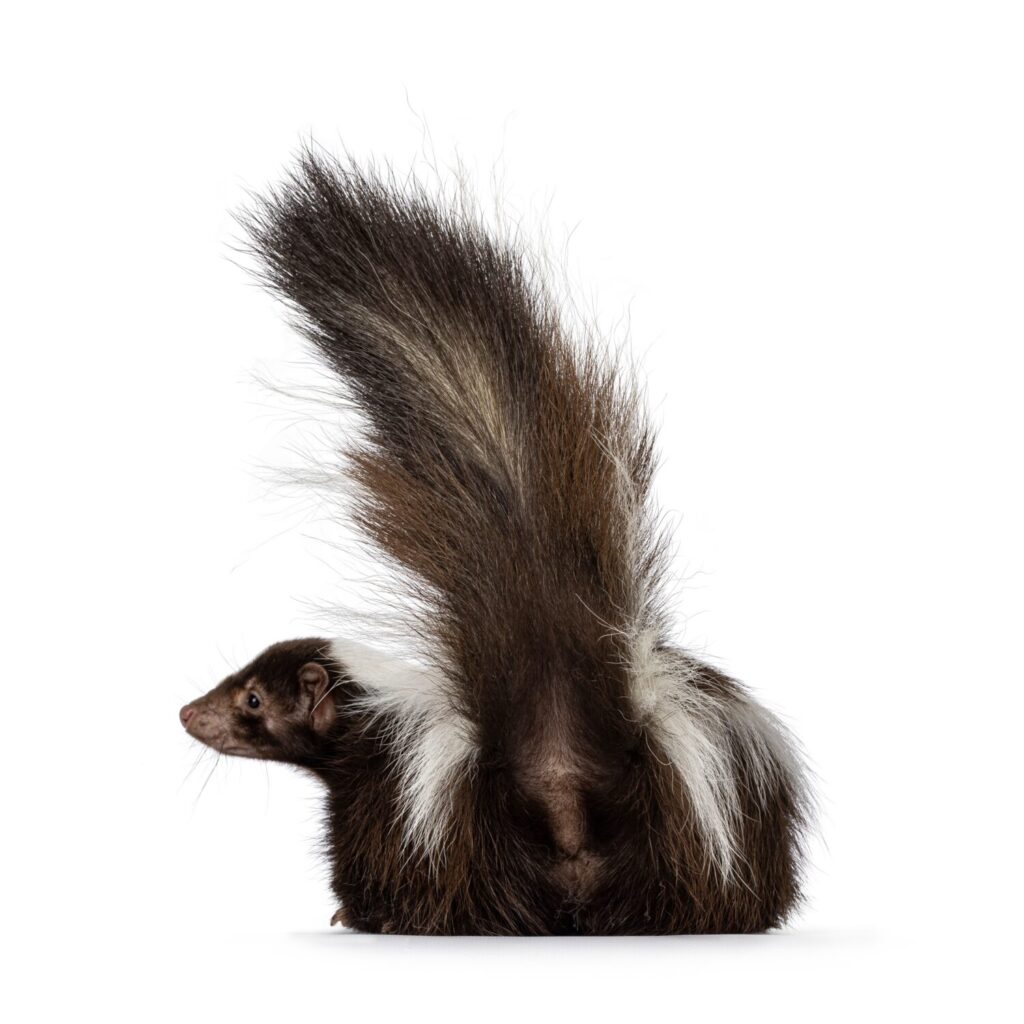
Skunks can spray with surprising accuracy, delivering a sulfur-rich chemical defense from up to about 10 feet away.
©Nynke van Holten/Shutterstock.com
Why Mating Season Means More Spraying
During breeding season, skunks are more likely to spray for two main reasons. The first is competition. Male skunks don’t fight with claws and teeth the way many mammals do. Instead, disputes over females are often settled with posturing, chasing, and spraying. A blast of skunk spray is usually enough to end an argument without physical injury.
The second reason is rejection. Female skunks are selective, and when an unwanted male approaches too closely, she may spray him directly. This delightful little act of assertiveness may sound like a myth or folklore—but it’s quite real. Researchers and wildlife biologists have documented female skunks spraying males that won’t back off.
Because skunks are crossing unfamiliar territory, encountering more animals and people, and are active during the same hours when dogs are outside, spray incidents increase dramatically during mating season.
Why Dogs Are Such Frequent Victims
Dogs tend to make all the wrong choices when it comes to skunks. They’re curious, fast, and confident. Many dogs interpret a skunk’s warning stomp as an invitation to play or chase. Others simply don’t see or smell the skunk until they’re already too close.
Unlike predators that hunt skunks and learn to avoid them, most pet dogs have no evolutionary experience with skunks. They don’t recognize the visual cues, and they certainly don’t understand the consequences. Cats, on the other hand, are sprayed far less often. They tend to be more cautious, quieter, and less likely to charge directly at a strange animal.
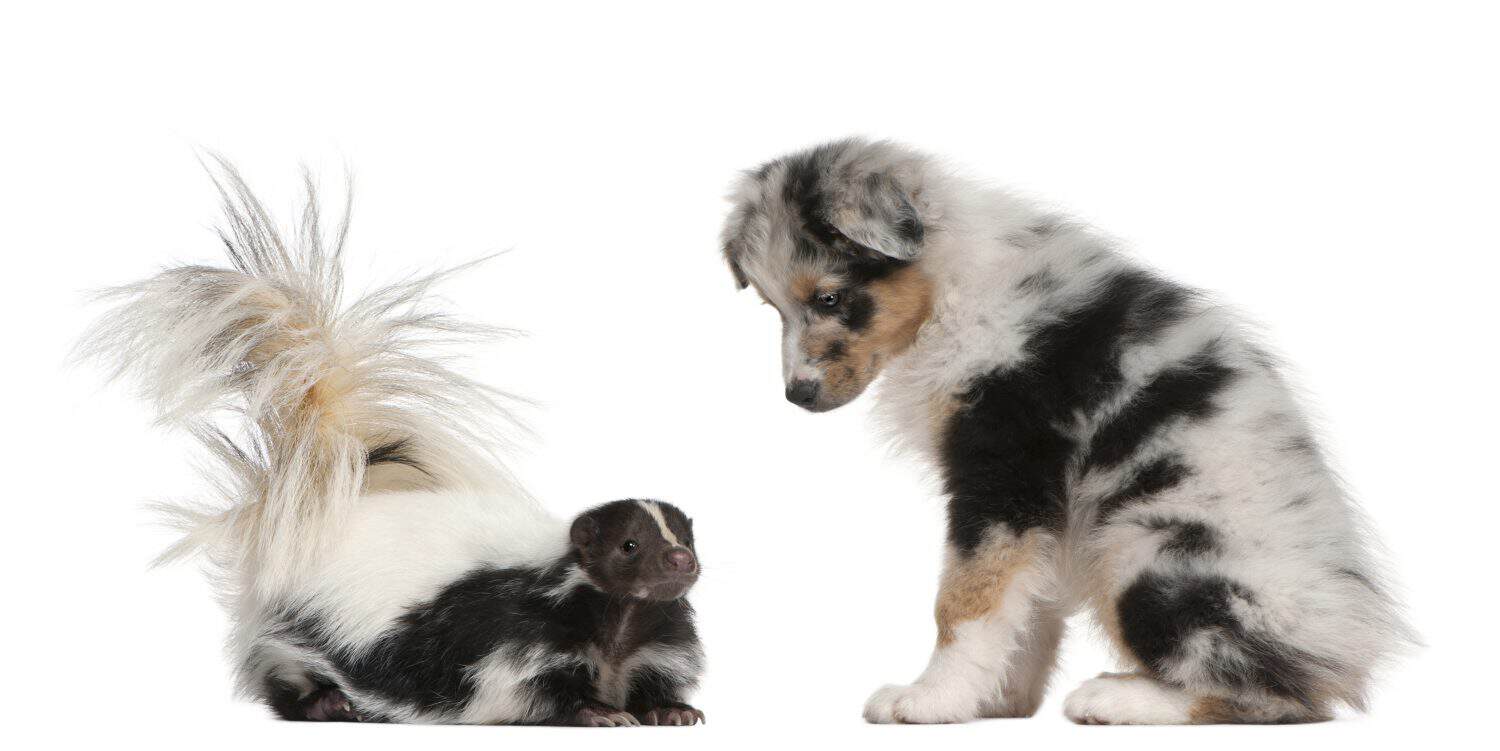
Many dogs mistake a skunk’s warning stomp for an invitation to play, often with unforgettable results.
©Eric Isselee/Shutterstock.com
How to Reduce the Risk During Nighttime Potty Breaks
You don’t need to stop walking your dog at night during skunk season, but you do need to be smarter about it.
- Leash your dog, even in your own yard. This is one of the most effective ways to prevent a skunk encounter. A leashed dog can’t sprint into the darkness after a moving shape.
- Use a flashlight. Skunks have distinctive body shapes and reflective eyes. A quick scan of the yard before letting your dog out can give you enough warning to avoid a surprise.
- Make noise before stepping outside. Clapping your hands or turning on a porch light can scare a skunk away before you ever see it. Skunks don’t want a confrontation any more than you do.
- Remove attractants. Pet food, fallen bird seed, unsecured garbage cans, and compost piles all draw skunks into yards. Reducing food sources makes your property less appealing.
- Block den sites. Skunks often den under decks, sheds, and porches. Sealing gaps and installing hardware cloth can prevent them from settling in close to home.
- Skunks are most active at dawn and dusk, but during mating season, their activity window stretches longer into the night. If possible, avoid the half hour before sunrise and the first few hours after sunset for off-leash yard time.
- If your dog insists on a late-night bathroom trip, keep it short and supervised. The longer a dog is outside, the greater the chance it will stumble across a roaming skunk.
What to Do If the Worst Happens
Despite your best efforts, skunk encounters still happen. If your dog gets sprayed, resist the urge to drag it straight into the house. The oil will quickly spread to carpets, furniture, and walls. The old tomato juice remedy doesn’t work. It may temporarily mask the smell, but it doesn’t break down the thiols responsible for the odor. Veterinarians and wildlife experts recommend a mixture of hydrogen peroxide, baking soda, and dish soap. The chemical reaction neutralizes the thiols instead of just covering them up. Be careful to avoid your dog’s eyes, and never store the mixture in a closed container because it can build pressure.
Commercial skunk odor removers are also effective and much more convenient if you keep one on hand during skunk season. More importantly, when a dog gets sprayed, the effects can go far beyond just the smell. The chemicals can cause eye irritation, temporary blindness, drooling, nausea, and vomiting if ingested. In rare cases, direct hits to the eyes can cause corneal damage that requires veterinary care. If a dog is sprayed at close range, especially in the face, contact a veterinarian right away. Flushing the eyes with clean water is a good first step, but professional treatment may be needed.
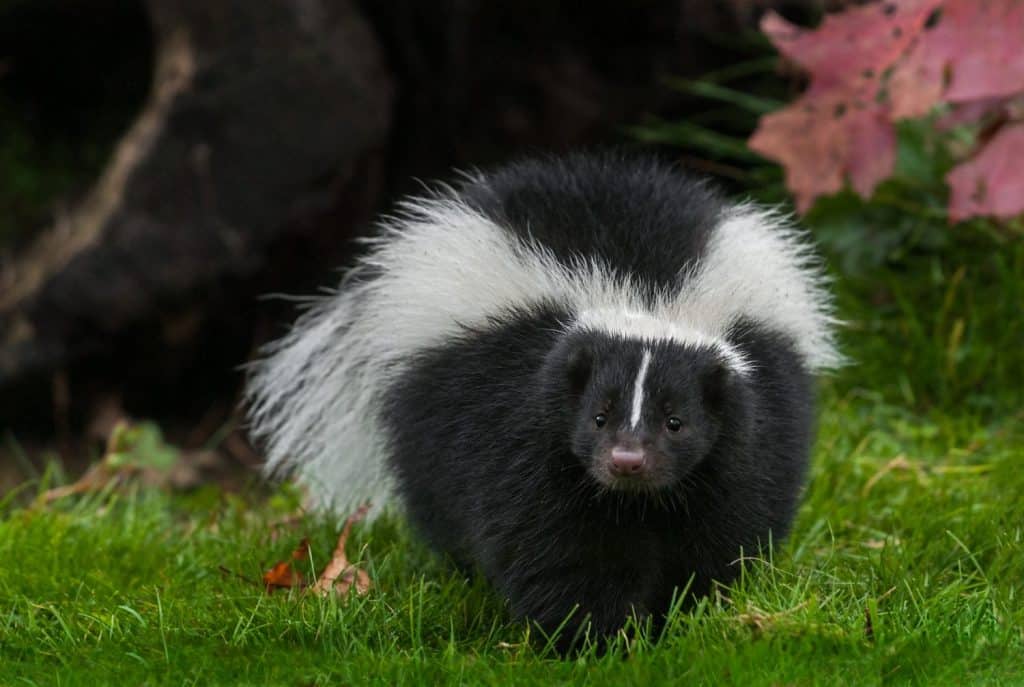
Despite their reputation, skunks play an important role in controlling insects, rodents, and even venomous snakes.
©Holly Kuchera/Shutterstock.com
Respect the Skunk
Skunks stink. They just do. Unfortunately, that’s often the only thing people remember about them. But keep in mind, skunks play an important role in the ecosystem. They eat large numbers of insects, including agricultural pests. They also consume rodents and even venomous snakes. And remember, skunks don’t want to spray you or your dog. Spray is their last line of defense—not their first choice. Most encounters end without incident if they’re given space.
Skunk season doesn’t last forever. Once mating wraps up and males return to smaller home ranges, spray incidents drop sharply. Until then, awareness is your best defense. Take simple precautions during nighttime outings, and you should be okay. A little preparation can spare your dog a pungent blast it’ll never forget and save you weeks of explaining that smell to everyone you encounter.