Quick Take
- One common fruit hides a naturally occurring toxin in every single berry, yet it is still considered safe for dogs under the right conditions. See the Xylitol warning →
- Skipping one simple prep step turns an otherwise safe fruit into a choking hazard or intestinal blockage risk for your dog. Check the prep steps →
- One item on this list isn't technically a fruit to most people, though veterinarians actually recommend it as a digestive remedy. Discover the digestive remedy →
- Most dogs will flat-out refuse one of these fruits before it even touches their tongue, and the reason has nothing to do with taste. Find out why dogs refuse it →
Fruit is an important part of the human diet, but should we feed it to our dogs? Luckily, the answer is yes! These sweet snacks are healthy for dogs and can boost their immune system, aid in digestion, and more. Always wash your fruit before feeding it to your dog, and remember that the skin and seeds of some fruit can be hazardous. In this article, we’ll discuss 14 fruits that are safe for dogs to eat, their benefits, and how to feed them to your pooch.
Should Dogs Eat Fruit?
Fruit is a great, healthy, sweet snack for dogs. Like any treat, it should be served in moderation only. This is because fruit does contain a lot of sugar! Sugar isn’t all bad, especially the natural sugar found in fruit. However, it’s not good for dogs in high amounts.
Fruit has been shown to have various benefits for dogs, including boosting their immune system and providing essential nutrients. As a treat, fruit is better for your dog than many store-bought dog treats.

Fruit can be a great healthy snack for your pup, boosting their immune system and providing essential nutrients.
© https://junction.cj.com/article/deep-linking-tools-publishers/Shutterstock.com
How to Prepare Fruit for Dogs
Preparing fruit for dogs is fairly simple. Many of the steps are the same ones you would use to prepare it for yourself! Here’s how:
- Wash the fruit, just like you would when serving it to a person.
- Remove any seeds, pits, and stems. This isn’t always necessary, but these items are sometimes toxic or pose choking hazards. We’ll go into more detail when we dive into the individual fruits below.
- Cut into small pieces. This helps prevent your dog from choking on its food and is especially important for puppies and small breeds.
- Serve fruit fresh, frozen, or cooked so long as there aren’t any additives. Canned and dried fruits typically aren’t healthy because they contain preservatives or large amounts of sugar.
- Serve plain fruit, not seasoned or as part of a dish. Some spices are toxic to dogs, and many dishes that contain safe fruit might contain other ingredients that are unsafe.

Dogs can eat certain fruits safely if you follow a few simple tips.
©Vadzim Mashkou/Shutterstock.com
14 Best Fruits for Dogs
Take an in-depth look at 14 of the best fruits that are safe for your dog to eat, including the health benefits and instructions for feeding.
1. Bananas
The flesh of bananas makes a great snack loaded with vitamins and nutrients, including potassium and fiber. You may want to cut the round pieces in half to prevent them from becoming a choking hazard for small dogs. You can also serve mashed bananas to your pup if you’d like! Some people mash bananas on a lick mat and freeze them to keep their dog occupied for a little while. The only danger you’re likely to encounter is the peel. Just like humans, dogs shouldn’t eat banana peels, as they can be tough to digest and may cause a blockage.

If you feed your dog a banana, try mashing it up for a tasty treat.
©MPH Photos/Shutterstock.com
2. Apples
Apple skin and flesh are delicious and great to serve your dog. They contain vitamin C, antioxidants, fiber, and potassium. However, your dog should never eat an entire apple. The core and seeds are toxic, so these must be removed before serving.

Apple skins and flesh have great vitamin c, and fiber boosts for your dog.
©iStock.com/Irina Stolyarova
3. Blueberries
Blueberries can help your dog’s immune system stay strong. They contain vitamins C and K, fiber, and antioxidants. They’re also super simple to serve to your pup. Just wash them, and you’re good to go!
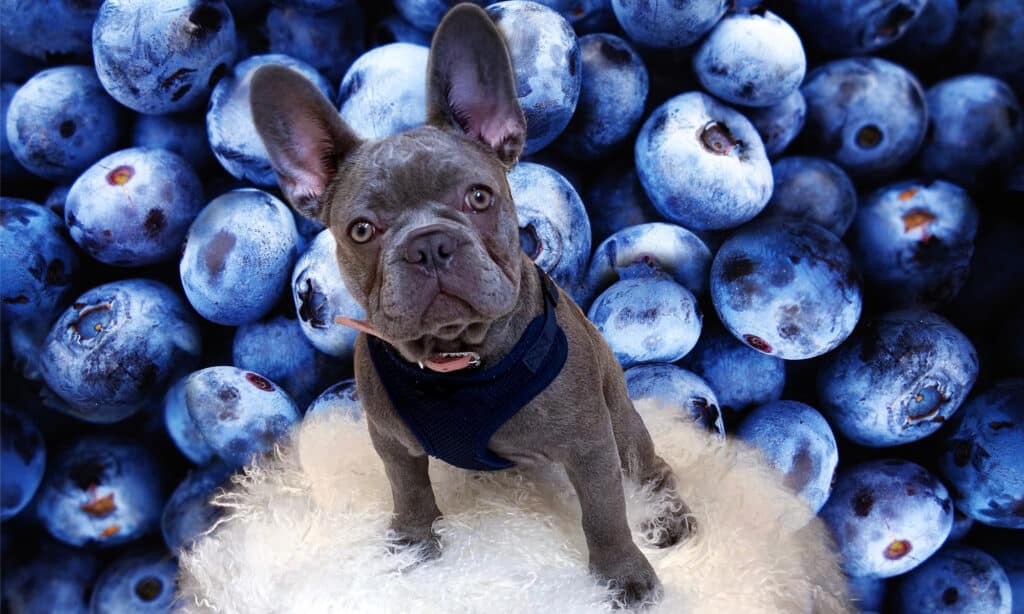
Blueberries offer great immune-boosting properties and are a simple treat for your dog.
©iStock.com/Joshua Wilder Oakley
4. Raspberries
Raspberries contain vitamins B, C, and K. They also contain fiber, antioxidants, and various other nutrients. Though they’re safe in small amounts, dogs shouldn’t eat too many raspberries as they can cause stomach upset. Raspberries are also a natural source of Xylitol, a sweetener that’s toxic to dogs.
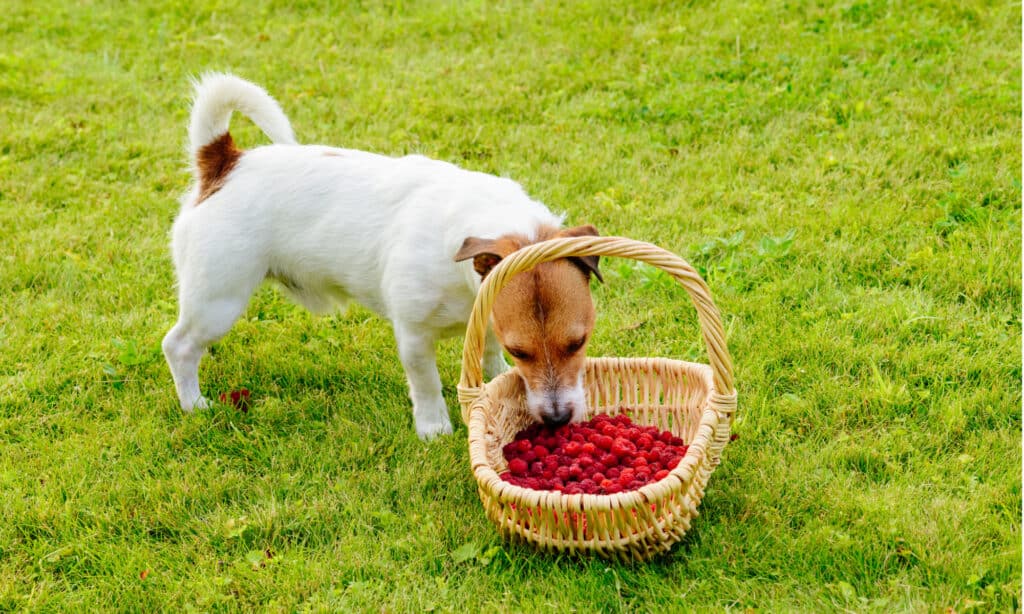
Raspberries are perfectly safe for your dog to eat in small amounts.
©iStock.com/alexei_tm
5. Watermelon
Watermelon is a favorite summer snack for many pups and people! Watermelon does contain vitamins and nutrients, but it’s also over 90% water. Therefore, its benefits are primarily taste and hydration. Cool watermelon can also help you and your pup to cool off on a hot day. Before feeding your dog a slice of watermelon, remove the rind and as many seeds as possible. Swallowing one or two seeds likely won’t hurt them, but too many can cause an intestinal blockage.
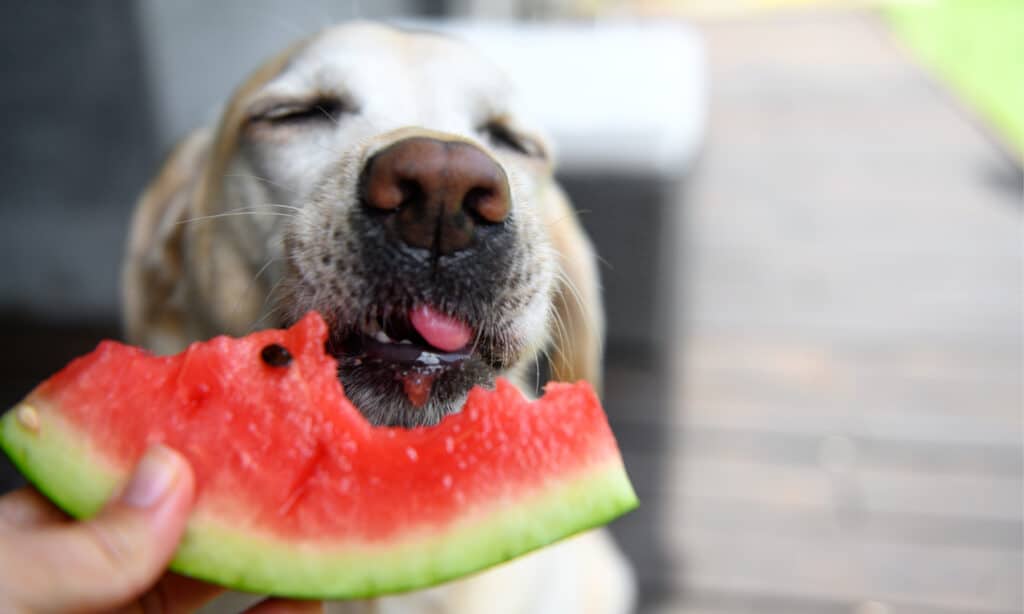
Watermelon is a great treat for a hot day for you and your pet. Just avoid giving them the rind and seeds.
©iStock.com/Anna_Belova
6. Strawberries
Strawberries can help your dog’s teeth stay white and healthy. They contain fiber, vitamin C, and antioxidants. The flesh and seeds are safe to feed, but remove the leaves and stem as these can be choking hazards or cause intestinal blockages. Most dogs also won’t enjoy the taste of the leaves.

Your pup can enjoy a strawberry, provided you remove the leaves and stem.
©iStock.com/Ирина Мещерякова
7. Pears
As long as you remove the pit and core, pears are safe to feed your pet. Dogs can eat the skin, and it’s where you’ll find the most fiber and antioxidants. Pears are also a source of potassium and vitamin C.
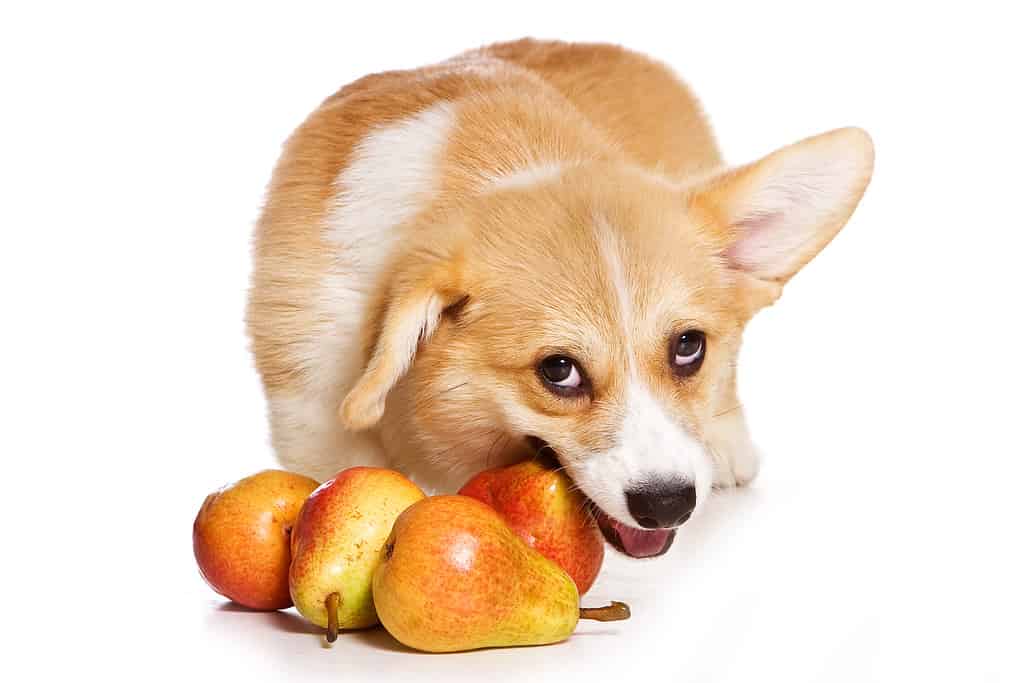
Pear skin is a great source of antioxidants and fiber for dogs.
©Utekhina Anna/Shutterstock.com
8. Cantaloupe
Cantaloupe is completely safe for dogs, though you might want to remove the seeds. Though they aren’t toxic, they can cause an intestinal blockage when eaten in large amounts. However, this shouldn’t be an issue so long as you’re feeding cantaloupe in moderation. The benefits of cantaloupe for dogs include supporting healthy cells, boosting the immune system, regulating the digestive system, and hydrating your pup.
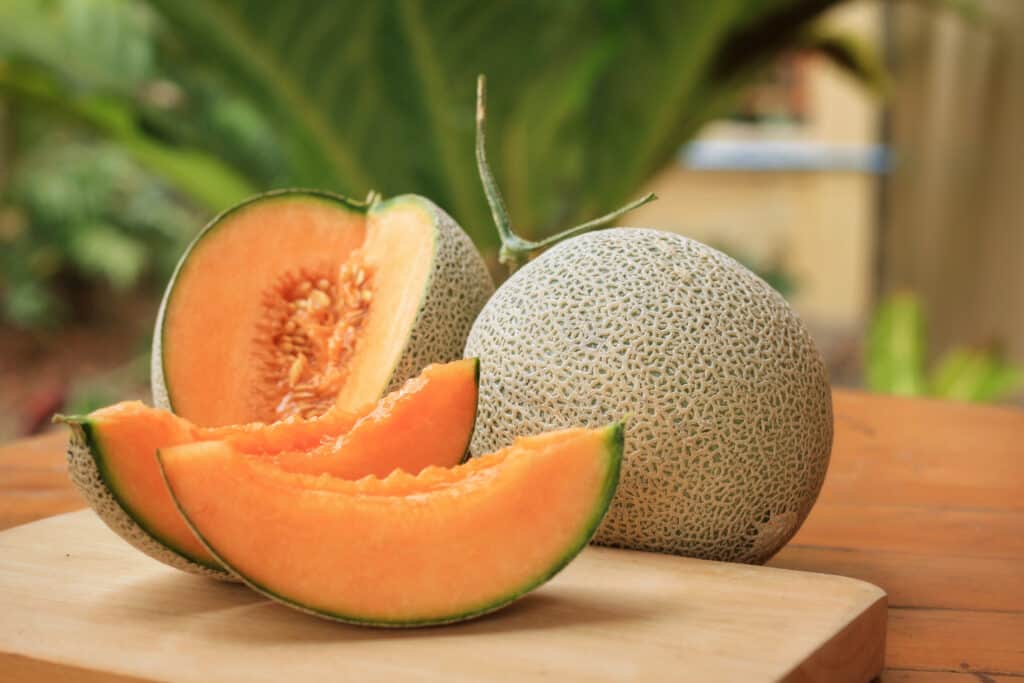
Cantaloupe is good for boosting the immune system and regulating the digestive system.
©Kotcha K/Shutterstock.com
9. Oranges
Oranges contain the immune system-boosting vitamin C alongside potassium, fiber, and other nutrients. They can also help your dog to stay hydrated as they contain a lot of water. At most, dogs should be given 1-2 sections of an orange. In larger amounts, they can cause digestive upset. Be sure to peel the orange and remove the white pith and any seeds. If your dog doesn’t take to the orange, don’t be surprised. Many dogs dislike even the smell of citrus.

Oranges offer your pup vitamin C and a hydration boost if given in moderation.
©iStock.com/Foto-front
10. Mango
Mangos contain many vitamins–including vitamins A, B6, C, and E. For some dogs, they’re an absolute favorite. Before serving mango to your dog, remove the skin. While it’s not toxic, it can cause digestive blockages because it’s not easy for them to digest. In addition, be sure that you do not feed your dog the pit. It’s a choking hazard and may also cause a blockage if eaten.

Your dog may love mango, but it’s important to remove the skin and the pit.
©Ankit98/Shutterstock.com
11. Peaches
Peaches can help boost your dog’s liver and kidney function. They contain antioxidants, fiber, and vitamins A and C. The peach skin is safe and nutritious for dogs, but be sure to remove the pit and cut the fruit into small pieces before feeding it.

Peach skin is safe and nutritious for dogs, but be sure to remove the pit.
©Sergii Chernov/Shutterstock.com
12. Pineapple
Pineapple contains many nutrients, including manganese, copper, potassium, magnesium, and iron. It can support your dog’s immune and digestive systems. Only feed your dog pineapple in small amounts. Though it’s not dangerous, it is acidic and can hurt a dog’s mouth if they eat too many slices, just as it does for humans who eat too much of the fruit!

Pineapple is acidic and may burn your pet’s mouth if they consume too much, so only feed them small amounts.
©Kseniya Resphoto/Shutterstock.com
13. Pumpkin
Botanically speaking, pumpkin is a fruit. Pumpkin is a superfood that helps regulate a dog’s digestive system. It contains significant amounts of fiber and vitamins A, B complex, C, and E. Sometimes, veterinarians recommend adding pumpkin as a topper to kibble for dogs with sensitive stomachs or digestive issues. Of course, you always want to see a veterinarian if your dog has tummy troubles. It’s an option to discuss, but your vet might find a serious underlying cause or determine that other treatment is needed beyond a diet change. Before serving pumpkin, be sure to remove the rind and seeds.

Pumpkin is great for your dog’s digestive system, but never feed them the rind or seeds.
©iStock.com/MirasWonderland
14. Blackberries
Blackberries are a good source of antioxidants, fiber, and omega-3 fatty acids. Like raspberries, they contain trace amounts of Xylitol and should be fed only in small amounts. Frozen blackberries may have added Xylitol, so avoid them or check the ingredients list before feeding them to your dog.
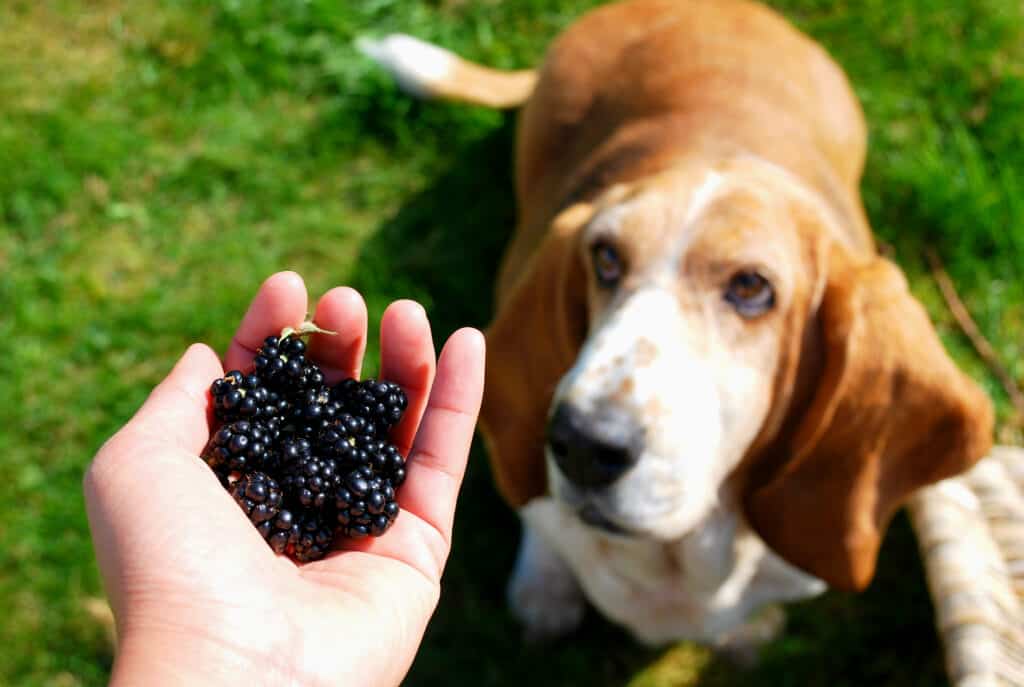
Your dog can eat blackberries, but try to choose fresh blackberries over frozen ones.
©praneem79/Shutterstock.com
Hopefully, you’ve found a fruit your dog loves on this list! Before feeding fruit to your dog, prepare it by washing it and then removing the rind, seeds, or stems if needed. Remember that fruits can be high in sugar, and all treats should be fed in moderation.