
Quick Take
- These two breeds look so different that most people can't believe they share the same ancestors, and the reason goes beyond more than just size. See how different they look →
- The larger American Akita defies one of the most well-known rules about dog lifespan, and the numbers are surprisingly stacked in its favor. Check the lifespan numbers →
- Choosing the wrong Akita type for your household is more than just a personality mismatch. It could create serious problems you didn't see coming. Avoid costly mismatches →
- One breed is far more stubborn and harder to manage, though it is not the one most people assume. Compare their stubbornness →
Akitas were originally developed in the Akita prefecture of northern Japan in the early 17th century. In the 1940s, they were brought to the United States by G.I.s returning from Japan after WWII, and a new breed, the American Akita, was developed. While the American Akita is listed as simply “Akita,” by the American Kennel Club (AKC) the Japanese Akita is listed as “Japanese Akitainu” and is currently in the AKC’s Miscellaneous Class, working toward full recognition. Read on to learn the differences between these two types of Akita.
American Akita vs. Japanese Akita
Japanese and American Akitas are very similar because they have the same ancestors. However, they’ve been bred differently since the 1940s due to varying breed standards. Take an in-depth look at the biggest differences between the two breeds.
Size
American Akitas are larger, with males standing 26-28 inches tall and weighing 100-130 pounds. Female American Akitas stand 24-26 inches tall and weigh 70-100 pounds. In comparison, Japanese Akita males stand stand 25–27.5 inches tall and weigh 65-75 pounds. Females stand 22.5-25 inches tall and weigh 55-65 pounds.
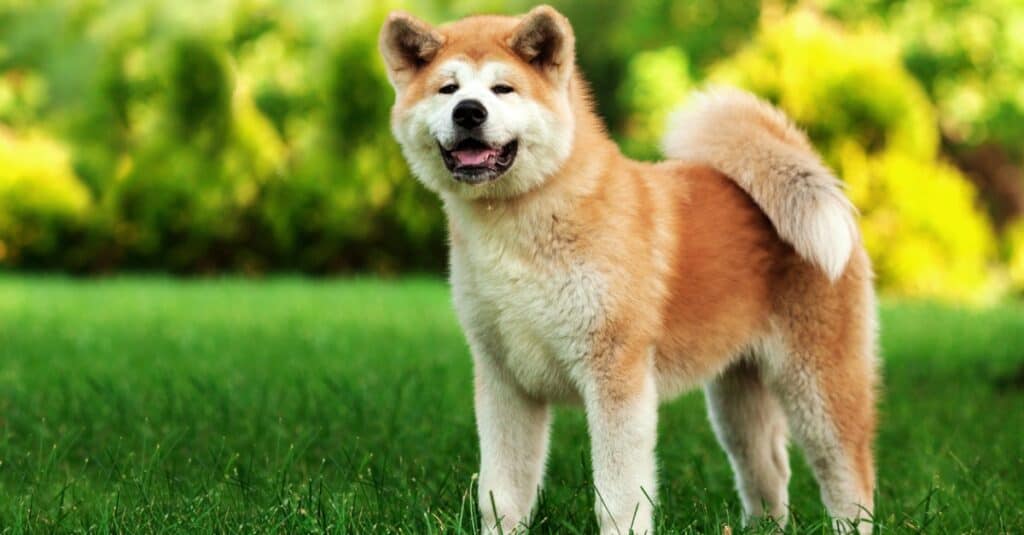
Japanese Akitas are the smaller of the two breeds.
©TatyanaPanova/Shutterstock.com
Lifespan
According to the AKC, American Akitas live an average of 10-14 years, which is actually a long lifespan for so large a dog. The AKC states that Japanese Akitainus typically only live 10-12 years, although some sources say they have a lifespan of 10-13 years.
Coat Color
The American Akita breed standard accepts many coat colors, including:
- Black
- Brown brindle
- Fawn
- Red
- White
- Brown with a black overlay
- Red with a black overlay
- Fawn with a black overlay
- Silver with a black overlay
They can also have the following markings:
- White mask with white markings
- Black mask with white markings
- Black and white mask with black markings
- Pinto with a black and white mask
- Pinto with a black mask
The Japanese Akitainu is bred in fewer colors with only brindle, red, and white accepted by breed standard. They can also have white markings.
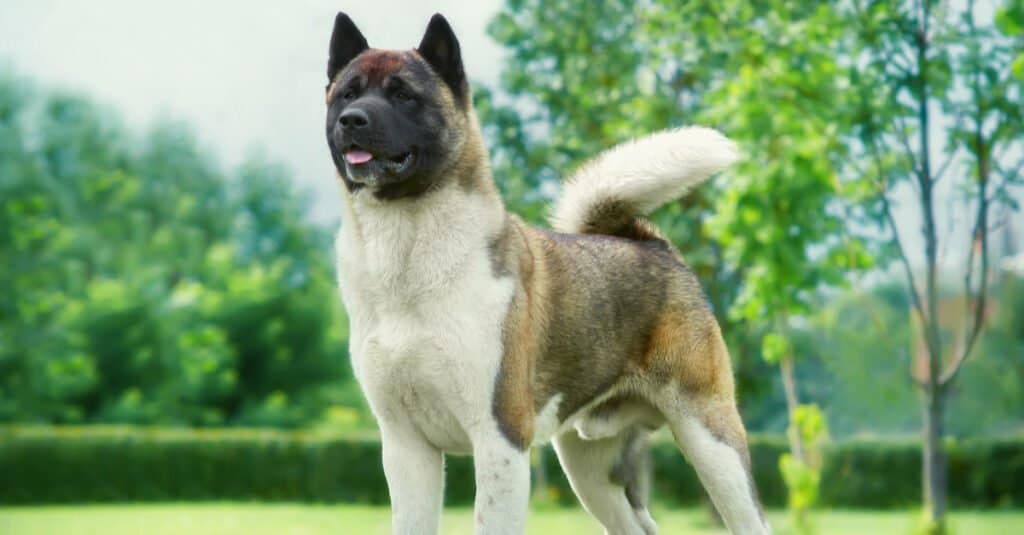
American Akitas are more heavily muscled.
©Kseniia Kolesnikova/Shutterstock.com
Face and Body Shape
American Akitas have boxier heads and faces that are often compared to bears. They also have wider muzzles and tend to have smaller eyes. Japanese Akitas have slimmer, more oval-shaped, fox-like faces. Their eyes are typically more almond shaped.
In addition, American Akitas are much stockier and more muscled. Although there isn’t a large height difference between the breeds, the extra muscle on American Akitas means they weigh considerably more. American Akitas can sometimes weigh more than double that of a Japanese Akita.
Temperament
American Akitas tend to be more affectionate toward their families, while Japanese Akitas are more independent than affectionate. Both breeds are relatively good about tolerating young children. American Akitas may be slightly friendlier toward strangers, but both breeds were bred to guard and tend to be wary of strangers. It is important to socialize them well at a young age and to keep them on-leash and under your control in public.
American Akitas are higher energy and require more exercise than Japanese Akitas. Japanese Akitas tend to be more prone to barking, while American Akitas are quieter. Both Akita breeds are often aggressive with other dogs, especially those of their own sex. Both breeds are also independent and stubborn, and neither breed is recommended for inexperienced owners.
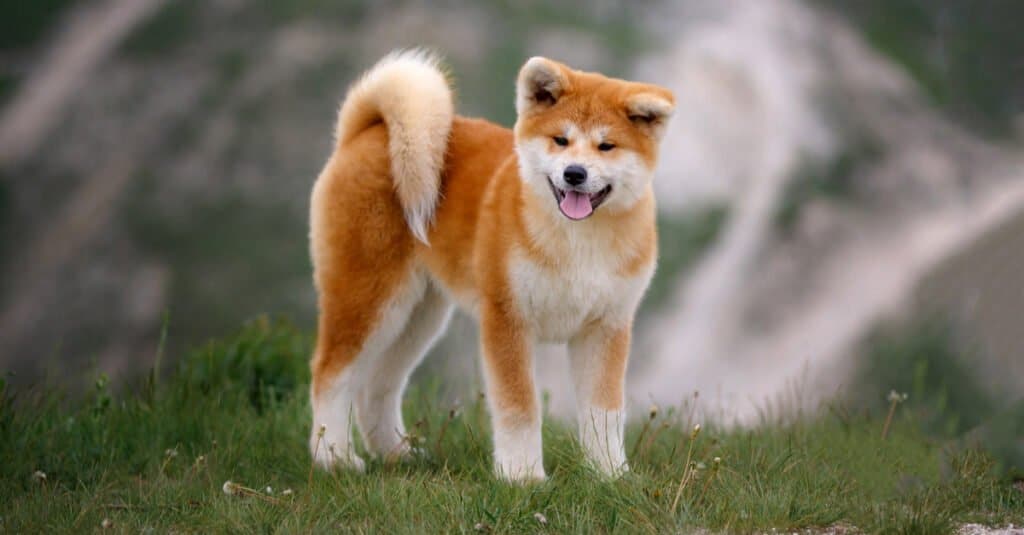
The Akita is a protective, loyal breed.
©Tatyana Kuznetsova/Shutterstock.com
Do Akitas Make Good Family Dogs?
Akitas can make good family dogs for the right family. This family should be knowledgeable about dogs and teach their children how to interact properly with them. No dog and child should ever be left unattended, no matter the dog’s breed.
Akitas are large, and this makes them more of a risk to children. They can hurt them even by mistake through rough play. Some Akitas aren’t good with children, while others love them. It depends on personality and the dog’s history.
It’s typically best for Akitas to be the only pet in the household. They have high prey drives and might see small pets, cats, or smaller dogs as prey. It’s impossible to completely override a dog’s prey drive. As noted above, Akitas are also prone to dog aggression, which means they might be aggressive even to larger dogs in the household. While this is not guaranteed and every dog is different, it is important to keep this in mind before adopting.

Either breed of Akita can make a great companion for the right family.
©Liudmila Bohush/Shutterstock.com