
Quick Take
- Spaying or neutering your basset hound at the wrong time goes beyond affecting behavior. It can open the door to serious, life-altering health conditions. See the health risks →
- Basset hounds look compact, yet their fully grown weight surprises most first-time owners, and that gap between appearance and reality has real consequences for care. See fully grown dimensions →
- The biggest basset hound on record tips the scale at a number that makes vets do a double-take, and that figure raises questions about what is driving extreme size in the breed. See the record-sized hound →
- Most owners start potty training at the wrong time, and the ideal window is narrower than you'd expect. Find the ideal training window →
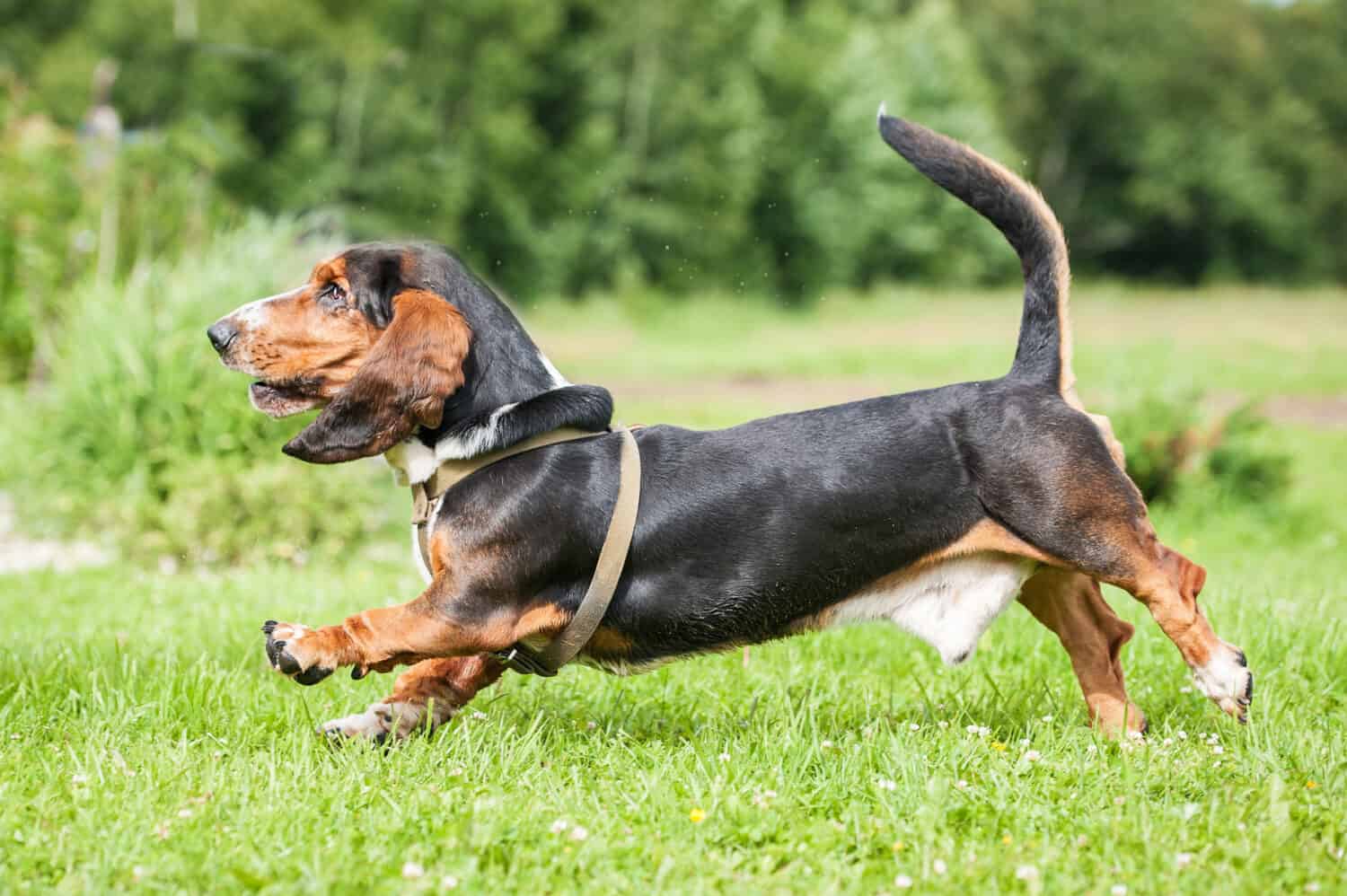
The basset hound is loved by many across the world. With its short legs, long body, and long, floppy ears, the basset hound is a charming and distinctive breed. These low-key hounds are excellent with children and other dogs. Their scenting ability is remarkable, second only to the bloodhound. While they may not be the most high-energy dogs, they are patient and loyal companions. If you’re thinking about adopting one of these appealing pups, check out our guide to basset hound progression, including growth charts, milestones, and training tips.
Basset Hound Growth Chart by Age
| Age | Male Weight | Female Weight |
|---|---|---|
| Birth | 1 to 2 pounds | 0.9 to 1.8 pounds |
| 1 Month | 5 to 8 pounds | 4.5 to 7.5 pounds |
| 6 Weeks | 8 to 10 pounds | 5 to 9 pounds |
| 2 Months | 10 to 18 pounds | 9 to 16 pounds |
| 3 Months | 18 to 28 pounds | 16 to 26 pounds |
| 4 Months | 25 to 38 pounds | 23 to 36 pounds |
| 5 Months | 30 to 45 pounds | 28 to 42 pounds |
| 6 Months | 35 to 50 pounds | 32 to 48 pounds |
| 7 Months | 38 to 55 pounds | 35 to 52 pounds |
| 8 Months | 40 to 58 pounds | 35 to 54 pounds |
| 9 Months | 42 to 60 pounds | 37 to 56 pounds |
| 10 Months | 44 to 62 pounds | 39 to 58 pounds |
| 11 Months | 45 to 64 pounds | 40 to 58 pounds |
| 12 Months | 45 to 65 pounds | 40 to 60 pounds |
| 2 Years | 50 to 70 pounds | 42 to 65 pounds |
When Will My Basset Hound Stop Growing?
The basset hound’s growth rate slows down between 12 and 18 months. They will reach their full height by around a year old, but basset hounds may continue to fill out and mature until the age of two.
How Big Will My Basset Hound Be When It’s Fully Grown?
Once your basset is fully grown, it will have a body length of 26 to 35 inches and measure up to 15 inches in height at the shoulder. Adults weigh around 40 to 65 pounds, depending on gender, genetics, and diet.
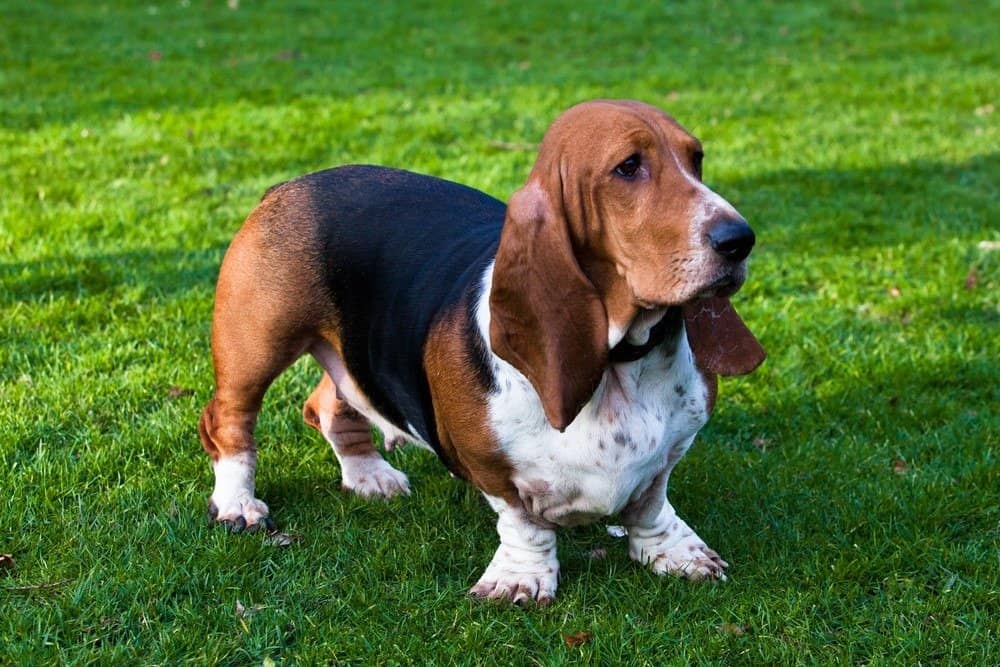
A full grown basset hound stands up to 15 inches in height at the shoulders.
©Ewa Studio/Shutterstock.com
The Biggest Basset Hound Ever Recorded
There are rumors of a 122-pound basset hound that wound up in a shelter in Las Vegas. However, this information cannot be confirmed. Bentley the basset hound, recently shared by Dr. Lindsay Butzer, DVM, was confirmed to weigh 80 pounds.
Whether these pups are American or European basset hounds is unclear, but European bassets tend to be larger and heavier than their American counterparts, generally reaching 70 to 80 pounds or more. They also have a heavier bone structure and more wrinkles than American bassets.
When Should My Basset Hound Be Spayed or Neutered?
In the past, vets believed that spaying or neutering your dog between four and six months of age was best. However, studies have shown that it depends on the size of the breed. For example, smaller breeds are sexually mature sooner, sometimes by six months of age. So, spaying or neutering them at a young age should be fine. However, larger breeds are usually sexually mature between 12 and 18 months, so waiting until later may be best.
Research shows that spaying and neutering your dog when they are too young can impact their health. They have an increased risk of conditions such as elbow or hip dysplasia, cranial cruciate ligament rupture, and cancers including hemangiosarcoma, lymphoma, osteosarcoma, and mast cell tumors. Since bassets are medium to large dogs, the best time to spay or neuter them is between six and 12 months. However, always consult with a veterinarian before making your decision.
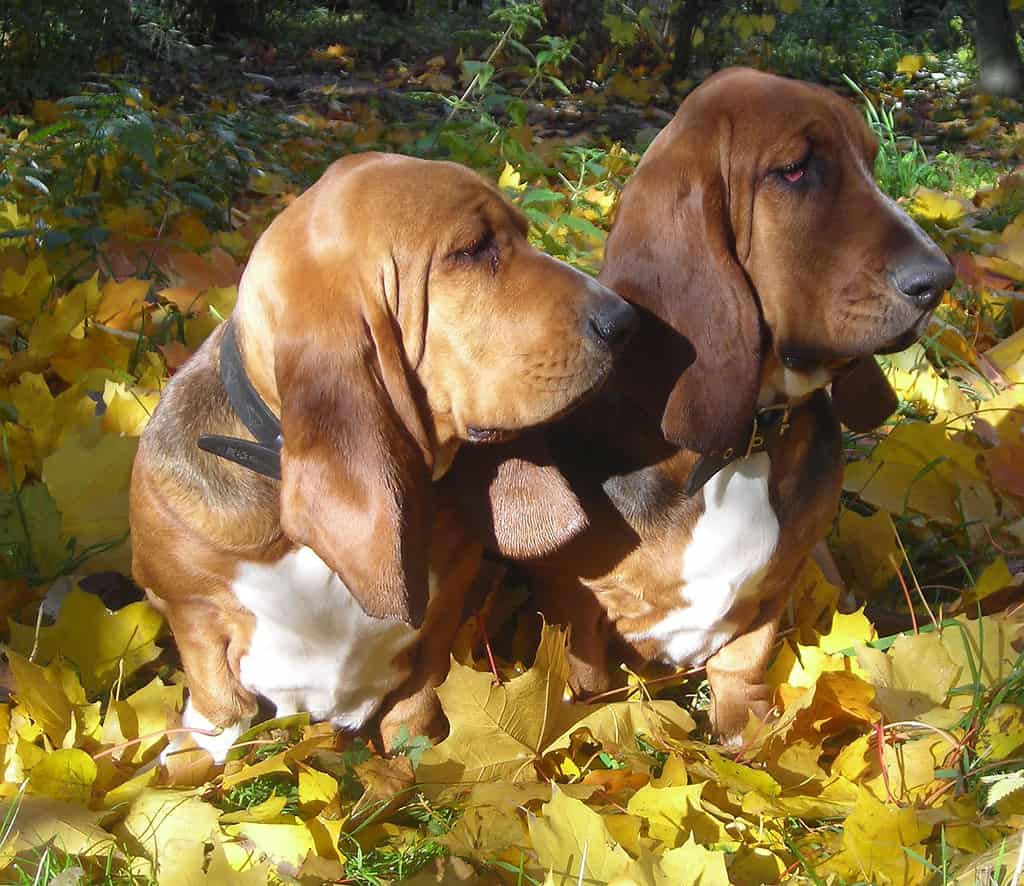
Experts recommend waiting to spay or neuter your basset hound until at least 6 months of age.
When Should My Basset Hound Be House Trained?
It’s never too early to start potty training. However, the ideal age is eight weeks, as this is when these pups are most likely to learn. Consistency is essential when potty training. Therefore, pick a designated area in the garden where you would like your basset to relieve itself, and always take the pup to that area. Try to create a routine by taking your basset out regularly, especially after naps, meals, and playtime. After a while, your puppy will associate that area with relieving itself, and the consistent routine will help reinforce its behavior.
While this process can be frustrating, staying patient and positive is vital. Dogs are very intuitive and can sense your emotions, so if you’re angry or stressed, it can rub off on your pup and hinder its progress. Accidents are bound to happen, and it’s important not to punish your basset. Instead, keep encouraging them to go outside and reward them with treats and praise when they do. Remember, patience, consistency, and a positive attitude are the keys to potty training your pup.
When Should My Basset Hound Stop Eating Puppy Food?
Basset hounds grow quickly, typically reaching full size by 12 to 18 months. Therefore, this is the best time to switch to adult food. However, consulting with your veterinarian before transitioning to a different food is essential. Puppies can suffer from growth abnormalities and nutritional deficiencies, resulting in delayed or stunted growth. It can also increase their risk of future joint, bone, brain, and eye conditions.
When Will My Basset Hound Start Losing Teeth?
As noted above, basset hound pups develop quite quickly. Their baby teeth start falling out between 12 and 16 weeks. During this time, watch for small, rice-sized teeth around the house. Their permanent teeth emerge as soon as the baby teeth have fallen out. However, this process is painful, so make sure your pup has chew toys to help ease their discomfort.
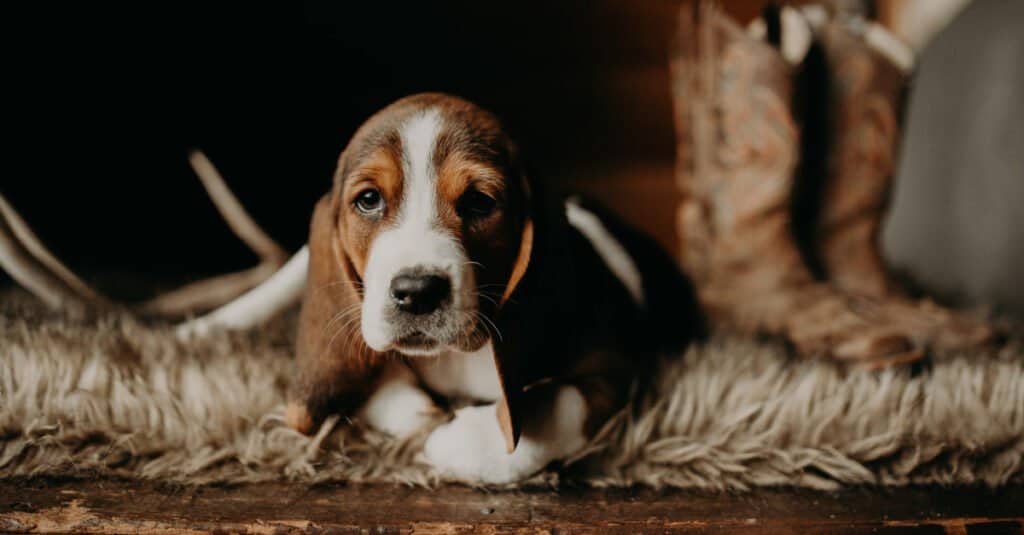
Basset hound pups may begin to lose teeth at around 12 weeks old.
©iStock.com/Jessica Nystrom
When Should I Start Training My Basset Hound?
You should start training your basset hound as soon as you bring your puppy home. When you train these dogs from a young age, it establishes good habits and prevents bad behavior as they get older. Bassets respond best to positive reinforcement. However, while treats work wonders, be sure that you do not give your hound too many. You can reward them with praise and toys as well. Basset hounds have a stubborn streak, so it’s essential to remain patient and consistent while training them. These dogs are scent hounds and are often trained for hunting purposes.
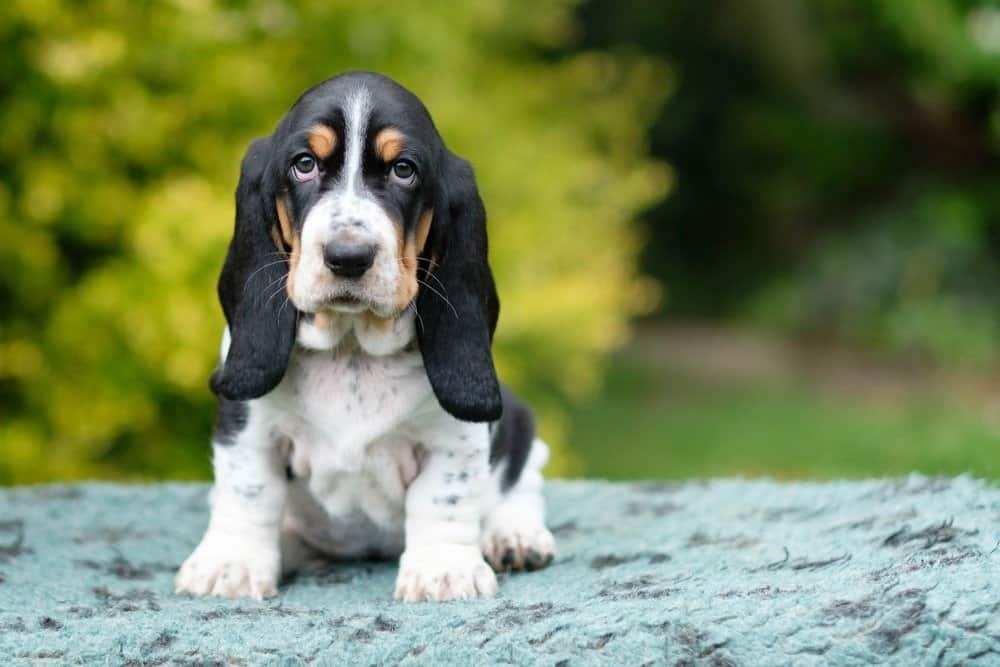
Basset hounds are great with children. However, they need to be trained and socialized from a young age.
©Jon Buscall/Shutterstock.com
What Cues Should I Teach My Basset Hound First?
The first words you should teach your basset are “No” and “Good,” as they need to differentiate between good and bad behavior. Once they know these words, you can move on to basic commands like “down,” “heel,” “sit,” and “come.”
When Will My Basset Hound Calm Down?
Basset hounds usually calm down between two and three years of age. This is when they reach full maturity, and their energy levels start to decline. However, if your basset receives the correct amount of exercise and socialization, a daily routine, and regular veterinary check-ups, they may calm down sooner. Another way to help them calm down is by spaying or neutering them.
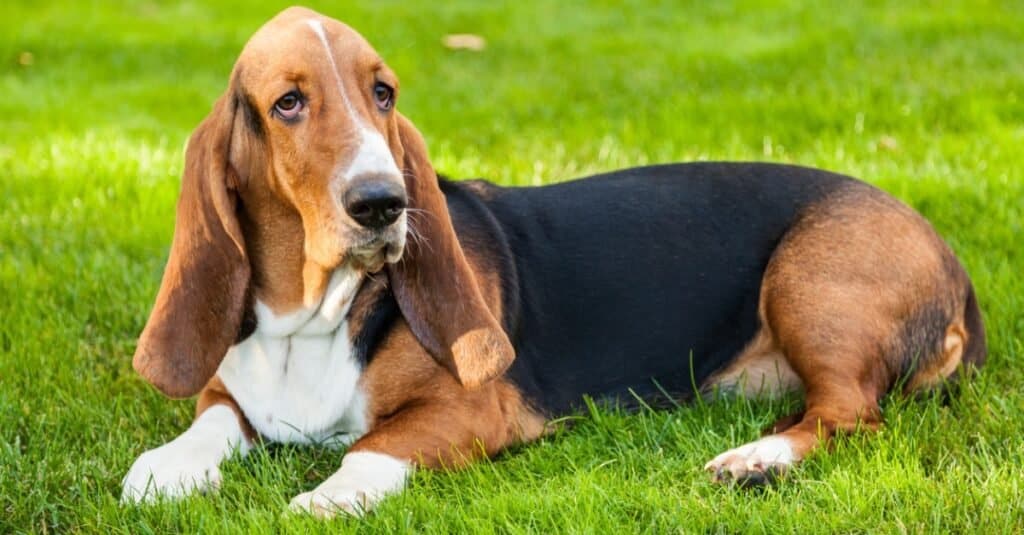
Basset hounds usually calm down between two to three years of age.
©iStock.com/artisteer
Common Health Issues Your Basset Hound Might Experience
Reputable breeders typically check for genetic health conditions, but it is important for owners to know what to look for. Since basset hounds have long, droopy ears, check them regularly to ensure that poor air circulation has not caused an infection. As basset hounds progress in life, they become prone to several health issues, including:
- Hip dysplasia
- Elbow dysplasia
- Obesity
- Luxating patella
- Eye conditions
- Dental diseases
- Glaucoma
- Hypothyroidism
- Bleeding disorders