
Quick Take
- Dogs can sniff out cancer, seizures, and COVID, but when it comes to pregnancy, the science hits a wall most people don't expect. See the science →
- One common dog behavior during pregnancy looks sweet at first, though vets warn it can turn dangerous fast. When protectiveness turns dangerous →
- The way you comfort your dog during pregnancy could make the baby's arrival significantly harder on both of them. Avoid this comfort mistake →
- Maternity leave is supposed to be a relief, but for your dog it can trigger a stress response you'd never see coming. How routine changes stress dogs →
You may have heard that dogs know when humans are pregnant. Many people claim dogs can even smell hormonal changes, but is this true? What does science say? In this article, we’ll discuss what the experts say about whether dogs sense pregnancy in humans. We will also go over the behavioral changes you might see in your dog, and how to make the addition of a new family member easier on your canine companion.
Does Your Dog Know That You’re Pregnant?
Science has shown that dogs can detect changes in human physiology through scent. They can sense blood sugar fluctuations in diabetes, detect certain cancers, and alert humans to epileptic seizures and early-onset PTSD symptoms through the odor of volatile organic compounds (VOCs) in their breath, urine, or skin. Dogs have also been trained to detect bacterial infections like Staphylococcus and C. Diff, as well as viruses such as COVID-19, through sweat or breath. Dogs also use other cues to sense changes in humans. For example, dogs who detect epileptic seizures or PTSD episodes watch for subtle differences in a person’s body language and behavior.
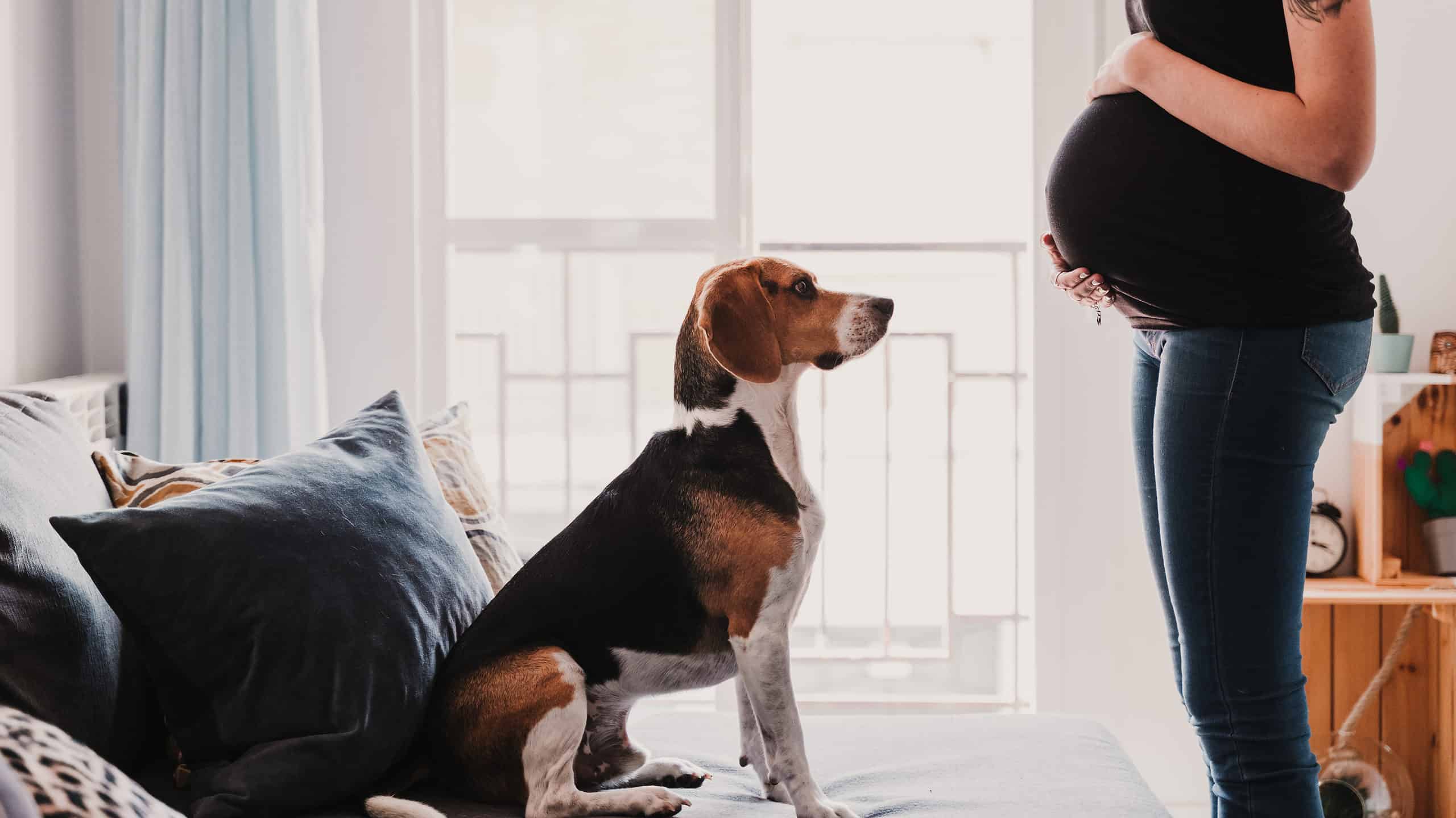
So, it is certainly plausible that your pooch could detect the hormonal changes that come with pregnancy, including increases in estrogen and progesterone. Experts note that hormonal changes create a distinct change in a person’s body odor. Your dog may also recognize changes in your gait or mannerisms, such as placing your arms over your belly. However, there are currently no formal scientific studies to prove that untrained dogs can sense human pregnancy.
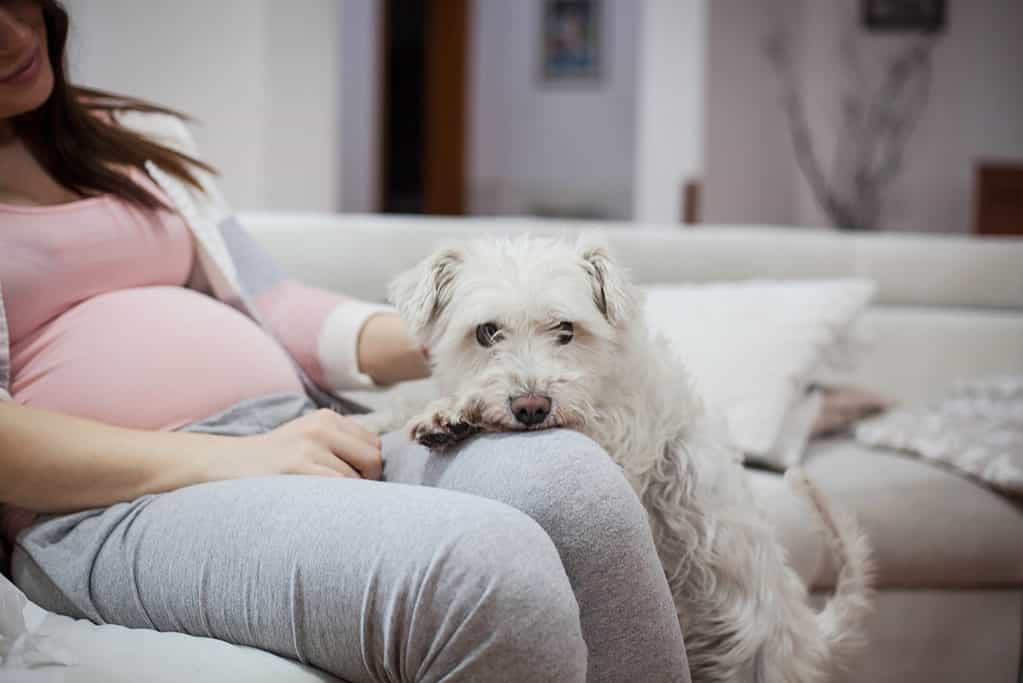
Dogs may be able to detect the hormonal changes that come with pregnancy, but it has not been proven.
©iStock.com/EllenaZ
Behavioral Changes You Might See in Your Dog
Even though your dog does not understand the idea of a human baby, your pup likely senses things are different through changes in your scent, body shape, and even routine. In one study from Queen’s University Belfast in Northern Ireland, around two-thirds of owners reported changes in their dog during pregnancy. Dogs may become clingy, protective, or even rebellious. Take a closer look at some of these behaviors in the following section.
Clingy Behavior
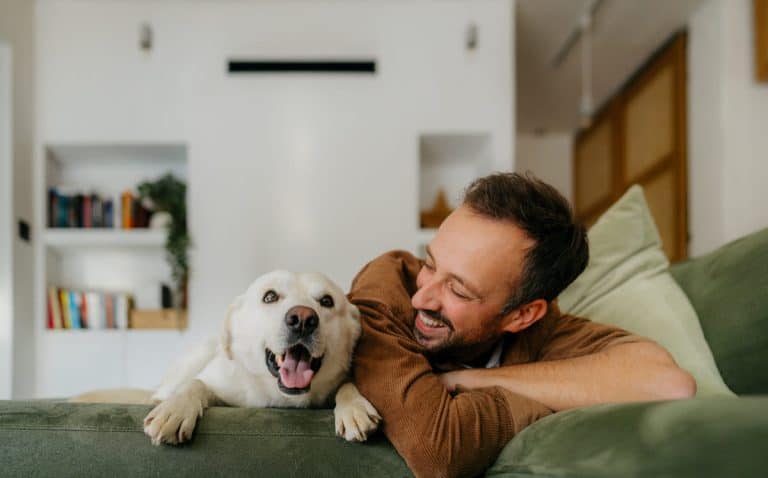
Dogs can, and often do, become clingy when you’re pregnant. After noticing a change in you, they might begin to cuddle you more often or refuse to leave your side while you’re home. Some dogs have “their person” in the house, but will leave their side once another person in the home becomes pregnant to cling to them instead. Some dogs may notice you’re sick due to the pregnancy and want to provide comfort.
Protective Behavior
Some dogs can become protective of their pregnant owner. They might see the pregnant person as vulnerable, especially if they’re sick from pregnancy or moving around less than usual. It’s possible your dog is protecting the fetus as well. Some dogs remain clingy and protective over the baby once the baby is born. Protectiveness in dogs can sometimes go awry. After all, a dog “protecting” you from others in the home isn’t the same as protecting you from a burglar. If your dog is getting overly protective, contact your veterinarian for advice before it escalates.
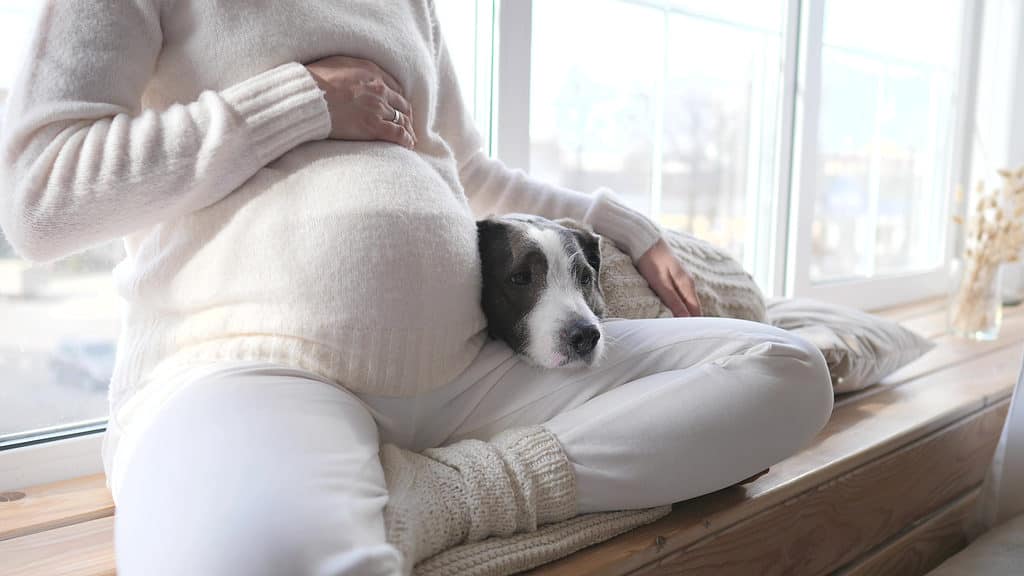
Some dogs that sense pregnancy can become protective of their pregnant owner.
©DiMedia/Shutterstock.com
Rebellious Behavior
Not all dogs know how to deal with changes in a good way, like giving extra cuddles. Some dogs may sense a difference in their guardians and misbehave as a result. This can especially be true if your dog is getting less attention, exercise, or mental stimulation. Ideally, others in the home should step in for the person who is pregnant if they are the dog’s main caretaker. Any dog who doesn’t receive enough walks or mental stimulation will start getting bored and potentially act out.
Even when cared for, a dog might act out due to the change in routine. Even if the other person does everything the same, your dog might wonder why the pregnant person isn’t spending as much time with them anymore. Or your dog might be used to the pregnant person going to work every day. Maternity leave can throw them off. Maybe they usually sleep while everyone’s away, but now someone is home and disrupting that routine.
How to Help Your Dog Negotiate the Changes
The first thing to remember is that your dog isn’t trying to make your life harder. This can be tough to remember, especially when having a rough pregnancy. Try to put yourself in their place. Dogs thrive on routine, and your dog has likely come to expect the same things day to day. Now, things are changing, and that’s incredibly stressful for a dog.
Here are some ways to help your dog, which will also help their behavior.
- Keep routines as similar as possible. Keep walks, meal times, and any other routines in your dog’s life the same, or as close as possible. The pregnant person may be unable to do this, but ideally others will step up to help!
- Give them extra attention. When a dog feels insecure, sometimes all they need is a bit more love to comfort them.
- Hire help. If you don’t have someone at home to help with your dog, consider hiring someone to help walk or groom them.
- Visit the veterinarian. If your dog is normally well-behaved, it’s important to rule out changes in their health. Sometimes dogs act out due to illness or pain.
- Give it time. Sometimes, all you can do is wait for your dog’s big feelings to pass. Once they get used to the changes in their life, they might adapt and go back to the well-behaved dog they used to be.
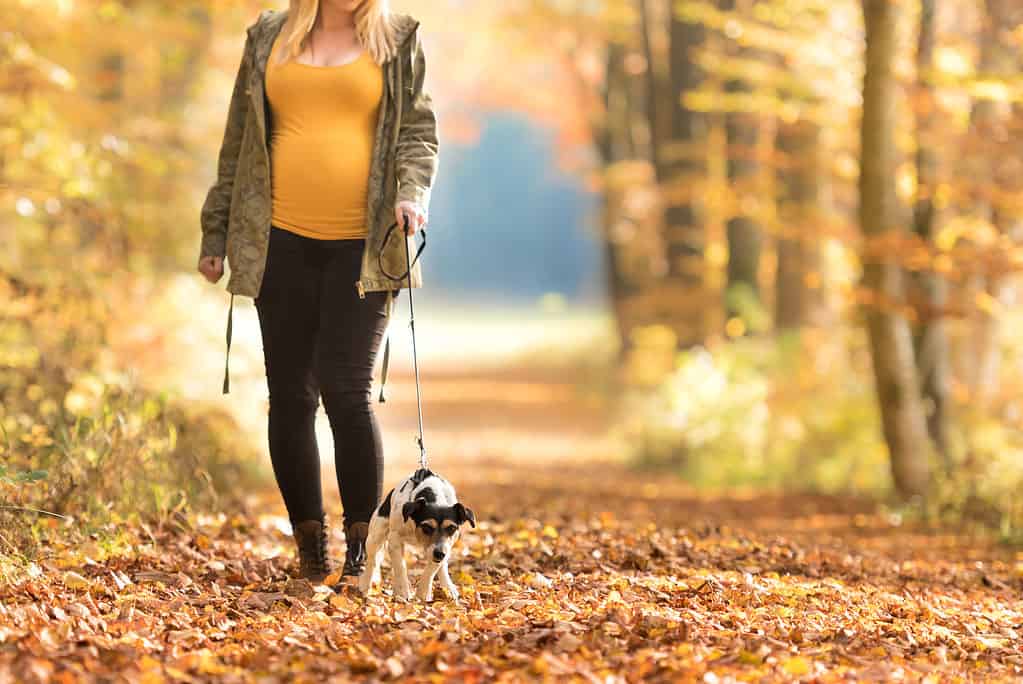
Keeping your dog’s routine the same during a pregnancy can help your dog to stay adjusted.
©thka/Shutterstock.com
Preparing Your Dog for the New Addition
Raising a dog and baby at the same time can be difficult, especially if you haven’t done it before. Here are some ways to make the process go more smoothly for you and your dog.
Make Lifestyle Changes Slowly
If you spend all day doting on your dog now, they’re going to have a hard time adjusting when you split your time to focus on the new baby. They might also resent the baby as the reason they aren’t getting the attention they want. Instead, start spending less time with your dog while you’re pregnant. I’m not suggesting fewer walks or neglecting your dog’s needs, just getting them used to your attention not always being focused on them.
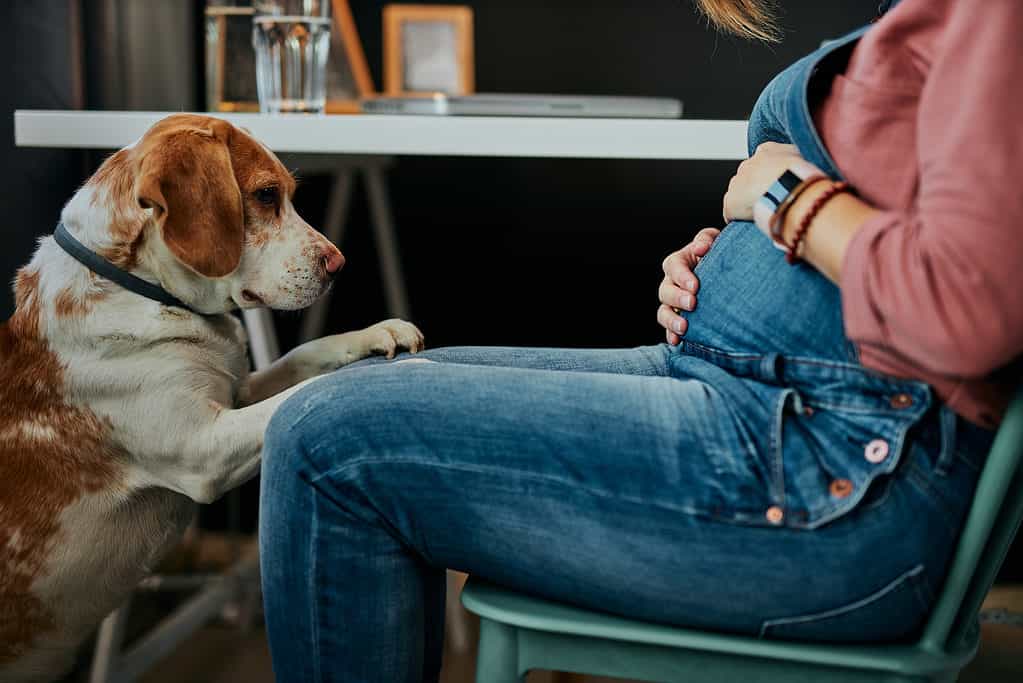
Your dog may need to get used to not being the center of attention.
©iStock.com/millann
Desensitize Your Dog to Baby Sounds and Smells
A baby crying can be very stressful to a dog, and they might go overboard getting in your baby’s face to find the source of the sound or in an attempt to help. One way to desensitize your dog to this is to play the sound of a baby crying on your phone or computer for them to hear before the baby comes home. This way, it won’t be brand new.
You can also do this with smells to a certain point. Let your dog smell the lotion you’ll use on your baby–you can even put it on yourself or a blanket so they can smell it regularly. This can be especially helpful for scent-driven dogs who might crowd the baby otherwise.
Work on Training and Socialization
Your dog should know basic manners before meeting your baby, as this will keep everyone safe. You don’t want them jumping on you while the baby is in your arms, for instance.
Some things to work on include:
- Not jumping on people
- Greeting people calmly
- “Place” command that teaches them to go to a bed or spot in the house to calm down
- “Leave it” command in case you need your dog to ignore the baby (if they’re getting over-excited about meeting them, for instance)
Mental Enrichment Can Temporarily Replace Physical Exercise
It’s understandable not to walk your dog the day you come home with your baby. If you don’t have anyone to step in for you, prepare some enrichment activities for the days you can’t go on walks or have as much play time as usual. These can include puzzle toys, frozen treat toys, lick mats, and even homemade dog enrichment games. You’ll want the activity to be difficult enough to keep your dog occupied and tire out their brain, but not so difficult that they give up.
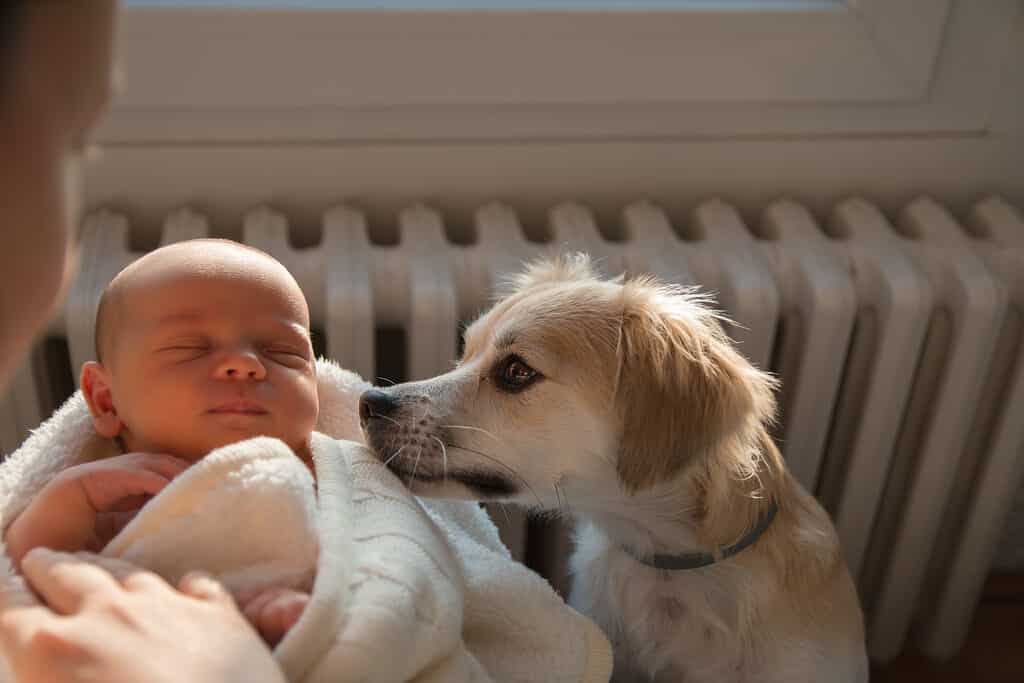
Slowly introducing your dog to your new baby can help with a smooth transition.
©Daniel Besic/Shutterstock.com
Leash Your Dog During the First Introduction
Some dogs get very excited around babies and don’t quite know their own size, or how to be gentle. They’ll likely be very curious when you bring the baby home and want to see them right away. Keeping them on a leash can stop them from jumping up, which could hurt the baby. It can also stop them from crowding the baby and doing too much sniffing.
Of course, you want your dog to meet your baby so that they know what’s happening and you can begin the process of teaching them to coexist peacefully. Constantly fussing at your dog for getting too close or not allowing them to interact at all can confuse your dog and make them associate the baby with your scolding, which doesn’t set up a good relationship for the two of them.
However, you also want to make sure introductions are done safely. Keep your dog on a leash and watch their body language. If they’re fearful, you might have to take the process more slowly and let them warm up to the baby. Don’t force your dog to interact if they’re not interested.