Quick Take
- An elephant throwing something at you might not mean what you think, and misreading the signal could put you in serious danger. See what throwing signals →
- Elephants send warnings long before they throw anything, yet most people standing right next to one completely miss the signs. Spot the warning signs →
- Most people would be surprised to learn which country has the world's largest elephant population, and it is not India. See which country leads →
- A trunk built for delicate work can also become a weapon, and researchers say there is a key reason you cannot always tell which mode an elephant is in. Understand trunk behavior →
Imagine being an elephant, minding your own business, when a group of people starts shouting at you to get moving. You probably wouldn’t be thrilled about it, either. And when the animal in question weighs several tons and has a remarkably powerful trunk, annoying it probably isn’t the smartest approach.
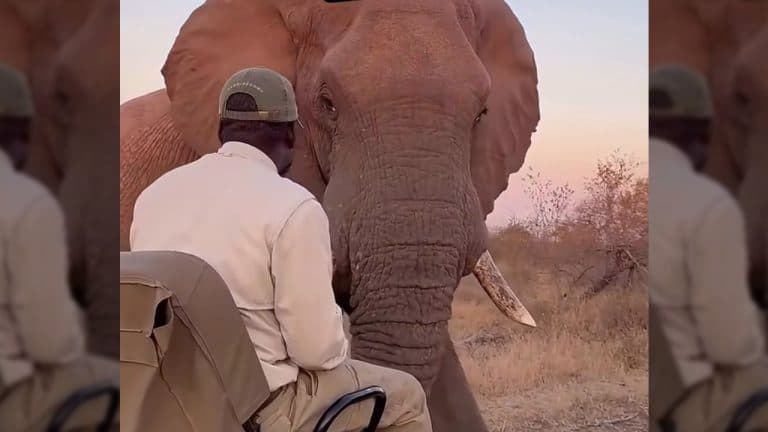
That’s what makes this footage from India so interesting. A large elephant stands near a group of people who appear to be calling out instructions. For a while, the animal stays where it is. Then it reaches down, grabs a bundle of sticks and brush, and sends the whole thing flying toward the people in front of it.
It’s an unusual moment to watch, but there’s more going on here than an elephant apparently losing patience. The encounter also raises an important question: When an elephant throws something in your direction, is it simply moving an object, or could it be sending a warning?
Watch the Elephant Throw a Bundle of Branches
The footage, uploaded to YouTube by Vidya Menon Padikkal, reportedly shows an elephant in India surrounded by several people who are shouting in its direction. The people appear to be encouraging the animal to move or perform some kind of task, although the video doesn’t establish exactly what they’re asking it to do.
For much of the opening minute, the elephant remains in roughly the same position. Meanwhile, the people continue calling out. There’s plenty of noise, but the animal doesn’t seem particularly interested in cooperating.
Then, around the 53-second mark, things take an interesting turn. The elephant lowers its trunk, wraps it around a bundle of brush and sticks, and lifts the material off the ground.
At approximately 1:01, it flings the bundle toward the people standing in front of it. They quickly move backward as the branches come their way. Fortunately, the footage doesn’t show anyone being struck.
It’s tempting to interpret the moment as the elephant telling everyone to leave it alone. And given the circumstances, that certainly seems like one possible explanation. But we can’t know exactly what the animal was thinking from a short video. What we can say is that its behavior deserves to be taken seriously.
Why Do Elephants Throw Branches and Other Objects?
An elephant’s trunk is an extraordinary piece of anatomy. It combines the functions of a nose and an upper lip, allowing the animal to smell, breathe, drink, investigate its surroundings, and manipulate objects. Elephants can use their trunks for surprisingly delicate tasks, but they can also move heavy vegetation with considerable force.
Throwing branches isn’t necessarily a sign of aggression. Elephants routinely interact with vegetation while feeding, clearing obstacles, exploring their environment, or engaging in other natural behaviors.
However, researchers have also documented object-tossing in situations involving frustration, distress, or threatening displays. An elephant that feels uncomfortable may throw vegetation, shake its head, spread its ears, or exhibit other behaviors intended to communicate with nearby animals or people.
That distinction matters here. We don’t have enough information to establish the elephant’s emotional state, but throwing a bundle of sticks toward nearby people is certainly a good reason to give the animal more room.
What Are the Warning Signs of an Agitated Elephant?
Elephants are highly intelligent, social animals with sophisticated communication abilities. They use vocalizations, body posture, physical contact, and subtle movements to communicate with one another. Unfortunately, people don’t always recognize those signals, particularly when they’re focused on getting an elephant to do something.
Depending on the situation, potential warning behaviors can include spreading the ears, shaking the head, trumpeting, swinging the trunk, tossing vegetation, or moving toward a perceived threat. Not every instance of these behaviors indicates aggression, and interpreting them correctly requires understanding the surrounding circumstances.
According to guidance on human-elephant conflict, elephants may throw branches or other objects during threatening displays. Wildlife experts emphasize the importance of recognizing changes in an elephant’s behavior and maintaining a safe distance rather than trying to provoke a reaction.
The people in this video appear to get the message once the branches start flying. Whatever prompted the elephant’s behavior, backing away rather than continuing to crowd or pressure it is the sensible response.
Where Do the World’s Largest Elephant Populations Live?
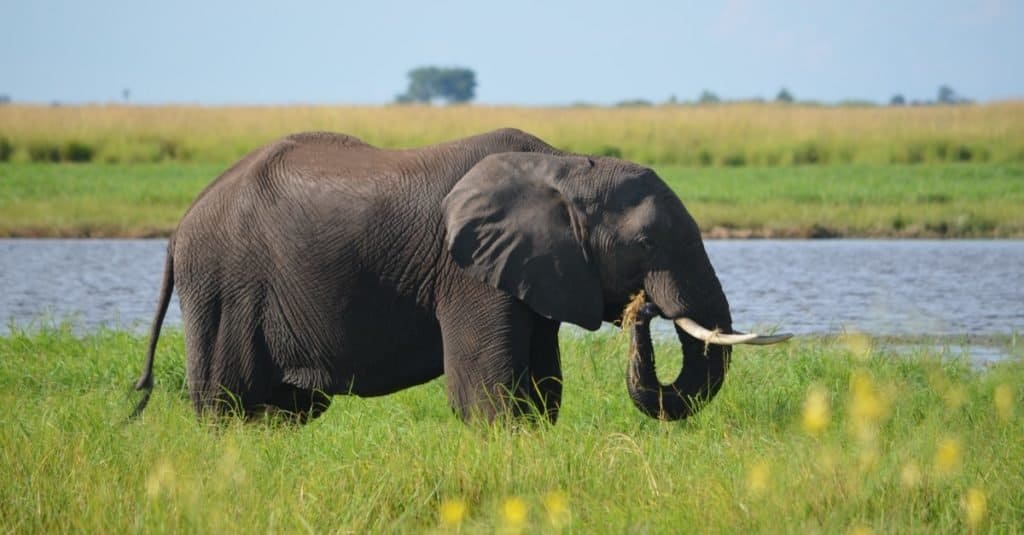
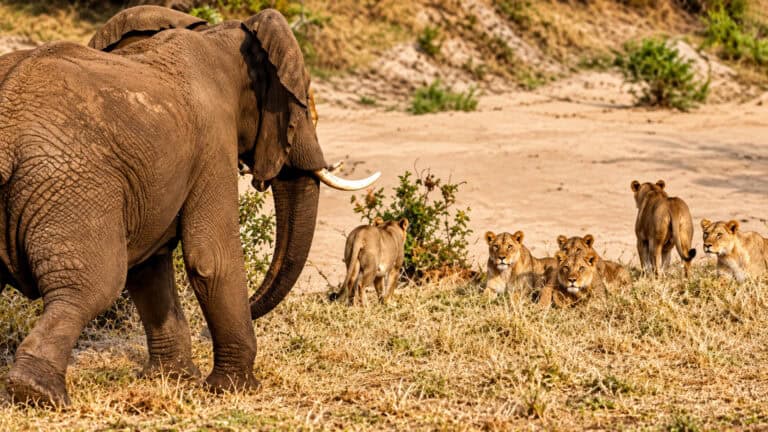
African elephants are the world’s largest living land animals, with adult males considerably larger than their Asian counterparts.
©LauraBerlin/Shutterstock.com
Although the elephant featured in this footage is reportedly in India, the world’s largest national elephant population is found thousands of miles away in Botswana, southern Africa.
Research from Elephants Without Borders estimated Botswana’s elephant population at approximately 130,000 in 2024. A subsequent scientific review published in 2025 placed the country’s total population at roughly 140,000, reflecting differences in the areas and estimates considered.
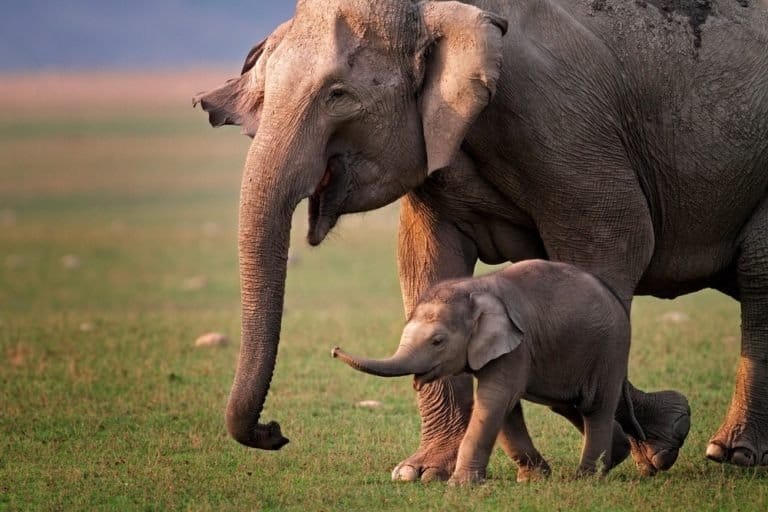
India, meanwhile, is home to Asian elephants, a different species from the African savanna elephants that account for most of Botswana’s population. Asian elephants are generally smaller and have differently shaped ears and other distinguishing physical features.
Despite their differences, both species are immensely powerful animals that deserve space and respect. A close encounter might make for an entertaining video, but it’s worth remembering that an elephant can cause serious injuries even without an intentional attack.
Watch the Elephant Encounter Below
Take a look at the original footage and watch what happens around the one-minute mark. The elephant’s ability to pick up and throw the bundle is impressive enough. The reaction from the people standing nearby is a reminder that getting too close to an uncomfortable elephant can become dangerous very quickly.