
Quick Take
- The rarest Chihuahua color is not only hard to find but also comes with serious health consequences that most owners don't realize are linked to breeding for it.
- Some Chihuahua colors that look nearly identical actually come from completely different genetics, a distinction that breeders take very seriously.
- One coat pattern doesn't naturally occur in purebred Chihuahuas at all. Yet it's still being produced, with a hidden danger most buyers overlook.
- Two colors that are both common on their own become surprisingly rare when paired together, and the reason comes down to how Chihuahua genetics actually work.
Chihuahuas are some of the smallest, cutest dogs on the planet! You’ve likely seen a few colors of Chihuahua, such as red, cream or tan and black. However, have you ever seen a pure black or white Chihuahua or one with a brindle coat? In this article, we’ll go through 31 Chihuahua coat colors from rarest to most common.
Standard Chihuahua Colors
According to the American Kennel Club (AKC) breed standard, all coat colors and combinations are acceptable in Chihuahuas, including “solid, marked, and splashed.” Splashed means the dog is a solid color, generally white, with irregular “splashes” or patches of another color. Chihuahuas are one of the most color-diverse dog breeds registered by the AKC.
#1: White
Many Chihuahuas have white in their coats, but pure white Chis are the rarest of them all! Albino Chihuahuas, or those without any pigment, are the rarest, but they are also more likely to be blind, deaf, and prone to sunburn. A reputable breeder will never purposefully breed albino puppies due to these increased health risks.
However, leucistic Chihuahuas, white dogs with partial pigment in their skin, don’t have any more health problems than any other Chi. They have a mostly white or pale coat, but a naturally pigmented nose, eyes, and paw pads.
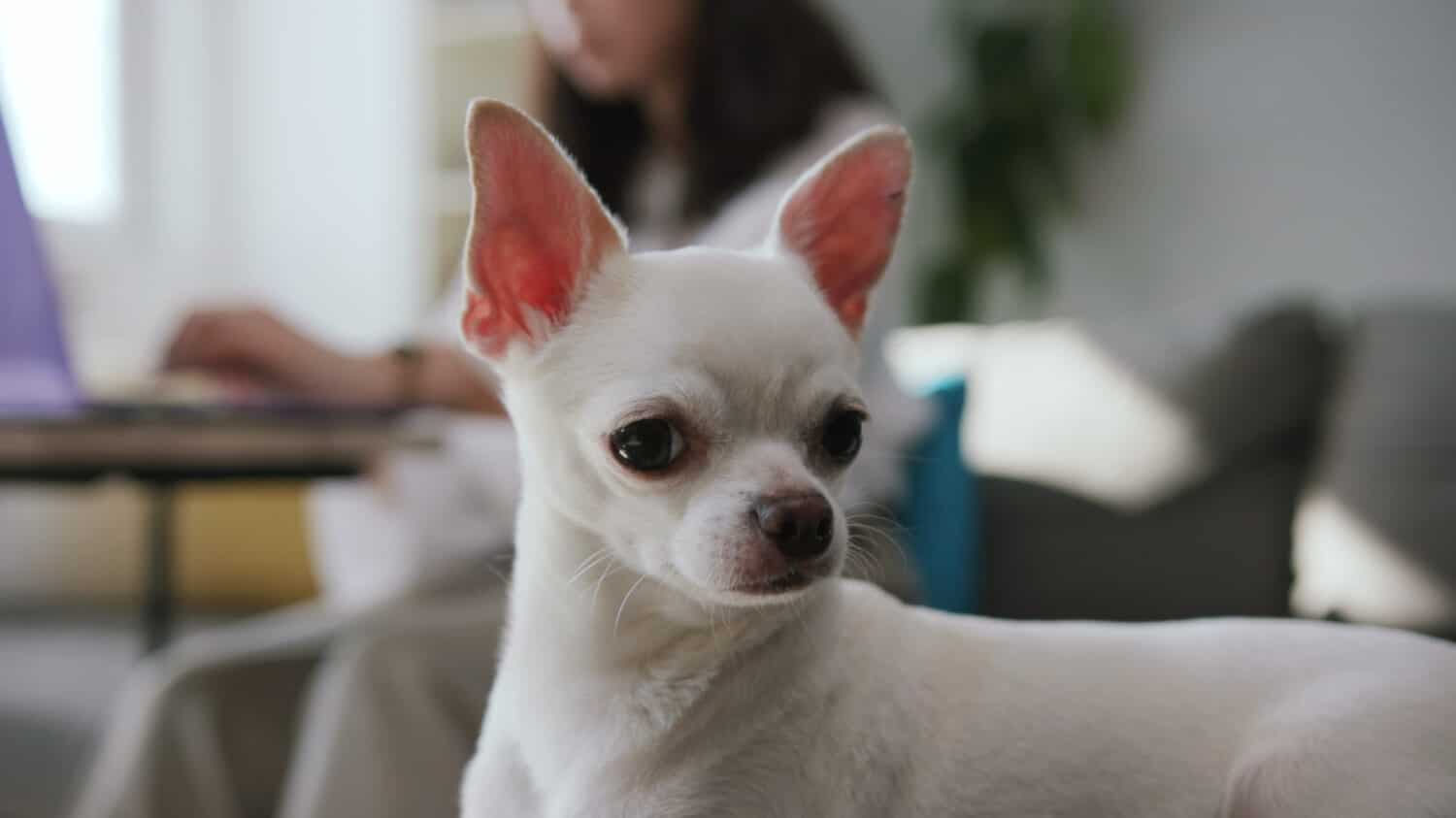
Pure white Chihuahuas are the rarest color of all.
©Fractal Pictures/Shutterstock.com
#2: Blue Merle
Blue merle Chihuahuas have light coats with a mottled pattern of darker blue or black markings. In dogs, the color blue is more of a slate grey shade. Merle does not naturally occur in purebred Chihuahuas, so it is rare. They commonly have two different-colored eyes or blue eyes. Two dogs with merle genes should never be bred together, as this can result in double merle puppies. The double merle gene is associated with a variety of health issues.
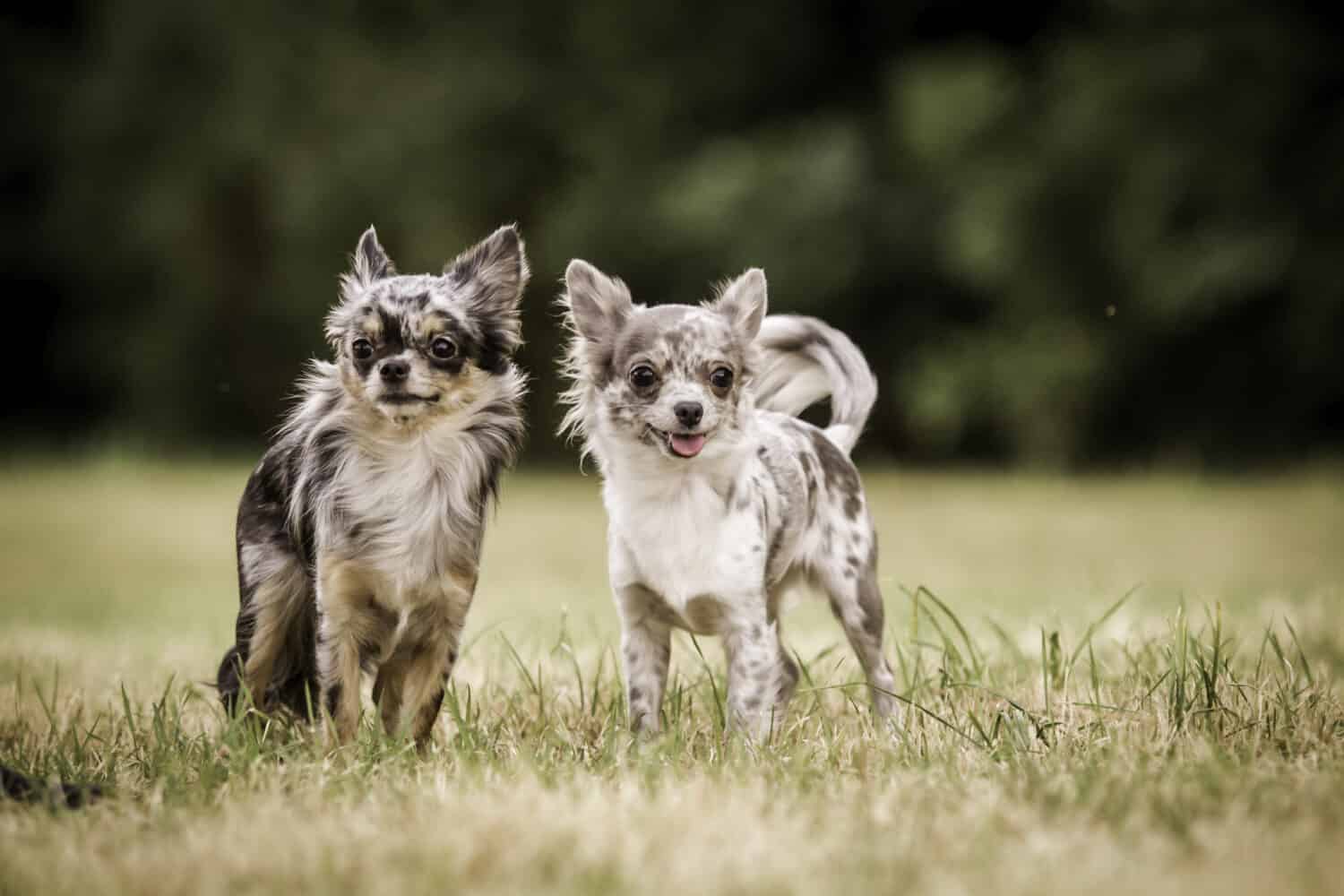
Blue merle Chihuahuas have a mottled pattern of black or grey patches on a lighter base coat.
©Aneta Jungerova/Shutterstock.com
#3: Chocolate Blue
Chocolate blue Chihuahuas are also called lilac or dilute chocolate, which is a light brown color. The color is due to the chocolate gene, which requires two copies of the brown gene (one from each parent), and the dilute gene, which results in a grey-brown coat with a silvery sheen. The nose, paw pads, and eye rims will appear brownish-grey or taupe.
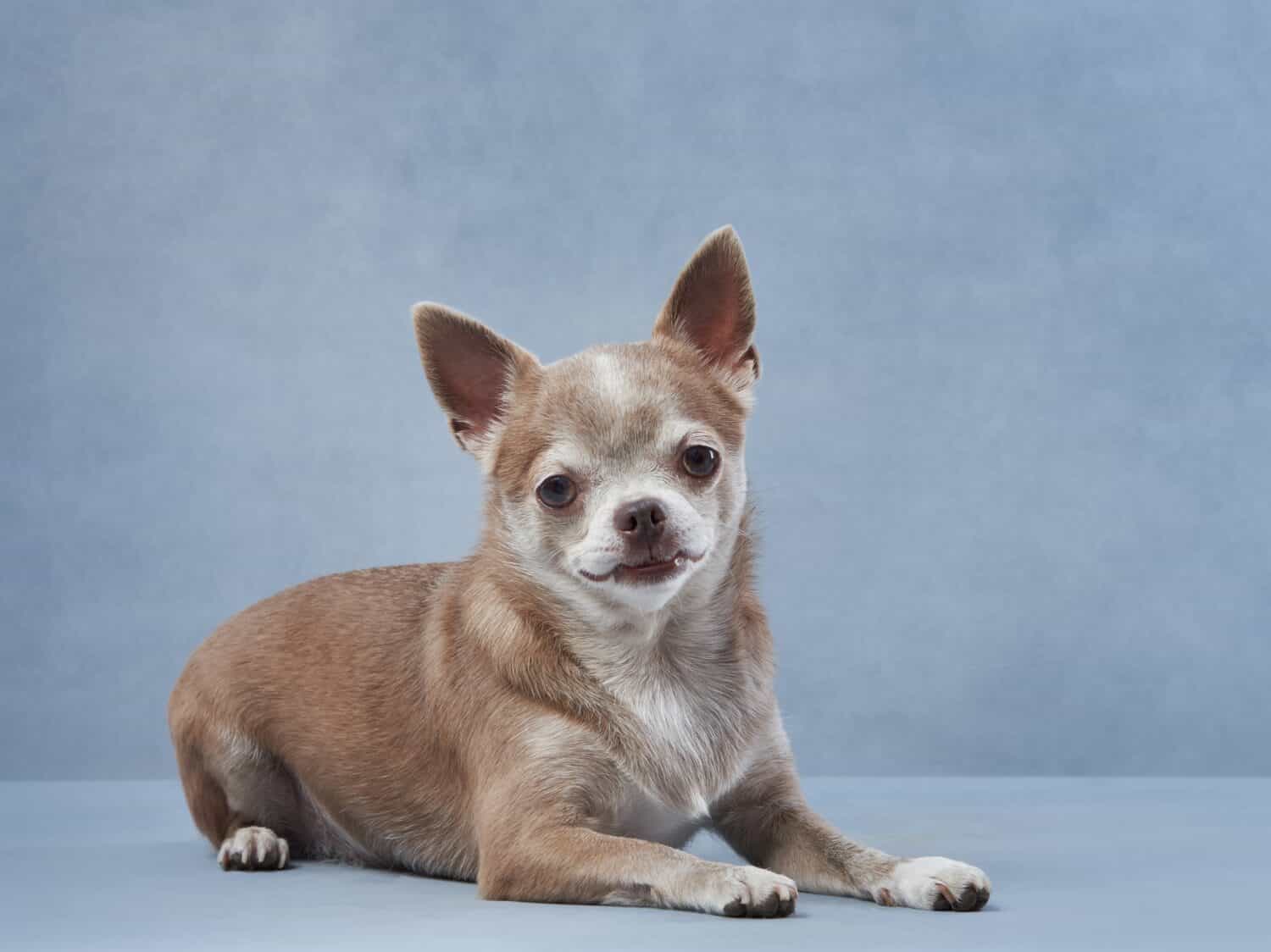
Chihuahuas with dilute brown fur are called “chocolate blue.”
©dezy/Shutterstock.com
#4: Blue and Tan
Blue and tan Chis have a greyish-blue coat with tan points, generally on the paws, muzzle, and above the eyes. The blue color is a dilution of black. It is recessive, so both parents must carry the dilution gene to produce blue and tan Chihuahuas.
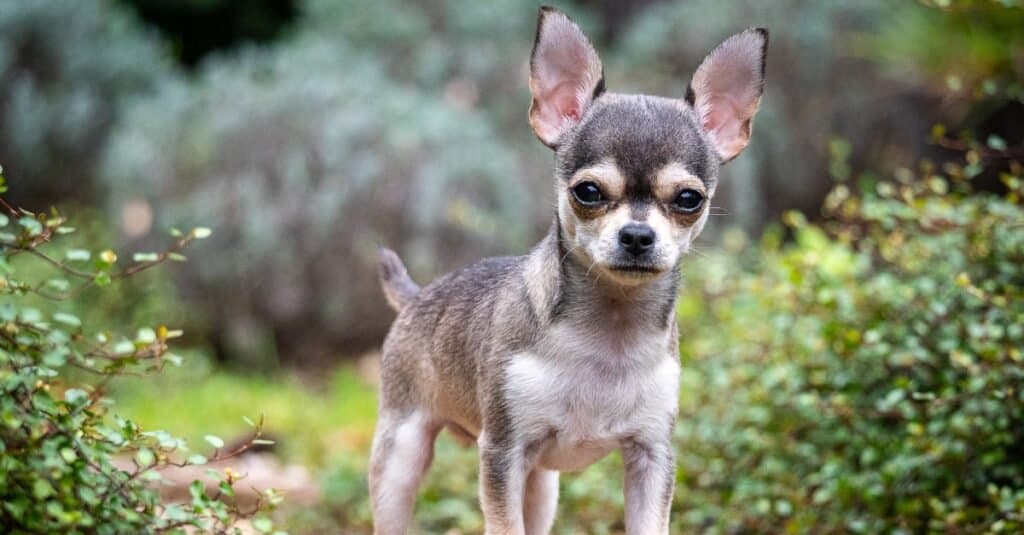
Blue and tan Chihuahuas have a greyish-blue coat with tan points.
©iStock.com/Aime Martin
#5: Chocolate and Tan
Chocolate and tan Chihuahuas have a brown base coat with tan points, typically on the cheeks, over the eyes, inside the ears, and on the legs. Both parents must carry the brown gene to produce puppies with chocolate color patterns.
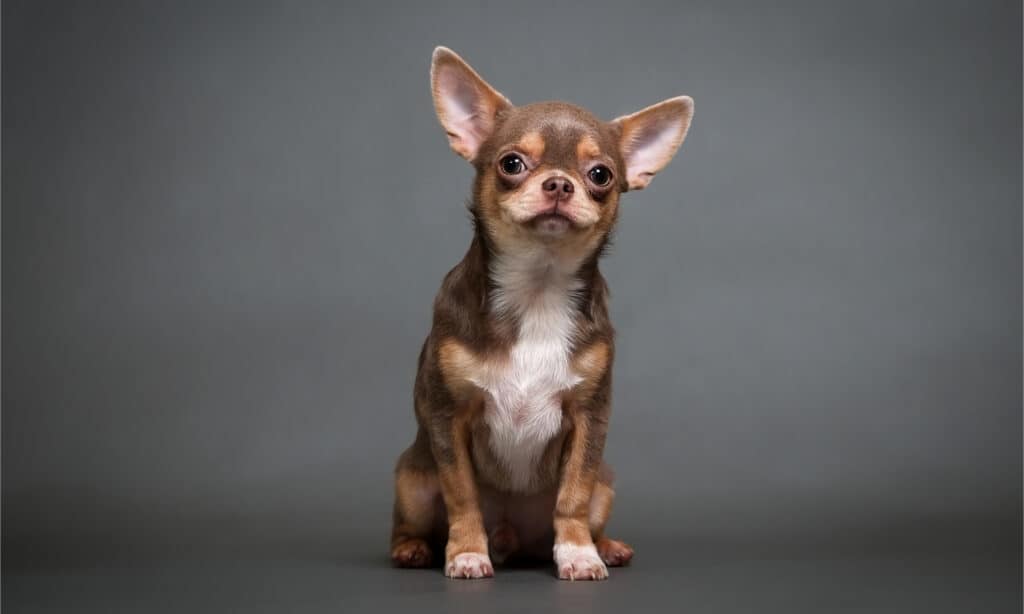
Both parents must carry the brown gene to produce puppies with chocolate color patterns.
©Al_Er/Shutterstock.com
#6: Blue
Blue dogs have dilute black genes, resulting in slate grey, charcoal, or silvery-blue fur. As mentioned previously, the color is caused by a recessive gene, so it is uncommon.
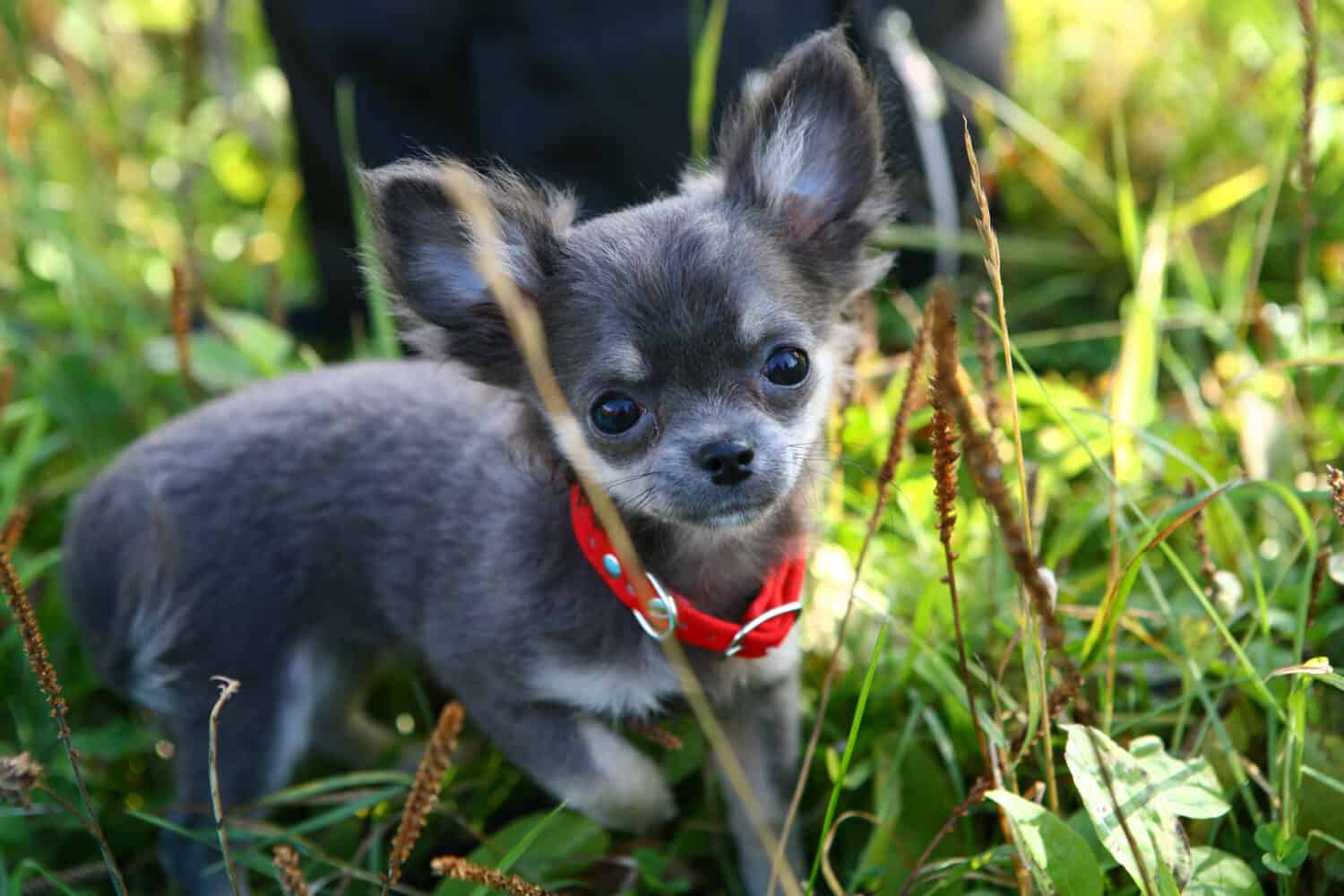
Chihuahuas with dark grey fur are called “blue.”
©Artem Bruk/Shutterstock.com
#7: Chocolate
Chocolate Chihuahuas have light milk chocolate to dark brown coats. They generally have brown or liver-colored noses instead of black. Both parents must carry the recessive brown gene to produce chocolate puppies.
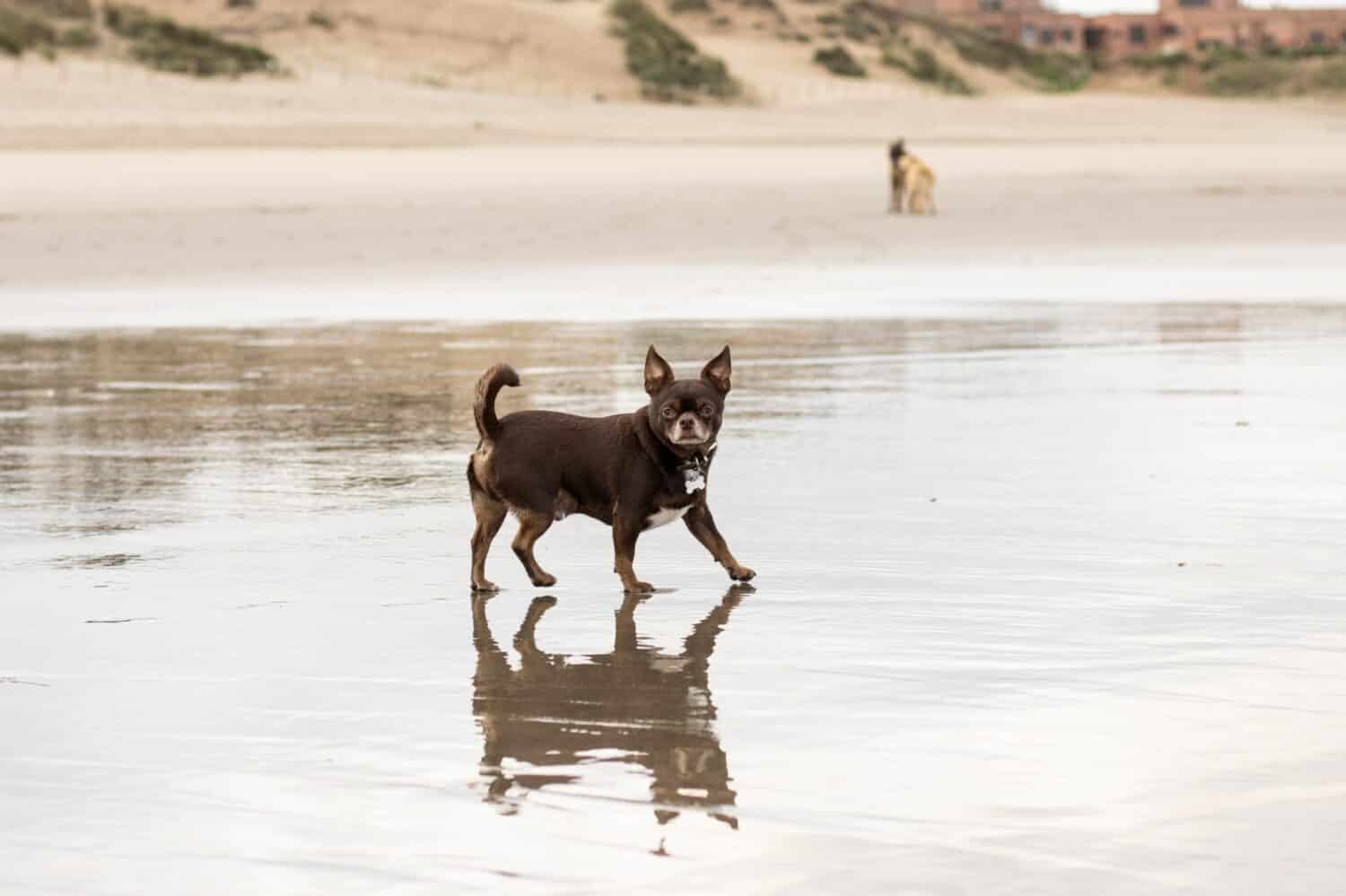
Chocolate Chihuahuas usually have brown or liver-colored noses.
©Patri Sierra/Shutterstock.com
#8: Black
There are many black Chihuahuas out there, but most aren’t pure black. Instead, they have a small amount of other fur colors, even if it’s just a small white spot or similar.
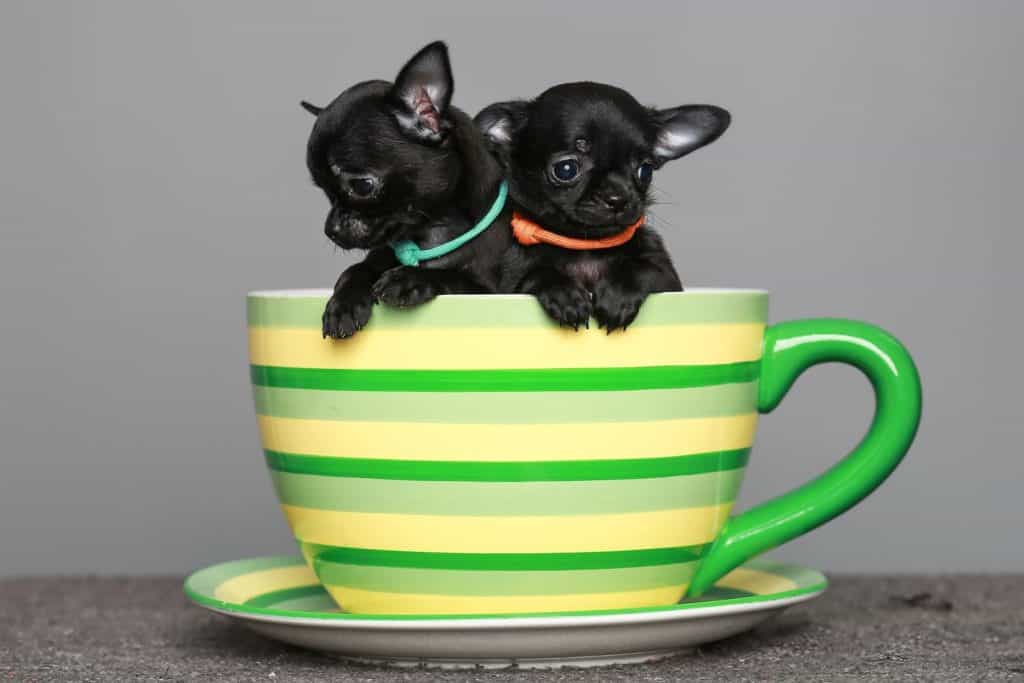
While black is a common coat color, pure black Chihuahuas are rare.
©Olga Kalimulina/Shutterstock.com
#9: Black and Silver
Black and silver dogs have a mostly black coat accented with silver points, commonly on the chest, muzzle, and eyebrows. The colors typically contrast more distinctly as the dog matures. Both long and short-haired dogs are seen in this color pattern.
#10: Blue-Brindled Fawn
Blue-brindled fawn Chihuahuas have a silvery blue base coat with fawn (warm tan) highlights, accented by darker brown or black tiger-like stripes.
#11: Chocolate-Brindled Fawn
As the name suggests, chocolate-brindled fawn Chihuahuas have a fawn-colored base with chocolate stripes. Chocolate brindles have brown noses, paw pads, and eye rims.
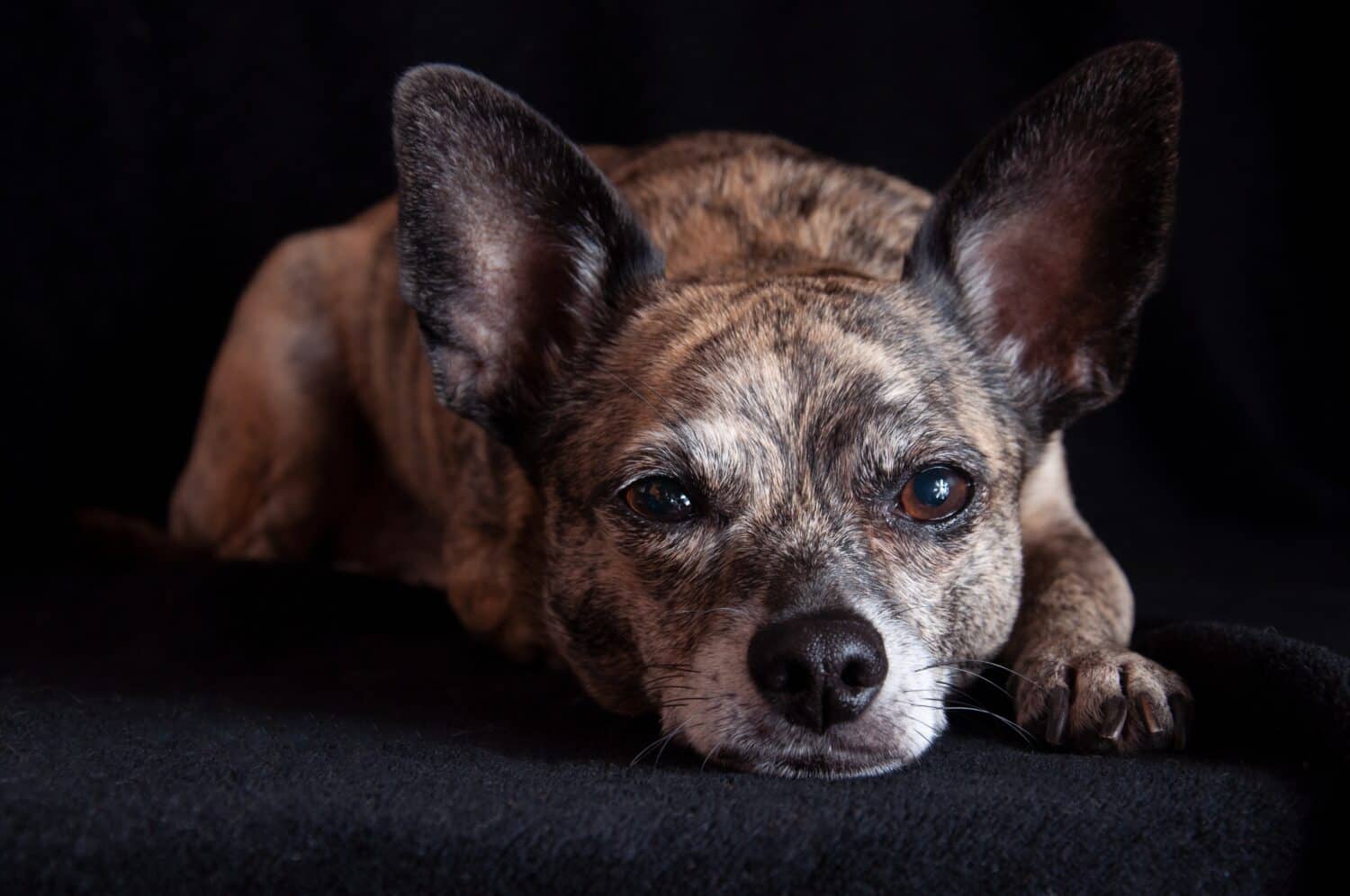
Brindle describes a tiger-striped coat pattern.
©Jes Abeita/Shutterstock.com
#12: Fawn-Brindled Black
Fawn-brindled black Chihuahuas have black base coats with fawn stripes. This pattern is sometimes called a reverse brindle.
#13: Silver
Silver Chihuahuas have gray and white coats, which gives them a shimmery appearance. Since the genes required to breed a silver Chihuahua are recessive, they’re not seen very often. They also look very similar to blue Chihuahuas.
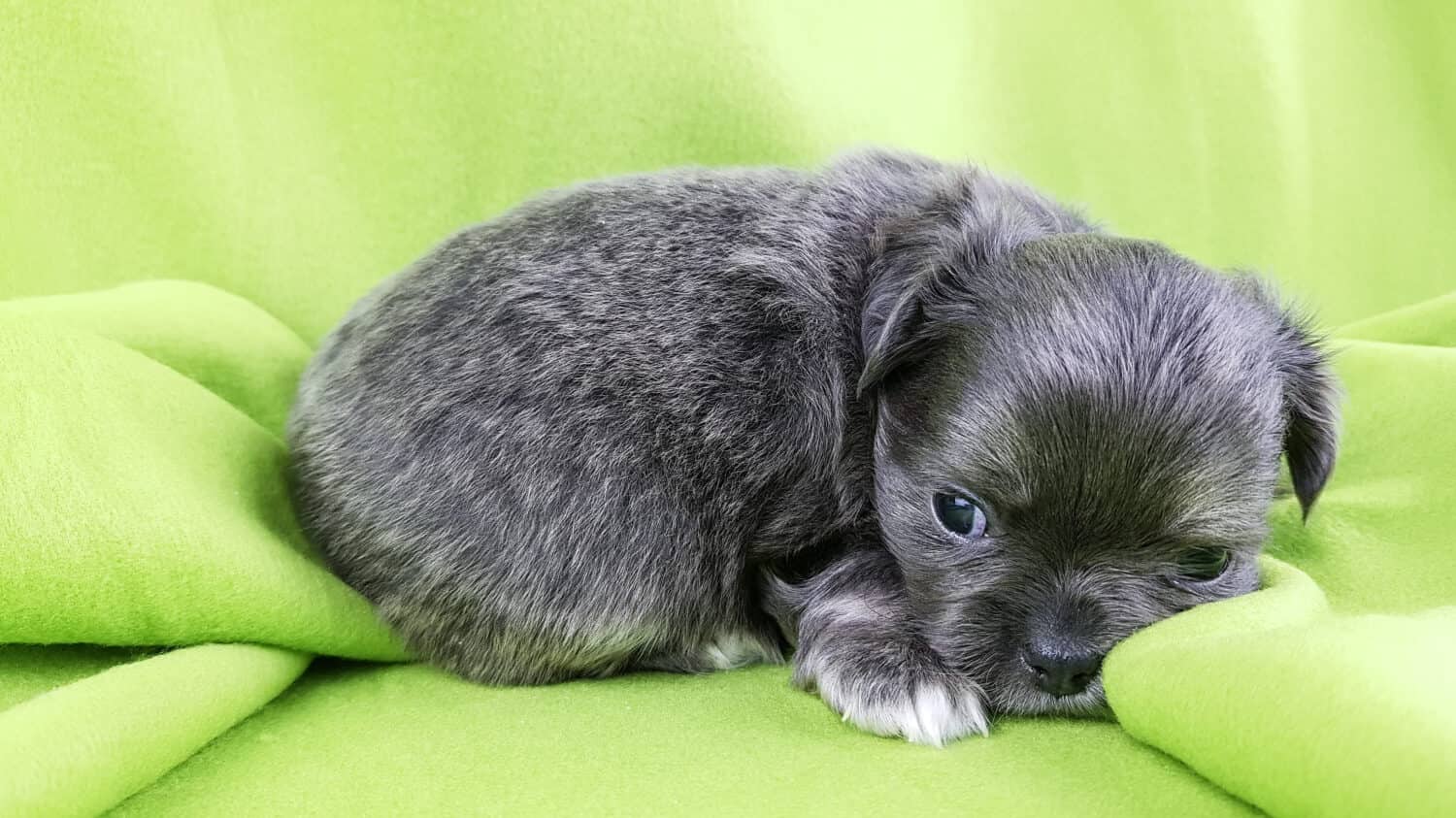
The coat of a silver Chihuahua is caused by a recessive dilution gene.
©Natalivideo/Shutterstock.com
#14: Silver and White
Silver and white Chihuahuas have a mostly white coat with silver patches of fur.
#15: Blue Fawn
Chihuahuas with blue fawn coats have light tan fur with a shimmery greyish-blue sheen. The blue is particularly seen on the nose, lips, and paw pads.
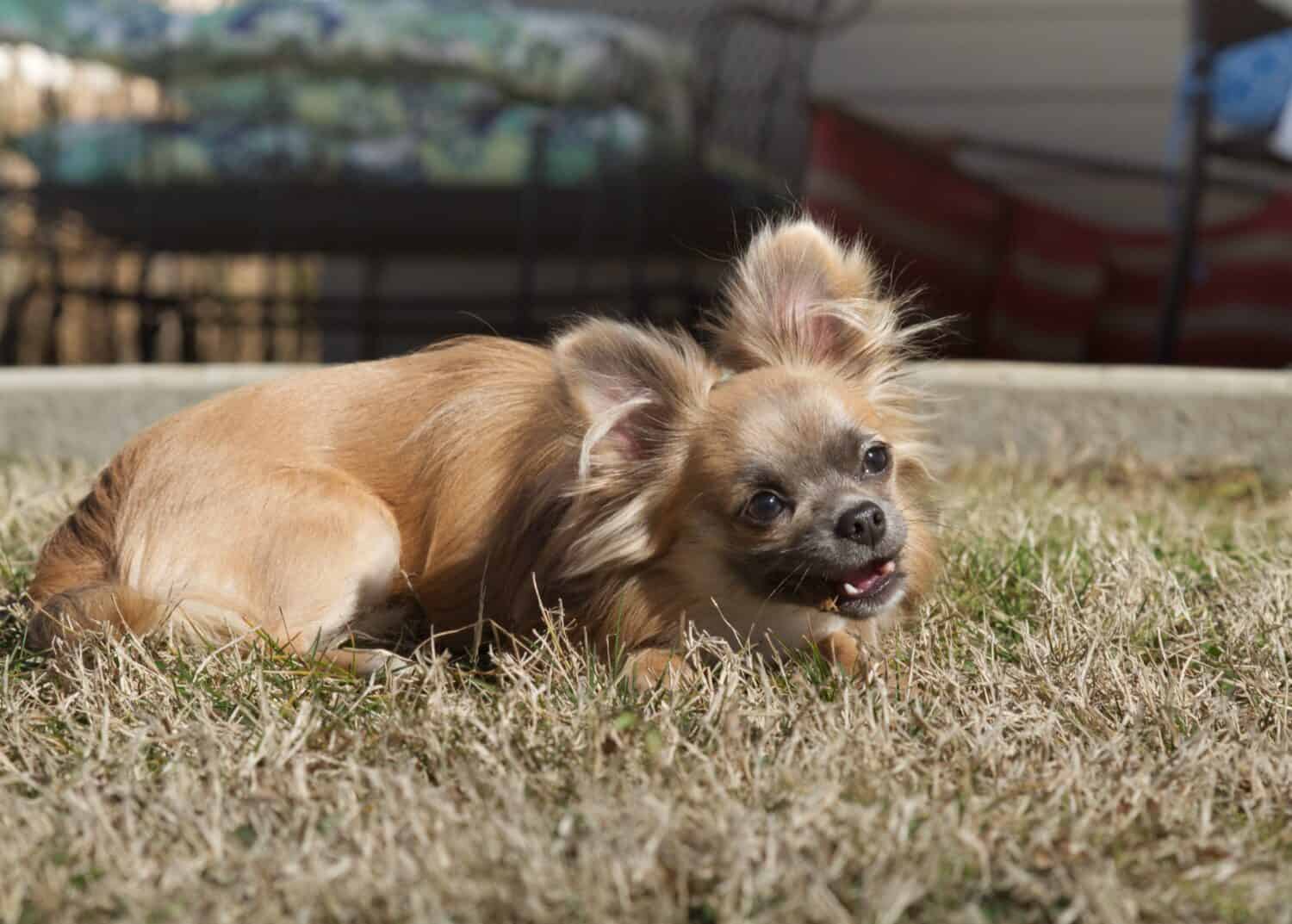
Blue fawn Chis have light fawn-colored coats with a greyish-blue sheen.
©Angela Dow/Shutterstock.com
#16: Black and Red
Though black and red are both common in Chihuahuas, they’re a pretty rare combination! Black and red dogs typically have a dark base coat with reddish-brown markings.
#17: Black and White
Black and white Chihuahuas can have distinct black and white markings, or they can be more of a piebald pattern, with white patches against a black base.
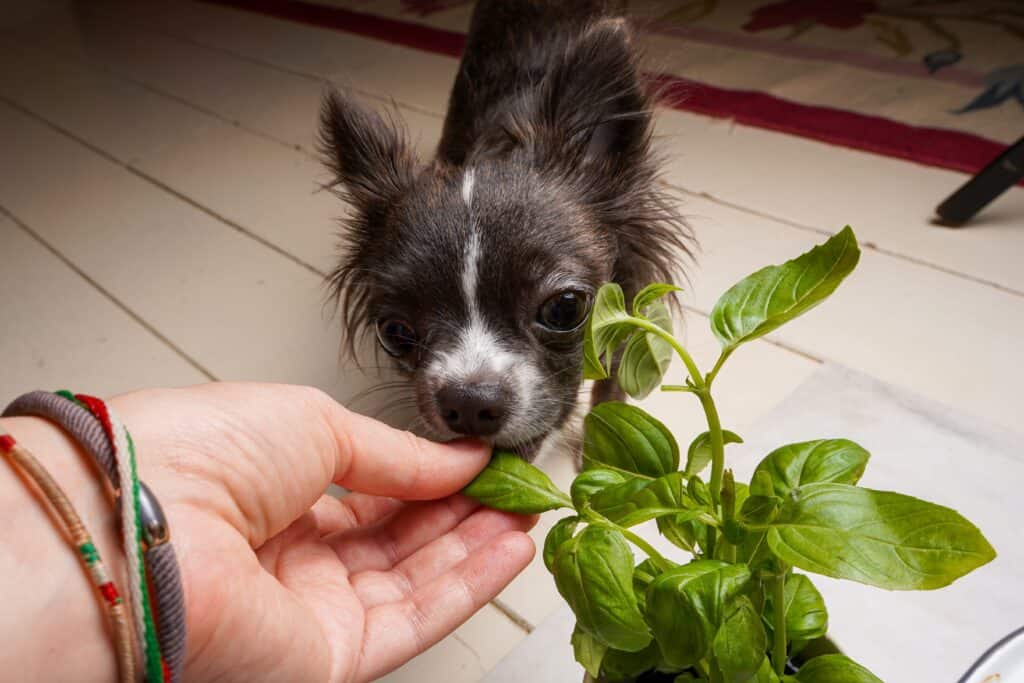
Black and white Chihuahuas can have distinct markings or piebald patterns.
©Polina Eugenevna/Shutterstock.com
#18: Black-Sable Fawn
Sable fur is light at the root and darker at the tip. Therefore, black-sable fawn Chihuahuas have fur with fawn roots and black tips.
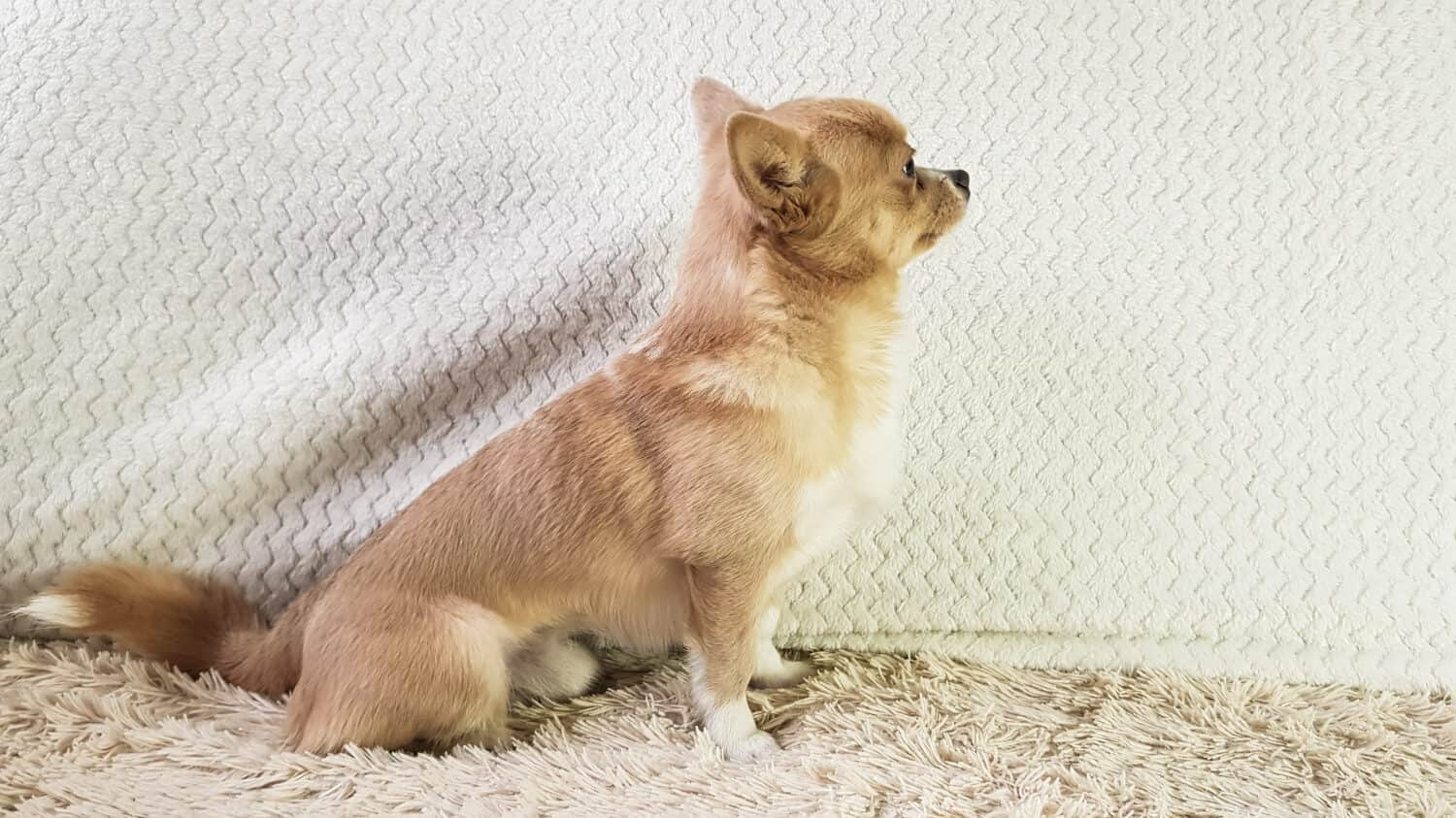
Sable coats have a “ticked” pattern, with darker tips.
©Natalivideo/Shutterstock.com
#19: Black-Sable Silver
Similarly, black-sable silver Chis have silver roots and black tips, making a gradient pattern on each strand of fur.
#20: Blue and White
Blue and white Chihuahuas have a diluted black coat mixed with white markings. However, the blue gene is caused by recessive dilution genes, so it isn’t as common as some other colors. They typically have a mostly blue coat with a white chest, paws, collar, or blaze on their face.
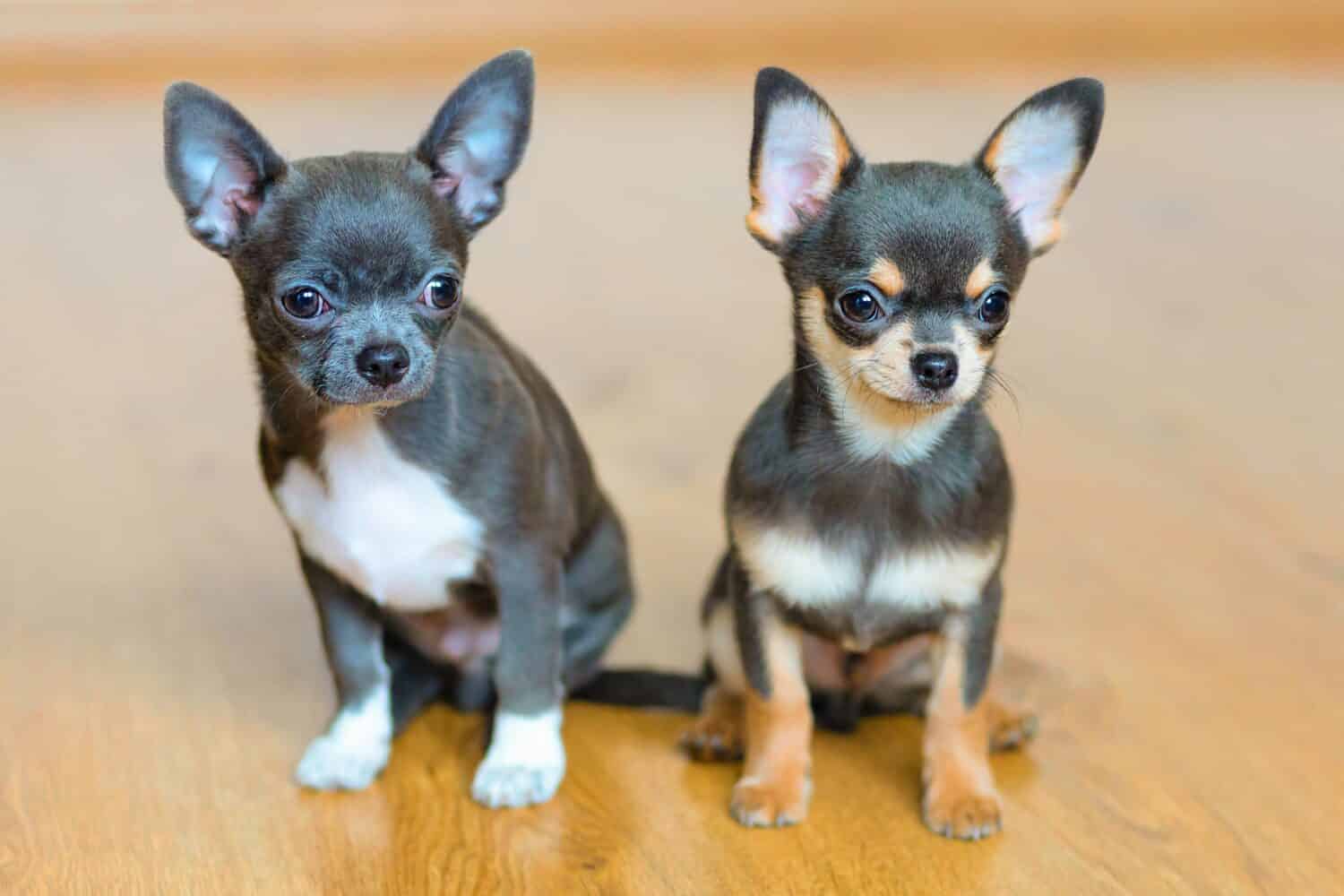
Blue and white Chihuahuas are mostly blue with white markings.
©ElenaYakimova/Shutterstock.com
#21: Chocolate and White
Chocolate and white Chihuahuas have dark brown coats with white markings, often on their chests and paws. As noted previously, the chocolate color requires a copy of the brown gene from each parent.
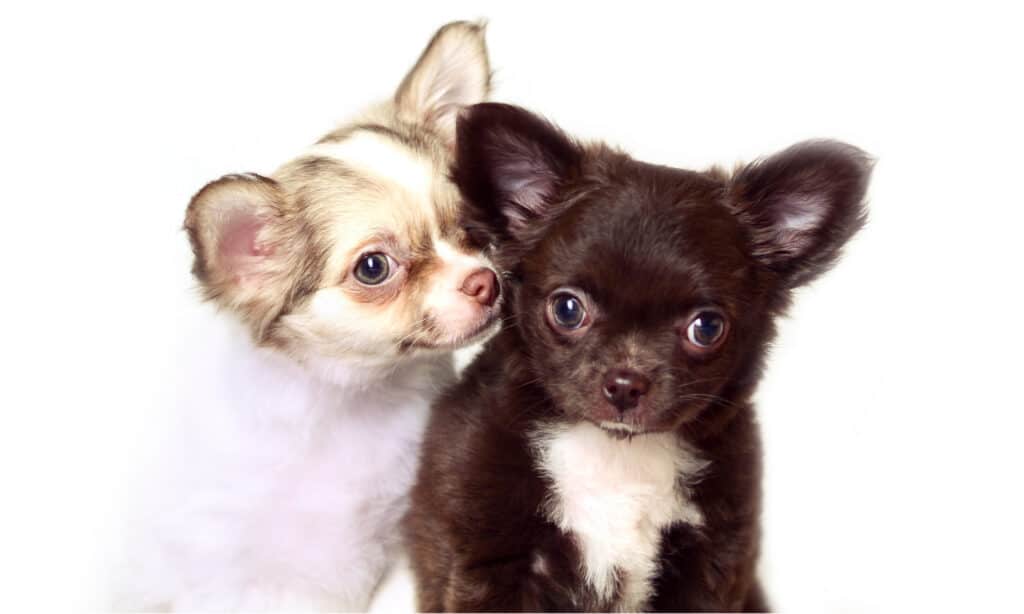
Chocolate and white Chihuahuas often have white markings on their chests.
©iStock.com/Tatiana Serebryakova
#22: Chocolate-Sable Fawn
Chocolate-sable fawn pups have fawn coat roots with chocolate tips. The nose, eye rims, lips, and paw pads will be chocolate or liver-colored instead of black.
#23: Cream and White
The coats of cream and white Chihuahuas are basically a dilution of fawn with patches of white. They may also have white coats with cream patches.
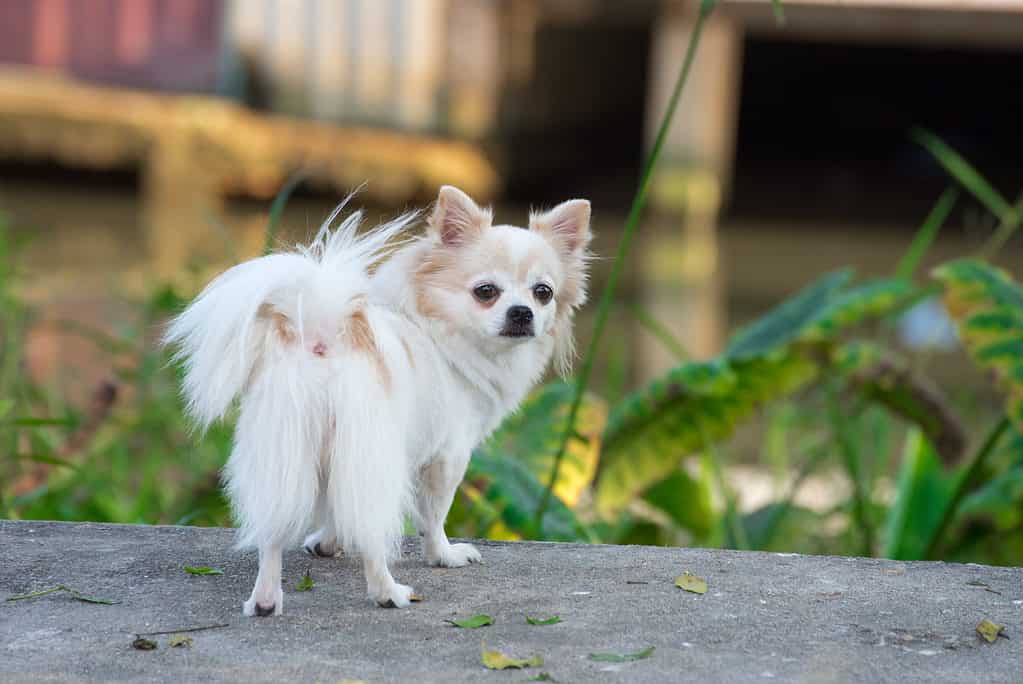
The color cream is much lighter than fawn, which is more of a warm tan shade.
©MODMOD/Shutterstock.com
#24: Gold
Gold Chihuahuas are essentially a richer, brighter fawn color with a metallic or red undertone that catches the light.
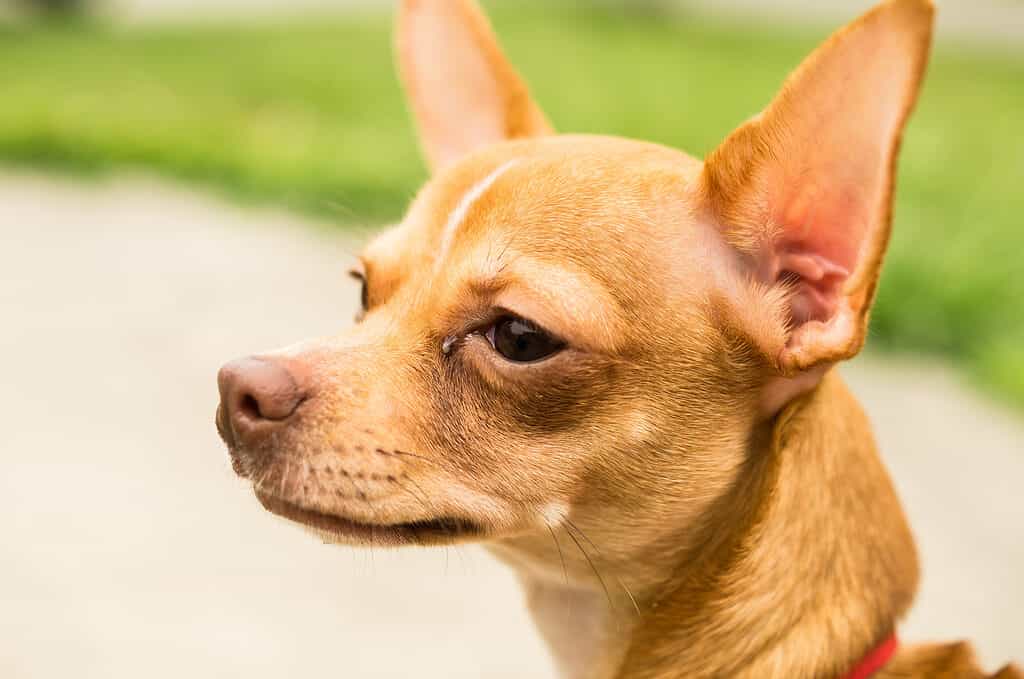
Fawn and gold coats are very similar, but gold is a richer shade and shimmers in the light.
©Toro_The_Bull – Arturelia/Shutterstock.com
#25: Gold and White
Gold and white Chihuahuas generally have a reddish-gold base with white markings on their muzzles, necks, chests, legs, and tails.
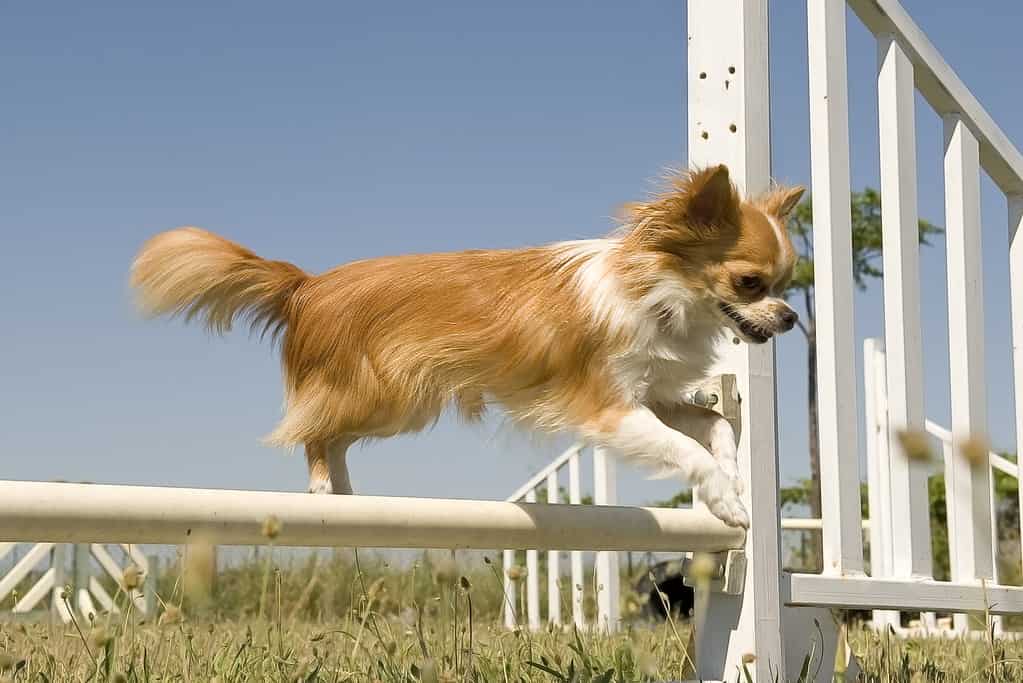
Some Chihuahuas with gold fur also have white markings.
©iStock.com/cynoclub
#26: Red and White
In dogs, red is an orange-brown color. Therefore, red and white Chihuahuas are really orange and white. They’re a little darker in color than gold and white Chis.
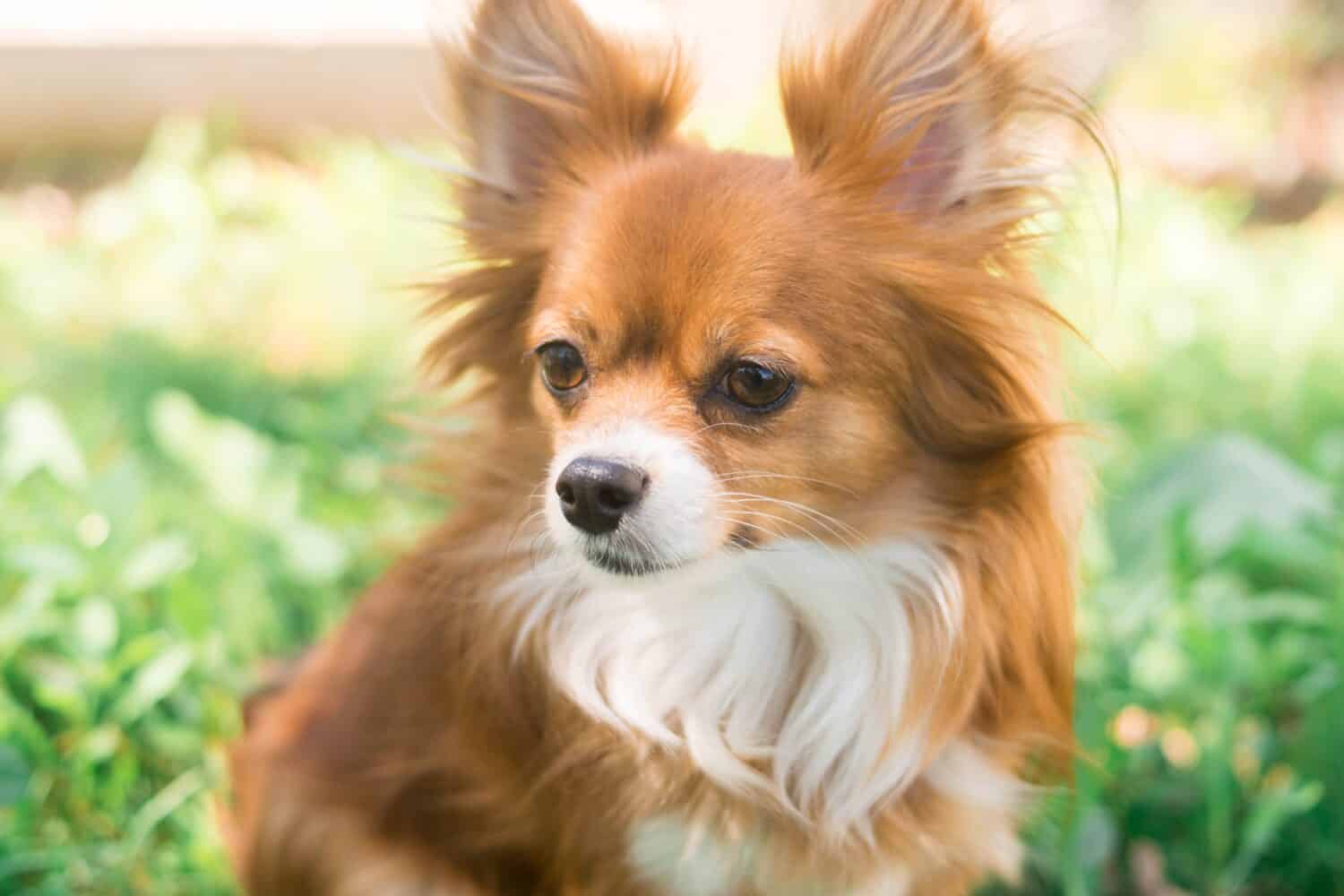
Orange-brown coats in dogs are referred to as red.
©Lisa Chip/Shutterstock.com
#27: Fawn and White
Fawn and white Chihuahuas have warm, light tan bodies with white markings, typically found on the face, muzzle, chest, belly, and feet. It is among the most popular color patterns.
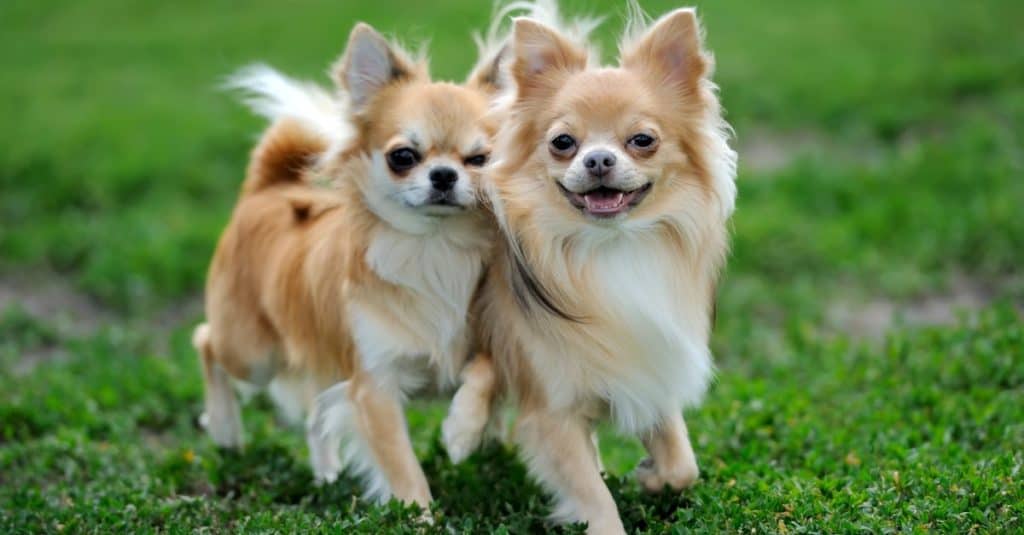
One of the most popular Chihuahua coat colors is fawn and white.
©Volodymyr Burdiak/Shutterstock.com
#28: Cream
Cream Chihuahuas have pale, off-white coats that are a dilution of fawn. They typically have subtle yellow undertones. Cream pups usually have black or brown eye rims, lips, and noses.
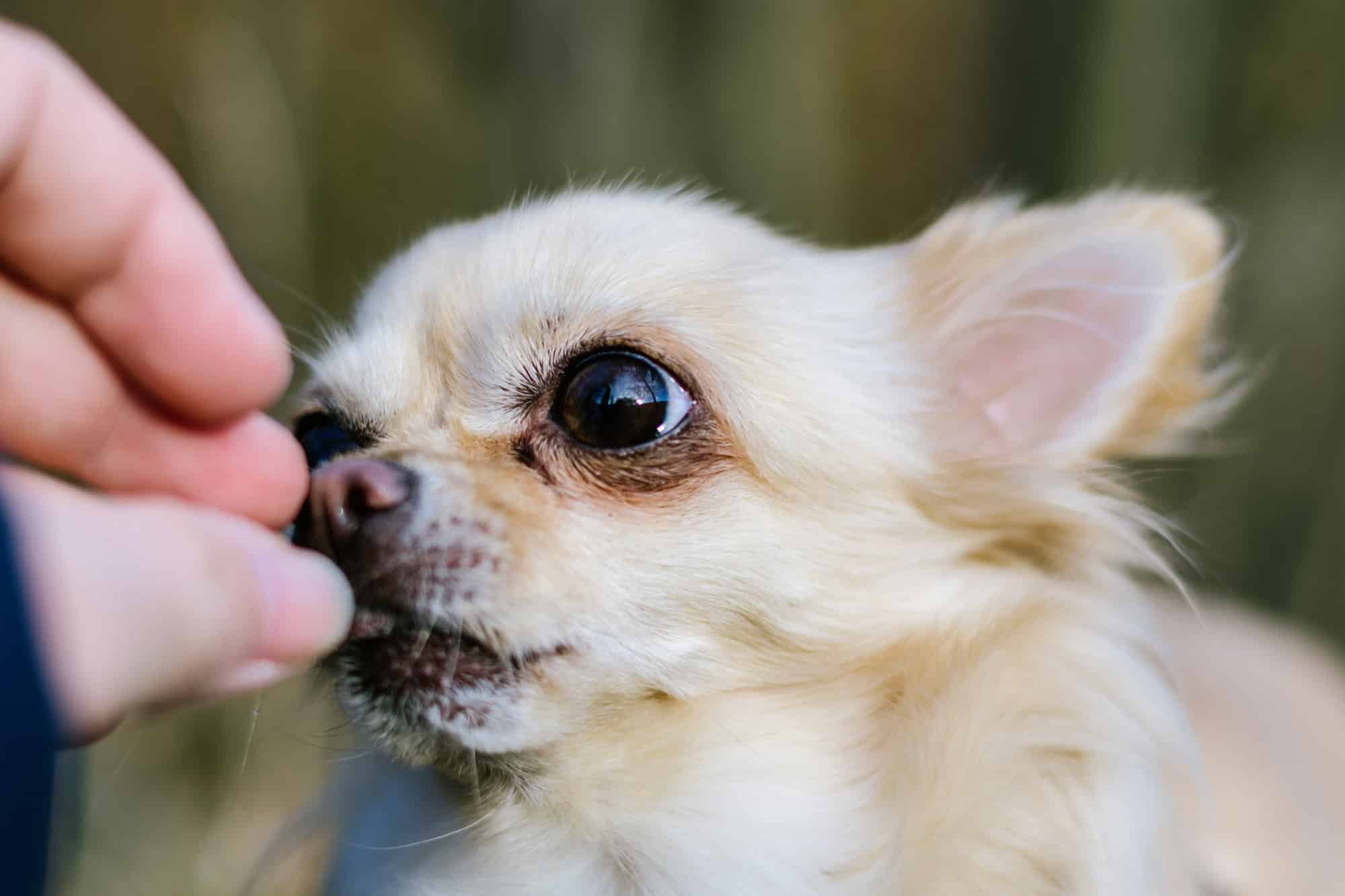
Another very common Chihuahua color is cream, which is off-white, typically with yellow undertones.
©iStock.com/Jan Rozehnal
#29: Red
Red Chihuahuas have medium to dark orange coats. They may also sometimes have sable (black tipped hairs) or white markings.
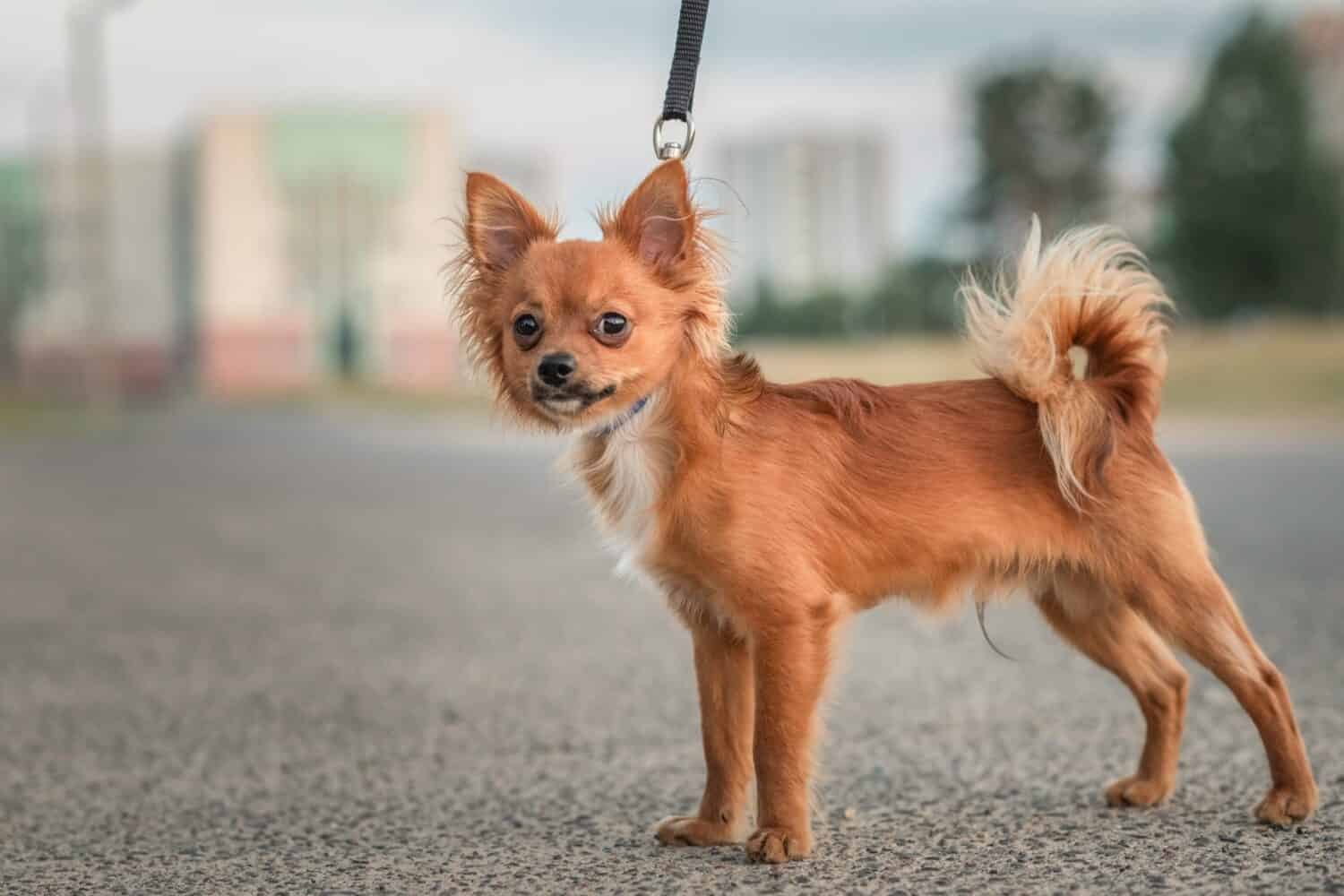
Red Chihuahuas have medium to dark orange coats, sometimes with sable or white markings.
©shymar27/Shutterstock.com
#30: Black and Tan
Black and tan Chihuahuas can resemble miniature pinschers in coloring. They are typically black with tan markings above the eyes and on the muzzle, chest, and legs.
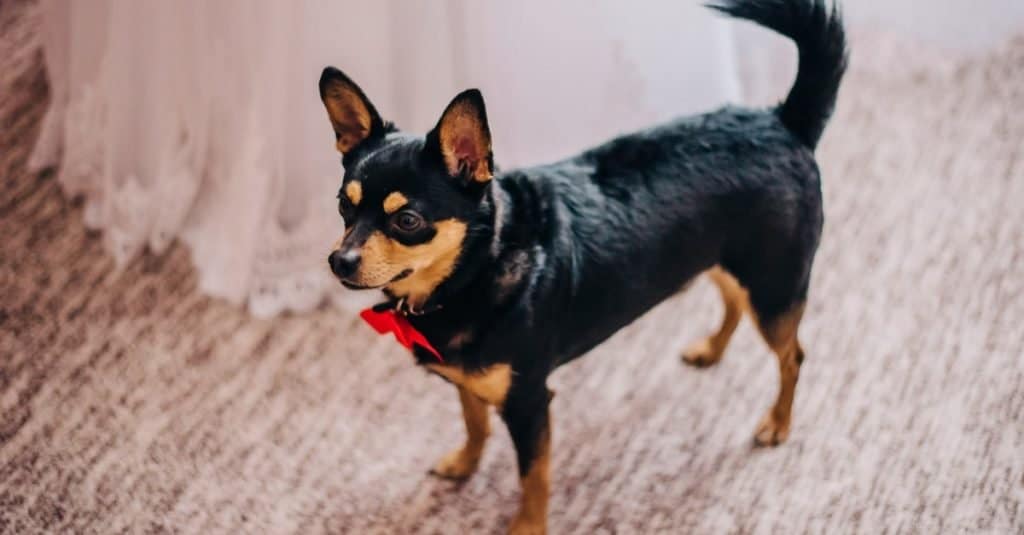
Black and tan Chihuahuas can resemble miniature pinschers.
©mil87olia/Shutterstock.com
#31: Fawn
Fawn is often cited as the most common Chihuahua color. These pups can range from a light, nearly cream color to a warm, reddish-brown.
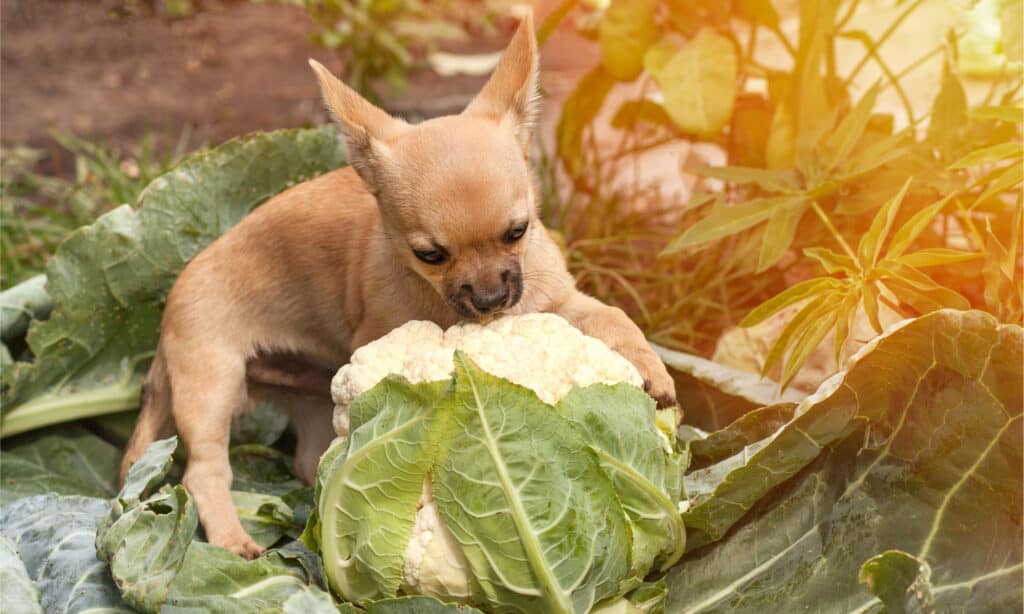
Fawn is thought to be the most common color for Chihuahuas.
©victoriyasmail/Shutterstock.com