
Quick Take
- One grooming habit could make or break your choice between these two breeds. Compare coats and looks →
- One of these breeds has a quirk about routine that surprises most first-time owners, and ignoring it tends to invite chaos. See Boxer quirks →
- Their personalities overlap more than you'd think, though one key difference determines which breed fits your lifestyle. Explore personality differences →
- One breed faces a health threat so specific and serious that vets say owners must actively watch for it. Do you know which one? See the cancer risk →
German shepherds and Boxers are both popular breeds with many things in common. Both are large breed dogs that are loyal, courageous, and alert. But what are the differences between them? Read on to learn the differences between German Shepherds and Boxers, including their appearance, personalities, and common health issues.
Appearance
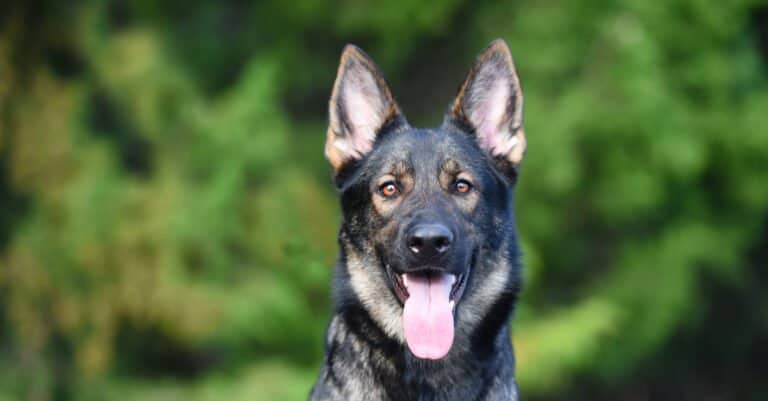
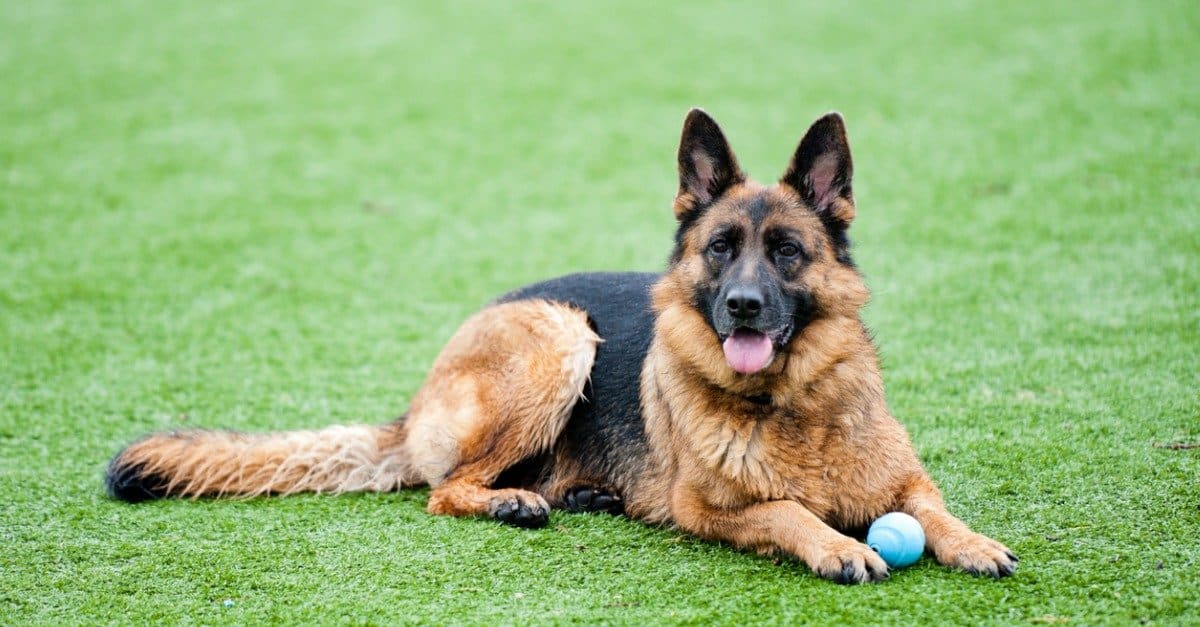
There are minimal differences between German Shepherds and Boxers regarding their size. However, their coats, build, and coloring are drastically different. When German Shepherds are fully-grown, males measure 24 to 26 inches at the shoulder and females measure 22 to 24 inches, with males weighing 65 to 90 pounds and females weighing between 50 and 70 pounds. By 18 to 24 months, these dogs are considered fully mature. The German Shepherd has a medium-length double coat, which requires a lot of grooming, and sheds a lot.
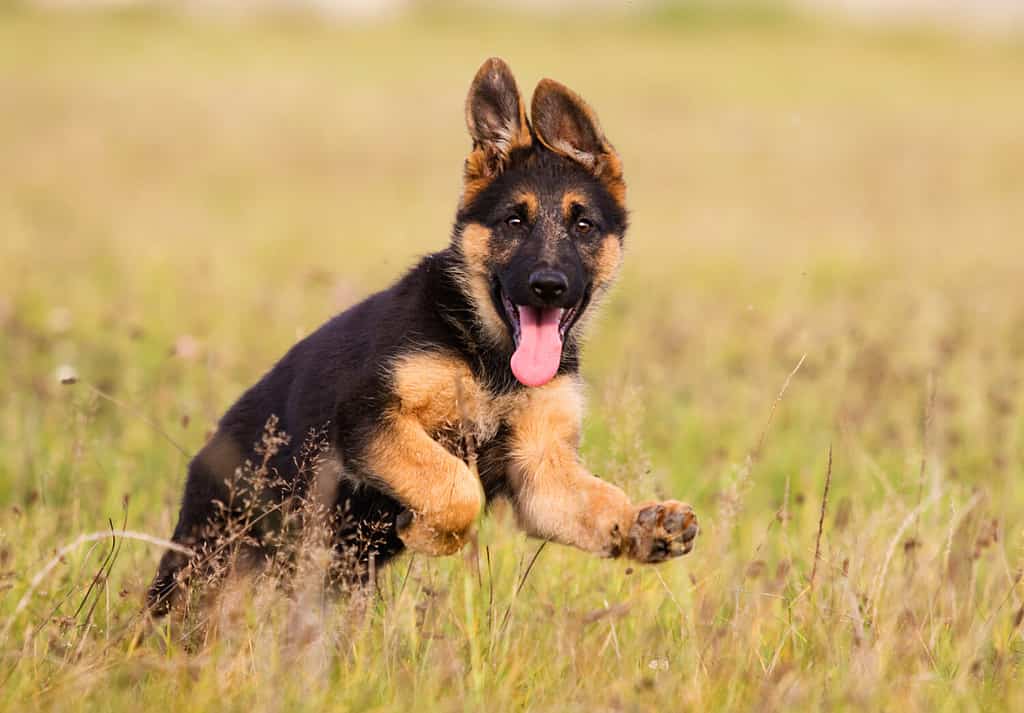
The German shepherd has a medium-length double coat, which requires a lot of grooming.
©Happy monkey/Shutterstock.com
German Shepherds also have many coat colors, including:
- Black and tan
- Black
- Black and red
- Black and cream
- Black and silver
- White
- Sable
- Liver
- Blue
- Bi-color
- Grey
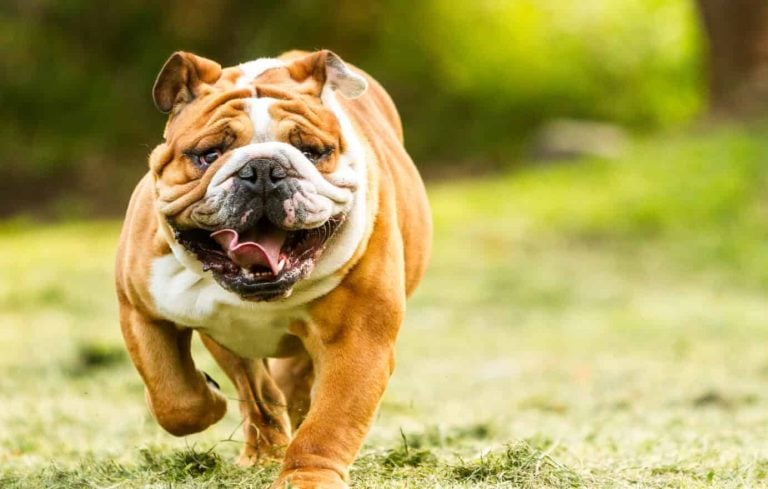
Boxers are a bit shorter than German Shepherds, measuring 23 to 25 inches for males and 21.5 to 23.5 inches for females. Their maximum weight is also less, as male Boxers weigh 65 to 80 pounds, with females typically weighing around 15 pounds less. These dogs are not fully mature until the age of three, which is older than most breeds. In contrast to German Shepherds, Boxers have a short, single coat and don’t shed a lot, requiring very little grooming. They come in fewer colors, including brindle, fawn, and white. Although white can be registered with the American Kennel Club, only brindle and fawn are breed standard colors.
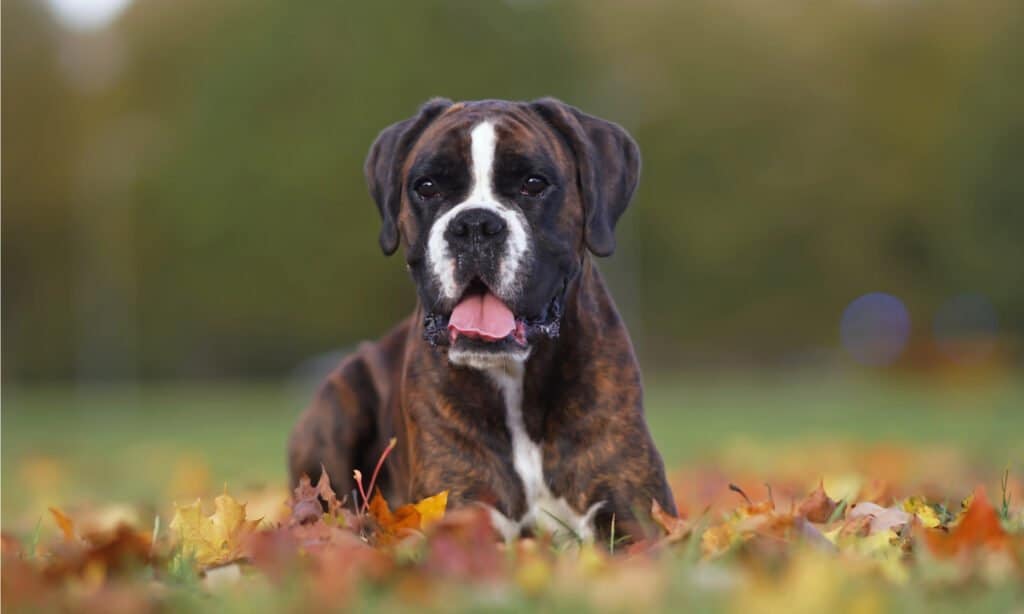
Boxers have a short, single coat and don’t shed a lot, requiring very little grooming.
©Eudyptula/Shutterstock.com
Personalities
Surprisingly, German Shepherds and Boxers have many similar characteristics, but they do differ in a few aspects.
Loyal and Courageous Family Guardians
Today the German Shepherd is a loving family companion, but they are also working dogs that excel at working long hours sniffing out contraband for the K-9 unit, or patrolling with military units on the front lines, among other roles. While these large dogs are very adaptable, their size and energy levels make them unsuitable for small homes with little or no outdoor space. However, they can be happy living in an apartment as long as they receive enough exercise and outdoor time.
German Shepherds are intelligent, courageous, protective, and gentle. They are eager to please and have many wonderful traits that make them fantastic working dogs. However, they can be wary of strangers, making them alert guardians. If they receive consistent training and obedience lessons, these dogs will be deeply loyal for the rest of their lives. German Shepherds are affectionate with family and are excellent with children, making them ideal companions, as long as owners have the time to dedicate to them.
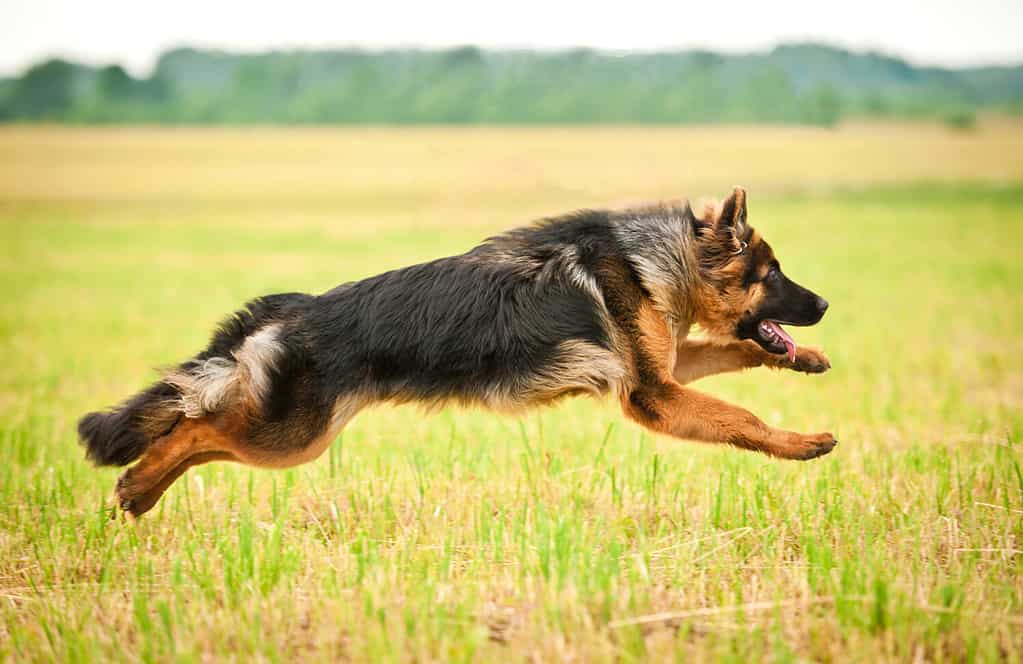
German Shepherds were originally bred to work, but they can also be ideal family dogs.
©Rita_Kochmarjova/Shutterstock.com
Playful and Protective Companions
Boxers were initially bred as working or guard dogs, and they need to stay busy to be healthy and happy. Due to their intelligence and social personalities, they make excellent messengers, having served during World War I, K9 unit dogs, cattle wranglers, and guide dogs for the visually impaired. Boxers are silly, loyal, affectionate, intelligent, alert, courageous, and hardworking. However, they are wary of strangers and other animals if not socialized and trained properly. Boxers are social dogs and need regular interaction, so they are not the best choice for individuals or seniors who can’t give them all the attention they need.
Once they mature past the puppy phase, Boxers are fun and naturally friendly, without barking too much or being overly excited and jumpy. They are excellent with young children and they are easy to train, so they are a good breed for first-time dog owners. Boxers respond well to cues and leash training. However, they dislike routine, so owners must dedicate a lot of time to finding various types of stimulation for their Boxers to keep them from getting up to mischief.
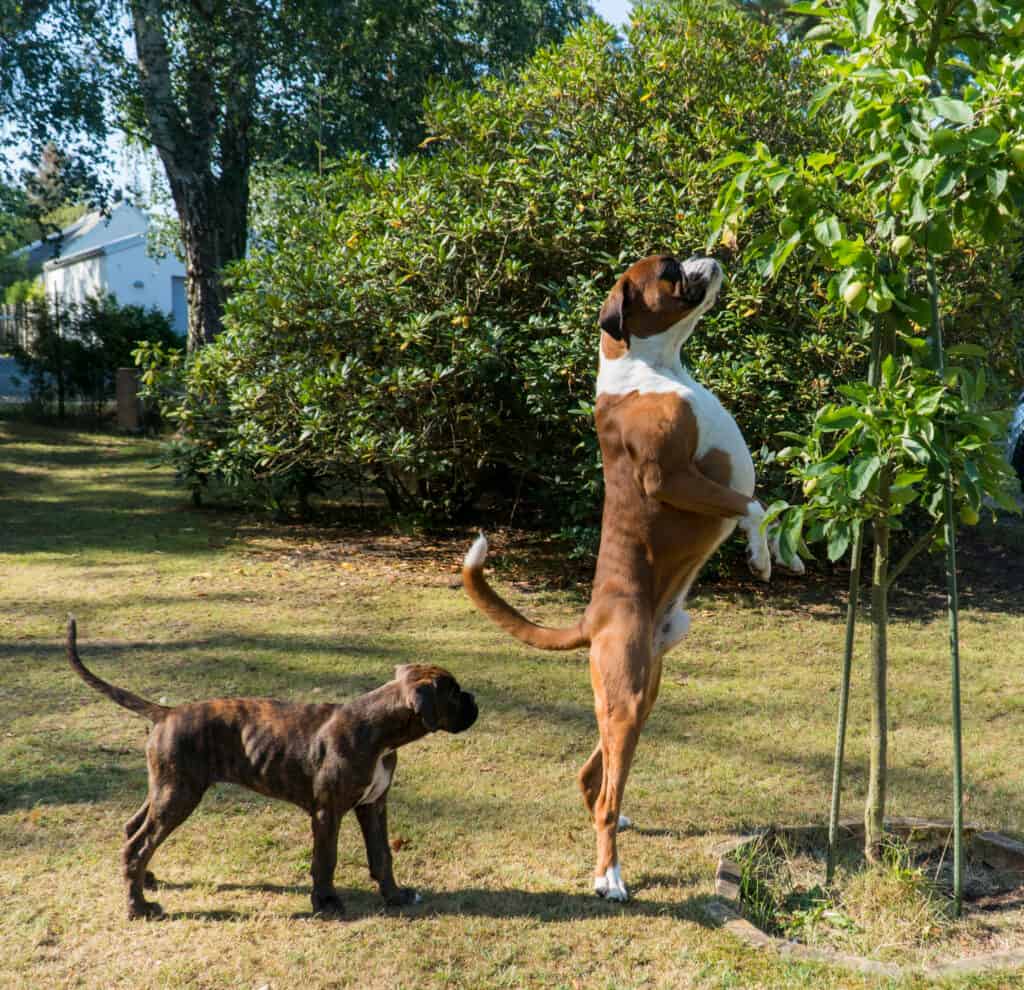
Boxers dislike routine, so owners must find various types of stimulation to keep them out of mischief.
©Peter Roslund/Shutterstock.com
Health Issues
German Shepherds are generally healthy dogs and have a life expectancy of 7 to 10 years. These dogs can experience bloat, which is a sudden, life-threatening swelling of the abdomen. Experts recommend that owners learn to recognize the symptoms and what to do in the event that bloat occurs. German Shepherds are also susceptible to health issues such as:
- Hip dysplasia
- Arthritis
- Degenerative myelopathy
- Exocrine pancreatic insufficiency
Boxers do not have a high tolerance for extreme temperatures, so they should be kept inside when it is extremely hot or cold. Boxers are also prone to:
- Certain cancers such as mast cell tumors, lymphoma, brain tumors, hemangiosarcoma, and other neoplasias
- Hip dysplasia
- Heart conditions such as dilated cardiomyopathy and aortic stenosis
- Thyroid deficiency
- Degenerative myelopathy
Veterinarians recommend that owners monitor their Boxers for sudden lethargy, odd lumps, or swollen glands. Cancer is the number one health issue for Boxers, so owners should contact their vet right away if they notice any of these signs.