
Quick Take
- Dog breeding genetics explain how dominant, additive, and recessive genes shape traits and disease risk in litters.
- Outcrossing expands the gene pool and lowers recessive disease risk, while linebreeding can fix desirable traits but can still carry inbreeding risk.
- Closed populations limit diversity and raise health issues like hip dysplasia and spinal abnormalities in some breeds.
Pure-bred dogs have been regarded as superior to crossbreeds or what some people refer to as mutts. However, we now understand that producing purebred dogs has drawbacks. The lack of variety in the breeding stock leads to a loss of genetic diversity and, with it, a higher risk of disease in dogs. Here we unpack the complicated subject of dog breeding genetics and explore arguments against very selective breeding practices.
The Genetics of Dog Breeding

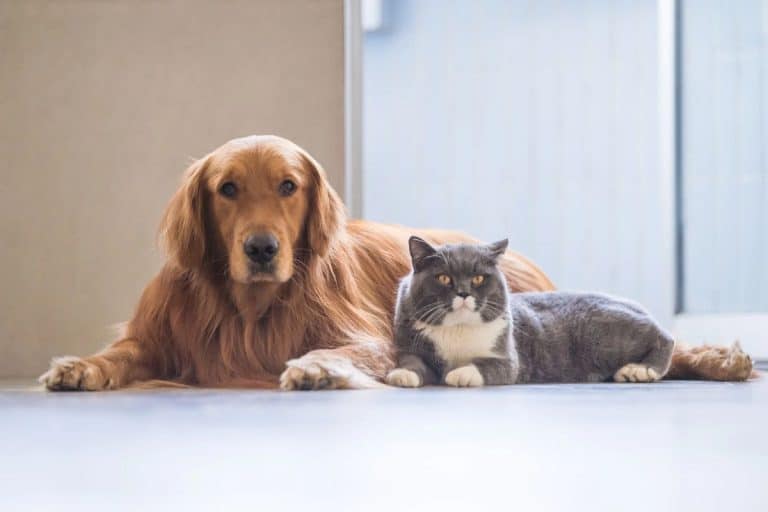
Dog breeding selects dogs with certain genes.
©Billion Photos/Shutterstock.com
When a male and female dog breed to produce a litter, the offspring will have half of their genetic material from the mom and half from the dad. The genes passed down from the parents can be described as dominant, additive, or recessive.
The dominant genes express themselves in offspring and are usually seen throughout a litter. If one parent passed on a dominant gene for a pale coat, then that is the coat color the offspring will have. Additive genes are those where two or more genes give a single characteristic. For example, several genes establish a specific eye color in dogs. Finally, there are recessive genes. Most of the time, they don’t play a role because the dominant genes are doing all the genetic heavy lifting.
As an example, let’s look at a recessive gene for a bone deformity. In most pups, the one parent would have supplied a dominant gene for normal bone formation, so no one would ever know that the other parent was carrying a recessive gene. However, if a mom and dad dog both carry the recessive gene, they will pass these on to their pup. I there is no dominant gene to take over, the pup will be born with the bone deformity. Inbreeding can cause a higher likelihood of recessive genes being passed along to the next generation.
The Different Types of Dog Breeding
Breeding dogs takes a lot more than simply placing a male near a female and letting nature do its thing. Experienced breeders spend years perfecting their skills, and the process of selecting parents for a litter of pups is very intentional. Here are the three avenues that you could choose for breeding dogs.
Outcrossing
Outcrossing is the most basic type of planned mating and is generally chosen by pet owners who want to try breeding their dog. Unfortunately, it is also used by some unethical breeders. The mother or father dogs are often chosen out of convenience or due to color. Unfortunately, this often means that you have no information on the genetic history of the dog, which can lead to problems. Conversely, in terms of genetics, this can be a good thing. Because it’s highly unlikely that the two dogs are related, you are accessing a larger gene pool. In this care, it is less likely that both parents will pass on a recessive gene that leads to a hereditary disease.
Linebreeding
Linebreeding is the middle ground of dog breeding and is used by many competition breeders. You will see several of the same dog or kennel names in the pup’s pedigree because they will have descended from the same lines. The parents are selected to improve the quality of offspring. You have a much better idea of what you are going to get because you know the characteristics of the line. Many breeders maintain that linebreeding is not considered inbreeding. However, the Royal Society for the Prevention of Cruelty to Animals in Australia states on its website, “As a form of inbreeding, linebreeding is still associated with the risks to animal health.”
Inbreeding
Inbreeding, also called close inbreeding, is the intentional mating of close relatives. There are very few people who think that this is a good idea! This type can involve mother to son, father to daughter, or brother to sister breeding. Some people would also class grandparent to grandchild and half-brother to half-sister as close inbreeding.
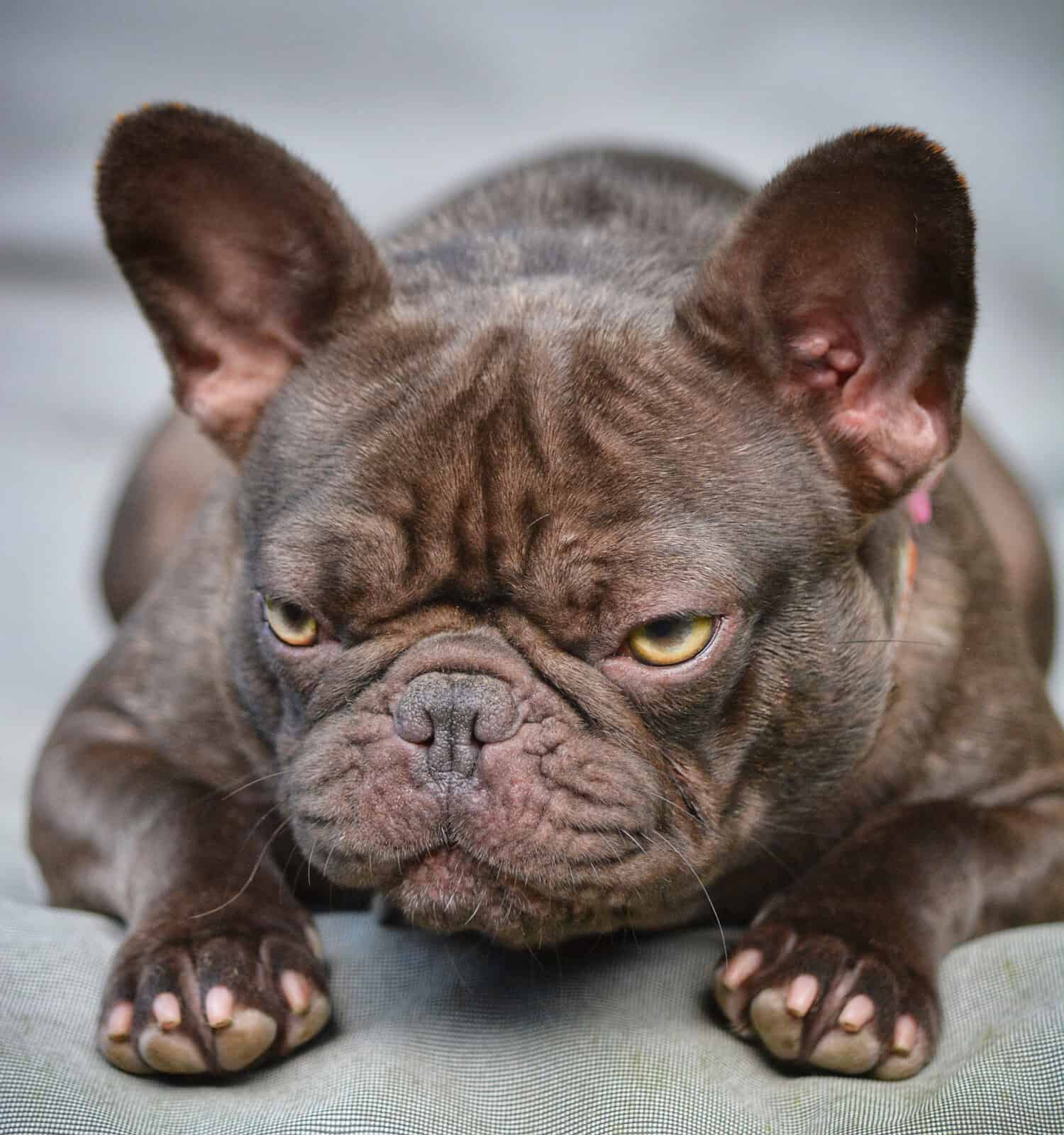
Where the gene pool is very large, as in labradors, for example, it is very unusual for responsible breeders to use close inbreeding. Contrast this with the gene pool for French bulldogs, which is very small.
This type of breeding can lead to the phenomenon of ‘popular sire syndrome’ where the overuse of an individual breeding dog decreases diversity and increases the spread of defective genes.
Closed Populations
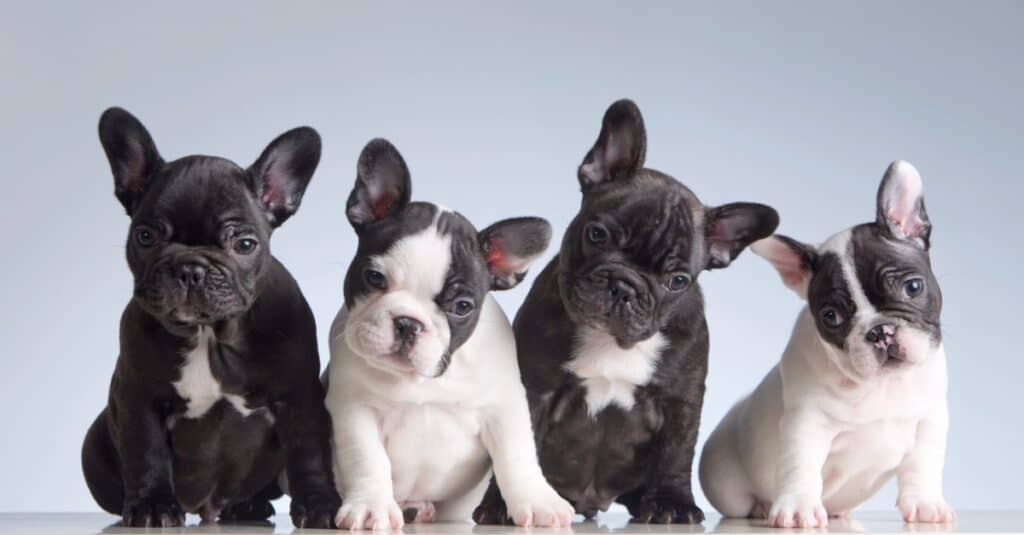
French bulldogs have a limited genetic diversity.
©iStock.com/Celiaaa
The populations of some dog breeds are closed. This means that there is a closed stud book or breed registry that does not accept any outside dogs. It ensures that the dogs are purebred. The American Kennel Club generally maintains closed stud books for established breeds, meaning only dogs descended from registered parents can be registered. New breeds are typically introduced through the Foundation Stock Service (FSS), though stud book status can vary by breed and may be temporarily opened under certain circumstances. The result is a very pure gene pool with fixed characteristics deemed desirable for that breed. In some cases, however, the desired characteristic itself is linked to health issues in the dogs. The brachycephalic breeds (such as French bulldogs and pugs) are typical examples. They have been bred to have a particular nose shape, but that very shape can lead to breathing problems.
Closed populations result in a gene pool that is limited to only those that are already present. The argument for this practice is that the breed becomes dependable, and its health and temperament can be improved. These closely monitored populations are also suitable for the study of disease. Once the canine genome sequencing project was completed, it paved the way for the development of tests for certain diseases. One example is the test developed for copper toxicosis (CT) in Bedlington terriers, where 25 percent are affected, 50 percent are carriers, and only 25 percent are clear.
Measuring the Degree of Inbreeding
One method for measuring how closely a pair of dogs (male and female) are related is the Coefficient of Inbreeding (COI). The method looks back over generations and uses a mathematical formula that takes into account common ancestors and ‘loops’. These are the paths that run from an individual up to a common ancestor through a parent and back down to the other parent without going through any individual twice. The number of loops is always the number of common ancestors the parents have. The higher the COI, the more likely it is that there will be problems in the offspring related to the accumulation of inbreeding effects.
The European Union Responsible Dog Breeding Guidelines state that breeders should avoid breeding from individual dogs whose combined coefficient of inbreeding (the combination of both parents), measured over at least 10 generations, is greater than 6.25 percent.
However, the COI can underrepresent the actual inbreeding by 5–10 fold if the complete pedigree is not included in the calculation.
What Is the Problem with Closed Populations?
There can be negative consequences to health associated with inbreeding. Firstly, there is a negative effect on litter size and the fitness of the puppies, which affects neonatal survival. It can also cause fertility problems and weakened immune systems. Inbred animals are more likely to have genetic defects and inherited diseases. For example, Mitral Valve Disease in Cavalier King Charles Spaniels and spinal abnormalities in British and French Bulldogs, Boston terriers, and pugs.
A genetic study of 227 dog breeds published in 2021 found that average inbreeding was 25 percent, which is the equivalent of sharing the same genetic material with a full sibling. These levels would not be considered safe in wild animal populations. Some dog breeds are more inbred than others because there was a small founding population, and particular traits have been strongly selected.
Genetic Welfare Issues in Popular Breeds
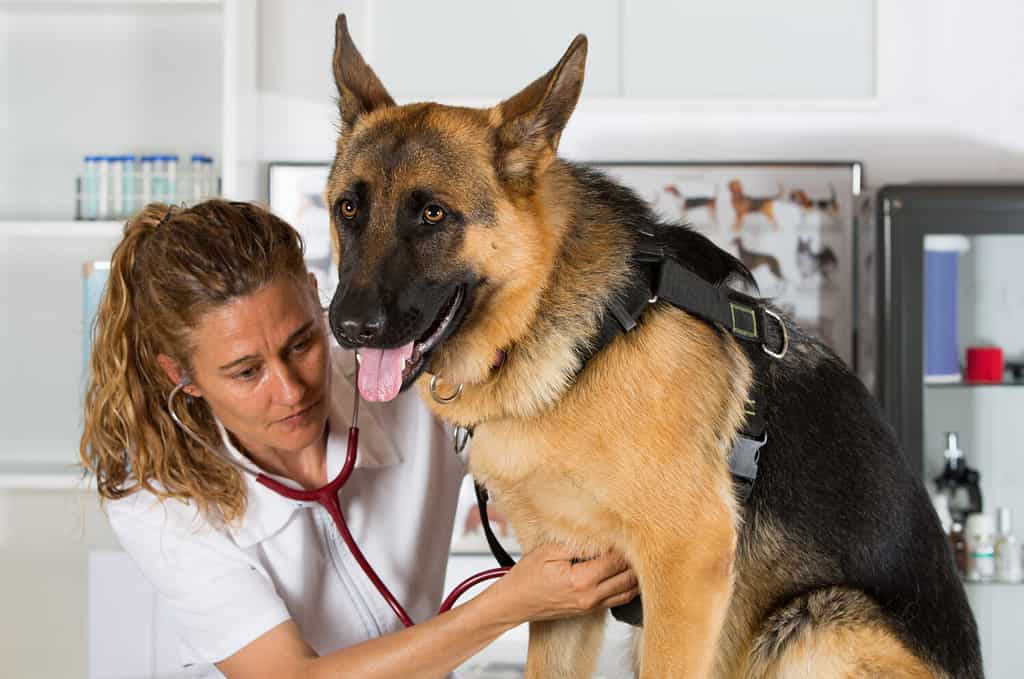
Hip dysplasia is a genetic condition seen in breeds such as German shepherds.
©135pixels/Shutterstock.com
Some of the most popular dog breeds have genetic conditions that may appear more frequently when there is inbreeding. A leading example is the French bulldog, which can have a genetic condition called hemivertebrae, where the bones of the spine are abnormally shaped and therefore do not align correctly. The misalignment leads to instability and deformity of the spinal column. Affected dogs suffer pain, ataxia (wobbliness), possibly loss of hind leg function, and potentially incontinence.
In German shepherds, the genetic condition called hip dysplasia causes excessive laxity (looseness) in the hip ball and socket joint. The dog can suffer from chronic joint pain and mobility issues. Osteoarthritis of the joint compounds the problem.
Centronuclear Myopathy (CNM) is hereditary myopathy seen in Labrador retrievers. It causes skeletal muscle problems which can include muscle weakness and exercise intolerance. You may also see it called hereditary myopathy of the Labrador retriever (HMLR). It is thought that the faulty gene causing this condition first occurred spontaneously in a single dog but was then passed down through successive generations. The gene that causes this disorder is recessive, so both parents must pass it on for a pup to be affected by the disease. The parents would be termed ‘carriers’ but would show no symptoms. DNA testing is available for this disease.
How Can Breeders and Pet Owners Help?
Pet owners can help by taking great care when it comes to where they get their pups. Ask a lot of questions! A personal recommendation from someone who knows about that breed is very useful. There are DNA tests available for some genetic conditions, so ask if the mother and father have been tested and ask to see the results. Reputable breeders are aware of the genetic conditions and should have actively bred them out of their lines.
Breeders can select matings with a projected lower carrier risk. However, in breeds that have a very small number of founders, there is a small gene pool with less genetic diversity. The simplest way to prevent the cycle of genetic deterioration is to be less restrictive about which animals are bred. The Institute of Canine Biology recommends breeding half rather than a quarter of the puppies produced. Outcrosses to another population through a plan of rotation breeding will also broaden the gene pool and mitigate the effects of selective breeding. Breeders can also make use of DNA testing to remove faulty genes from their breeding lines.