
While they may look extremely similar upon first glance, there are a number of differences between the Chesapeake Bay Retriever vs Labrador Retriever. But what might some of those differences be, and what makes both of these dog breeds special?
In this article, we will compare and contrast all of the similarities and differences between the Labrador Retriever and the Chesapeake Bay Retriever so that you can have a full understanding of both breeds. We will address their ancestries, behaviors, and life spans in case you are interested in adopting either of these two dogs. Let’s get started now!
This post was updated on August 29, 2025 to clarify ancestry and lifespan.
Comparing Chesapeake Bay Retriever vs Labrador Retriever

| Chesapeake Bay Retriever | Labrador Retriever | |
|---|---|---|
| Size | 55-80 pounds; 21-26 inches tall | 55-80 pounds; 21.5-24.5 inches tall |
| Appearance | Wavy and oily textured waterproof coat; only shades of brown and tan | Smooth and thick double coat; comes in many colors, including yellow, black, and brown |
| Ancestry | Bred in the Chesapeake Bay in the 1800s for gun and hunting dog activities in frigid waters | Developed in the early 1800s in the U.K. from Newfoundland dogs |
| Behavior | Alert and focused; polite to strangers though aloof and can be stubborn while training | Extremely friendly and kind; a perfect family dog due to their patience and easy-going nature |
| Lifespan | 10-13 years | 10-13 years |
Key Differences Between Chesapeake Bay Retriever vs Labrador Retriever

the Labrador Retriever has a slightly longer lifespan compared to the Chesapeake Bay Retriever.
©Grisha Bruev/Shutterstock.com
There are many key differences between the Labrador Retriever and the Chesapeake Bay Retriever. While they both weigh roughly the same amount on average, the Labrador Retriever is slightly shorter compared to the Chesapeake Bay Retriever. Additionally, the Labrador Retriever has a slightly longer lifespan compared to the Chesapeake Bay Retriever.
Let’s take a closer look at all of these differences and more now.
Chesapeake Bay Retriever vs Labrador Retriever: Size
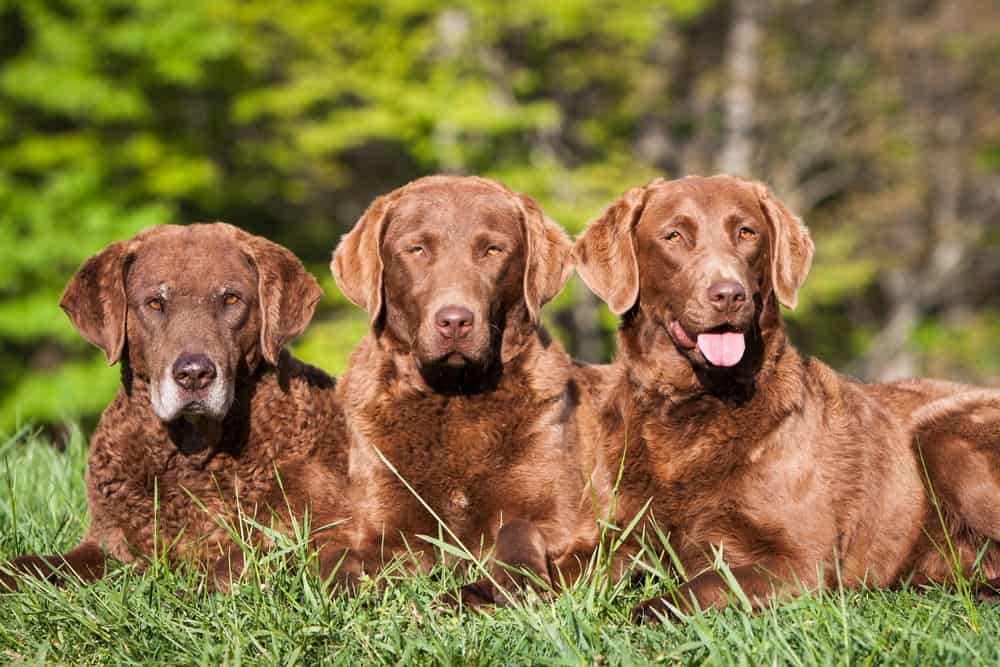
Depending on gender, the Labrador Retriever reaches heights of 23 to 24 inches tall, while the Chesapeake Bay Retriever frequently reaches 21 to 26 inches tall.
©Kerrie T/Shutterstock.com
Looking at a Chesapeake Bay Retriever and a Labrador Retriever, you likely can’t tell that they weigh exactly the same amount on average. However, the Labrador Retriever is slightly shorter than the Chesapeake Bay Retriever on average. Depending on gender, the Labrador Retriever reaches heights of 21.5 to 24.5 inches tall, while the Chesapeake Bay Retriever frequently reaches 21 to 26 inches tall.
Chesapeake Bay Retriever vs Labrador Retriever: Appearance

Did you know that the Chesapeake Bay Retriever comes in fewer colors compared to the Labrador Retriever?
©New Africa/Shutterstock.com
It can be extremely difficult to tell a Labrador Retriever apart from a Chesapeake Bay Retriever, given the fact that they are built similarly and have very similar facial features. When it comes to coats, the Chesapeake Bay Retriever comes in fewer colors compared to the Labrador Retriever. While both breeds have dense, water-resistant double coats, Chessies’ coats are oily and wavy, and more water repellent. Lab’s coats are less oily and straight. Otherwise, these dogs are strikingly similar to one another, despite not necessarily being related.
Chesapeake Bay Retriever vs Labrador Retriever: Ancestry and Breeding
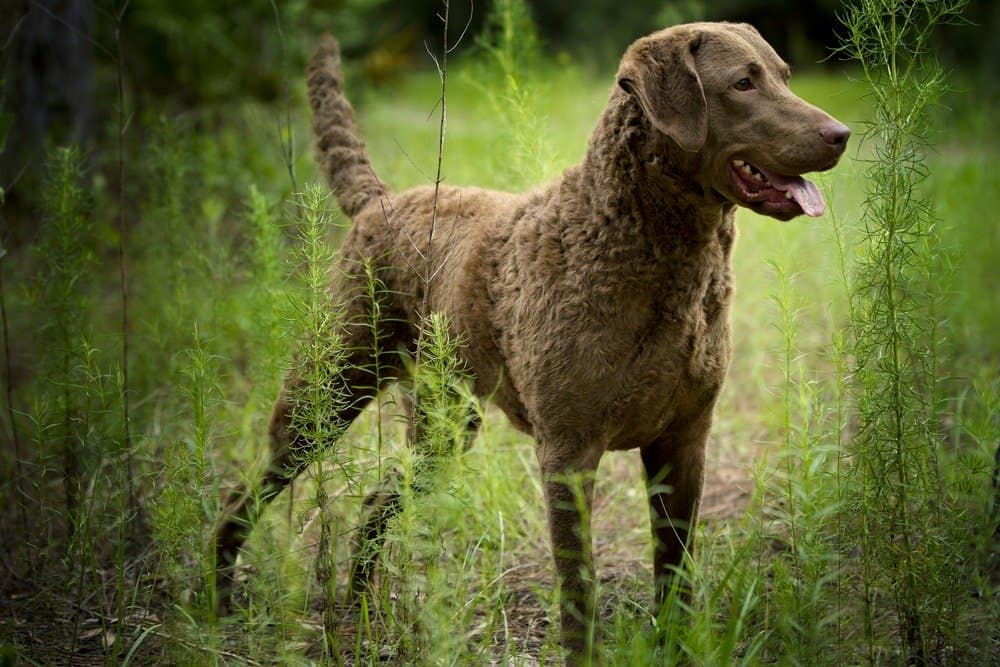
The Labrador Retriever was originally bred in the United Kingdom and Newfoundland, sometime during the 1500s, while the Chesapeake Bay Retriever originated in the 1800s in the Chesapeake Bay Area.
©Kerrie T/Shutterstock.com
The primary differences between a Labrador Retriever and a Chesapeake Bay Retriever lie in their ancestry and breeding purposes. While both of these dogs are highly capable gun and hunting dogs, the Labrador Retriever is a much older breed compared to the Chesapeake Bay Retriever. Additionally, these dogs originated in different locations. Let’s talk more about that now.
The St. John’s water dog (a now-extinct breed from Newfoundland) was developed in the 16th–17th centuries and later imported to Britain. The modern Labrador Retriever was developed in the early 1800s in the U.K. from these Newfoundland dogs. Meanwhile, the Chesapeake Bay Retriever originated in the 1800s in the Chesapeake Bay Area. The Chesapeake Bay Retriever was bred for retrieving waterfowl in the frigid temperatures of the Chesapeake Bay, while the Labrador Retriever was not bred with this in mind.
Chesapeake Bay Retriever vs Labrador Retriever: Behavior

The Chesapeake Bay Retriever is much more alert and focused compared to the easygoing Labrador Retriever.
©Johanna Mehrke Fotografie/Shutterstock.com
Both the Chesapeake Bay Retriever and the Labrador Retriever are highly intelligent dogs that are easy to train, especially for hunting and game retrieval. However, there are some personality differences between the two breeds. For example, the Chesapeake Bay Retriever is much more alert and focused compared to the easygoing Labrador Retriever.
Additionally, the Chesapeake Bay Retriever exhibits more stubbornness while training compared to the eager-to-please Labrador Retriever. The Labrador Retriever also welcomes small children and just about anyone with its happy nature, while the Chesapeake Bay Retriever is a bit more aloof with strangers by comparison.