


Quick Take
- Fenbendazole is available without a prescription, though skipping that first step could mean treating the wrong parasite entirely. Check prescription requirements →
- Diarrhea getting worse after starting treatment isn't always a red flag, but there are times when it is and recognizing those moments could save your dog's life. See diarrhea warning signs →
- The dosing window is narrower than most owners expect, and missing even one day can undermine the entire treatment course. See the dosing schedule →
- Fenbendazole treats several common parasites, yet there is one very common infection it simply cannot touch, no matter the dose. See what it can't treat →
Discovering that your dog has worms is concerning, but knowing that the problem can be resolved quickly by administering fenbendazole can make it less stressful. Watching the medicine take effect and getting your pup back to its normal, high-energy, tail-wagging self is a huge relief. In the meantime, you must administer the proper dose, understand the risks, and watch for related side effects.
What Is Fenbendazole?
The medication Fenbendazole works by attacking the internal structure within intestinal parasites.
©JOKE_PHATRAPONG/Shutterstock.com
Fenbendazole is a medication used to treat a variety of intestinal parasites in animals. It has been used to treat both humans and animals for many years. It is often sold under the brand name PANACUR®. PANACUR® C is fenbendazole that has been formulated for use in dogs, specifically. Fenbendazole can treat roundworms, hookworms, whipworms, lungworms, Giardia, and some forms of tapeworms.
Fenbendazole works by binding to beta-tubulin within the microtubules of intestinal parasites, disrupting their cellular structure and impairing nutrient absorption. This results in the death of the parasites within one to two days. However, it may take a few days to see significant improvements.
Is Fenbendazole Safe for Dogs?
Fenbendazole is safe for use in dogs when you follow your vet’s dosing guidance. Fenbendazole can be purchased over the counter in some feed stores and pet stores. It is recommended to consult your vet before giving fenbendazole to your dog. Your dog requires a specific dosing range based on its weight and parasite burden, and it may have a form of parasite that the medication cannot treat. Your vet will know the exact medication and dosage your dog needs.
Veterinarian Dr. Amy Nicole Lewis, told A-Z Animals that it’s important for your vet to test your dog’s stool before treatment. This will identify the exact parasites afflicting your pup and ensure your pet gets the treatment they need. For example, coccidia is a common parasite that fenbendazole cannot treat, so the medication would be ineffective.
Why Do Dogs Take Fenbendazole?
Dogs are prescribed fenbendazole to treat a variety of intestinal parasite infections. The intestinal parasites that can be treated with fenbendazole include:
- Hookworms
- Roundworms
- Whipworms
- Some species of tapeworms
- Giardia (often prescribed alongside a medication called metronidazole)
How Is Fenbendazole Given to Dogs?

Fenbendazole is used to treat roundworms, hookworms, whipworms, lungworms, giardia, and tapeworms.
©Jaromir Chalabala/Shutterstock.com
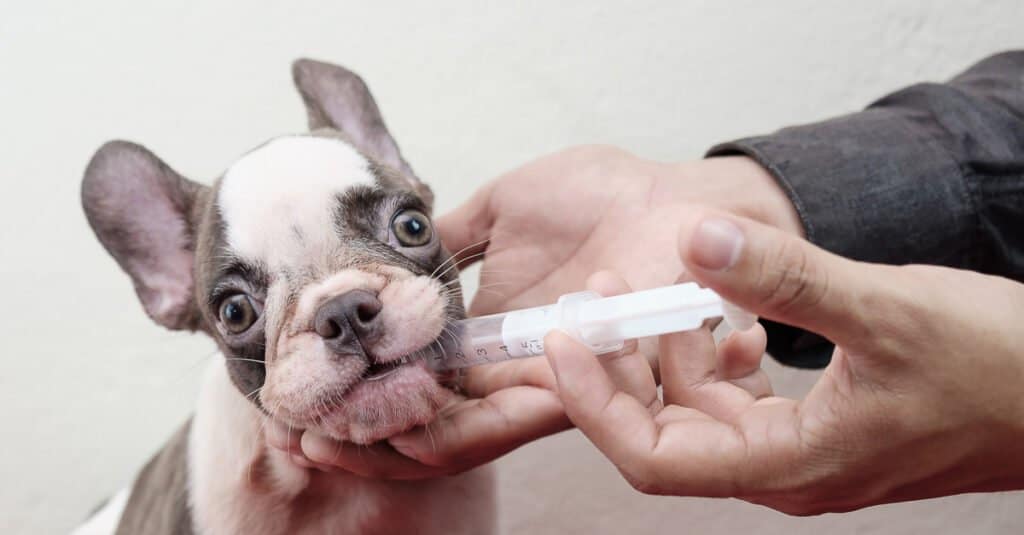
Fenbendazole is a common medication that can be found over the counter. It can be purchased in a variety of forms. Your vet will likely prescribe either a granule form or liquid form of PANACUR® C. The granule form is sprinkled on top of your dog’s food, while the liquid form is given orally by syringe. PANACUR® C will typically be given once daily for at least three days. However, dogs with a heavy worm burden may need to take it for up to seven days.
Fenbendazole must be given on consecutive days until the course is completed, or it may not work properly. Skipping days may result in insufficient treatment of the intestinal parasites. Best practice is to give your dog its dose of fenbendazole with a small meal to prevent an upset stomach.
What Is the Dose of Fenbendazole for Dogs?
Before giving your dog the standard dose of fenbendazole , you must consult with your veterinarian.
The standard dose of fenbendazole for dogs is 22.7 mg per pound of body weight. It should be given once daily for three to seven days consecutively. A second round of treatment may be prescribed two weeks later to ensure that all life stages of the parasite are treated. Avoid skipping days, missing doses, or ending treatment without consulting your vet.
Are There Any Side Effects with Fenbendazole Use in Dogs?
Fenbendazole is a safe medication with very few side effects, but some dogs may develop mild gastrointestinal (GI) upset when taking it. However, it’s important to note that most dogs taking fenbendazole have an active case of intestinal parasites, so this could simply be side effects related to their parasitic infection.
It is common for a dog’s diarrhea to temporarily worsen after starting fenbendazole. This happens because dying intestinal parasites detach from the gut wall and release inflammatory substances that irritate the intestinal lining as the body expels them. Symptoms usually improve within a few days and completely resolve after finishing the course of medication. Owners should contact their veterinarian if the diarrhea continues beyond that window, if the dog becomes lethargic or begins vomiting, or if bright red blood or dark, tarry stools appear.
How Do I Get Fenbendazole for My Dog?
Fenbendazole can be obtained from your vet or at local pet stores and feed stores. Although fenbendazole does not require a prescription, it’s best to consult your vet before giving it to your pet.