Quick Take
- One popular Cheerios flavor sitting in many pantries is quietly toxic to dogs, and most owners would never guess which one it is. See the toxic flavors →
- The "safe" way most people serve Cheerios to dogs can actually trigger a painful reaction, even though the cereal itself isn't the problem. Check the milk warning →
- There's a specific portion rule for dog treats that changes how many Cheerios you should ever hand over, and the number is probably less than you think. See the portion rule →
- Dog size plays a bigger role in Cheerios safety than the ingredient list does, and the reason why matters more than you might expect. Explore the size factor →
Who isn’t guilty of feeding their dog table scraps from time to time? There is an undeniable joy in occasionally slipping your dog a bite of meat or a stray crust from the dinner table. Watching their eyes light up as their tail thumps against the floor makes it almost impossible to resist, although table scraps should not be an everyday treat. Before you feed your pup human food, it’s important to be certain that the food is safe for your dog to consume. If you and your dog are staring at your bowl of cereal, wondering if dogs can eat Cheerios, the answer is yes. Cheerios are harmless to dogs, but they also don’t provide health benefits. Keep reading to learn more about how Cheerios will affect your dog, how many they can eat, and more.
How Many Cheerios can a Dog Eat?
Dogs can eat Cheerios in moderation. The exact amount depends on the size of your dog. However, regardless of its size, your dog never needs a whole bowl of Cheerios. Treats should never make up more than 10% of your dog’s diet, and Cheerios shouldn’t be your dog’s main or only treat.
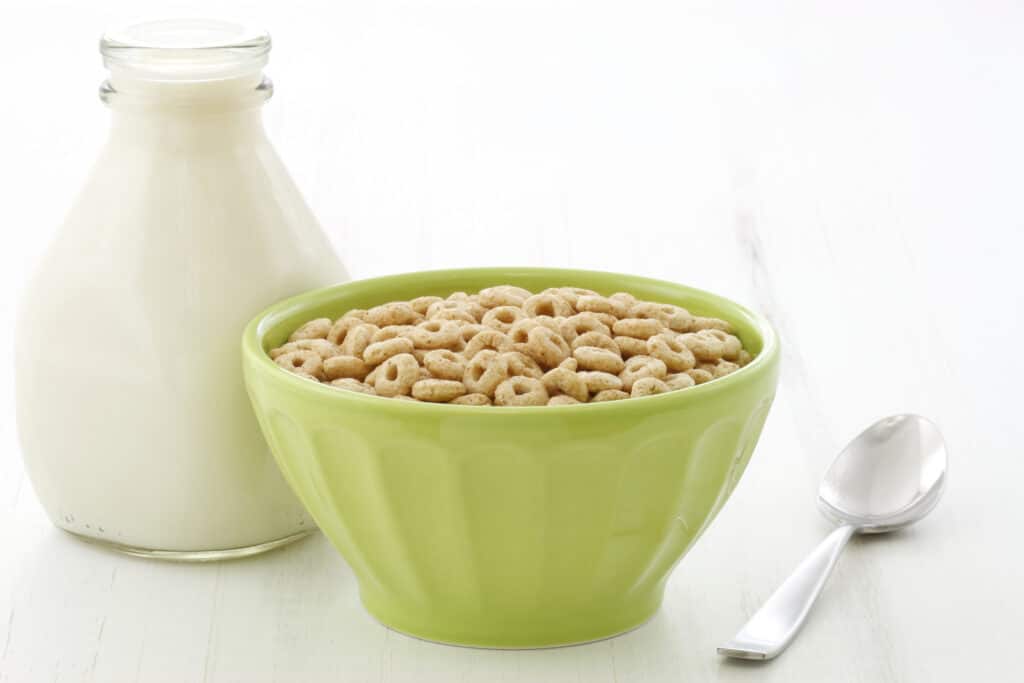
Most flavors of Cheerios are okay for your dog to eat occasionally.
©iStock.com/tacar
Although it’s up to you what you feed your dog, it is important to feed them a regular diet of high-quality dog food. Ultimately, sharing a few Cheerios isn’t likely to hurt your dog unless they’re fed in excess, such as being fed enough to cause weight gain.
Can Dogs Eat Flavored Cheerios?
Although Cheerios now come in numerous varieties, from fruit flavors to the classic Honey Nut flavor, these flavors are likely to contain more sugar, so it is best to avoid them.

Some Cheerios flavors contain chocolate or nutmeg, both of which are toxic to dogs.
©pukao/Shutterstock.com
However, most flavors aren’t toxic to your dog. From a quick scan of their current flavors, the only harmful ingredients are chocolate and nutmeg. The chocolate flavors are easy to recognize, while nutmeg is an ingredient in Pumpkin Spice Cheerios.
If your dog eats Chocolate Cheerios or Pumpkin Spice Cheerios, they could react to the toxic ingredients. Some dogs will suffer no consequences, especially if they only had a small amount, while others can become ill or die from even a small amount of chocolate or nutmeg.
Your dog’s size also matters, as it typically takes a lot less chocolate to poison a chihuahua than a Labrador.
Symptoms of chocolate poisoning in dogs include:
- Vomiting
- Diarrhea
- Increased thirst and urination
- Excessive panting
- Restlessness
- Increased heart rate
Nutmeg poisoning can look a bit different. Symptoms of nutmeg poisoning in dogs include:
- Vomiting
- Dry mouth
- Dilated or constricted pupils
- Agitation
- Increased heart rate
- Difficulty walking or standing
- Hallucinations
If your dog shows symptoms of poisoning, contact your veterinarian or the ASPCA animal poison control center at (888) 426-4435 immediately. They can advise you on what to do or if you should see an emergency vet.
Can Dogs Eat Cheerios with Milk?
While Cheerios are fine for dogs to eat, they shouldn’t eat them with milk.

If you give your dog Cheerios, be sure not to include any milk with them.
©Gorodenkoff/Shutterstock.com
Most adult dogs are lactose intolerant. Because the severity of intolerance varies, some dogs can comfortably tolerate a small amount of dairy, while others will experience severe stomach distress from a single lick. Some dogs suffer from a dairy allergy, which can cause itchy skin and ear infections.

There are many cereals that you can safely give to your dog on occasion, but they should never be a primary part of their diet.
©iStock.com/:OLGA RYAZANTSEVA