
Quick Take
- These two breeds look nearly identical, but one physical difference quietly determines which dog fits your life. And it's not just about size. See the physical differences →
- Both breeds are built for explosive speed, yet their daily energy levels will surprise anyone who pictures life with a racing dog. Explore their energy needs →
- One of these dogs carries a hidden fragility that could turn a normal household moment into a vet emergency. Discover the hidden fragility →
- Training either breed comes with one near-impossible challenge that even experienced dog owners underestimate. Understand the training challenge →
When choosing between an Italian Greyhound and a Whippet, you truly cannot make a wrong decision, as both sighthounds bring immense affection, elegance, and low-shedding companionship into a home. The ultimate choice depends entirely on your lifestyle and preferences regarding size and daily care. If you prefer a tiny, fine-boned Velcro dog that weighs under 15 pounds, thrives on constant physical closeness, and can live comfortably in a small apartment, the sensitive Italian Greyhound is an ideal choice. However, they do require extra dental attention and protection from cold weather and accidental fractures. However, if you want a sturdier, medium-sized companion weighing up to 40 pounds, the Whippet offers a more even-tempered and adaptable personality that integrates effortlessly into active families or households with other pets. Both breeds are peaceful house sleepers that transform into stunning, aerodynamic runners outdoors, ensuring that whichever dog you welcome will become a deeply devoted family member.
Appearance
Whippets stand 18-22 inches at the shoulder, making them tall dogs. Italian greyhounds are much smaller at 13-15 inches tall.
Whippets weigh 25-40 pounds, and Italian greyhounds weigh 7-14 pounds.

Italian greyhounds are smaller than whippets.
©Kwadrat/Shutterstock.com
Larger dogs cost more to feed and care for, while small dogs are easier to exercise indoors and need less space.
Both breeds have short, fine coats in a wide range of colors and patterns. They’re more prone to getting cold in the winter and getting sunburned in the summer than longer or thicker-coated breeds.
Temperament
Sighthound breeds tend to share a similar temperament. They’re sensitive, sometimes stubborn, and often compared to cats.
These dogs weren’t built for endurance but to get their energy out by sprinting. This means they’re typically calm most of the day, happy to laze on their favorite dog bed until their next run.
Both breeds tend to get along well with other dogs, though every dog is an individual. It’s important to make introductions slowly, with both dogs on leash and under your control.

Whippets may not get along with small animals, including cats.
©Viktoria Koval/iStock via Getty Images
Since these breeds have strong prey drives, they must be kept away from prey animals. Some may see cats as prey and cannot live with them, while others can coexist peacefully with feline companions.
Some whippets do best with dogs of their own size or larger, as they may see smaller dogs as prey to chase.
They can be great with children, though you’ll want to keep their size in mind. Tiny Italian greyhounds can be easily hurt by rough handling. Whippets are large enough to knock a small child over while sprinting around.
Never leave children and dogs together unsupervised, for any reason.
Exercise Requirements and Training
Though their exercise needs are similar, Italian greyhounds are easier to exercise indoors. Since they’re small, sprinting around the living room is often enough to tire them out.
Whippets need a securely fenced yard to run around in. Daily walks will also provide exercise and mental stimulation for both breeds.
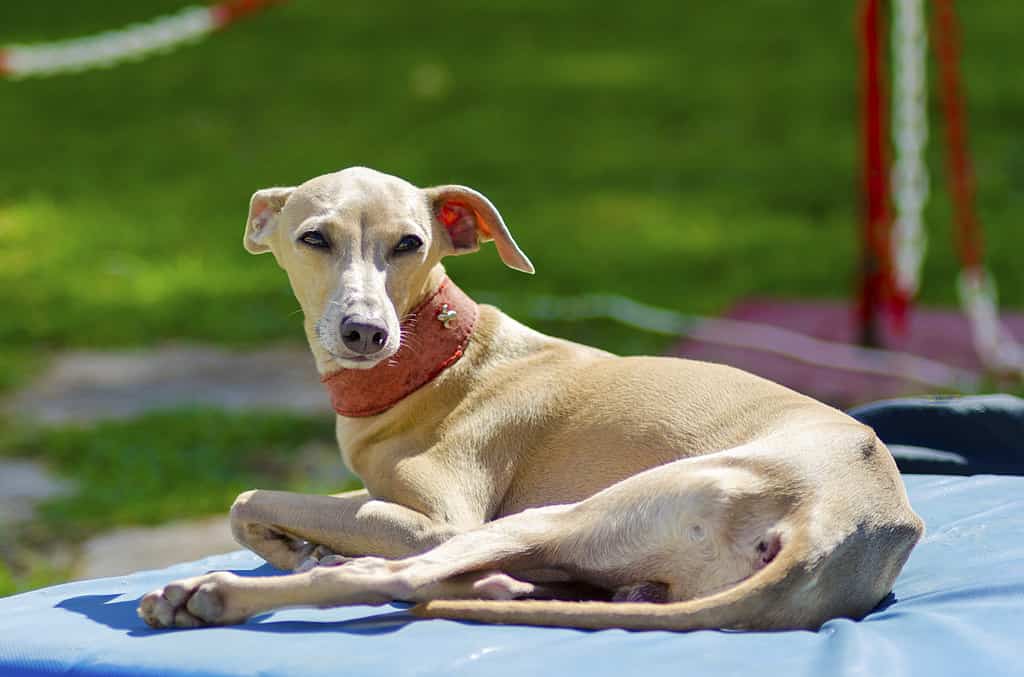
Greyhounds are very thin and have a slender structure, making them look very fragile.
©f8grapher/ via Getty Images
No dog responds well to harsh training methods, and sighthounds are especially sensitive. Be sure to use only force-free training methods.
Although they can be stubborn, developing a good relationship with your dog will go a long way, as will daily training sessions. Keep them short and fun so that your pup always wants to come back for more.

Whippets can run up to 35-37 miles per hour.
©Liliya Kulianionak/Shutterstock.com
Italian greyhounds and whippets both have strong prey drives, and training a reliable recall is usually very difficult. It’s better to keep them on a leash or enclosed with a fence at all times than to try to train out their instincts.
Health Problems
Italian greyhounds are prone to health issues such as luxating patella, Legg-Calvé-Perthes disease, and hypothyroidism. Whippets are prone to deafness, heart disease, and musculoskeletal problems.
Neither breed is built to handle extra weight, and obesity can be detrimental to their joint health as well as their overall health.
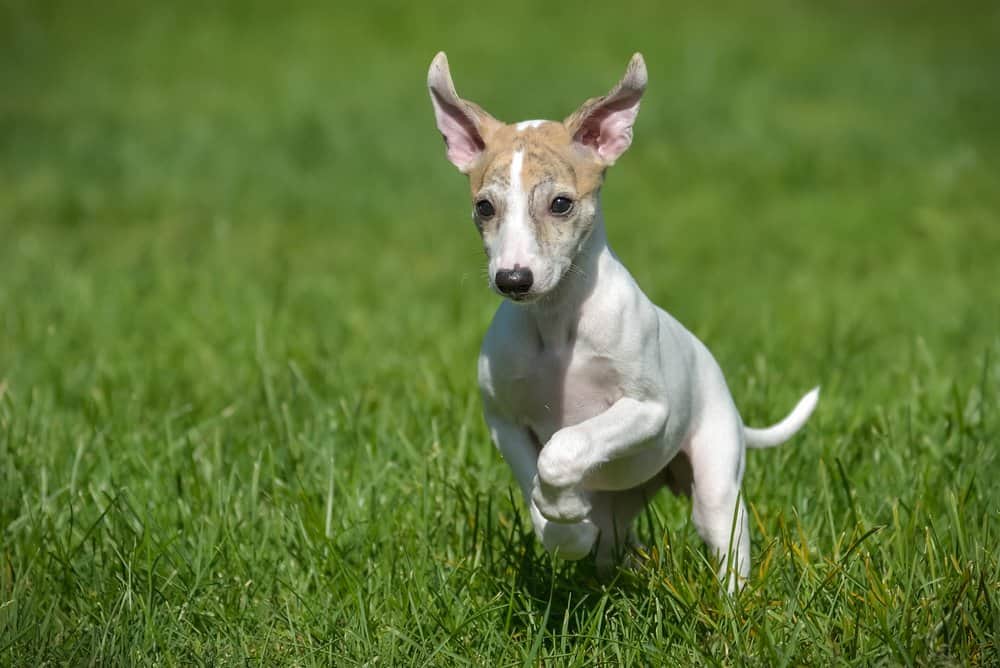
Whippets and Italian greyhounds can live an average of up to 15 years.
©Radek Havlicek/Shutterstock.com
As deep-chested breeds, they’re also prone to bloat, a life-threatening condition in which the stomach twists inside the body. Whippets may be more prone to bloat due to their larger size.
These breeds have very similar life expectancies, each living up to 15 years on average. Italian greyhounds typically live 12–14 years, though some may reach their late teens, while Whippets average 12–15 years.
When deciding between an Italian greyhound and a whippet, consider the size of the dog you’d like to adopt. This is the main difference between these breeds, which are otherwise very similar.
If you want a dog you can play with indoors, or you live in an apartment, an Italian greyhound is likely the best choice. If you have a fenced yard and love large dogs, you may prefer a whippet.